How to Improve Tap Water at Home in Ontario

A glass of water can look perfectly clear and still leave a chlorine taste, a metallic smell, white scale on the kettle, or orange stains in the sink. Those clues matter because the best way to improve tap water depends on what is actually in it, where it comes from, and how your household uses it.

For Ontario homeowners, learning how to improve tap water starts with identifying the specific problem instead of buying a one-size-fits-all filter. A system that improves drinking water flavour may do little for hard-water scale in showers and appliances. Likewise, a water softener can protect plumbing but does not remove every contaminant that may be a concern at the kitchen tap.

Start With a Proper Water Assessment

Municipal water is treated before it reaches your home, but its quality can still be affected by source water, disinfection practices, older pipes, plumbing fixtures, and water chemistry. Private well and lake water require even closer attention because conditions can change with weather, nearby activity, groundwater levels, and equipment performance.

A professional water test gives you a practical starting point. Depending on your concern, testing may assess hardness, iron, manganese, sulphur, pH, total dissolved solids, bacteria, lead, chlorine, and other parameters. The goal is not to treat everything indiscriminately. It is to select equipment that addresses documented issues and fits the water supply.

Pay attention to what you see and smell around the home. White crust on faucets and shower glass commonly points to hardness. Orange or brown staining can indicate iron. A rotten-egg odour often suggests sulphur or bacteria-related concerns. Blue-green staining may be associated with corrosive water and copper plumbing. If water tastes or smells strongly of chlorine, a carbon filtration system may provide a noticeable improvement.

For private wells, testing should be performed regularly and whenever there is flooding, a change in taste or appearance, plumbing work, or a concern about contamination. Households with infants, elderly residents, or anyone with a weakened immune system should be particularly careful about microbiological water quality.

Match the Treatment System to the Problem

Improve taste, chlorine, and everyday odours with carbon filtration

Activated carbon filtration is often the right starting point for municipally supplied water that has an unpleasant chlorine taste or odour. Carbon media can reduce chlorine and many taste- and odour-causing compounds, making water more enjoyable to drink and cook with.

A whole-home carbon filter treats water as it enters the property, so showers, laundry, fixtures, and kitchen taps all benefit. This approach can be especially appealing for families who notice dry skin after bathing or dislike the smell of treated water throughout the home. The correct tank size and flow rate matter. An undersized filter may restrict water pressure or fail to provide adequate contact time for effective treatment.

Reduce scale and protect appliances with a water softener

Hard water contains elevated levels of calcium and magnesium. It is not usually a drinking-water safety issue, but it can be expensive over time. Scale buildup reduces the efficiency of water heaters, marks glassware, stiffens laundry, shortens the life of dishwashers and coffee makers, and creates stubborn residue on fixtures.

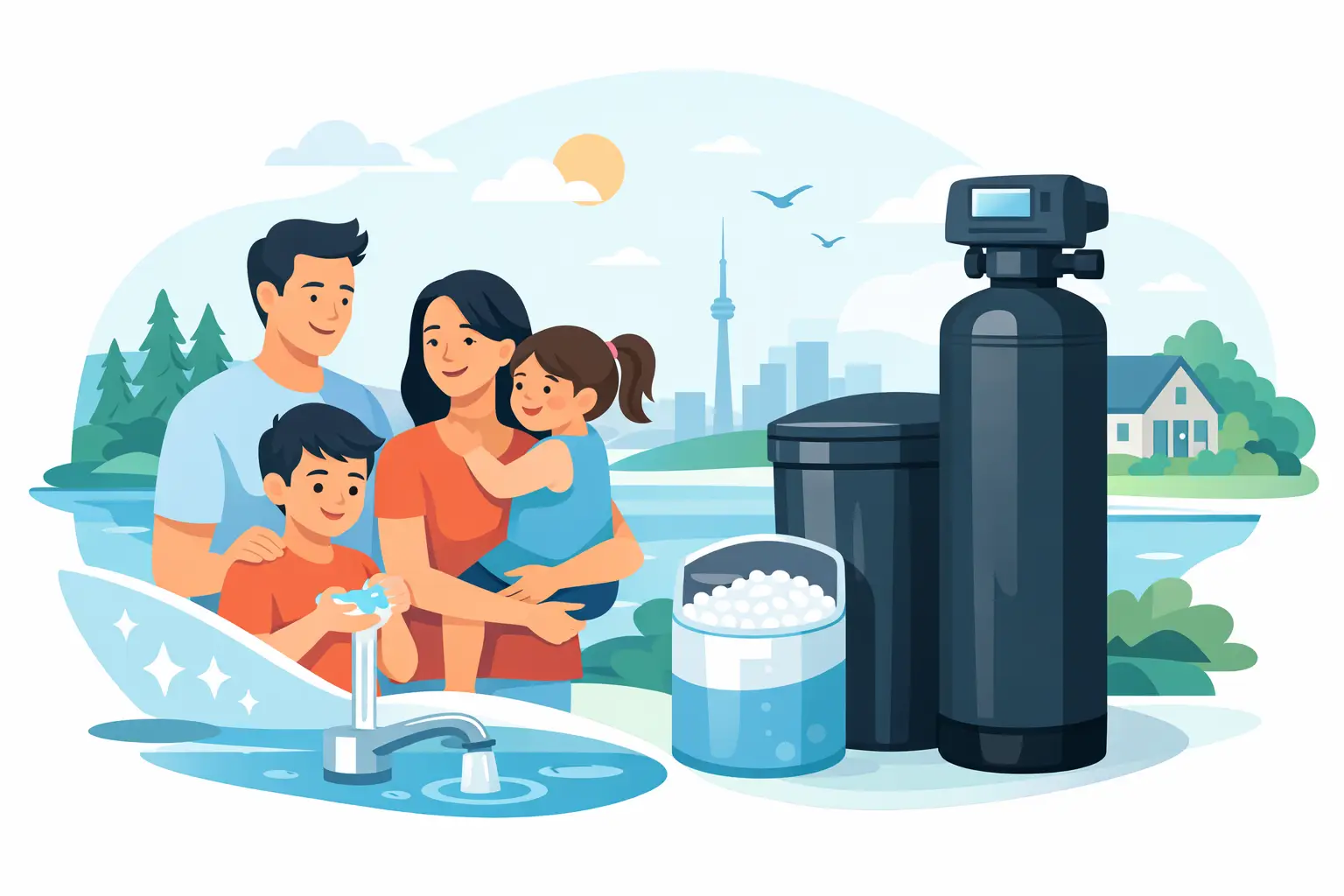
A water softener exchanges hardness minerals for sodium or potassium ions, preventing scale from forming in the plumbing system. This makes it one of the most effective upgrades for homes with hard water. It also improves soap performance, so many households use less detergent, shampoo, and cleaning product.

There are trade-offs to consider. Conventional softeners require salt and periodic maintenance, while potassium can be a higher-cost alternative. Softened water is also not a substitute for a drinking-water filtration system when the concern is lead, bacteria, chemical contaminants, or taste at a specific tap.

Address lead at the point of use

Lead concerns are often linked to older service lines, solder, or plumbing components rather than the municipal treatment plant itself. Since lead cannot be seen, smelled, or tasted, testing is the sensible first step in a home with older plumbing or a known local concern.

For drinking and cooking water, a properly selected point-of-use lead removal system can be highly effective. Reverse osmosis systems are commonly used beneath the kitchen sink because they can reduce lead along with a wide range of dissolved contaminants. A dedicated lead-reduction filter may also be suitable, depending on the water test and the level of treatment required.

Use only treated cold water for drinking and cooking. Hot water can dissolve metals from plumbing more readily, and passing hot water through a drinking-water filter can damage some cartridges or systems. If lead is a concern, do not rely on boiling water – boiling does not remove lead.

Use reverse osmosis for high-quality drinking water

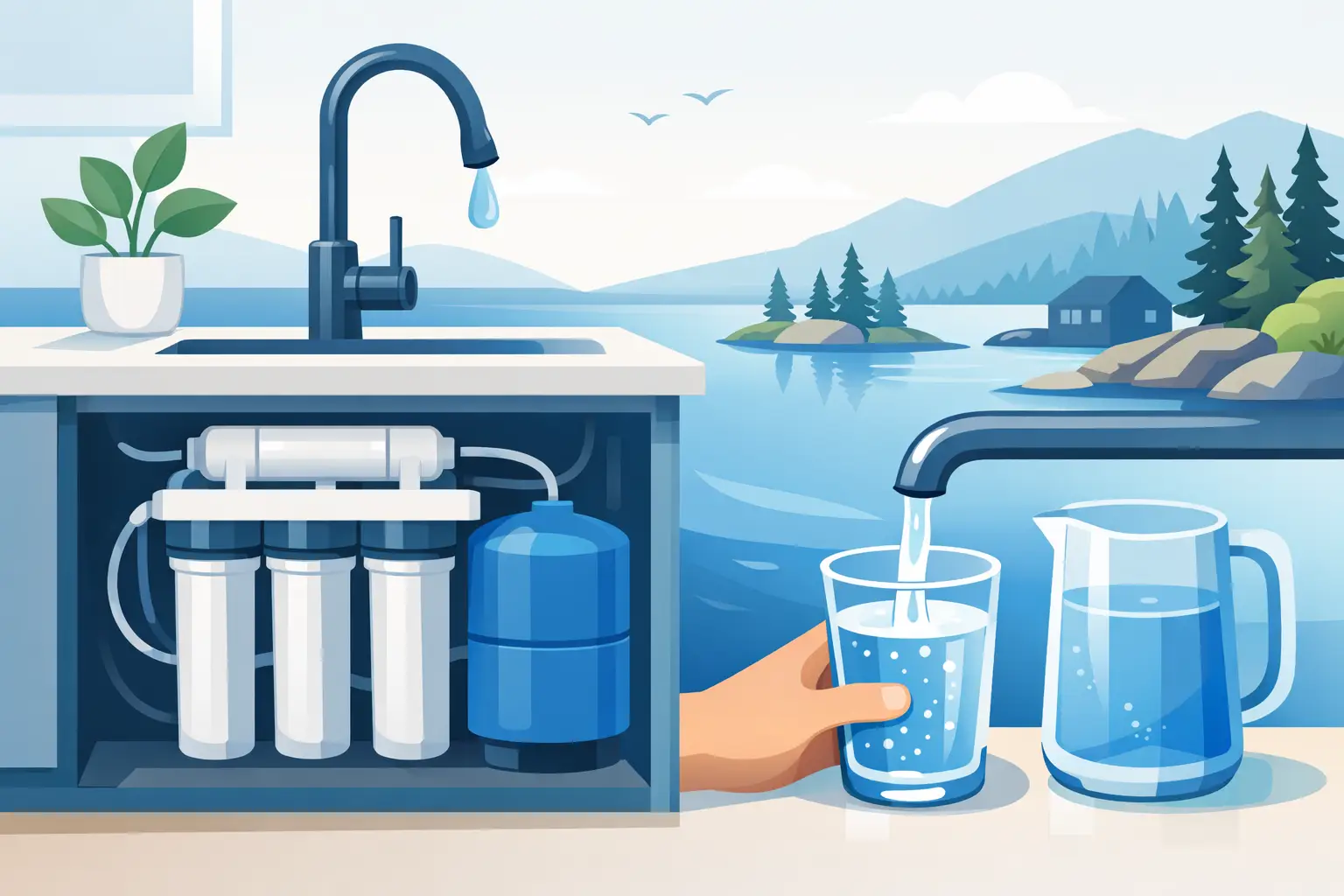
A reverse osmosis system provides focused treatment at the kitchen tap. It is a strong option for homeowners who want cleaner-tasting water for drinking, coffee, tea, cooking, ice makers, and baby formula preparation. Depending on the system design and feed water, reverse osmosis can reduce many dissolved substances, including lead, sodium, certain minerals, and other contaminants.

Reverse osmosis is not normally intended to replace whole-home treatment. It produces purified water at a dedicated faucet and requires filter and membrane changes on schedule. It also produces some wastewater during the purification process, although efficient modern systems can reduce this amount. For households dealing with hardness, iron, or odours throughout the building, reverse osmosis works best as part of a broader treatment plan.

Treat iron, sulphur, and manganese before they damage the home

Well water often presents challenges that municipal-water households never see. Iron can stain sinks, toilets, and laundry. Manganese can create dark staining and affect taste. Sulphur can produce the familiar rotten-egg odour that makes showers and drinking water unpleasant.

These issues usually need a whole-home solution, such as oxidation, specialized filtration media, air injection, or a combination of treatment stages. The right method depends on concentration levels, pH, flow requirements, and whether bacteria are contributing to the problem. Installing a standard cartridge filter without testing can create frequent clogging and disappointing results.

Add ultraviolet treatment when bacteria is the concern

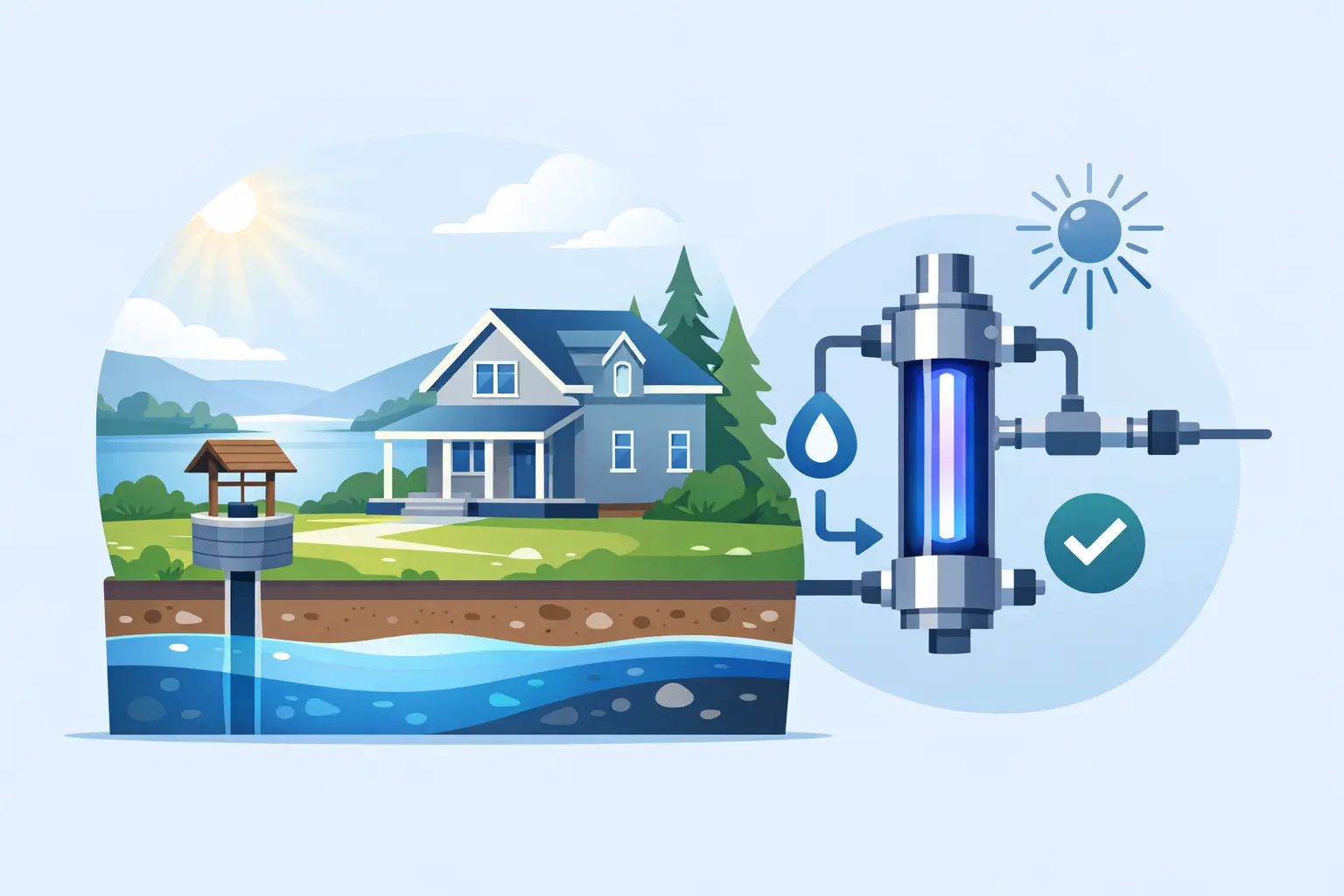
Ultraviolet, or UV, treatment disinfects water by exposing it to ultraviolet light that inactivates bacteria and other microorganisms. It is particularly valuable for private wells, lake-water systems, rural properties, and buildings where microbiological safety needs to be controlled on an ongoing basis.

UV does not remove sediment, hardness, iron, chemicals, or bad taste. Water also needs to be clear enough for UV light to work properly, which is why sediment filtration and iron removal may need to come first. The lamp and sleeve require regular service, and the unit should be sized for the property’s peak water demand rather than average daily use.

How to Improve Tap Water Throughout the Whole Home

The most dependable systems are often staged in the order the water needs to be treated. For example, a well-water home may use sediment filtration first, followed by iron and sulphur removal, a water softener, and UV disinfection. A municipal-water home may benefit from a whole-home carbon filter and softener, with reverse osmosis at the kitchen sink for drinking water.

This approach protects each component and avoids asking one system to do work it was not designed to do. It also provides better results at every fixture, not only at one countertop pitcher or faucet. Shower water smells better, laundry is easier on fabrics, fixtures stay cleaner, and water-using appliances face less scale and sediment exposure.

For condominiums and smaller homes, space and plumbing access may influence the design. Larger homes, multi-unit properties, hotels, schools, and healthcare facilities need treatment equipment engineered for higher flow rates and peak demand. A commercial system that is too small can create pressure loss, inadequate treatment, and expensive service interruptions.

Do Not Overlook Installation and Maintenance

Even high-quality equipment will underperform if it is installed incorrectly or neglected. Treatment systems should be matched to the incoming water pressure, plumbing layout, drain access, electrical needs, and local code requirements. Bypass valves, shutoffs, pre-filtration, and drainage are not minor details – they affect serviceability and long-term reliability.

Maintenance requirements vary by system. Sediment and carbon filters need replacement. Water softeners need salt and periodic inspection. Reverse osmosis systems need cartridge and membrane service. UV systems need annual lamp replacement and sleeve cleaning. Ignoring maintenance can reduce performance and, in some cases, allow water quality problems to return unnoticed.

Canadian Smart Home Solutions helps Ontario homeowners and property managers assess water conditions, select appropriate treatment equipment, and install systems built for dependable daily use. The right recommendation should be based on your water, not on a generic product package.

Better tap water is not just about making a glass of water taste cleaner. When treatment is matched to the actual issue, it can also protect plumbing, reduce cleaning time, extend appliance life, and give your family greater confidence every time they turn on the tap.


Why Does Tap Water Taste Bad in Ontario Homes?

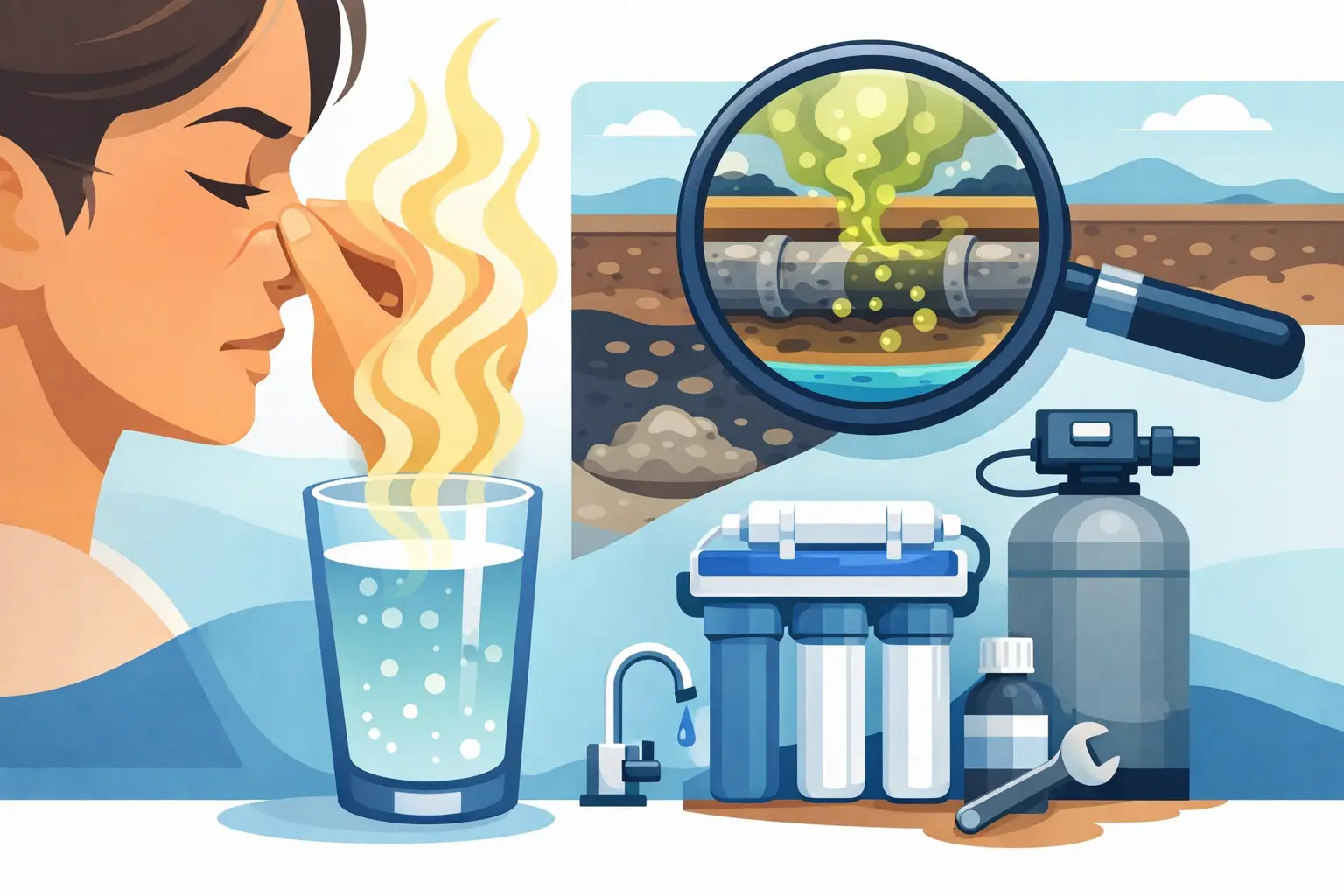
A glass of water should taste clean and neutral. When it tastes like a swimming pool, rotten eggs, metal, earth, or even salt, most homeowners rightly want to know what has changed. Why does tap water taste bad? The answer can be as simple as municipal disinfectant or as specific as aging plumbing, hard water minerals, or a well-water contamination concern.

An unpleasant taste does not automatically mean your water is unsafe. Ontario municipal water is regularly treated and monitored. However, taste and odour changes can signal a water-quality issue worth investigating, particularly in homes with private wells, older plumbing, or a recent change in water supply. The right treatment depends on the source of the problem, not just the taste itself.

Why Does Tap Water Taste Bad? Start With the Taste

The character of the taste often provides a useful clue. It is not a substitute for professional water testing, but it can help narrow down the likely cause.

Chlorine or swimming-pool taste

Many Ontario municipalities use chlorine or chloramine to disinfect drinking water. These disinfectants protect the public water supply from harmful microorganisms, but some people are sensitive to their smell and taste. A stronger chlorine taste may be more noticeable after municipal maintenance, seasonal changes, or periods when water has been sitting in household plumbing.

A carbon filtration system can significantly reduce chlorine taste and odour. For homeowners who want improved water from every tap, a whole-home carbon filter is often the practical choice. For drinking and cooking water only, a properly selected under-sink system may be enough.

Metallic, bitter, or coin-like taste

A metallic taste can come from iron, manganese, copper, or corrosion inside plumbing. Iron and manganese are common in well water and can also cause orange, brown, or black staining on fixtures, laundry, and appliances. Copper can be associated with plumbing corrosion, particularly when water is acidic or has been sitting in pipes for several hours.

Run the cold tap for a minute and see whether the taste improves. If it does, the issue may be related to stagnant water in the plumbing rather than the incoming supply. If the taste persists throughout the home, water analysis is the sensible next step. Treatment may involve pH correction, iron and manganese removal, a sediment filter, or a specialized media system.

Rotten egg or sulphur smell and taste

Water that tastes or smells like rotten eggs is usually associated with hydrogen sulphide gas. This is especially common in private well water, where naturally occurring sulphur compounds can develop underground. In some cases, the odour comes from bacteria in a water heater rather than the cold-water supply.

If the odour appears only when using hot water, have the water heater inspected before investing in a whole-home treatment system. If both hot and cold water smell sulphurous, testing can identify whether hydrogen sulphide, sulphate-reducing bacteria, iron bacteria, or another issue is involved. Depending on the results, an oxidation, filtration, or disinfection system may be recommended.

Earthy, musty, or pond-like flavour

An earthy taste can occur when organic material, algae-related compounds, or naturally occurring microorganisms affect the water source. It may be more noticeable in lake-fed systems, private wells, or municipal supplies during warmer weather.

Carbon filtration is often effective for taste and odour compounds, but the cause still matters. Lake water and well water systems may require sediment removal, ultraviolet sterilization, or additional treatment before carbon filtration. A filter that improves the flavour without addressing microbial risk is not a complete solution.

Salty, mineral, or soda-like taste

Hard water contains dissolved calcium and magnesium. While these minerals are not usually harmful, they can affect taste and create a much larger household problem: scale buildup. White deposits on faucets, dry skin after bathing, cloudy glassware, reduced water-heater efficiency, and premature appliance wear are all common signs.

A water softener removes hardness minerals and protects plumbing fixtures, water heaters, dishwashers, and boilers. It may improve the overall feel and taste of water, but it is not designed to remove chlorine, lead, bacteria, or every dissolved contaminant. Many homes benefit from a combination of treatment systems rather than one unit expected to solve every concern.

Your Plumbing May Be Affecting the Water

Sometimes the municipal or well water entering the property is not the main issue. Water can pick up taste after it enters the building.

Older pipes, corroded fittings, rubber components, and underused plumbing lines can all affect flavour. This is common in older homes, rental properties, seasonal cottages, schools, and commercial buildings where some fixtures sit unused. Water that has been standing overnight often tastes different from water drawn after a short flush.

If only one faucet has an unpleasant taste, remove and clean the aerator first. Sediment and organic buildup can collect there. If the issue is limited to hot water, inspect the water heater. If it affects every fixture, the incoming water and whole-home plumbing should be assessed.

Lead deserves particular attention in older Ontario properties. Lead does not always create a noticeable taste, colour, or smell. Do not rely on your senses to decide whether lead is present. Proper testing is the only way to confirm it, and a certified lead-reduction solution should be selected based on the results and the property’s plumbing conditions.

When Bad-Tasting Water Needs Prompt Attention

A temporary chlorine taste after utility work is usually different from a sudden, significant change in a private water supply. Contact a qualified water treatment professional and consider testing promptly if you notice persistent rotten-egg odour, black or orange staining, cloudiness, unusual sediment, a major change after flooding, or recurring gastrointestinal concerns in the household.

Private well owners should test their water regularly, even when it tastes fine. Bacteria, nitrates, lead, and other contaminants cannot always be detected by taste or smell. The same principle applies to commercial and institutional facilities, where water quality affects guests, residents, staff, equipment, and regulatory responsibilities.

Choose Treatment Based on Evidence, Not Guesswork

It is tempting to buy the first countertop filter or pitcher that promises better-tasting water. These products can help with minor taste concerns, but they have limits. A small carbon filter may reduce chlorine at one tap, for example, while doing nothing for hard-water scale in showers, iron staining in toilets, or bacterial concerns in well water.

A water test identifies the actual issue and helps prevent mismatched equipment. The treatment plan may include one system or several working together:

  • Whole-home sediment and carbon filtration for chlorine, particles, and household-wide taste and odour improvement.
  • Water softening for hardness, scale control, and appliance protection.
  • Reverse osmosis for high-quality drinking and cooking water, with reduction of many dissolved substances.
  • Iron and sulphur removal for staining, metallic flavours, and rotten-egg odours.
  • Ultraviolet sterilization for properly pretreated well or lake water where microbial control is needed.
  • Lead-reduction filtration selected for the property’s water chemistry and point-of-use needs.

The best setup depends on whether the property uses municipal water, a well, or lake water; the number of occupants; daily water demand; plumbing layout; and the test results. A large household, hotel, school, or healthcare facility also needs properly sized equipment that can maintain performance at higher flow rates.

A Better Glass of Water Starts at the Source

Bad-tasting tap water is frustrating, but it is also a useful reason to look more closely at what is flowing through your home or building. Begin with where and when the taste appears, then confirm the cause through appropriate testing. From there, a properly designed treatment system can improve drinking water, protect fixtures and appliances, and give you confidence every time you turn on the tap.

Canadian Smart Home Solutions helps Ontario homeowners and property managers identify water-quality concerns and install treatment systems designed for real conditions, from simple chlorine reduction to complete well-water and whole-home solutions.

A Practical Guide to Safer Drinking Water

A glass of water can look clear, smell normal, and still leave important questions unanswered. Ontario homeowners often notice the signs only after the fact: white scale around faucets, orange stains in sinks, a sulphur smell from a well, or concern about older plumbing and lead. This guide to safer drinking water explains how to identify the issue, understand what treatment can and cannot do, and choose a solution that protects both your family and your home.

Start With Your Water Source and Your Building

The right treatment begins with where your water comes from. Municipal water is treated before it reaches the home, but it can still pick up minerals, chlorine taste, or contaminants from plumbing along the way. Private wells and lake water systems require a different level of attention because water quality can change with rainfall, seasonal runoff, nearby construction, flooding, and groundwater conditions.

Your building matters too. An older Ontario home may have lead service lines, lead solder, or fixtures that contribute lead at the tap. A newer home may have municipal water that is safe to drink but hard enough to create scale in water heaters, dishwashers, shower doors, and plumbing fixtures. Commercial properties have their own demands, particularly where high water use, multiple washrooms, kitchens, laundry equipment, or vulnerable occupants are involved.

Do not choose a system based only on a neighbour’s experience or a single visible symptom. Two homes on the same road can have different water chemistry, plumbing materials, flow requirements, and treatment needs.

Test Before You Treat

Water testing is the most practical first step. It replaces guesswork with results and helps avoid buying equipment that addresses the wrong problem. A proper analysis can identify hardness, iron, manganese, sulphur, pH, total dissolved solids, bacteria, nitrate, lead, and other concerns relevant to the property and water source.

For municipal water, testing is especially useful when there is a persistent taste or odour concern, an older service line, recent plumbing work, or a household with infants, pregnant people, or anyone concerned about lead exposure. For private wells, regular testing should be part of routine property maintenance, not something done only after water begins to smell or stain.

If a well has been flooded, damaged, unused for a period, or affected by changes in nearby land use, test it promptly. Bacterial contamination cannot be diagnosed by sight, taste, or smell. Likewise, the absence of staining does not prove that water is free from dissolved contaminants.

A water treatment professional should interpret the results in context. For example, a system selected for iron removal may need to account for pH and hardness. A reverse osmosis unit may improve drinking water quality at one tap, but it will not prevent scale buildup throughout the home. Good recommendations match the test results, water usage, plumbing layout, and desired outcome.

Match the Treatment to the Problem

Different water issues require different solutions. One filter is not a universal answer, and a system that improves taste may not address bacteria, lead, or hard water.

Hard Water and Scale

Hard water contains dissolved calcium and magnesium. It is common in many Ontario communities and can leave white deposits on fixtures, make soap harder to rinse, reduce appliance efficiency, and shorten the life of water-using equipment. A properly sized water softener treats hardness throughout the home, protecting plumbing, hot water tanks, dishwashers, laundry equipment, and fixtures.

A softener is primarily an appliance-protection and comfort solution. It is not designed to remove every possible drinking-water contaminant. Many households pair whole-home softening with point-of-use drinking water filtration for a more complete approach.

Chlorine Taste, Sediment, and Everyday Drinking Water

Carbon filtration can reduce chlorine taste and odour, as well as certain sediment and organic compounds, depending on the filter media and design. It is a common choice for municipal water where the main concern is better taste, clearer ice, and improved water for coffee, cooking, and drinking.

Filter cartridges require regular replacement. Leaving an expired filter in service can reduce performance and, in some cases, create sanitation concerns. Maintenance is part of the system, not an optional extra.

Lead Concerns

Lead requires a targeted approach. If testing or plumbing history indicates a possible lead issue, use treatment equipment certified for lead reduction and ensure it is installed and maintained correctly. A point-of-use reverse osmosis system or a properly selected lead-reduction filter may be appropriate, depending on the water chemistry and the location of the concern.

It also helps to use cold water for drinking and cooking, since hot water can dissolve metals more readily from plumbing. If water has been sitting in pipes for several hours, let it run until it becomes cold before filling a glass or cooking pot. These steps are sensible precautions, but they do not replace testing or a permanent plumbing and treatment plan where lead is confirmed.

Well Water, Iron, Sulphur, and Bacteria

Well water can carry iron, manganese, hardness, sulphur odour, sediment, bacteria, and other naturally occurring or surface-related contaminants. Orange staining usually points to iron, while a rotten-egg smell often suggests hydrogen sulphide. Both can be frustrating, but they are treatable when the system is designed around test results.

Iron and sulphur removal equipment can improve odour, staining, and fixture cleanliness. Ultraviolet sterilizers can provide a chemical-free barrier against microbiological contamination when the water has been pretreated properly. UV systems need clean water, correct flow rates, working lamps, and routine service to perform as intended. They should not be installed as a substitute for understanding the underlying water quality.

Whole-Home Treatment Versus Point-of-Use Systems

A useful guide to safer drinking water should distinguish between treating water everywhere and treating water where it is consumed. Whole-home systems are installed near the point where water enters the property. They are the better choice for concerns that affect plumbing, appliances, showers, laundry, or all taps, such as hardness, sediment, iron, sulphur, and certain well-water issues.

Point-of-use systems, usually installed at the kitchen sink, focus on water for drinking and cooking. Reverse osmosis is a common example. It uses a membrane process to reduce a broad range of dissolved substances and can provide excellent-quality drinking water when maintained properly. It also produces a slower flow than a standard faucet and may generate some wastewater during operation, so it is best suited to drinking-water needs rather than whole-home volume.

Many Ontario households benefit from combining the two approaches: whole-home treatment to protect the property and a reverse osmosis or specialized drinking-water system at the kitchen sink. The right combination depends on test results, household size, budget, and whether the concern is health-related, aesthetic, or equipment-related.

Do Not Overlook Installation and Maintenance

Water treatment equipment performs best when it is correctly sized, professionally installed, and maintained on schedule. An undersized system may struggle during peak household demand. An oversized or poorly configured system can waste water, salt, or energy. Incorrect installation can also create leaks, bypass untreated water, or compromise performance.

For commercial and institutional facilities, system design is even more critical. Hotels, schools, healthcare settings, restaurants, and multi-unit properties may require higher flow rates, multiple treatment stages, monitoring, and service planning that supports continuous operation. Treatment should be engineered around actual demand, not selected from a standard residential package.

Homeowners should also know what ongoing care their equipment requires. This may include replacing cartridges, adding softener salt, servicing UV lamps, sanitizing storage tanks, checking pressure, or arranging periodic water retesting. A dependable provider explains these requirements before installation, not after.

Canadian Smart Home Solutions helps Ontario property owners move from water concerns to practical treatment plans through testing, system selection, installation, and ongoing support. The objective is not to sell the most equipment. It is to solve the specific issue with a system that delivers reliable performance.

Water quality is not something to leave to assumptions. Test the water, consider the entire property, and choose treatment that addresses the actual source of the problem. A well-designed system can make every glass, shower, load of laundry, and appliance cycle feel like a better long-term investment in the place you call home.

Best Water Softener for Families in Ontario

A family of five can expose a water softener’s limits quickly: morning showers, dishwasher cycles, laundry, and a busy kitchen faucet can all run within a few hours. The best water softener for families is not simply the largest unit available. It is the system sized to your actual water hardness, peak demand, plumbing flow rate, and household routine – then installed correctly to protect fixtures, appliances, and water-using equipment.

For Ontario homeowners, this decision often starts after familiar signs of hard water become difficult to ignore. White scale builds around faucets and showerheads. Glassware comes out cloudy. Soap does not lather as expected. Skin and hair may feel dry after bathing, while water heaters, dishwashers, humidifiers, and washing machines work harder than they should.

What Makes the Best Water Softener for Families?

A properly selected water softener removes hardness minerals, mainly calcium and magnesium, through ion exchange. Hard water enters a mineral tank filled with resin beads. The resin captures hardness minerals and exchanges them for sodium or potassium ions. At intervals, the system regenerates using salt or potassium chloride, flushing the captured minerals to a drain and restoring the resin.

For a family home, the quality of that process depends on capacity and control. A system that is too small will regenerate too frequently, use more salt and water than necessary, and may allow hard water through during high-demand periods. An oversized system can cost more up front and may not operate as efficiently as a correctly sized model.

The strongest choices for family use generally include a high-efficiency resin tank, a demand-initiated control valve, adequate flow capacity, and a reliable bypass valve. Demand-initiated regeneration matters because it tracks water use and regenerates based on actual demand instead of a fixed calendar schedule. That helps reduce unnecessary salt consumption while maintaining consistently soft water.

A family-sized softener should also be practical to service. Salt loading, maintenance access, drainage, and placement all affect the ownership experience. A dependable unit installed in the wrong location, or connected to inadequate plumbing, will not deliver its full benefit.

Start With Water Testing, Not Tank Size

Water hardness in Ontario can vary substantially between municipalities, rural properties, and private wells. Municipal water may be treated and safe to drink but still contain enough hardness minerals to cause scale. Well water can bring additional concerns, including iron, manganese, sulphur odours, sediment, tannins, or bacteria.

That is why hardness testing should come before choosing a softener. Results should identify hardness in grains per gallon or milligrams per litre, while a fuller water analysis can reveal other conditions that influence treatment design. Iron, for example, can foul softener resin over time. High iron or sulphur levels may require dedicated pre-treatment rather than relying on a standard softener alone.

Water testing also helps separate hardness problems from drinking water quality concerns. A water softener is designed to control mineral hardness. It is not a complete answer for lead, chlorine taste, microbiological contamination, or every dissolved contaminant. Families concerned about drinking water often benefit from pairing whole-home softening with targeted filtration or a reverse osmosis drinking water system at the kitchen sink.

Size the System Around People and Water Use

The number of people in the home is a useful starting point, but it is not the whole calculation. A family with two teenagers, frequent laundry loads, a large soaking tub, and multiple bathrooms will use water differently than a household of the same size with lower daily demand.

A treatment professional will typically consider household occupancy, water hardness, average daily use, fixture count, plumbing size, and peak flow requirements. Peak flow is especially relevant in larger homes. If two showers, a dishwasher, and a washing machine run at once, the softener must deliver sufficient flow without a noticeable pressure drop.

For many families of three to five people, a softener with a resin capacity commonly in the 30,000 to 48,000 grain range may be appropriate. Larger households or homes with very hard water may need 60,000 grains or more. These figures are planning ranges, not a substitute for testing and proper sizing. A 48,000-grain system is not automatically better than a 32,000-grain model if the smaller system is better matched to the home’s actual needs.

The resin volume and control valve quality are often more meaningful than the number printed on a sales label. Some units are advertised using maximum grain ratings that require inefficient salt doses to achieve. Ask about the system’s working capacity and salt efficiency at normal operating settings, not only its highest possible capacity.

Salt-Based, Salt-Free, or Potassium: Know the Trade-Offs

Traditional salt-based ion-exchange softeners remain the most reliable choice when a family needs genuine hardness removal. They reduce the minerals responsible for scale, improve soap performance, and help protect water heaters and appliances. For homes with hard or very hard water, this is usually the most effective long-term solution.

Salt-free systems are often described as conditioners. They may alter how minerals behave and can help reduce some scale formation under suitable conditions, but they do not remove calcium and magnesium from the water in the same way. They are not a like-for-like replacement where clear soft-water performance is the goal. They can be useful where salt discharge restrictions, maintenance preferences, or moderately hard water make conditioning a reasonable compromise.

Potassium chloride can be used instead of sodium chloride in many conventional softeners. It is often considered by households trying to reduce sodium added through the softening process, although it generally costs more than standard softener salt. Families managing sodium intake should discuss their specific water conditions with a healthcare professional and a water treatment specialist. For drinking and cooking water, a separate reverse osmosis system can reduce dissolved minerals and provide another layer of treatment.

Look Beyond the Softener Tank

The best water softener for families often forms part of a complete water treatment plan. Sediment filtration may be needed to protect equipment from sand, silt, or debris. Carbon filtration can improve chlorine taste and odour in municipal water. Well water may require iron removal, sulphur treatment, ultraviolet disinfection, or specialized media before the water reaches the softener.

This sequence matters. Installing a softener ahead of an untreated iron problem can shorten resin life and increase maintenance. On the other hand, installing filtration without addressing severe hardness may leave the home dealing with scale and reduced appliance efficiency.

Consider which water lines should receive softened water. Most homes benefit from softened hot and cold water to bathrooms, laundry, and appliances. An outdoor tap is often left untreated because softened water is unnecessary for gardening and can increase salt use. Whether the kitchen cold-water line is softened depends on the household’s preferences and the presence of a dedicated drinking water system.

Installation Details That Protect Performance

A water softener needs more than a nearby outlet. Proper installation requires an appropriate drain connection, a safe air gap where required, a bypass arrangement, accessible shutoff valves, and enough space for salt storage and service. The system must be sized for the home’s plumbing and installed in a location protected from freezing.

For homes on private wells, the installation should account for pump flow, pressure tank performance, and changing water conditions. For municipal homes, the installer should verify incoming pressure, plumbing layout, and whether other equipment is already in place. A pressure issue or restrictive plumbing line can affect performance even when the softener itself is correctly selected.

Canadian Smart Home Solutions approaches this as a whole-home water treatment decision, using water analysis and installation expertise to match the equipment to the property rather than forcing every home into one standard configuration.

Questions to Ask Before You Buy

Before selecting a system, ask how it is sized for your household, how often it is expected to regenerate, and how much salt and water it uses per regeneration. Confirm its service flow rate, resin type, warranty coverage, and whether the control valve is designed for demand-initiated operation.

Also ask what happens if the water test shows iron, sulphur, sediment, lead, or bacterial concerns. A clear answer should explain whether additional treatment is needed and why. The right recommendation should address the cause of the problem, not just the most visible symptom.

Do not overlook ongoing support. Families depend on water treatment equipment every day, and occasional maintenance is normal. Knowing who can inspect the system, replace filters, troubleshoot a valve, or retest changing well water provides real peace of mind.

A good softener should fade into the background of family life. You notice it in cleaner dishes, softer laundry, less scale around fixtures, and appliances that are better protected from hard-water buildup. Start with a water test, size the system for the way your household actually uses water, and choose installation support that will still be there after the equipment is in place.

Well Water UV System Review for Ontario Homes

A well water UV system review should start with one practical question: is the system being asked to disinfect clear, properly treated water, or to compensate for water quality problems that have not been addressed? Ultraviolet treatment can be an excellent safeguard for private wells, but its performance depends on water clarity, correct sizing, installation quality, and ongoing maintenance.

For Ontario homeowners, UV disinfection is often part of a complete well water treatment plan. It is not a filter for sediment, iron, sulphur odour, hardness, or chemicals. Its job is to inactivate microorganisms as water passes through the treatment chamber. When the water has been properly pretreated and the equipment is matched to household demand, a UV system provides dependable, chemical-free protection at every tap.

What a UV System Does for Well Water

A UV sterilizer exposes flowing water to a controlled dose of ultraviolet light. That light damages the genetic material of bacteria, viruses, and other microorganisms, preventing them from reproducing. Unlike chlorination, it does not change the taste or smell of the water, add chemicals, or leave a disinfecting residual in your plumbing.

This makes UV especially attractive for families using private wells, cottages with year-round water systems, and rural properties where bacterial quality may change after heavy rain, flooding, repairs to the well cap, or seasonal groundwater movement. It can also be appropriate for commercial properties supplied by a private water source, provided the system is engineered for the required flow rate and monitored appropriately.

The limitation matters just as much as the benefit. UV only treats water that passes through the chamber. It does not remove dead microorganisms, prevent recontamination after treatment, repair a damaged well, or solve a persistent source of contamination. If a water test shows ongoing bacterial concerns, the well itself, pressure tank, plumbing, and surrounding drainage may also need attention.

Well Water UV System Review: The Factors That Matter Most

The best UV unit is not simply the one with the highest stated flow rate or the lowest purchase price. For well water, the most important factor is whether the system can consistently deliver the required UV dose under real household conditions.

Correct flow rate and sizing

A UV system must be sized for peak demand, not average daily water use. A small home with one bathroom has very different requirements from a home with multiple bathrooms, a large soaker tub, irrigation, frequent laundry, and a growing family. If water moves through the chamber too quickly, the UV exposure time may be insufficient.

Professional sizing considers the service flow rate, pressure tank cycle, plumbing layout, and the other treatment equipment ahead of the UV system. For commercial applications, this becomes even more critical. Hotels, schools, healthcare facilities, and high-use buildings need systems engineered for their actual peak flow, not a residential unit stretched beyond its intended capacity.

Water quality before the UV chamber

This is the point most often missed in a basic UV review. Cloudy water, sediment, iron, manganese, tannins, and hardness can interfere with UV performance. Particles may shield microorganisms from the light, while mineral scale can coat the quartz sleeve around the lamp.

A sediment filter is commonly installed ahead of UV, but it may not be enough on its own. Water with iron staining, black manganese deposits, sulphur odour, or significant hardness often needs additional treatment first. Depending on the water analysis, that may mean an iron and sulphur removal system, a water softener, specialized filtration, or a combination of treatment stages.

Clear-looking water is not always UV-ready water. A proper water test helps identify the conditions that can reduce light transmission and shorten maintenance intervals. It also prevents spending money on a UV unit when the primary issue is chemical, mineral, or aesthetic rather than microbiological.

Monitoring and safety features

A basic UV unit may simply turn on when it has power. A better system gives the homeowner meaningful warning when the lamp reaches the end of its service life, when the unit loses power, or when UV output falls below the intended level.

Lamp-life reminders are useful, but intensity monitoring provides a stronger level of confidence because it measures actual UV performance rather than assuming a new lamp is working perfectly. Some systems can also include audible alarms, visual indicators, or a shut-off feature that stops untreated water from flowing if the system is not operating correctly.

The right level of monitoring depends on the property. For a seasonal cottage, a basic unit with disciplined maintenance may be appropriate. For a family home with a vulnerable occupant, rental property, or commercial facility, more active monitoring and fail-safe protection are often worth the additional investment.

Installation location and plumbing details

UV equipment is generally installed after other whole-home treatment equipment, close to where treated water enters the home distribution system. This placement protects the lamp and sleeve from sediment and minerals while ensuring water delivered to fixtures has passed through disinfection.

The installation must also allow enough room to service the lamp and sleeve. A UV lamp is longer than the treatment chamber, so tight mechanical rooms can create avoidable maintenance problems. A bypass arrangement, shut-off valves, electrical access, and proper orientation all make future service safer and more straightforward.

Expert installation matters because a UV system is only one part of the water treatment system. Pressure loss, improperly selected filters, undersized plumbing, and poor equipment sequence can affect performance throughout the home.

Ongoing Costs and Maintenance Expectations

UV systems are relatively low-maintenance, but they are not maintenance-free. Most lamps require replacement on a regular schedule, commonly once per year, even if the lamp still appears to be lit. UV output declines over time, and visible light is not a reliable measure of disinfection strength.

The quartz sleeve also needs inspection and cleaning. In hard water areas, scale can build up on the sleeve and block UV light. Where iron or manganese is present, staining can occur even faster. Effective pretreatment reduces this workload and helps protect the system’s performance.

Budget for replacement lamps, sleeve cleaning, sediment filter changes, and periodic water testing. These are predictable ownership costs, and they are far less disruptive when planned in advance than when a system alarm sounds during a busy weekend or cold-weather service call.

When UV Is the Right Choice and When It Is Not Enough

UV is a strong choice when microbiological protection is the concern and the water can be made clear enough for effective treatment. It is particularly valuable after well repairs, after a positive bacterial test, or as a permanent final barrier in a properly designed well water system.

It is not a substitute for source correction. If surface water is entering the well, the well cap is damaged, the casing is compromised, or nearby drainage is directing runoff toward the well, those issues should be corrected. Similarly, UV will not remove lead, nitrate, salt, pesticides, fuel-related contaminants, or dissolved minerals. Those require treatment selected specifically for the water test results.

For many Ontario homes, the best solution is a treatment train rather than a single device: sediment reduction first, removal of iron, sulphur, manganese, or hardness as needed, then UV disinfection as the final stage. This approach protects the equipment, improves water appearance and taste, and delivers the conditions UV needs to work properly.

A Practical Buying Decision

Before choosing a UV system, arrange a current well water analysis and discuss how much water the property uses at peak demand. Ask whether the proposed unit is sized for that flow rate, what pretreatment is required, how the system alerts you to a problem, and what annual service involves.

Canadian Smart Home Solutions can assess the complete water picture rather than treating UV as a stand-alone answer. That means matching the system to the well water, the plumbing, and the needs of the people relying on it every day.

The most reassuring UV installation is one you rarely have to think about because it was correctly sized, properly protected from sediment and mineral buildup, and maintained on schedule. Start with the water test, then build the treatment system around what your well actually needs.

Best Under Sink Water Purifiers for Ontario Homes

A glass of water can look perfectly clear and still carry concerns that matter to Ontario households: chlorine taste, lead from older plumbing, dissolved minerals, bacteria in private wells, or sediment released from aging pipes. The best under sink water purifiers address the contaminants actually present in your water, rather than relying on a one-size-fits-all filter.

An under-sink system treats water at the point where you drink and cook. It is usually installed inside the kitchen cabinet and supplies a dedicated drinking-water faucet, although some systems can connect to a compatible main faucet. For families who want better-tasting water without carrying bottled water home each week, it is a practical, space-saving solution. The right choice depends on your water source, plumbing, household needs, and test results.

What makes an under-sink purifier the right choice?

Under-sink filtration is designed for drinking water, food preparation, coffee, tea, and pet water. It does not replace a whole-home system when the problem affects every fixture in the house. If hard water is leaving scale on faucets, iron is staining toilets, or sulphur odours are noticeable in showers, treatment should begin at the main water supply.

That distinction saves money and frustration. A reverse osmosis system can produce excellent drinking water at one tap, but it will not protect a water heater, dishwasher, plumbing fixtures, or laundry from hard-water scale. Conversely, a whole-home filter may improve water throughout the house but may not reduce dissolved contaminants to the level a dedicated reverse osmosis system can achieve at the kitchen sink.

For many Ontario homes, the strongest approach is a whole-home treatment system for broad water-quality issues plus an under-sink purifier for refined drinking water. This is particularly common in homes on well water, lake water, or municipal water with a noticeable chlorine taste.

Best under sink water purifiers by water concern

Reverse osmosis for broad dissolved-contaminant reduction

Reverse osmosis, often called RO, is one of the most capable under-sink options. It pushes water through a semi-permeable membrane, reducing many dissolved substances that ordinary carbon filters do not reliably address. Depending on the system and the water chemistry, RO can reduce contaminants such as lead, sodium, fluoride, nitrates, and total dissolved solids, while also improving taste.

This makes RO a strong choice for homeowners concerned about older service lines, municipal water quality, or well-water contaminants identified through testing. A quality system normally uses several stages, including sediment and carbon pre-filtration to protect the membrane, followed by the RO membrane and a final polishing filter.

The trade-off is that RO systems need more cabinet space than a simple filter, require scheduled filter and membrane changes, and produce some reject water during purification. Modern high-efficiency designs can reduce waste compared with older equipment, but efficiency varies by model, incoming pressure, and water temperature. Homes with low water pressure may need a booster pump for reliable performance.

Carbon block filtration for chlorine, taste, and odour

A carbon block filter is often the best fit when the primary issue is chlorine taste, chloramine, unpleasant odour, or minor sediment in municipally supplied water. Carbon adsorption improves the taste of drinking water and can reduce many organic compounds, but performance depends on the specific filter media, contact time, and replacement schedule.

This option is generally less costly and simpler than reverse osmosis. It is well suited to households where water testing does not identify a concern requiring membrane treatment. However, a basic carbon filter should not be assumed to solve lead, nitrate, arsenic, bacteria, or high dissolved solids. The product’s performance claims need to match the problem you are trying to correct.

Lead-certified filtration for older Ontario plumbing

Lead is a concern worth taking seriously in older homes, particularly where lead service lines, brass components, or aging plumbing may be present. Water can pick up lead after it enters the property, which means a municipal treatment plant’s water quality report does not always reflect the water coming from your kitchen faucet.

For this concern, choose an under-sink system specifically certified for lead reduction, and have the water tested where possible. Both specialized carbon filters and reverse osmosis systems may be appropriate, but certification and correct installation matter more than a broad marketing label. Filter cartridges must also be replaced on time. An overdue cartridge can lose effectiveness long before water begins to look or taste different.

UV purification for bacteria and well-water risks

Ultraviolet systems disinfect water by exposing it to UV light. They are valuable when testing identifies bacteria or when a private well or lake-water supply has a microbiological risk. UV does not remove sediment, hardness, iron, chemicals, or dissolved minerals. In fact, cloudy water can reduce UV effectiveness because particles may shield microorganisms from the light.

For that reason, UV is often paired with sediment filtration and, in many well-water applications, broader pre-treatment. A point-of-use UV unit can support a kitchen drinking-water system, but a whole-home UV system is often more appropriate when bacteria could affect showers, bathroom taps, ice makers, and other fixtures.

How to choose between the best under sink water purifiers

Start with the source of your water. Municipal water and private well water present very different treatment needs. Municipal water may have disinfectant taste, sediment, or concerns related to local plumbing. Well water can vary widely from property to property and may contain hardness, iron, manganese, sulphur, bacteria, nitrates, or other naturally occurring substances.

A proper water test gives you a clear starting point. It prevents the common mistake of buying equipment for a problem you do not have while missing the one you do. For example, a carbon filter may make sulphur odour less noticeable at the kitchen tap, but it will not resolve iron staining or protect appliances. An RO system may reduce dissolved solids, yet it is not the first line of defence for heavy sediment or untreated bacterial contamination.

When comparing systems, assess these practical factors:

  • The contaminants the system is certified or designed to reduce, based on your water test.
  • Available cabinet space, drain access, water pressure, and whether a dedicated faucet is acceptable.
  • Filter replacement intervals, membrane life, and the ongoing cost of maintenance.
  • Daily water demand, especially for larger families, frequent cooking, or refrigerator and ice-maker connections.
  • Whether a whole-home filter, softener, iron removal system, or UV treatment is needed before the under-sink unit.

Do not choose by filter stage count alone. More stages do not automatically mean better water. Each stage should have a defined role, such as sediment removal, chlorine reduction, membrane protection, dissolved-contaminant reduction, or final taste polishing.

Installation details that affect performance

Under-sink purifiers are compact, but their installation should not be treated as an afterthought. The system needs a sound cold-water connection, a properly installed drain saddle where required, sufficient clearance for cartridge changes, and a faucet mounted securely through the sink or countertop. Reverse osmosis systems also need the storage tank positioned where it can be serviced.

Poor installation can lead to leaks, low flow, premature filter wear, or a system that is difficult to maintain. This is especially relevant in condominiums, older homes, and properties with limited cabinet space or non-standard plumbing. Professional installation also helps ensure the system is selected and configured for the incoming water conditions rather than simply fitted beneath the sink.

Canadian Smart Home Solutions can assess water quality and recommend an under-sink system that works with, rather than against, your home’s existing treatment equipment. For homes with hardness, staining, odours, or well-water concerns, the recommendation may include a complete treatment plan instead of placing all expectations on a single kitchen filter.

Maintenance is part of clean drinking water

Every purifier has a service schedule. Sediment and carbon filters are commonly replaced more often than RO membranes, while UV lamps require regular replacement even if the light still appears to be working. The exact timing depends on the equipment, water use, sediment load, and the manufacturer’s instructions.

Keep a record of cartridge changes and sanitization service. If flow slows noticeably, taste changes, or the system has been unused for an extended period, arrange maintenance before assuming the unit is still performing as intended. Families using private wells should also retest their water periodically, particularly after flooding, nearby construction, changes in taste or odour, or work on the well or plumbing.

The best result is not simply a filter under the sink. It is a properly sized, professionally installed system maintained on schedule and chosen from real information about your water. That gives your household confidence every time the kitchen tap is turned on.

Top Commercial Water Treatment Solutions

A hotel’s laundry machines scaling up, a school dealing with drinking-water concerns, or a long-term care facility facing sulphur odours all have the same underlying problem: untreated water can affect safety, operating costs, and confidence in the building. The top commercial water treatment solutions are not one-size-fits-all products. They are properly sized systems designed around the facility’s water source, flow demand, occupancy, and specific water-quality results.

For Ontario businesses and institutions, the right treatment system can reduce equipment damage, improve water taste and appearance, support sanitation procedures, and help deliver dependable water at every tap. The starting point is always a professional water analysis. A system built to solve the wrong problem can add expense without producing the result your facility needs.

Start With the Water Problem, Not the Equipment

Commercial water treatment should begin with a clear look at where the water comes from and what it contains. Municipal water may be disinfected, but it can still carry hardness minerals, chlorine taste, lead from plumbing components, or sediment. Private well water can introduce iron, manganese, sulphur, bacteria, tannins, and changing seasonal conditions. Lake water requires a different level of treatment again, particularly where turbidity and microbiological contamination are concerns.

Flow rate matters just as much as water chemistry. A small office may need a modest point-of-use drinking-water system, while a hotel, school, manufacturing operation, or multi-unit property may require high-flow filtration, multiple treatment tanks, storage capacity, and redundant equipment. Commercial systems must maintain performance during peak demand, not only during a quiet afternoon.

A proper assessment considers water test results, plumbing layout, incoming pressure, daily usage, peak flow, drainage capacity, and the equipment that needs protection. Boilers, dishwashers, ice machines, coffee equipment, laundry systems, steam equipment, and commercial water heaters can all be affected by poor water quality.

Top Commercial Water Treatment Solutions for Ontario Facilities

The most effective commercial systems often combine several treatment methods. Each component has a defined job, and together they address the full range of water concerns present at the property.

Commercial Water Softeners

Hard water is one of the most common and costly issues in Ontario. Calcium and magnesium create scale inside pipes, water heaters, boilers, fixtures, dishwashers, and other equipment. The visible signs may be white residue on glassware and fixtures, but the more serious cost is often hidden inside expensive appliances and mechanical systems.

A commercial water softener removes hardness minerals through ion exchange. Properly sized softeners can improve cleaning results, reduce soap consumption, help water-heating equipment operate more efficiently, and extend the service life of plumbing-connected equipment.

For high-demand facilities, a duplex or alternating softener system may be the better choice. One tank can remain in service while the other regenerates, helping maintain a continuous supply of softened water. The trade-off is higher upfront cost and the need for salt storage and drainage, but the operational protection can be substantial for facilities that cannot tolerate untreated water during regeneration.

High-Flow Sediment and Carbon Filtration

Sediment filtration removes particles such as sand, rust, silt, and debris before they reach fixtures and downstream treatment equipment. This is particularly valuable for well water, older plumbing systems, lake-water applications, and properties with visible particulate matter. Removing sediment early protects valves, membranes, ultraviolet lamps, and other sensitive components.

Carbon filtration is commonly used to improve taste and odour by reducing chlorine and certain organic compounds. In municipal-water facilities, carbon can make a noticeable difference to drinking water, coffee, ice, and food preparation. It can also protect reverse osmosis membranes from chlorine exposure.

Filter selection depends on the contaminant and required flow rate. Cartridge filters are useful in some applications but need regular replacement. Backwashing media filters can be a more practical option for larger commercial demands because they are designed for higher volumes and reduced service interruption.

Reverse Osmosis Systems

Commercial reverse osmosis, often called RO, is used when a facility needs highly purified water for drinking, food service, specialty equipment, laboratories, or other applications where dissolved solids are a concern. RO uses a membrane to reduce a broad range of dissolved contaminants, including many salts, minerals, and metals.

This is not usually a whole-building solution. RO systems work best when installed at the point of need, such as a commercial kitchen, bottle-filling station, laboratory, coffee service area, or equipment feed line. They require pre-treatment, regular membrane maintenance, and adequate water pressure. They also produce a concentrate stream, which must be considered when planning water use and drainage.

Where taste, mineral content, or sensitive equipment performance is the priority, RO can be an excellent choice. Where the main issue is hard water or iron staining, a softener or iron-removal system may be more appropriate and more economical.

Ultraviolet Water Disinfection

Ultraviolet, or UV, systems use UV light to deactivate bacteria, viruses, and other microorganisms. They are especially important for private wells, lake-water systems, rural facilities, and any building where microbiological safety needs added protection.

UV does not remove sediment, hardness, iron, sulphur, or dissolved chemicals. In fact, cloudy water, iron, and sediment can reduce UV effectiveness by blocking the light. That is why a commercial UV system is usually installed after the appropriate pre-filtration and water conditioning equipment.

For a school, clinic, food-service operation, or care facility, UV can add a critical barrier against microbiological contamination. The unit must be sized for the actual peak flow, maintained according to schedule, and equipped with the right monitoring features to verify lamp performance.

Iron, Manganese, and Sulphur Removal

Orange staining, black deposits, metallic taste, and rotten-egg odours are familiar well-water problems across Ontario. Iron and manganese can stain fixtures, clog plumbing, and damage appliances. Hydrogen sulphide produces a strong sulphur smell that can make water unpleasant to use even when it is not visibly discoloured.

Commercial iron and sulphur removal systems may use oxidation, specialized filtration media, aeration, or chemical treatment depending on the water chemistry and concentration levels. The correct approach depends on whether iron is dissolved or particulate, whether bacteria are present, and whether pH adjustment is required.

These systems need engineering attention. A solution that works well for a home may not have the flow capacity, backwash rate, or media volume required for a commercial property. Water testing and accurate sizing are essential to prevent staining and odours from returning during high-use periods.

Lead Reduction Systems

Lead concerns require a targeted response. The source may be older service lines, plumbing, fixtures, or solder rather than the municipal water supply itself. Point-of-use lead-reduction systems, certified filtration technologies, and properly planned drinking-water stations can help protect employees, residents, students, and visitors.

The right design depends on where people consume water. A building may benefit from treatment at kitchen taps, staff areas, hydration stations, or other designated drinking-water locations rather than attempting unnecessary treatment throughout every plumbing line. Follow-up testing is valuable because it confirms that the selected solution is achieving the intended reduction.

Design for Reliability, Service, and Growth

A commercial treatment system has to work after installation day. Access for maintenance, media replacement, salt delivery, filter changes, lamp replacement, drainage, bypass plumbing, and monitoring should all be addressed before equipment is installed. A system hidden in an inaccessible mechanical room may be technically capable but difficult to maintain properly.

For facilities with high occupancy or critical water needs, redundancy deserves consideration. Parallel filters, duplex softeners, duty-and-standby pumps, and monitored alarms can reduce the risk of a water-quality issue disrupting operations. Remote monitoring may also be useful where onsite maintenance staff are limited.

It is also wise to plan for growth. A facility adding rooms, equipment, residents, or production capacity may outgrow an undersized system quickly. Choosing equipment with a practical expansion path can protect the initial investment.

Professional Installation Makes the Difference

Commercial water treatment is as much about system design and installation as the equipment itself. Incorrect pipe sizing, inadequate drainage, poor pre-treatment, or an improperly positioned UV unit can limit performance. Local installation expertise also helps ensure systems are integrated correctly with the building’s plumbing and operational requirements.

Canadian Smart Home Solutions provides commercial and custom water treatment equipment for Ontario properties that need practical answers to hard water, staining, odours, lead concerns, filtration, and high-flow treatment demands. The best recommendation comes after understanding the building and testing the water, not after selecting a product from a shelf.

Better water should make daily operations easier: cleaner fixtures, protected equipment, more dependable drinking water, and fewer avoidable maintenance calls. When treatment is matched to the actual conditions at your property, that is the result a commercial system is built to deliver.

How to Remove Water Stains and Stop Them Returning

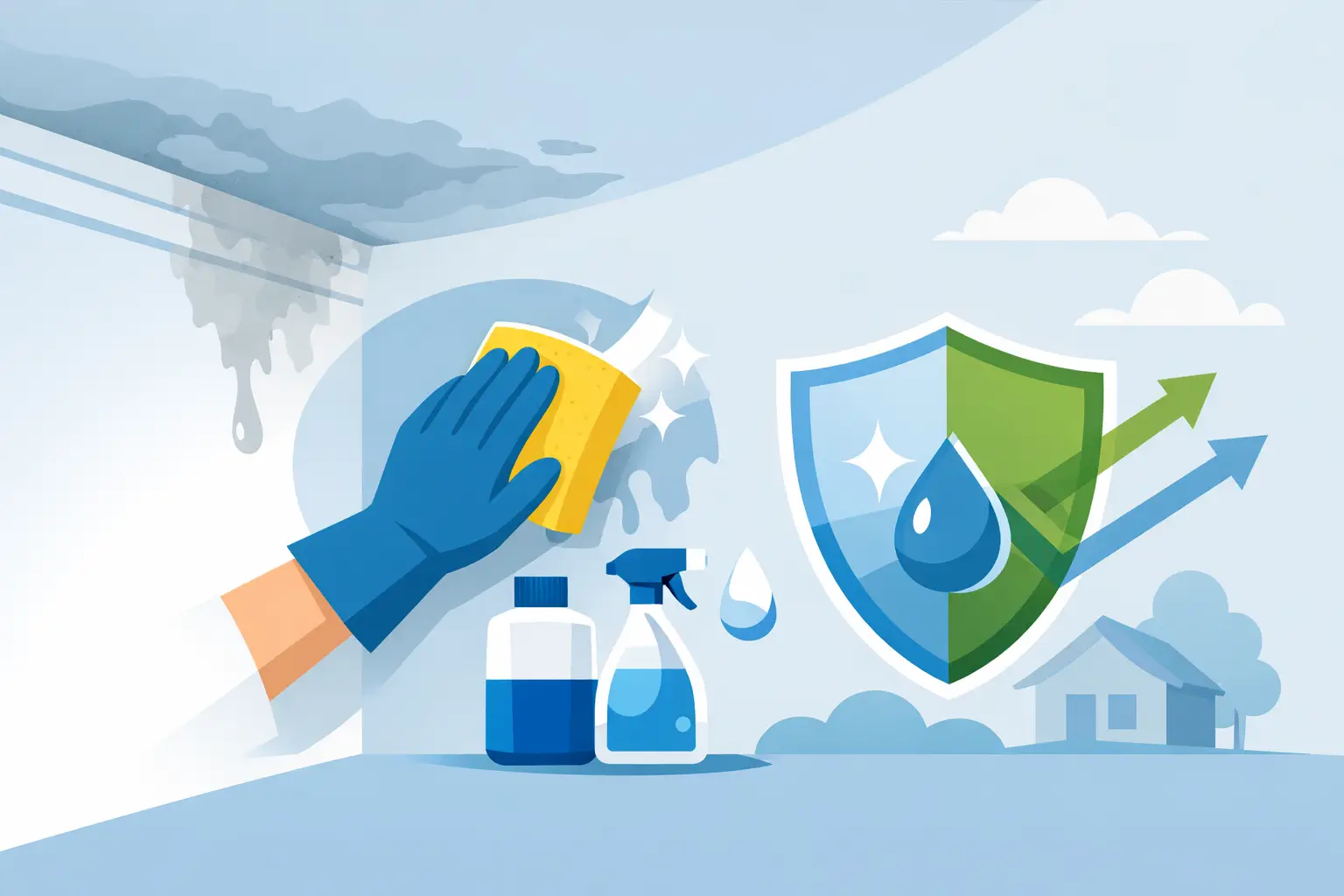
A white film on the shower door, orange rings in the toilet, or crust around a faucet are not simply cleaning problems. They are often evidence of what is travelling through your water supply. Knowing how to remove water stains starts with identifying the stain, cleaning the surface safely, and addressing the water condition that is causing it.

For Ontario homes with hard municipal water, private wells, or lake water systems, stains can return quickly after cleaning. A whole-home treatment solution can reduce the minerals and metals behind recurring buildup, helping protect fixtures, appliances, plumbing, and the time you spend cleaning.

Identify the type of water stain first

Water stains look similar at first glance, but their causes require different approaches. Using the wrong cleaner may waste time or damage a delicate finish.

White, chalky marks on glass, chrome, tile, coffee makers, and shower fixtures are usually caused by hard water minerals. Calcium and magnesium remain behind when water evaporates, eventually forming scale that can feel rough or crusty.

Orange, reddish-brown, or yellow staining is commonly linked to iron in the water. This is especially common in homes supplied by a well. Iron can leave stains in toilets, sinks, tubs, laundry, and even on exterior surfaces where irrigation water dries.

Blue-green stains around plumbing fixtures may indicate copper corrosion. Black or dark brown staining can be caused by manganese, while pink or reddish residue around drains and toilet bowls is often a bacterial film that thrives in damp areas rather than a mineral deposit.

If the staining is persistent, widespread, or accompanied by metallic taste, sulphur odour, discoloured water, or reduced water pressure, cleaning alone is not the right long-term answer. Water testing can identify the underlying issue and guide the appropriate treatment system.

How to remove water stains from common surfaces

Start with the mildest effective method. This protects the surface and reduces exposure to stronger cleaning products. Always test a cleaner in an inconspicuous area first, particularly on natural stone, coloured grout, specialty metals, and refinished tubs.

Glass shower doors and chrome fixtures

For light hard water spotting, apply white vinegar to a microfiber cloth or paper towel and lay it over the affected area for 15 to 30 minutes. The mild acid helps loosen calcium deposits. Wipe the surface, rinse with clean water, and dry thoroughly with a clean microfiber cloth.

For heavier buildup, make a paste with baking soda and a small amount of water. Gently work it over the stain using a non-abrasive sponge, then rinse and dry. Avoid steel wool, scouring pads, and harsh powders on chrome and glass. They can create fine scratches that make future stains cling more easily.

Vinegar is useful on many hard surfaces, but it should not be used on marble, limestone, travertine, or other natural stone. Acidic cleaners can etch these materials and leave dull spots that are more difficult to repair than the original stain.

Toilets, sinks, and porcelain tubs

Mineral rings in a toilet bowl can often be treated with a toilet-safe descaling cleaner. Apply it according to the product directions, allow adequate contact time, then scrub with a toilet brush or non-scratch pad. For a stubborn hard water ring, a pumice stone designed specifically for wet porcelain may help, but use very light pressure and keep both the stone and surface wet to avoid scratching.

Orange iron stains usually need a cleaner formulated for rust or iron deposits. Follow the label carefully, wear gloves, and provide ventilation. Never mix cleaners, especially products containing bleach with acidic or ammonia-based products. Mixing household chemicals can produce dangerous fumes.

For sinks and tubs, avoid abrasive cleaning tools on acrylic, fibreglass, and enamel surfaces. A soft cloth, non-scratch sponge, and suitable mineral or iron stain cleaner are safer choices. Rinse fully after cleaning so residue does not remain on the finish.

Faucets, aerators, and showerheads

Scale around a faucet base can be softened with a vinegar-soaked cloth. If the aerator or showerhead has reduced flow, mineral buildup may be blocking small openings. Remove the aerator or showerhead if it is designed to be detached, soak it in vinegar for several hours, brush gently, and rinse before reinstalling.

Take care with older fixtures or finishes such as brushed nickel, oil-rubbed bronze, and matte black. Manufacturer-approved cleaners are often the safest option. If scale has become heavy enough to affect fixture performance, it may also be accumulating inside appliances and plumbing components.

Dishes, glassware, and small appliances

Cloudy drinking glasses can be caused by mineral film, although permanent etching from dishwasher heat and detergent is also possible. Soak mineral-film haze in vinegar, rinse, and dry. If the cloudiness does not improve, the glass may be etched and cannot be cleaned away.

For kettles, coffee makers, and humidifiers, follow the manufacturer’s descaling instructions. These appliances often need regular maintenance in hard water areas. Repeated scale buildup can reduce efficiency, shorten equipment life, and affect performance.

Why stains come back after cleaning

A clean fixture can look new for a few days, then show the same marks again because the source water has not changed. This is the key difference between cleaning a symptom and solving the problem.

Hard water is one of the most common causes of recurring white scale. A water softener reduces hardness minerals before they move through the home’s plumbing system. This can reduce spotting on shower doors and fixtures, make cleaning easier, help soaps lather more effectively, and limit scale in water heaters, dishwashers, washing machines, and tankless systems.

Iron and manganese require a different approach. Depending on the water chemistry and concentration, an iron removal system, oxidation and filtration system, or custom well water treatment setup may be recommended. Sulphur odours, sediment, bacteria concerns, pH, and water usage also affect system selection. A proper water analysis matters because one treatment method is not suitable for every well or property.

For drinking water concerns, such as lead or dissolved contaminants, point-of-use treatment like reverse osmosis may be appropriate at the kitchen sink. However, reverse osmosis is not designed to replace a whole-home softener or iron filtration system when the primary concern is staining and scale throughout the building.

Prevent water stains between cleanings

Small habits can slow stain formation, but they work best when paired with the right water treatment. Wipe shower glass and fixtures after use, particularly in areas with hard water. Repair dripping faucets and running toilets, since constant water exposure concentrates deposits in one location.

Use the correct dishwasher detergent and rinse aid for your water conditions. If glasses remain spotted despite proper dishwasher settings, hardness may be too high for the appliance to manage effectively. Keep humidifiers, coffee equipment, and ice makers on a regular cleaning schedule, since scale can build inside before it becomes visible.

Property managers and commercial facility operators should pay particular attention to water heaters, boilers, dishwashing equipment, laundry systems, and high-use washrooms. Scale and iron staining create both a visual maintenance issue and an operational cost. In hotels, schools, healthcare facilities, and multi-unit buildings, treatment equipment should be sized for actual flow rates and demand rather than selected as a one-size-fits-all solution.

When to arrange water testing

Consider professional water testing when stains are recurring, change colour, appear in multiple fixtures, or are joined by odours, sediment, poor taste, appliance failures, or visible discolouration. Well owners should be especially proactive, as groundwater quality can vary over time and by season.

A water test can measure hardness, iron, manganese, pH, sulphur-related conditions, and other relevant factors. The results make it possible to recommend a treatment system that targets the cause instead of relying on repeated bottles of cleaner. Canadian Smart Home Solutions can assess Ontario water conditions and install whole-home equipment suited to the property’s needs.

Clean surfaces are satisfying, but the real improvement is water that leaves less behind. When stains become less frequent, fixtures stay brighter, appliances work under less strain, and routine cleaning becomes a quick task instead of a recurring project.

Sulphur Smell in Water: Causes and Fixes

Turn on a tap and catch that rotten egg odour, and the problem becomes hard to ignore fast. A sulphur smell in water is one of the most common complaints we hear from Ontario homeowners, especially on well water, but it can also show up in cottages, rural properties, and some commercial buildings. The good news is that the smell usually has a clear cause, and with proper testing, it can be treated effectively.

What causes sulphur smell in water?

In most cases, the odour comes from hydrogen sulphide gas in the water. Even at low levels, hydrogen sulphide can create a strong smell that makes water unpleasant to drink, cook with, or use for bathing. It may not always signal a serious health issue, but it is a clear sign that the water needs attention.

Hydrogen sulphide can enter water naturally as groundwater moves through soil and rock that contain sulphur-bearing minerals. That is why the issue is especially common in private well systems. In other cases, sulphur-reducing bacteria can produce the gas inside a well, plumbing system, or water heater.

Sometimes the source is not the incoming water supply at all. If the smell only appears when using hot water, the problem may be inside the water heater. A magnesium anode rod can react with naturally occurring sulphates and create that familiar rotten egg smell. That is a very different issue from a whole-home water problem, which is why proper diagnosis matters.

When sulphur smell in water points to a bigger issue

The smell itself is unpleasant, but the larger concern is what it may be telling you about your water system. Odours can travel with other water quality problems such as iron, manganese, sediment, staining, or bacterial activity. If you are on well water, a sulphur odour is often part of a broader treatment need rather than a stand-alone issue.

For homeowners, this can mean orange or black staining in sinks and toilets, metallic taste, slimy buildup, or recurring maintenance problems with fixtures and appliances. For commercial and institutional properties, the impact can be even more disruptive. Guests, tenants, staff, or residents notice water odours quickly, and complaints tend to follow. In buildings with high water use, even a moderate odour issue can affect daily operations, cleaning, laundry, and food service.

That is why a basic filter swap is not always the answer. If the cause is bacterial, chemical, or equipment-related, the right fix depends on the source.

How to tell where the smell is coming from

A simple observation can narrow things down.

If the smell is present in both hot and cold water, the source is more likely the incoming water supply. That often points to hydrogen sulphide in the well water or bacterial activity somewhere in the system.

If the smell is only in hot water, the water heater becomes the first place to investigate. This is common in homes where the cold water seems fine but showers and hot taps have a strong odour.

If the smell is strongest after water has been sitting in the pipes, bacteria may be growing in the plumbing. If it is strongest from one tap only, the issue may be local to that fixture rather than the entire property.

There is also a difference between a true sulphur smell and other odours. Water that smells musty, earthy, or like chlorine points to a different treatment path. That is another reason testing matters before equipment is recommended.

Why water testing should come first

A proper water test helps determine whether the issue is hydrogen sulphide, sulphates, iron bacteria, manganese, coliform bacteria, or a combination of factors. Without that step, treatment can become guesswork.

For example, activated carbon may reduce mild odours in some cases, but it will not solve every sulphur problem. A softener may help with hardness, but it is not designed to handle hydrogen sulphide on its own. Shock chlorination may provide short-term relief if bacteria are involved, but if the underlying conditions remain, the smell often returns.

An experienced water treatment provider looks at the full picture: water source, flow rate, household or building demand, other contaminants, plumbing setup, and whether the problem is constant or occasional. That is how you move from temporary relief to a dependable long-term solution.

Treatment options for sulphur smell in water

The right solution depends on what the water test shows and where the odour is being generated.

For hydrogen sulphide in well water, oxidation is one of the most effective treatment methods. This process changes the gas into a form that can be filtered out. Depending on the application, that may involve an air injection system, chemical oxidation, or specialized media designed for iron and sulphur removal. These systems are often installed as point-of-entry equipment so the whole building benefits, not just one tap.

When iron and manganese are also present, combination treatment is often the smarter route. That is common in Ontario well water. Instead of trying to solve one problem at a time, a properly sized system can address odours, staining, and nuisance minerals together.

If sulphur-reducing bacteria are part of the problem, shock chlorination may be used as an initial step to disinfect the well and plumbing. In persistent cases, continuous disinfection or a more advanced filtration setup may be needed. The key point is that bacteria-related odours often come back if the root cause is not fully addressed.

If the smell is isolated to hot water, the fix may involve servicing the water heater, replacing the anode rod, or adjusting the heater setup. That is a much more targeted repair than installing full-home treatment equipment.

For commercial properties, system design matters even more. A hotel, school, long-term care home, or industrial facility has different flow requirements than a single-family home. Equipment must be sized properly for demand, peak use, and maintenance access. Under-sizing a system may reduce odour briefly but fail under real operating conditions.

Why off-the-shelf fixes often fall short

A lot of property owners try the simplest first step: a jug filter, a basic under-sink cartridge, or a hardware store treatment product. These can help with taste in limited situations, but sulphur odours usually need a more specific solution.

That is because the smell is often tied to chemistry, bacteria, or equipment conditions that consumer-grade products are not built to manage. In some cases, the wrong media can even foul quickly, reduce water pressure, or create maintenance issues without removing the odour completely.

Whole-home and engineered treatment systems cost more upfront, but they are built for the actual problem. They also protect more than drinking water. When the source water is treated properly, you improve water quality at every tap, reduce nuisance odours in bathrooms and laundry, and help protect plumbing fixtures and appliances from related buildup or contamination issues.

Residential and commercial needs are not the same

For a homeowner, the goal is usually simple: safe, clean, better-tasting water without odour. That often means a whole-home sulphur removal system, possibly paired with filtration, softening, or UV treatment if other issues are present.

For a commercial or institutional site, the conversation is broader. Water quality affects reputation, maintenance costs, tenant satisfaction, regulatory confidence, and equipment performance. A food service operation may need consistent water quality for cooking and beverage systems. A healthcare facility may need a more comprehensive approach that considers sterilization, scaling, and source reliability together.

This is where system engineering and installation experience matter. The best answer is rarely the most generic one.

What to do if your water smells like sulphur

Start by noticing when and where the odour appears. Check whether it affects hot water, cold water, or both. Think about whether you also have staining, taste issues, or slime in toilets and fixtures. Then arrange proper water testing before investing in equipment.

If you are on a private well, avoid assuming the smell is harmless just because it is common. Even when hydrogen sulphide itself is not the main health concern, it may point to conditions that deserve closer inspection. If you manage a larger property, address it early. Water odours rarely improve on their own, and complaints tend to grow faster than the problem does.

At Canadian Smart Home Solutions, we approach sulphur and well water issues with testing, system matching, and installation that fits the property, not a one-size-fits-all recommendation. That leads to better performance and fewer surprises after installation.

A sulphur odour in your water is unpleasant, but it is also useful information. Once you know what is causing it, the path forward becomes much clearer – and so does the water coming out of your taps.

All You Need to Know About a Well Water System to Keep Water Safe!

According to a study, about 3 million Canadian residents use private wells. But they are unaware that many issues and contaminants can impact the groundwater that supplies well.

Careful observation, frequent testing, and regular treatment help maintain water safety and softness. Thus, the professionals always recommend using a well water system to filter and soften the water and make it drinkable and safe for human use. Learn to spot some frequently occurring well water problems!

The Most Common Well Water Issues

Have a look at the following signs to spot the problem!

Stains in sinks and tubs

The most common signs of iron in well water are rust or reddish-orange stains in sinks and tubs. You can also find brown, black or blue-green spots indicating other issues.

Scaling, soap scum and spots

Hard water is common in wells, and it may cause scaling or lingering soap scum on drains, faucets, tubs and showers, leaving dishes spotty after washing.

Strange tastes or smells

You will never want to use water with strange tastes and smells for drinking or cooking, right. It is an irritating issue because it makes your entire routine a mess. So, do not wait and find a well water system soon!

Cloudy or discoloured appearance

It is a sign of a water problem and indicates numerous causes, such as sediment, turbidity (issues with clarity) or suspended solids.

A dry scalp or skin after showering

If you feel that your hair and skin become dry and dull after using the water, you must find a well-water professional to treat the problem.

How to Keep Your Well Water Safe?

When you know that your water has some issues, obey the following steps to purify it. Here you go!

Test well water

Use simple home testing or comprehensive lab testing to find out the issue.

Soften and filter water

Now, you need to soften and filter the polluted water to make it safe and drinkable again.

Bottom Line

Hopefully, now you have understood the correct way to keep your water safe with a well water system. If you want to know more, read a few more blogs.

Call Now
Get a Quote