
A hospital cannot treat water quality as a background utility issue. Water reaches patient rooms, kitchens, laboratories, dialysis areas, sterilization equipment, cooling systems, humidification equipment and staff facilities. A problem that begins as hard-water scale, corrosion, poor taste or bacterial growth can quickly affect patient safety, equipment reliability and operating costs. This hospital water quality guide outlines the practical steps Ontario healthcare facilities can take to understand their water, manage risk and install treatment systems that perform under demanding conditions.
Start with a complete water assessment
Municipal water is treated before it enters a hospital, but that does not mean it will meet every point-of-use requirement inside the building. Water chemistry can change as it moves through service lines, storage tanks, older plumbing, hot-water systems and specialized equipment. Facilities supplied by wells or surface water require even more detailed assessment because source-water conditions can vary by season.
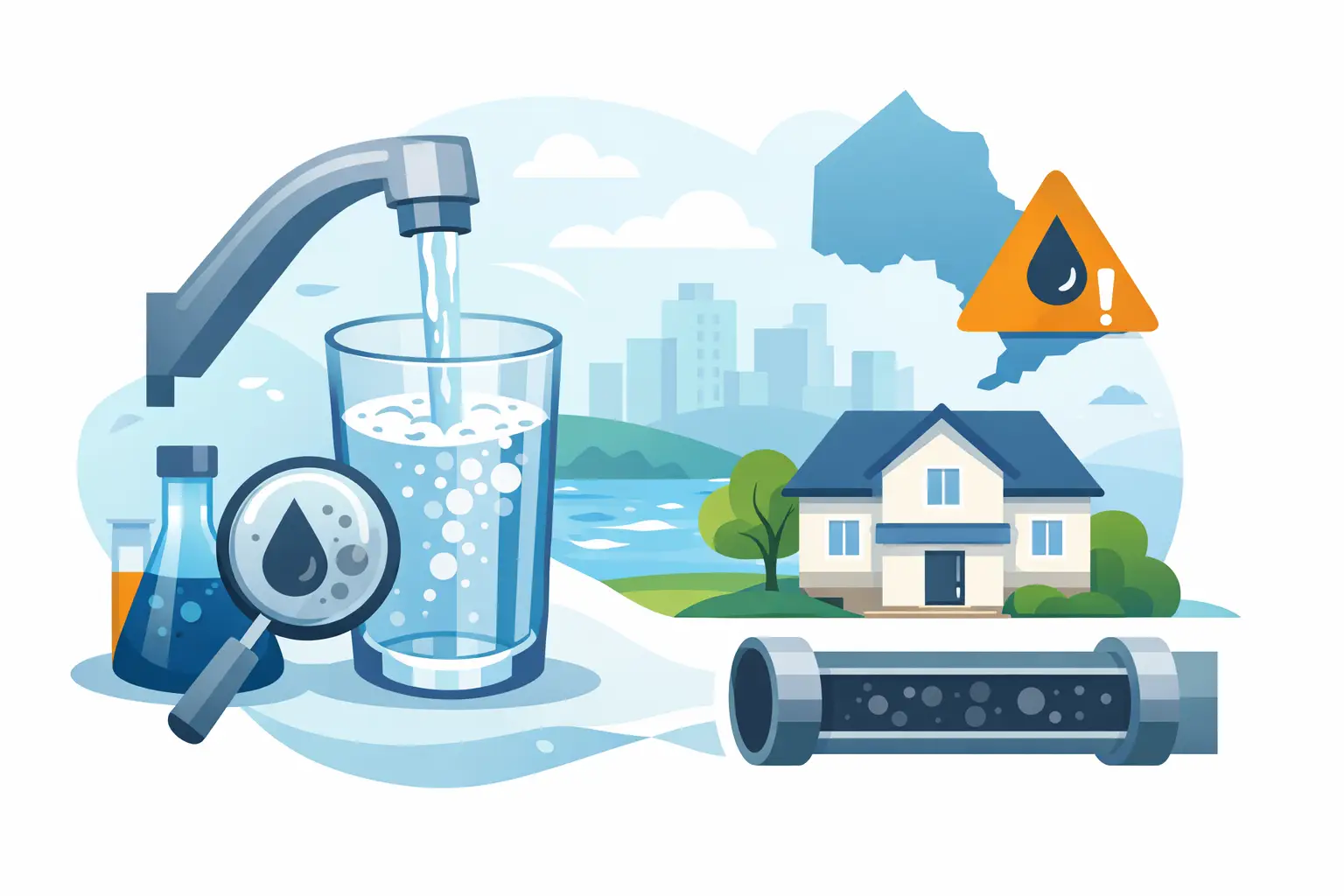
A proper assessment begins at the incoming water supply and extends to representative points throughout the facility. Testing may include hardness, iron, manganese, pH, total dissolved solids, turbidity, chlorine or chloramine residual, lead, copper and microbiological indicators. The right test panel depends on the facility, its water source, the age and materials of its plumbing, and the equipment in use.
For example, a hospital experiencing frequent boiler maintenance may need a focused review of hardness and silica. A building with older fixtures may need lead and corrosion-related testing. If there are concerns about odours, discoloured water, low disinfectant residuals or stagnant areas of plumbing, the investigation should also consider microbial control and the building’s water-management plan.
One sample is rarely enough. Water quality should be assessed at locations that reflect real use, including incoming water, hot-water outlets, low-use areas and departments with specialized needs. This creates a baseline for selecting treatment equipment and establishing sensible monitoring intervals.
Match water quality to each hospital use
Not every tap requires the same degree of treatment. A whole-building solution should protect the plumbing infrastructure and provide consistently high-quality water for general use, while critical departments may need additional point-of-use treatment. Treating every litre to the highest possible standard can add unnecessary cost and maintenance. Under-treating, however, can leave sensitive equipment and vulnerable patients exposed to avoidable risk.
General domestic water may benefit from filtration, softening and disinfection support. Food service often requires better-tasting water and protection for ice machines, steam equipment and dishwashers. Laundry systems need water conditions that support cleaning performance and reduce scale. Mechanical systems may require treatment that protects heat exchangers, boilers and cooling equipment.
Specialized clinical applications require their own specifications and validation procedures. Dialysis water, sterile processing, laboratory feed water and other clinical processes should be designed according to the applicable manufacturer requirements, infection prevention protocols and healthcare standards. A commercial water treatment provider can support the incoming-water and pretreatment side of these systems, but the final design must align with the equipment supplier and facility compliance team.
Hard water and scale are operational problems
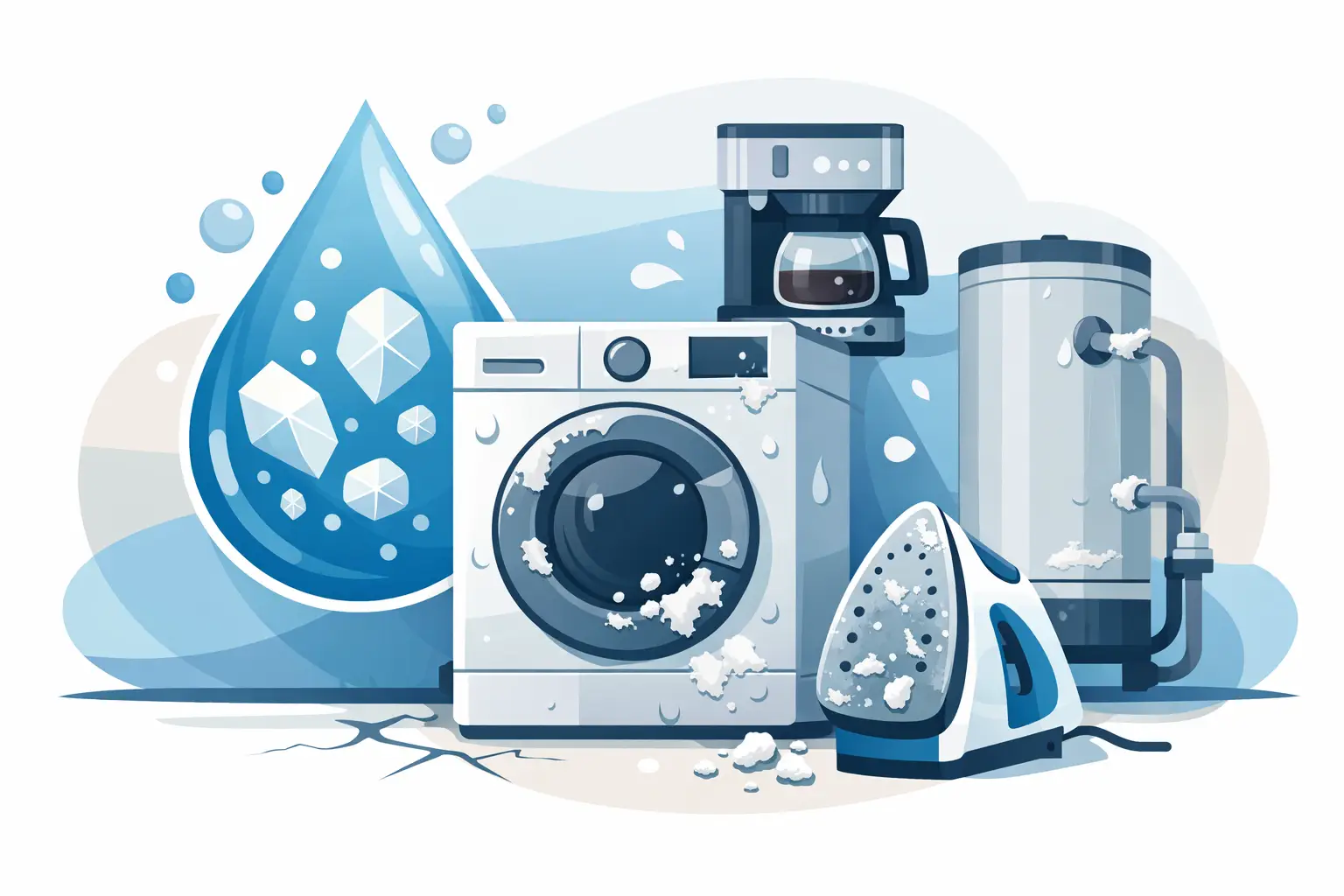
Hard water is one of the most common and costly issues in Ontario facilities. Calcium and magnesium form scale inside water heaters, pipes, valves, steam equipment and appliances. That scale reduces heat transfer, restricts flow and increases energy use. It can also shorten the service life of equipment that hospitals depend on every day.
Commercial water softeners are often the practical answer where hardness is high and flow demand is substantial. The system must be sized for peak demand, regeneration capacity, water pressure, available drain connections and service continuity. In a hospital, an undersized softener is not a minor inconvenience. It can allow untreated water to reach sensitive equipment during high-use periods.
Duplex or alternating softener configurations can provide continuous service during regeneration. The correct choice depends on water use patterns, redundancy requirements and the departments being served. Salt storage, brine handling and routine service access should also be planned before installation, not after equipment arrives.
Filtration, carbon and reverse osmosis have different roles
Sediment filtration removes suspended particles that can foul valves, ultraviolet systems and downstream membranes. Carbon filtration can improve taste and odour while reducing chlorine or chloramine where that is appropriate for the application. It may also be used as pretreatment for certain equipment.
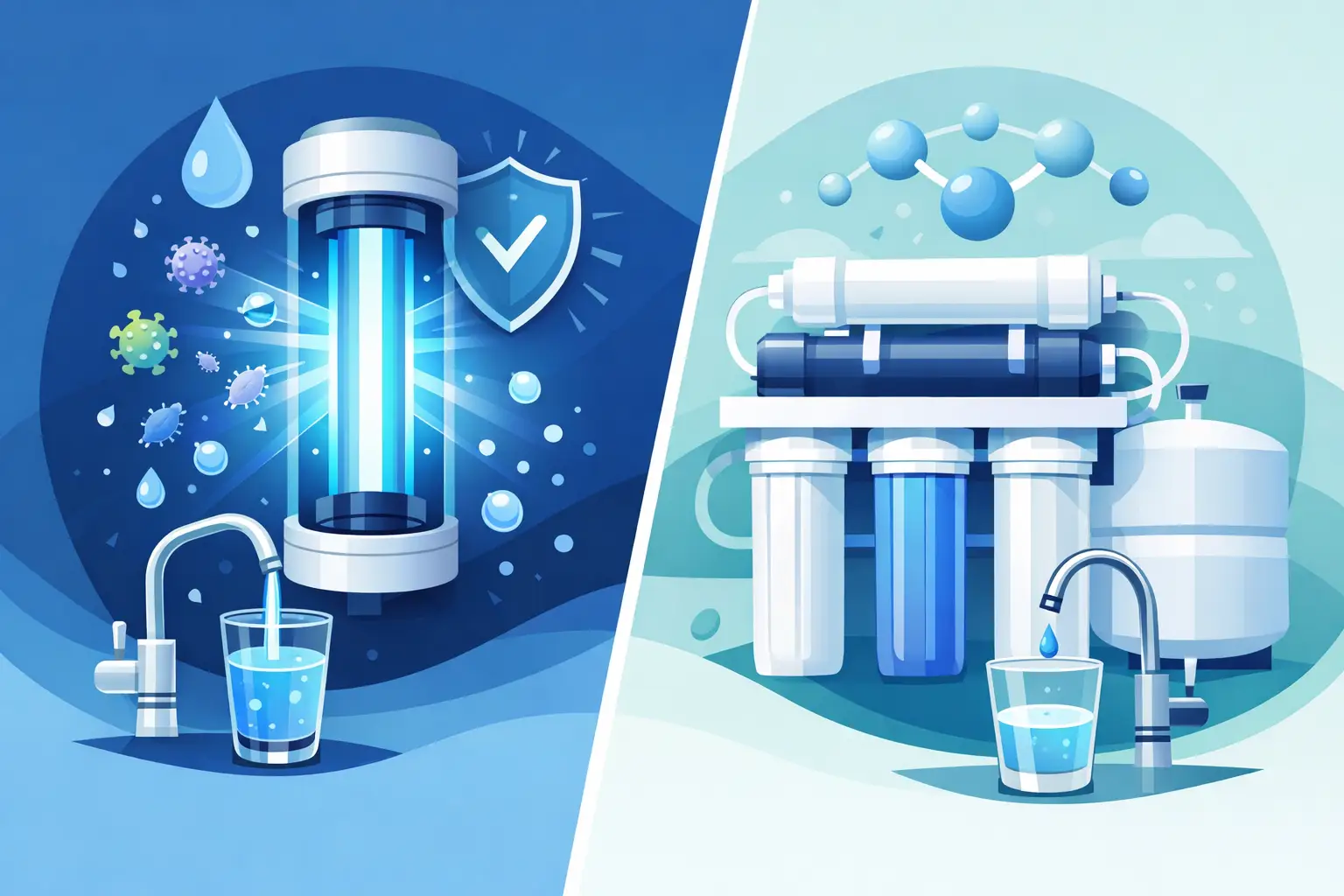
Reverse osmosis removes a much wider range of dissolved contaminants than standard filtration. It is often selected where low-mineral water is needed for specialized equipment or drinking-water applications. However, reverse osmosis requires sound pretreatment, periodic membrane monitoring and responsible management of reject water. It should be specified for a clear purpose, rather than treated as a universal solution for every hospital fixture.
Iron, manganese, sulphur odours and turbidity may be more relevant to facilities using private wells or lake-water sources. These issues can stain fixtures, clog equipment and create unpleasant odours. Depending on the test results, an engineered system may combine oxidation, specialized media filtration, softening and disinfection.
Control microbiological risk throughout the plumbing system
Water treatment equipment is only one part of a hospital’s microbial risk strategy. Buildings also need active water management practices that address temperature control, flow, dead legs, storage, stagnation and maintenance. This is particularly relevant for opportunistic waterborne pathogens, including Legionella, which can multiply under favourable conditions in complex building plumbing.
A treatment system should never be used as a substitute for a documented water-management plan. Hot-water temperature management, recirculation performance, flushing procedures and corrective-action protocols all matter. Low-use rooms, vacant wings, rarely used fixtures and renovation areas deserve close attention because water can stagnate there.
Ultraviolet sterilization can provide an additional disinfection barrier at a specific point in the system. It is effective only when the water is clear enough for UV light to penetrate and when the equipment is correctly sized, monitored and maintained. UV does not leave a residual disinfectant in the distribution system, so it cannot solve every downstream plumbing issue on its own.
Where a facility uses carbon filtration, the design and service schedule are especially important. Carbon can improve water quality, but poorly maintained media can become a maintenance concern. Proper prefiltration, planned replacement intervals and regular inspection help keep the system performing as intended.
Build redundancy into critical treatment systems
Hospitals operate around the clock. A treatment system that requires shutdown for servicing may be suitable for a small commercial site, but it can be a poor fit for a large healthcare facility. Critical applications may need duty-standby equipment, bypass arrangements, isolation valves, alarm monitoring and clear service procedures.
Redundancy does not always mean duplicating every component. It means identifying what cannot be allowed to fail without affecting patient care, food service, sterilization, mechanical operations or infection-control measures. For some facilities, that may mean parallel filters and duplex softeners. For others, it may mean reserve capacity, spare parts on site and a service partner able to respond quickly.
System design should also account for peak flow rates, pressure drop, available floor space, drain capacity and future expansion. A treatment room that is difficult to access or impossible to service safely will create ongoing operational problems. Engineered commercial systems should fit the building, not force the building to work around them.
Monitor performance after installation
Installation is the beginning of water quality control, not the finish line. Filters load with sediment, softeners consume salt, UV lamps age, carbon media requires replacement and reverse osmosis membranes need regular performance checks. Without monitoring, a facility may not know performance has declined until equipment scales up, water quality changes or a department reports a problem.
A practical maintenance program should document test results, service dates, consumable changes, alarm conditions and corrective actions. Facility teams should know which readings are normal, who receives alarms and what happens if a treatment component is offline. For critical equipment, response steps should be written, accessible and understood before an issue occurs.
Canadian Smart Home Solutions can help hospitals and other institutional facilities assess incoming water, identify scaling or contamination concerns, and design commercial treatment equipment suited to high-flow, high-demand operations. The strongest results come from combining accurate water testing with professional installation and ongoing service.
The right hospital water treatment plan is rarely a single filter or one-time repair. It is a practical, monitored system that protects the people using the building and the equipment they rely on. Begin with the water your facility actually has, then design for the risks, flow demands and care activities that make your hospital unique.