Commercial Treatment Design That Solves Water Problems

A hotel that runs out of treated water during a busy morning, a school with recurring lead concerns, or a nursing home dealing with scale-clogged equipment does not have a minor plumbing issue. It has an operational risk. Effective commercial treatment design starts by identifying that risk, testing the water properly, and building a system that performs at the flow rate the facility actually needs.

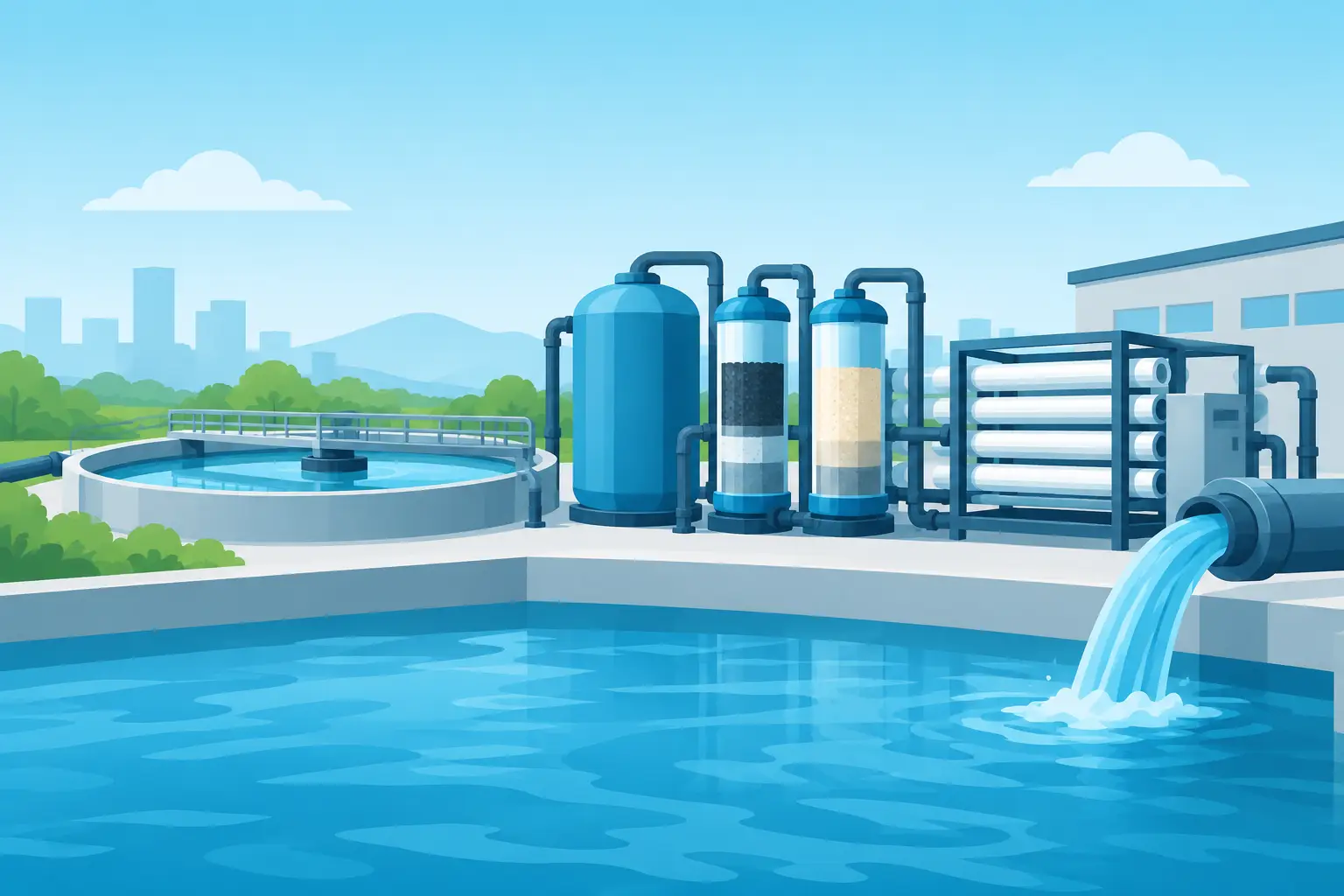
Commercial water treatment is not simply a larger version of a residential filter. High occupancy, variable water demand, multiple water sources, sensitive equipment, and safety requirements all change the design process. The right system protects staff, residents, guests, patients, plumbing infrastructure, and the facility budget over the long term.

What Commercial Treatment Design Must Account For

Every commercial facility uses water differently. A restaurant may need better water for ice machines, dishwashers, steam equipment, and drinking water. A hotel needs consistent water quality across guest rooms, laundry, kitchens, boilers, and mechanical systems. A school or healthcare facility may require specific safeguards for drinking water quality and microbial control.

This is why an engineered solution begins with the complete picture rather than a single complaint. A foul odour may point to sulphur bacteria or hydrogen sulphide. Orange staining can indicate iron. White scale around fixtures often signals hardness. Poor taste may be related to chlorine, organic material, dissolved minerals, or aging building plumbing. Each issue requires a different treatment approach.

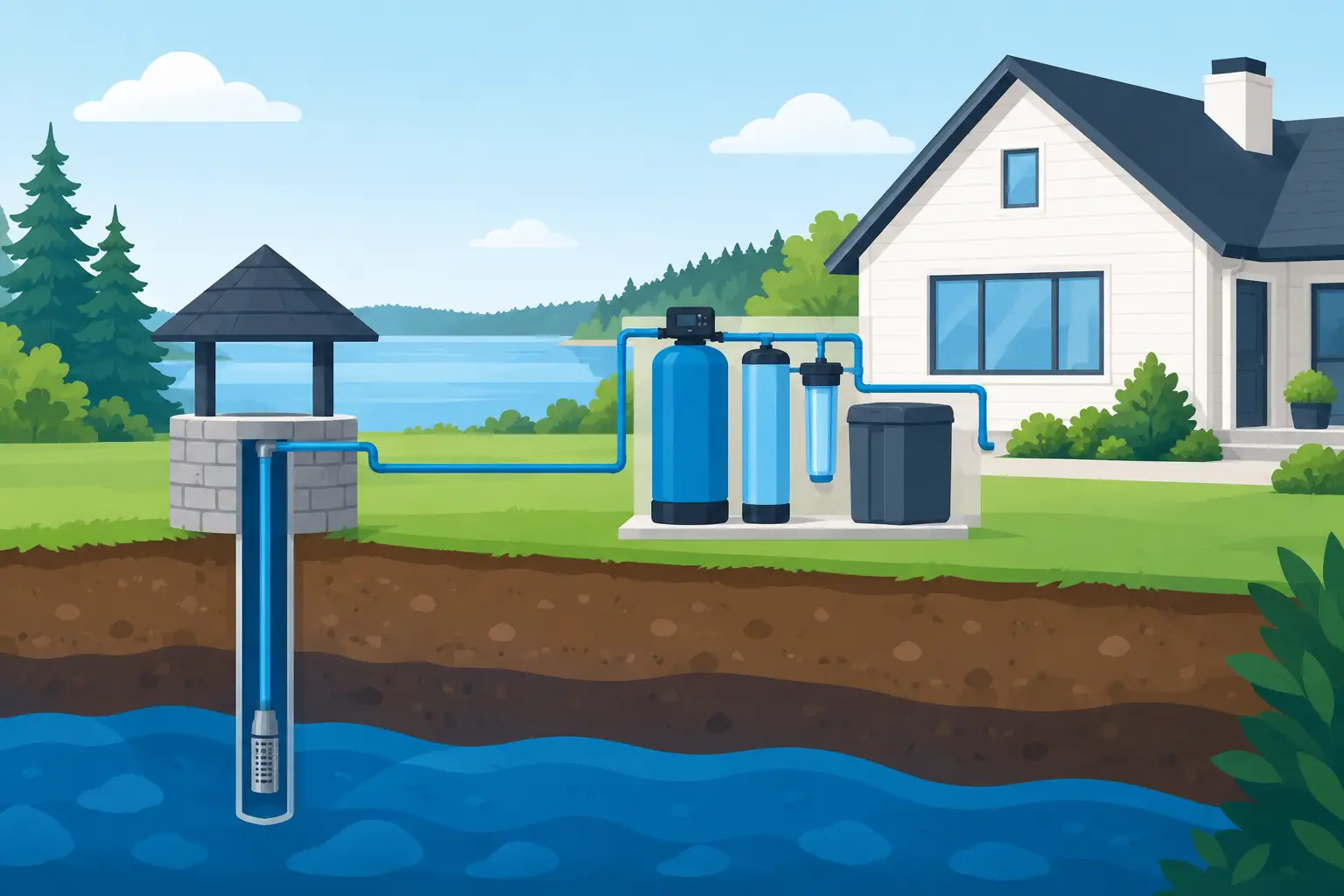
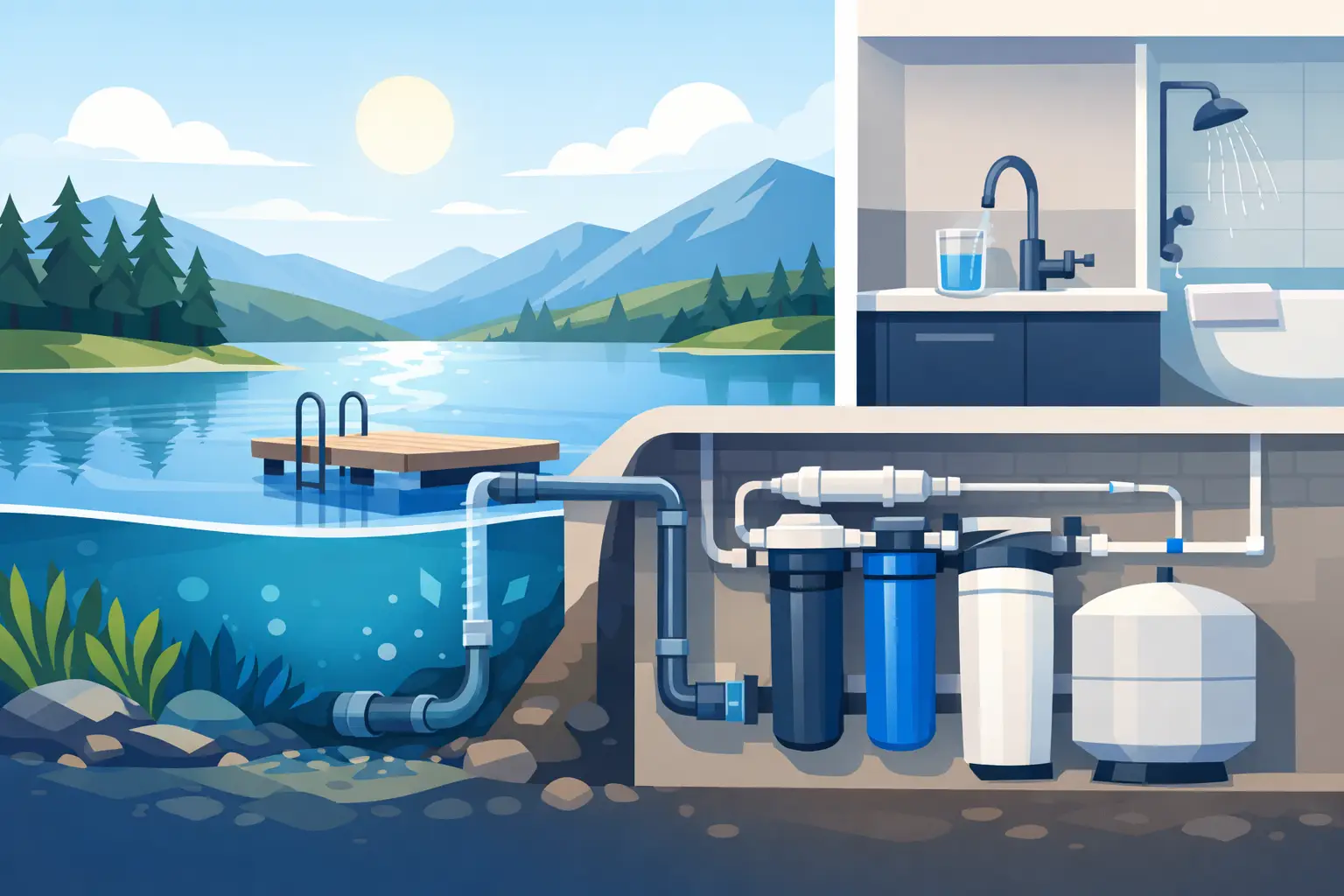
Water source matters as well. Municipal water commonly calls for chlorine reduction, hardness control, lead reduction at relevant outlets, and specialized filtration where required. Well water can bring iron, manganese, sulphur, bacteria, turbidity, hardness, and changing seasonal conditions. Lake water systems may require more extensive filtration and disinfection because surface water quality can vary significantly.

A treatment system should also reflect local plumbing requirements, available installation space, drainage capacity, electrical access, and the facility’s ability to support regular maintenance. Good design is practical. Equipment must be accessible for service and sized so that it can be maintained without disrupting essential operations.

Start With Water Testing and a Site Assessment

A proper water analysis is the foundation of commercial treatment design. Selecting equipment before testing can lead to undersized filters, ineffective media, unnecessary expense, or a system that solves one problem while leaving another unresolved.

Testing should be matched to the facility and its water source. Depending on the situation, the analysis may assess hardness, iron, manganese, pH, total dissolved solids, sulphur, chlorine, turbidity, lead, bacteria, and other contaminants of concern. Where a building has an older plumbing system, testing at the point of use can be just as relevant as testing incoming water.

The site assessment then turns water results into a workable treatment plan. It should review peak water demand, normal operating demand, incoming water pressure, pipe sizing, drainage, equipment location, and the consequences of downtime. A system designed only around average consumption may struggle when dozens of fixtures, appliances, or process lines operate at once.

For example, a softener that is adequate for a small office may not be sufficient for a long-term care facility where laundry, bathing, food service, and cleaning routines create frequent demand. High flow requirements may call for twin alternating systems, multiple tanks, commercial control valves, larger distribution piping, or storage capacity that prevents pressure loss and treatment bypass.

Match the Treatment Equipment to the Problem

There is no one commercial water treatment system that fits every building. Most successful installations combine several treatment stages, with each stage addressing a known water quality concern.

Hardness and Scale Control

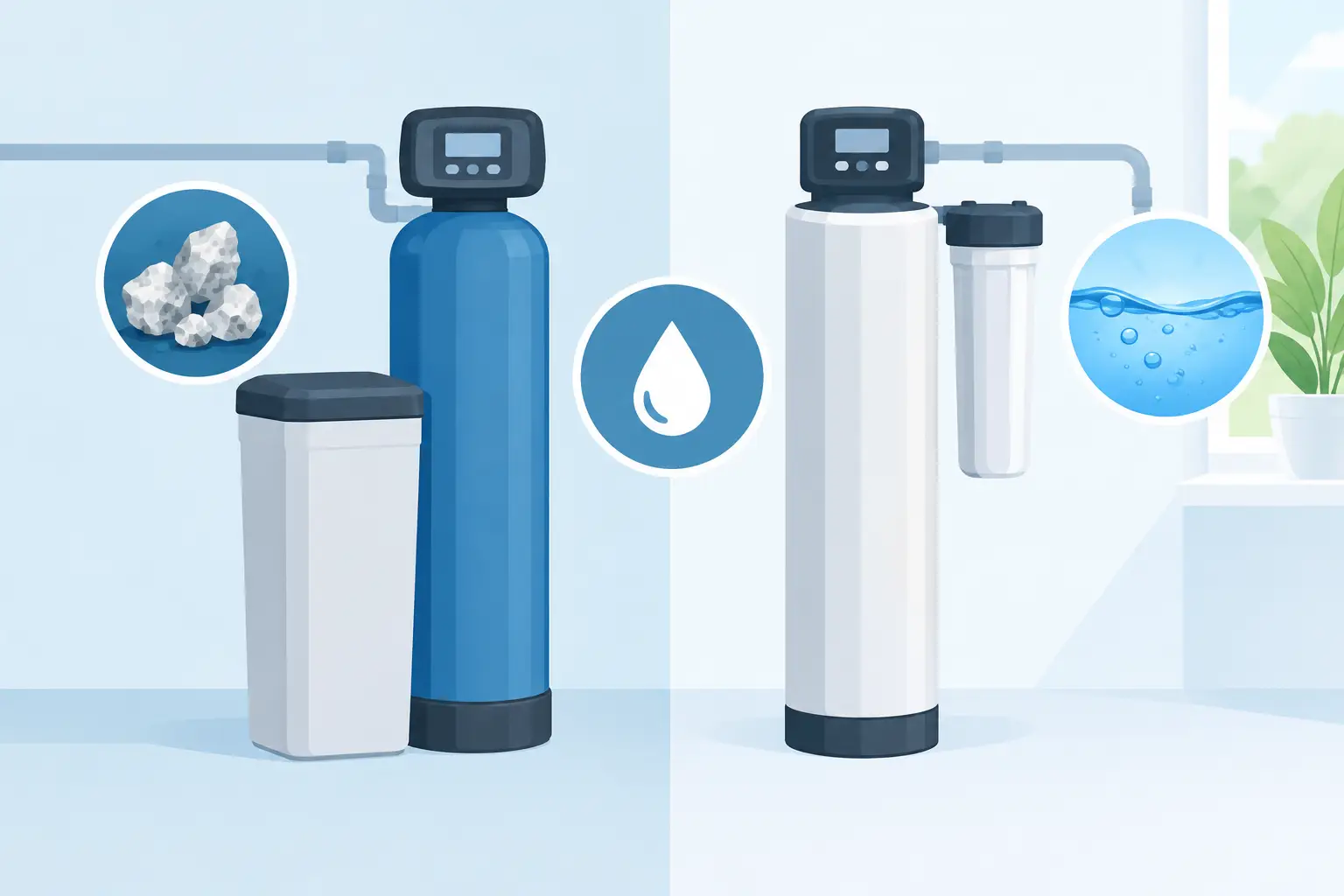
Hard water is costly in commercial settings. Calcium and magnesium deposits can reduce the efficiency of water heaters, shorten the life of dishwashers and laundry equipment, block valves, stain fixtures, and increase cleaning labour. Water softeners remove hardness minerals before they accumulate throughout the plumbing system.

For facilities with continuous or near-continuous demand, a duplex or twin alternating softener can maintain treated water availability during regeneration. The right choice depends on hardness levels, daily consumption, peak flow, salt storage needs, and whether the building can tolerate even brief interruptions.

Sediment, Iron, and Sulphur Removal

Sediment affects water clarity and can clog fixtures, filters, and sensitive equipment. Iron causes orange or brown staining, while manganese can create dark staining and contribute to unpleasant water quality. Sulphur issues are often recognized by a rotten-egg odour.

Treatment may involve sediment filtration, oxidation, specialized media filtration, backwashing equipment, or a combination of methods. The correct design depends on the concentration of contaminants, pH, water chemistry, and flow requirements. Treating iron without considering hardness, for instance, can create service issues if the selected equipment is not suited to the full water profile.

Carbon Filtration and Reverse Osmosis

Activated carbon filtration is commonly used to reduce chlorine taste and odour, improve water quality for food service, and protect equipment that is sensitive to disinfectants. Carbon systems need to be correctly sized because contact time matters. Water moving too quickly through undersized media may not receive the level of reduction the facility expects.

Reverse osmosis systems provide highly filtered water for drinking stations, kitchens, laboratories, coffee service, ice production, and specialized applications. They are not usually intended to treat every drop of water entering a large building. Instead, they are often installed where high-purity water offers the most value. A commercial reverse osmosis design must account for production capacity, storage, delivery pressure, pre-treatment, membrane protection, and wastewater management.

Ultraviolet Disinfection and Microbial Control

Ultraviolet systems are used to disinfect water without adding chemicals. They can be especially valuable for well water, lake water, and facilities concerned about microbial safety. However, UV is not a replacement for proper filtration. Cloudy water, sediment, or elevated iron can reduce UV effectiveness by preventing light from reaching microorganisms.

A reliable UV system is therefore typically installed after the required pre-filtration stages. Lamp monitoring, annual lamp replacement, sleeve cleaning, and alarm functions should be considered part of the design, not an afterthought.

Design for Peak Demand, Not Just Daily Usage

One of the most common commercial sizing mistakes is focusing only on how much water a facility uses in a day. Daily volume matters, but peak flow often determines whether occupants experience acceptable water pressure and consistent treatment.

A school may have moderate water use most of the day, then experience a sharp demand increase between class periods. A hotel can see similar peaks in the early morning and evening. A manufacturing or food service operation may need stable treatment during a particular production cycle. If a system cannot support these periods, it may allow untreated water through, reduce pressure, or regenerate at an inconvenient time.

Commercial equipment should be selected with a realistic view of fixture count, simultaneous use, process demand, future expansion, and required service continuity. In some facilities, redundancy is justified. Having parallel treatment trains or alternating equipment can reduce the risk of service interruption when maintenance is required.

Plan for Service, Monitoring, and Long-Term Costs

Commercial treatment equipment is an investment in water quality, equipment protection, and operational reliability. The lowest purchase price is not always the lowest cost over time. An undersized system can use more labour, create repeated service calls, and allow damage from scale, staining, or poor-quality water to continue.

Maintenance requirements should be clear from the start. Depending on the system, this may include replacing filters, replenishing salt, checking chemical supplies, servicing control valves, cleaning UV sleeves, replacing UV lamps, sanitizing reverse osmosis components, and testing treated water. Monitoring flow, pressure drop, and regeneration performance helps identify a problem before it affects the building.

Installation quality matters just as much as equipment selection. Commercial systems require appropriate bypasses, isolation valves, drains, electrical connections, and pipe sizing. These details make future service safer and faster while helping the equipment operate as intended.

When a Custom System Is the Better Choice

Standard packaged equipment can be an excellent fit for many businesses. But facilities with high flow rates, unusual water chemistry, strict water quality targets, limited mechanical-room space, or critical operations often benefit from a custom design.

Custom commercial systems can combine softening, filtration, carbon treatment, iron and sulphur removal, reverse osmosis, UV sterilization, storage tanks, booster pumps, and automated controls in one coordinated plan. The objective is not to add equipment unnecessarily. It is to build a dependable sequence that addresses the actual risks without creating avoidable maintenance burdens.

For Ontario property owners and facility managers, Canadian Smart Home Solutions can assess water quality, usage requirements, and installation conditions to recommend equipment that fits the building rather than forcing the building to fit a generic system. The most useful next step is simple: test the water, review peak demand, and design for the people and equipment that depend on it every day.
How to Stop Iron Staining in Ontario Homes

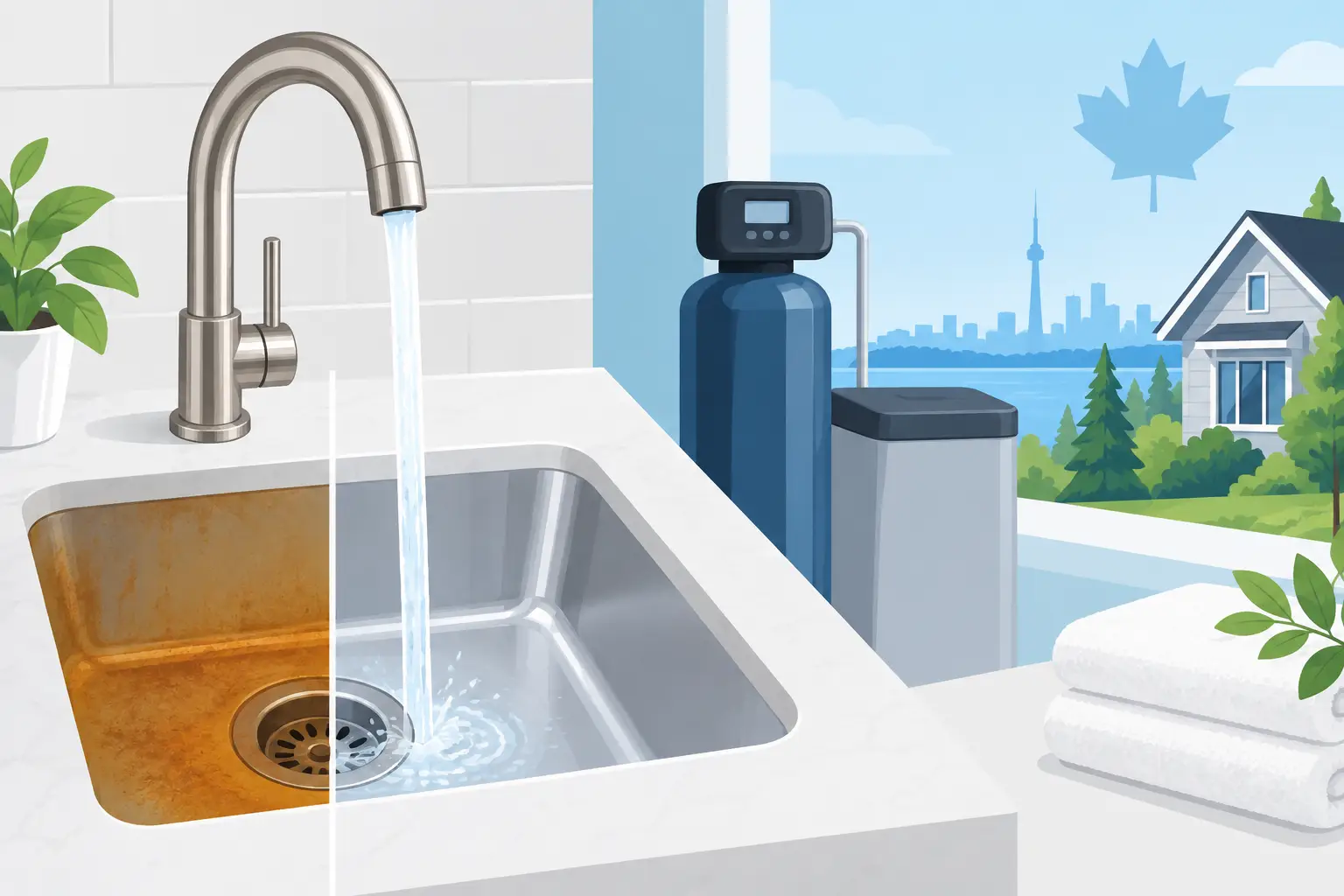
Orange-brown marks around taps, toilets, tubs, and appliances are more than a cleaning nuisance. Iron staining is a common sign that your water contains dissolved iron or iron particles, often from a private well but sometimes from plumbing or a municipal supply. The right treatment can protect fixtures, reduce cleaning time, improve water appearance, and help prevent premature wear on plumbing equipment.

A stain remover may make a sink look better for a few days. It does not remove the iron entering the home. Lasting results start by identifying the type and amount of iron in the water, then matching the treatment system to the property’s water chemistry and daily demand.

What causes iron staining?

Iron is a naturally occurring mineral found in soil and rock. As groundwater moves through iron-bearing formations, it can dissolve the mineral and carry it into a well. This is especially common in rural and suburban Ontario properties that rely on private wells.

When the water first leaves the tap, dissolved iron may be clear. Once it meets oxygen, it oxidizes and turns yellow, orange, brown, or reddish. Those particles settle on porcelain, glass, fabric, and metal surfaces. This is why a toilet bowl, shower enclosure, or white laundry can develop staining even when the water initially looks clean.

Iron can also enter water from corroding pipes, although this is less common as the primary cause in a home with a private well. A proper water analysis helps distinguish a source-water issue from a plumbing issue before any equipment is selected.

The type of iron matters

Not all iron behaves the same way, and that difference affects treatment. Clear-water iron is dissolved and may only become visible after sitting in a glass or contacting air. Red-water iron is already oxidized into visible particles. Organic iron can be associated with colour and tannins, while iron bacteria can create a slimy residue, clogged fixtures, and persistent musty or swamp-like odours.

Hydrogen sulphide is another frequent companion to iron in well water. It creates a rotten-egg smell and can make staining problems more difficult to manage. A system designed only for basic iron removal may not be the right answer when sulphur, manganese, hardness, low pH, or bacteria are also present.

Why iron staining should not be ignored

For many households, the first concern is appearance. No one wants visitors to see a stained toilet, rusty ring in the bathtub, or discoloured laundry. But the practical effects can extend beyond surface cleaning.

Iron deposits can restrict faucet aerators, showerheads, appliance valves, filters, and water-using equipment. Over time, buildup may reduce flow and add to maintenance costs. Water heaters, dishwashers, washing machines, humidifiers, and ice makers can all suffer when sediment and mineral deposits are allowed to accumulate.

Iron can also interfere with other water treatment equipment. For example, heavy iron can foul a water softener resin bed or shorten the life of certain filtration media if it is not addressed properly beforehand. In commercial settings, staining and iron buildup can create added housekeeping work and affect guest, tenant, patient, or customer experience.

Iron in household water is usually an aesthetic and operational concern rather than an immediate health emergency. That said, every water source is different. Well owners should not assume that staining is the only issue. A complete water test can identify related concerns that require separate treatment, including bacteria, nitrates, lead, pH imbalance, manganese, and sulphur.

How to identify an iron problem

The location and timing of stains offer useful clues. Orange or brown marks in multiple bathrooms, along with rusty laundry or sediment in toilet tanks, point to a water-supply issue rather than one isolated fixture. Clear water that turns orange after standing is a strong indicator of dissolved iron.

A metallic taste, yellowish water, black specks, reduced water pressure, or a rotten-egg odour are also worth noting. Black staining may indicate manganese, which often occurs alongside iron and needs to be considered during system design.

The dependable next step is a professional water analysis. Testing should measure iron concentration, manganese, hardness, pH, alkalinity, sulphur where relevant, total dissolved solids, and bacterial quality for well water. The results show whether the water needs oxidation, filtration, softening, disinfection, pH correction, or a combination of these steps.

The most effective solutions for iron staining

There is no single filter that fits every property. The right solution depends on the iron level, whether the iron is dissolved or particulate, the presence of sulphur or manganese, household water flow, and the condition of the well or plumbing.

Iron and sulphur removal systems

For many Ontario well-water homes, an automatic iron and sulphur removal system is the most effective whole-home approach. These systems oxidize iron so it can be captured by specialized filtration media. Depending on the water chemistry, the system may use air injection, an oxidizing filter media, or another engineered treatment process.

The benefit is simple: iron is removed before it reaches sinks, toilets, showers, laundry, and appliances. Automatic backwashing keeps the media cleaner and directs trapped contaminants out of the system. Proper sizing is critical. A unit that is too small for the home’s peak flow rate may allow breakthrough, leading to recurring stains during busy periods.

Water softeners for iron and hardness

A water softener can help where hardness and modest amounts of clear-water iron occur together. Softening reduces calcium and magnesium, which cause scale buildup, while also removing a limited amount of dissolved iron.

However, a softener is not always the best primary treatment for higher iron levels, iron bacteria, or severe sulphur odours. Excess iron can coat the resin, reduce efficiency, and increase maintenance. In these cases, installing iron removal ahead of the softener often provides better long-term performance.

Sediment filtration and pH correction

When water contains visible iron particles, a sediment filter may be part of the solution. It can protect downstream equipment by catching particulate matter. On its own, though, it may not remove dissolved iron that turns into stains later.

Low pH can make water more corrosive and may contribute to plumbing deterioration. Neutralizing treatment can raise pH and support more effective iron removal, particularly where corrosion and metallic taste are also concerns. Water testing determines whether this additional step is needed.

Ultraviolet disinfection and reverse osmosis

Ultraviolet systems do not remove iron, but they may be recommended when well-water testing identifies bacteria or when a property needs reliable ongoing disinfection. Iron should generally be controlled before UV treatment because staining and sediment can reduce UV effectiveness.

Reverse osmosis systems are typically installed at a kitchen sink for high-quality drinking and cooking water. They are not a replacement for whole-home iron treatment. If iron staining affects bathrooms, laundry, and appliances, the issue must be addressed where water enters the building.

Why cleaning alone does not solve the problem

Acid-based or iron-specific cleaners can remove existing stains from many surfaces when used according to product directions. They are useful for restoring a fixture after a treatment system is installed. But repeated scrubbing can damage finishes, grout, and protective coatings, especially on older fixtures.

Bleach is not an effective answer for mineral-based iron stains and should never be mixed with other cleaners. More importantly, cleaning does nothing for the iron entering the water every day. Whole-home treatment prevents new deposits instead of creating a permanent cleaning routine.

Protecting your system after installation

Water treatment equipment needs appropriate service to continue working as designed. This may include checking settings, confirming regeneration or backwash cycles, replenishing consumables where required, inspecting valves, and retesting water if conditions change. Well water can vary with seasonal groundwater levels, heavy rainfall, construction activity, or changes to the well itself.

A professionally installed system should be sized for the building, not just the test result. A family home with several bathrooms needs different flow capacity than a small cottage. Hotels, schools, healthcare facilities, and other high-use properties require engineered equipment that can handle peak demand without sacrificing treatment performance.

Canadian Smart Home Solutions can assess the source water, identify the cause of recurring staining, and recommend a treatment plan suited to the property. The objective is not simply clearer water at one tap. It is dependable whole-home protection for fixtures, plumbing, appliances, and the people who rely on them.

If orange stains keep returning after every cleaning, treat that pattern as useful information. A targeted water test and correctly designed system can replace the cycle of scrubbing with water that stays cleaner where it matters most.

Water Softener Versus Conditioner Compared

Hard-water scale on a kettle is one thing. Scale inside a water heater, dishwasher, boiler, or plumbing system is a more expensive problem. When comparing a water softener versus conditioner, the key question is not which unit sounds better. It is whether you need to remove hardness minerals or simply reduce the way those minerals form scale.

For Ontario homeowners, the answer often depends on the source of water, hardness level, household water use, existing equipment, and the specific issues appearing around the home. A water conditioner may be a sensible choice in some situations. But where hard water is causing persistent buildup, dry skin, stained fixtures, reduced appliance efficiency, and frequent cleaning, a properly sized water softener is usually the more complete solution.

Water softener versus conditioner: the key difference

A conventional water softener removes hardness minerals from water. A water conditioner generally leaves those minerals in the water but aims to change how they behave.

Hard water contains dissolved calcium and magnesium. These minerals are not usually a drinking-water health concern, but they create practical issues. As water is heated or evaporates, calcium and magnesium can form scale on fixtures, shower glass, heating elements, and the internal components of appliances.

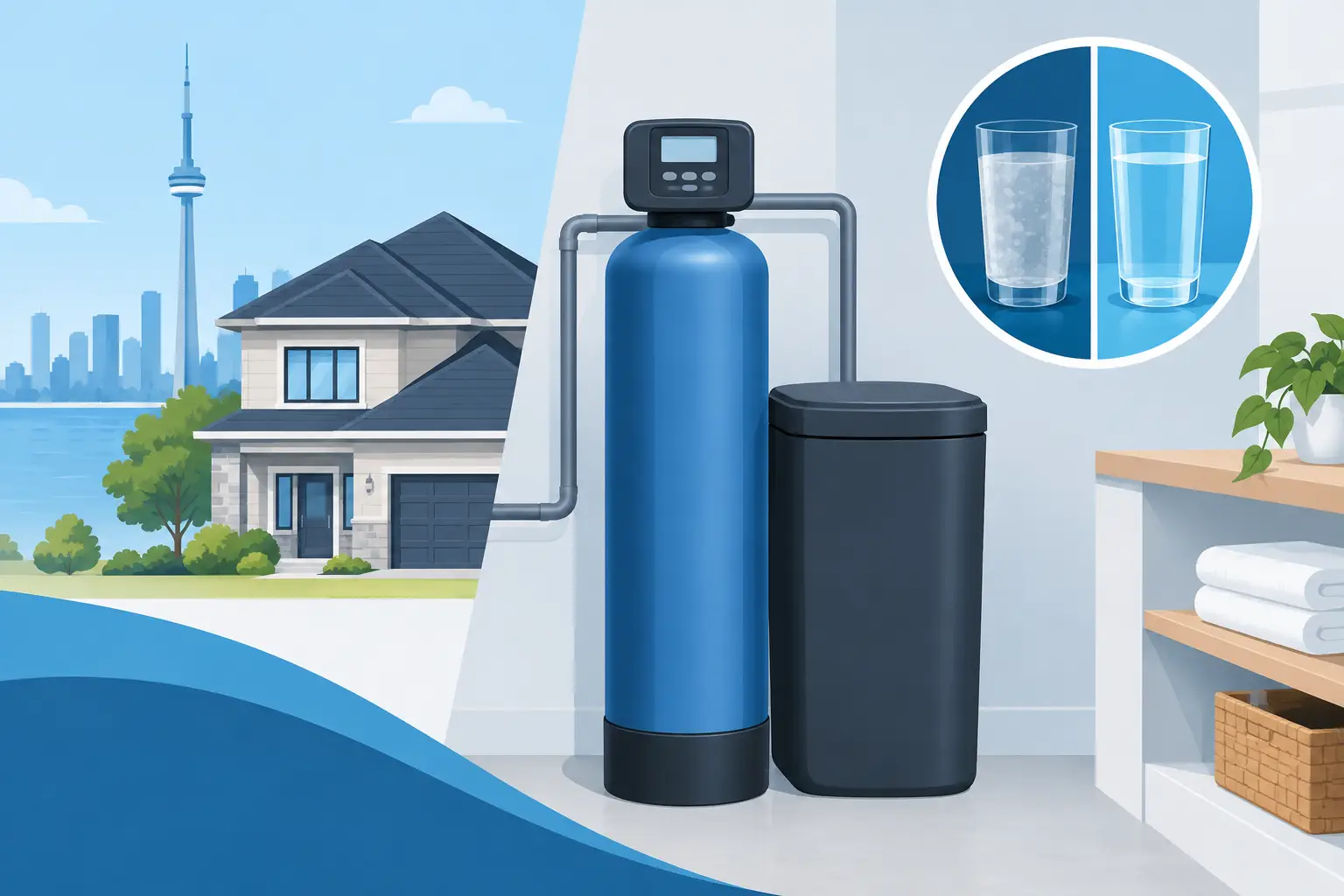
A softener uses ion exchange. Water passes through resin beads that attract calcium and magnesium, replacing them with sodium or potassium ions. The result is genuinely softened water, with substantially lower hardness.

Most salt-free conditioners use a different method, often called template-assisted crystallization. The media encourages hardness minerals to form microscopic crystals that are less likely to stick to surfaces. This can reduce scale accumulation under suitable water conditions, but the calcium and magnesium remain present. The water will still test as hard.

That distinction matters. A conditioner is not a direct substitute for a softener in every home, even when both products are marketed as scale-control equipment.

What a water softener does well

A water softener is designed for homes or facilities dealing with moderate to severe hardness. It provides the most noticeable improvements where hardness is the main problem.

Softened water helps prevent hard scale from building up in water heaters, tankless heaters, dishwashers, washing machines, coffee machines, humidifiers, and plumbing fixtures. This can improve the efficiency of equipment that heats water and reduce the frequency of descaling or service calls.

Many families also notice everyday changes. Soap and shampoo rinse more easily, laundry can feel softer, glassware develops fewer spots, and bathrooms require less scrubbing. These are practical benefits, especially in homes with several bathrooms, high hot-water demand, or appliances that have already begun to show scale damage.

A softener does require periodic regeneration. During this cycle, the system uses salt or potassium chloride and a measured amount of water to rinse accumulated hardness minerals from the resin. Modern demand-initiated systems regenerate according to actual water use, which is more efficient than relying on a fixed timer.

The trade-off is ongoing maintenance. Salt must be added, the brine tank should be checked, and the system needs professional sizing and setup. Improperly sized equipment can waste salt and water or fail to keep up with household demand.

What a water conditioner can and cannot do

A water conditioner can be a useful option when the goal is scale management without salt, regeneration cycles, or a drain connection. Because it does not use brine, it generally requires less routine attention than an ion-exchange softener.

Conditioners can be attractive for homes where water hardness is relatively low to moderate, where drainage is difficult to install, or where the owner wants a low-maintenance approach to reducing scale on plumbing and appliances. They may also suit certain commercial applications where reducing mineral adhesion is the primary objective.

However, expectations need to be realistic. A conditioner does not remove calcium or magnesium. It will not produce the same soap performance as softened water, and it may not stop spotting or scale under all water conditions. It also does not remove sediment, iron, sulphur odours, lead, chlorine, bacteria, pesticides, or other contaminants.

Water chemistry can affect conditioner performance. High iron, manganese, sediment, or certain pH conditions may require pretreatment. On private wells, for example, treating iron, sulphur, bacteria, or sediment before installing scale-control equipment is often necessary for dependable results.

Which system is right for your Ontario home?

The right choice starts with the problem you are trying to solve. If the issue is heavy white buildup on taps and shower doors, a water heater that needs frequent descaling, stiff laundry, poor soap lather, and appliance wear, a water softener is typically the stronger long-term answer.

If your water has manageable hardness and your priority is reducing scale with minimal maintenance, a conditioner may be worth considering. It can be a practical fit when there is no convenient drain for a softener or when salt-free operation is a firm preference.

Municipal water and well water should be evaluated differently. Municipal water may contain chlorine or chloramine, which can affect taste, odour, and the lifespan of some treatment media. Well water can vary widely in hardness, iron, manganese, sulphur, sediment, pH, and bacteria. A conditioner or softener alone may not address all of those issues.

For well-water properties, treatment often works best as a coordinated system. Sediment filtration, iron and sulphur removal, softening, ultraviolet disinfection, and reverse osmosis may each have a role depending on laboratory results. Installing a single device without identifying the full water profile can leave the original problem only partially solved.

Consider sodium, water use, and installation requirements

Some homeowners hesitate to install a softener because of sodium. Ion-exchange softeners add sodium in proportion to the water hardness removed. For most households, the contribution is modest, but people following medically restricted sodium diets should discuss their needs with a healthcare professional.

Potassium chloride can be used instead of sodium chloride in many systems, although it is usually more expensive. Another common approach is to soften the whole home while supplying an unsoftened cold-water line to a dedicated drinking-water tap. A reverse osmosis drinking-water system can also reduce dissolved solids at the point of use.

Drainage and local installation conditions also matter. A softener needs access to water, power, and an appropriate drain for regeneration discharge. Professional installation helps ensure the system has correct bypass plumbing, flow capacity, backflow protection where required, and settings matched to the home’s actual hardness and occupancy.

For commercial buildings, selection becomes even more site-specific. A hotel, school, healthcare facility, or multi-unit property may need high flow rates, duplex softeners for continuous service, or engineered pretreatment equipment. In these settings, choosing based on price alone can lead to poor pressure, insufficient capacity, and preventable downtime.

Do not confuse softening with filtration

A softener protects against hardness, but it is not a complete water filtration system. Likewise, a conditioner is primarily a scale-management device, not a purifier.

If your concerns include chlorine taste, sediment, lead, odours, well-water bacteria, or contaminants in drinking water, additional treatment may be needed. A whole-home carbon filter can address chlorine and many odours. An ultraviolet system can provide disinfection for properly pretreated water. Reverse osmosis can improve drinking water at a dedicated tap, while specialized media can target iron, sulphur, manganese, or lead.

This is why water testing matters. A hardness reading alone does not reveal whether your water has iron, elevated sodium, acidity, bacterial risk, or contaminants that require separate treatment. A professional review of water results, plumbing layout, flow requirements, and household use produces a recommendation that fits the property rather than a generic sales pitch.

Make the decision based on results you need

Choose a water softener when you want hardness minerals removed and need reliable protection from heavy scale. Choose a conditioner when your goal is lower-maintenance scale control and your water chemistry is suitable for that technology.

Before committing to either option, have the water tested and look beyond the visible scale. The best system is the one that protects your plumbing and appliances, supports the quality of water your family uses every day, and addresses the actual conditions coming into your home.

How to Install an Under Sink Filter Safely

A drinking-water filter should improve your kitchen, not create a slow leak inside the cabinet or reduce pressure at the tap. If you plan to install under sink filter equipment, the first decision is not where to drill a hole. It is choosing a system that addresses the water issue you actually have – whether that is chlorine taste, lead concerns, sediment, hardness-related scale, well-water odours, or a combination of problems.

An under-sink system can be an excellent solution for clean, better-tasting water at the kitchen tap. However, proper installation matters. The system must fit the available space, connect to compatible plumbing, and be serviced on schedule to continue performing as intended.

Start With the Water Problem, Not the Filter

Under-sink filters are designed primarily for point-of-use drinking water. They treat the water used for drinking, cooking, coffee, ice, and food preparation. They do not protect showers, toilets, appliances, or the rest of the plumbing system.

For municipal water, a carbon filtration system may reduce chlorine taste and odour, sediment, and certain contaminants depending on the filter media and certification. If lead is a concern in an older home, use a system specifically rated for lead reduction. A standard sediment or taste-and-odour filter should never be assumed to remove lead.

Reverse osmosis is often a stronger choice when homeowners want a higher level of dissolved-contaminant reduction. It can address a broader range of concerns, including many dissolved solids, while delivering dedicated drinking water from a separate faucet. These systems require more cabinet space and include a storage tank and drain connection.

For private wells, lake water, or water with iron, sulphur odour, bacteria, or significant hardness, an under-sink filter may only be one part of the solution. Treating severe source-water issues at one faucet leaves the rest of the home exposed to staining, scale buildup, odours, and equipment wear. Whole-home filtration, water softening, iron removal, or ultraviolet disinfection may be the more practical first step.

What to Check Before You Install an Under Sink Filter

Open the cabinet and look beyond the empty floor space. Existing pipes, a garbage disposal, pull-out waste bins, and cleaning supplies can all affect whether the system fits and remains easy to service. A filter that is difficult to access is more likely to miss cartridge changes.

Before installation, confirm these four details:

  • The cold-water shutoff valve works and can fully stop water flow.
  • The system has enough vertical clearance for filter replacement.
  • The tubing, fittings, and supply connections match your plumbing materials and water pressure.
  • A dedicated faucet hole is available or can be added safely to the countertop or sink.

Most under-sink drinking-water systems connect only to the cold-water line. Connecting a filter to hot water can damage filter media, tubing, and seals. If you are installing reverse osmosis, also verify that there is a suitable drain connection and room for the tank.

Homes with older shutoff valves deserve extra attention. A valve that has not been operated for years can seize, drip, or fail to close completely when disturbed. This is one reason professional installation is often worthwhile, particularly in older Ontario homes with aging plumbing.

How to Install an Under Sink Filter Without Creating Problems

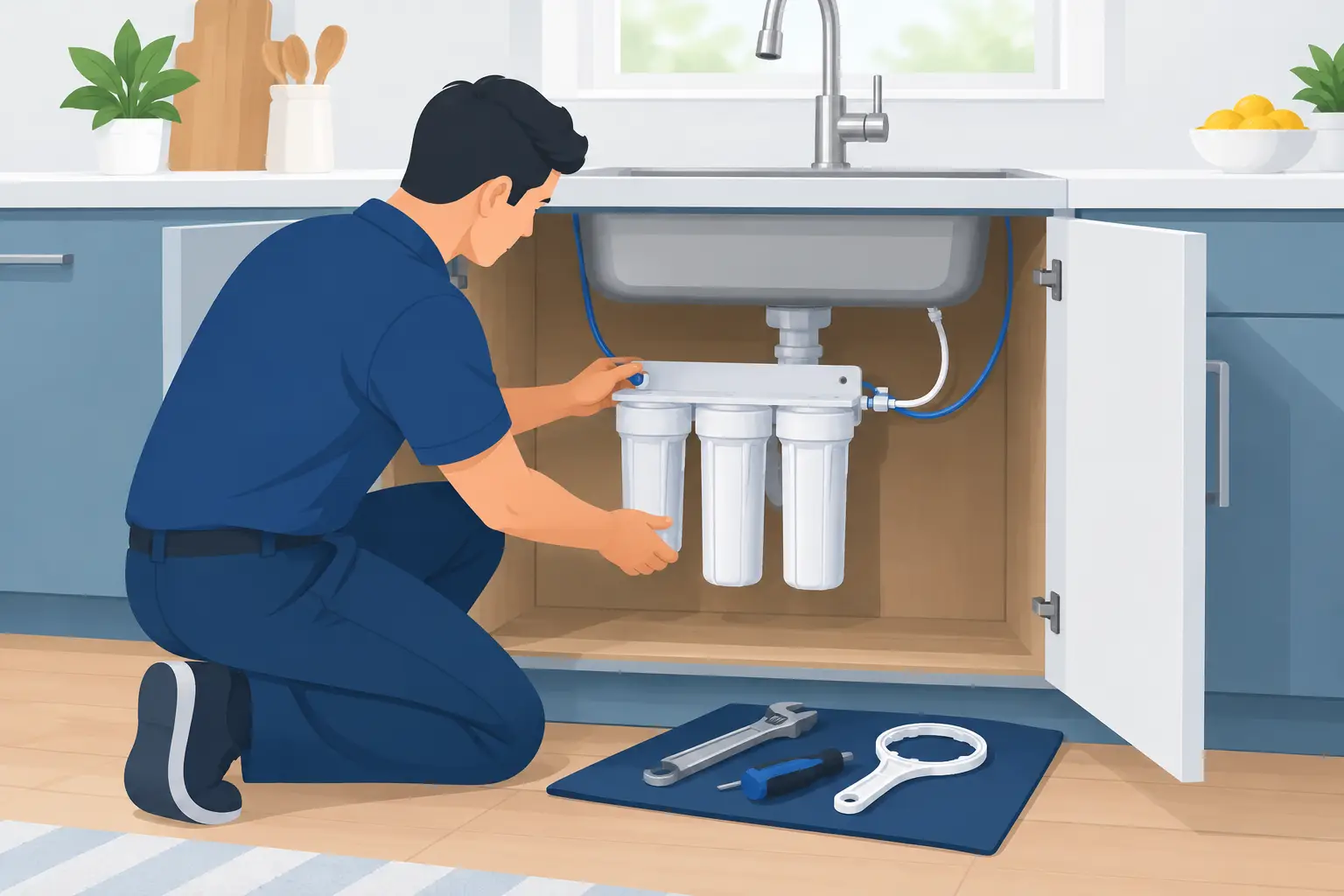
Begin by shutting off the cold-water supply below the sink and opening the kitchen faucet to relieve pressure. Place a towel or shallow pan beneath the connections. Even a small amount of residual water can make cabinet work messy.

The typical installation sequence starts with mounting the filter bracket on a solid cabinet wall where cartridges can be removed without obstruction. Avoid mounting it so low that it sits in standing water after a minor cabinet leak, and avoid placing it where the housing will strike pipes or drawers during service.

Next, install the supplied adapter or tee fitting on the cold-water line. This supplies water to the filtration system while preserving the existing line to the kitchen faucet. Use only the fittings provided or fittings approved for the system. Mixing incompatible parts can lead to poor seals, restricted flow, or premature fitting failure.

Run the inlet and outlet tubing neatly, allowing enough slack to avoid sharp bends. Kinked tubing can reduce flow and place stress on quick-connect fittings. Push tubing fully into each fitting according to the manufacturer’s instructions, then gently pull it back to confirm it is secure.

If the system uses a dedicated drinking-water faucet, mount it only after confirming the countertop material can be drilled safely. Stainless steel sinks are generally straightforward with the right bit and technique. Granite, quartz, porcelain, and solid-surface counters can crack or chip if drilled incorrectly. A professional installer can assess the material and use the appropriate tools.

Reverse osmosis systems require an additional drain saddle or approved drain connection. Its placement must allow wastewater to flow correctly and must not interfere with the sink drain or dishwasher connection. Because this part affects both performance and local plumbing requirements, it is an area where experience makes a meaningful difference.

Flush the System and Inspect Every Connection

Once all connections are complete, slowly turn on the cold-water supply. Do not open it abruptly. A gradual start makes it easier to spot a loose fitting before water sprays inside the cabinet.

Check every connection with a dry paper towel, including the supply adapter, tubing fittings, filter housings, faucet base, and any drain connection. A paper towel reveals small leaks more clearly than a quick visual inspection. Check again after the system has been running for several minutes and once more later that day.

New carbon filters usually need flushing to remove fine carbon particles and prepare the media for use. Follow the specific flushing instructions supplied with the system. Reverse osmosis systems may require filling and emptying the storage tank more than once before the water is ready for regular use.

Do not judge a system by the first glass of water. Carbon taste, trapped air, and residual manufacturing dust can affect the initial flush. Once properly flushed, water should run clear and the system should provide consistent flow appropriate to its design.

When a DIY Installation Is Not the Best Option

Many basic under-sink filters can be installed by a capable homeowner. Still, DIY is not always the lower-risk choice. A small leak can damage cabinetry, flooring, and adjacent finished spaces long before it becomes visible.

Professional installation is particularly advisable when the home has corroded plumbing, restricted cabinet access, stone countertops, a reverse osmosis drain connection, a suspected lead issue, or an existing water-quality problem that has not been tested. It is also the better route when you want filtration coordinated with a water softener, whole-home filter, ultraviolet system, or well-water treatment equipment.

A qualified water treatment specialist can test or review your water, size the system appropriately, install it cleanly, and explain the service schedule. That prevents a common mistake: buying a filter based on a label claim that does not match the contaminants or water conditions in the home.

Keep the Filter Working After Installation

Installing the system is only the beginning. Filter cartridges have a limited service life, usually measured by time, gallons treated, or both. Waiting until water tastes bad is not a reliable replacement schedule. A spent filter can reduce flow and may no longer provide the reduction performance you purchased it for.

Write the installation date inside the cabinet or set a calendar reminder. Keep replacement cartridges on hand if your household depends on the system daily. When changing cartridges, shut off the water supply, relieve pressure, inspect O-rings and fittings, and check carefully for leaks after restarting the system.

Canadian Smart Home Solutions helps Ontario homeowners choose and install drinking-water and whole-home treatment systems based on practical water concerns, not one-size-fits-all assumptions. The right under-sink filter should be easy to maintain, properly installed, and matched to the water coming into your home. If your water has persistent staining, scale, sulphur odour, or suspected contamination, start with a proper assessment before selecting a filter.

Are Water Softeners Right for Your Ontario Home?

Hard water often announces itself long before a water test confirms it. White crust builds around faucets and showerheads, glassware comes out of the dishwasher cloudy, and soap seems to disappear without producing a proper lather. Water softeners address the minerals behind these frustrations, helping Ontario homeowners protect plumbing, appliances, fixtures, and everyday comfort.

For many properties, hardness is not a health emergency. It is a costly maintenance issue that gets worse quietly. Calcium and magnesium can accumulate inside hot-water equipment, reduce efficiency, leave residue on finished surfaces, and shorten the service life of appliances that use water every day. The right treatment system can stop that cycle at the source.

What hard water does to a home

Hardness occurs when water contains elevated levels of dissolved calcium and magnesium. These minerals are common in municipal and private well water across Ontario. You may not see them in a glass of water, but heat and evaporation make their effects visible quickly.

The most familiar sign is scale. It can collect on taps, shower glass, kettles, humidifiers, coffee makers, and dishwasher components. Inside your plumbing, the same deposits can restrict flow over time. Water heaters are especially vulnerable because heat accelerates mineral buildup. A layer of scale makes the equipment work harder to transfer heat, which can increase energy use and contribute to premature repairs or replacement.

Hard water also affects cleaning. It reacts with soap and detergent, leaving residue on skin, hair, clothing, dishes, and bathroom surfaces. Families may use more shampoo, laundry detergent, or cleaning products without realizing the water quality is part of the problem. Softened water improves soap performance, makes rinsing easier, and reduces the amount of residue left behind.

How water softeners solve scale problems

Most conventional water softeners use ion exchange. Water flows through a tank containing resin beads that are charged with sodium or potassium ions. As hard water passes through the resin, calcium and magnesium attach to the beads while the sodium or potassium ions are released into the water.

Over time, the resin needs to be regenerated. A brine solution from the salt tank flushes the collected hardness minerals away and recharges the resin. Modern demand-initiated systems use a metered valve to regenerate based on household water use rather than a fixed calendar schedule. This approach helps manage salt and water consumption while ensuring the system keeps up with demand.

A properly selected softener is typically installed where water enters the home, so treated water reaches the fixtures, appliances, bathrooms, and laundry areas that benefit most. Some households choose to keep an unsoftened cold-water line to the kitchen or an outdoor tap. The best configuration depends on the plumbing layout, water source, and the family’s preferences.

Choosing the right water softener size

A water softener that is too small may regenerate frequently, use more salt than necessary, and struggle during busy periods. One that is oversized can cost more upfront than the home requires. Sizing should be based on more than the number of bathrooms.

A water analysis identifies the hardness level, usually measured in grains per gallon or milligrams per litre. Daily water use, number of occupants, plumbing flow rate, and peak demand also matter. A household with four people, multiple bathrooms, and frequent laundry use requires a different system from a small home with one resident, even if the measured hardness is identical.

Private well owners should take sizing particularly seriously. Well water may contain iron, manganese, sulphur, sediment, or bacteria in addition to hardness. Iron can foul softener resin, while sulphur can create a noticeable rotten-egg odour. In these cases, a water softener may be one part of a larger treatment design that includes sediment filtration, iron and sulphur removal, ultraviolet disinfection, or other equipment suited to the test results.

Salt-based softeners versus salt-free conditioners

Salt-based ion-exchange systems remove hardness minerals and are the most dependable choice when the goal is to eliminate scale and improve soap performance throughout the home. They require salt, a drain connection, electricity for the control valve, and periodic maintenance.

Salt-free conditioners are sometimes marketed as alternatives for homeowners who want to avoid salt. These systems do not remove calcium and magnesium from the water. Depending on the technology and water conditions, they may alter how minerals behave and can help reduce scale adhesion in certain applications. They do not provide the same results for laundry, bathing, or mineral removal.

That distinction matters. If you have severe scale, cloudy dishes, stiff laundry, or a water heater affected by mineral buildup, a conventional softener is generally the more effective solution. If reducing salt handling is your top priority and your hardness level is moderate, a conditioner may be worth discussing after a proper water assessment.

Sodium concerns and drinking water

A common question is whether softened water adds too much sodium. The amount added depends on the original hardness level and how much water is consumed. For most people, it is not a concern, but households following sodium-restricted diets may prefer potassium chloride for regeneration or maintain a separate drinking-water line.

A reverse osmosis drinking-water system is another practical option. It can reduce dissolved contaminants and improve taste at a dedicated kitchen tap, while the whole-home softener protects the plumbing and appliances. These systems serve different purposes and often work well together.

Installation details that affect performance

A quality water softener is only as reliable as its installation. The unit needs adequate space, access to a drain, a nearby electrical outlet, and a bypass valve so water can continue flowing when maintenance is required. The drain connection must be installed correctly to protect against backflow and meet applicable plumbing requirements.

The location should also make salt delivery and refilling manageable. Placing a brine tank in a difficult corner may seem harmless on installation day, but it can make routine care unnecessarily inconvenient for years. An experienced installer considers access, drainage, water pressure, flow requirements, and the condition of existing plumbing before recommending equipment.

For homes with older pipes, visible staining, or fluctuating well-water quality, testing should come before installation. A softener will not remove lead, kill bacteria, or correct every source of discolouration. It solves hardness. Identifying the full water profile prevents homeowners from purchasing a single system when a combined solution is needed.

Maintaining your system for long-term protection

Water softeners are dependable equipment, but they are not maintenance-free. The brine tank needs the right type of salt and should be checked regularly. Salt bridges, where a hardened layer forms above the water, can stop proper regeneration even when the tank appears full. High-purity salt pellets can help reduce residue and cleanup.

The resin tank and control valve also benefit from periodic service, especially when iron is present. If water begins to feel hard again, scale returns, or the system regenerates unusually often, it is worth having the equipment inspected rather than waiting for a complete failure.

For commercial properties, maintenance planning becomes even more important. Hotels, schools, healthcare facilities, restaurants, and multi-unit buildings can place significant demand on treatment equipment. High flow rates, peak-use periods, and continuous hot-water production may require duplex softeners or engineered systems that regenerate without interrupting treated-water service. Equipment should be designed around actual usage, not simply selected from a residential capacity chart.

When a softener should be part of a complete solution

Hardness is often only one piece of the water-quality picture. Municipal-water customers may be concerned about chlorine taste, lead from aging plumbing, or sediment. Well-water and lake-water properties can face bacteria, tannins, iron, sulphur odours, or seasonal changes in source-water quality.

This is why a water test and a practical site review are so valuable. Canadian Smart Home Solutions can assess the problem, explain which contaminants or minerals are present, and recommend a whole-home treatment plan that matches the property. The goal is not to add equipment unnecessarily. It is to provide the right protection for the water being used and the people relying on it.

If you are constantly cleaning scale from fixtures or replacing appliances sooner than expected, hard water may already be costing more than you think. A properly sized, professionally installed softener turns that ongoing maintenance problem into a controlled, manageable part of home care.

Water Filtration for Real Ontario Water Problems

A white crust around the kettle, orange staining in the toilet, a sulphur smell at the tap, or water that simply tastes off are not cosmetic annoyances. They are signs that your water needs attention. Effective water filtration starts by identifying what is actually in the water, then selecting a system that addresses the problem at the right point in the building.

For Ontario homeowners, water quality can vary sharply from one neighbourhood to the next. Municipal water may be safe but hard, chlorinated, or affected by older plumbing. Private wells can contain iron, manganese, sulphur, sediment, bacteria, or excessive hardness. Lake water brings another set of treatment needs. A good solution protects the people using the water, the plumbing carrying it, and the appliances that depend on it every day.

Water filtration is not one-size-fits-all

A basic filter can improve taste, but it will not necessarily remove lead, stop scale buildup, treat bacteria, or clear iron stains. This is where many property owners spend money on equipment that does not solve the original issue. The right treatment plan depends on the water source, the contaminant, household demand, plumbing layout, and whether the concern is drinking water, whole-home performance, or both.

Municipal water often benefits from carbon filtration to reduce chlorine taste and odour, along with a water softener where hardness is high. Homes supplied by a well may need sediment filtration, iron and sulphur removal, softening, ultraviolet disinfection, or several stages working together. A cottage using lake water requires careful treatment and disinfection designed around changing source-water conditions.

Commercial and institutional facilities require the same disciplined approach at a larger scale. A hotel, school, healthcare facility, restaurant, or multi-unit property may need high-flow equipment that maintains pressure while treating a much greater volume of water. Treatment equipment must be sized for peak demand, not just average use, or occupants may experience poor flow and inconsistent results.

Start with a water test, not a product

Water testing is the most useful first step because appearances can be misleading. Clear water can still contain dissolved minerals, lead, or contaminants that affect health and equipment. Conversely, a noticeable odour or stain can point to a specific treatment need that a general-purpose filter will not fix.

A proper analysis can assess hardness, iron, manganese, sulphur, pH, total dissolved solids, turbidity, and other factors relevant to the property. For private water supplies, bacterial testing and source conditions also matter. The results help determine not only which equipment is required, but the order in which systems should be installed.

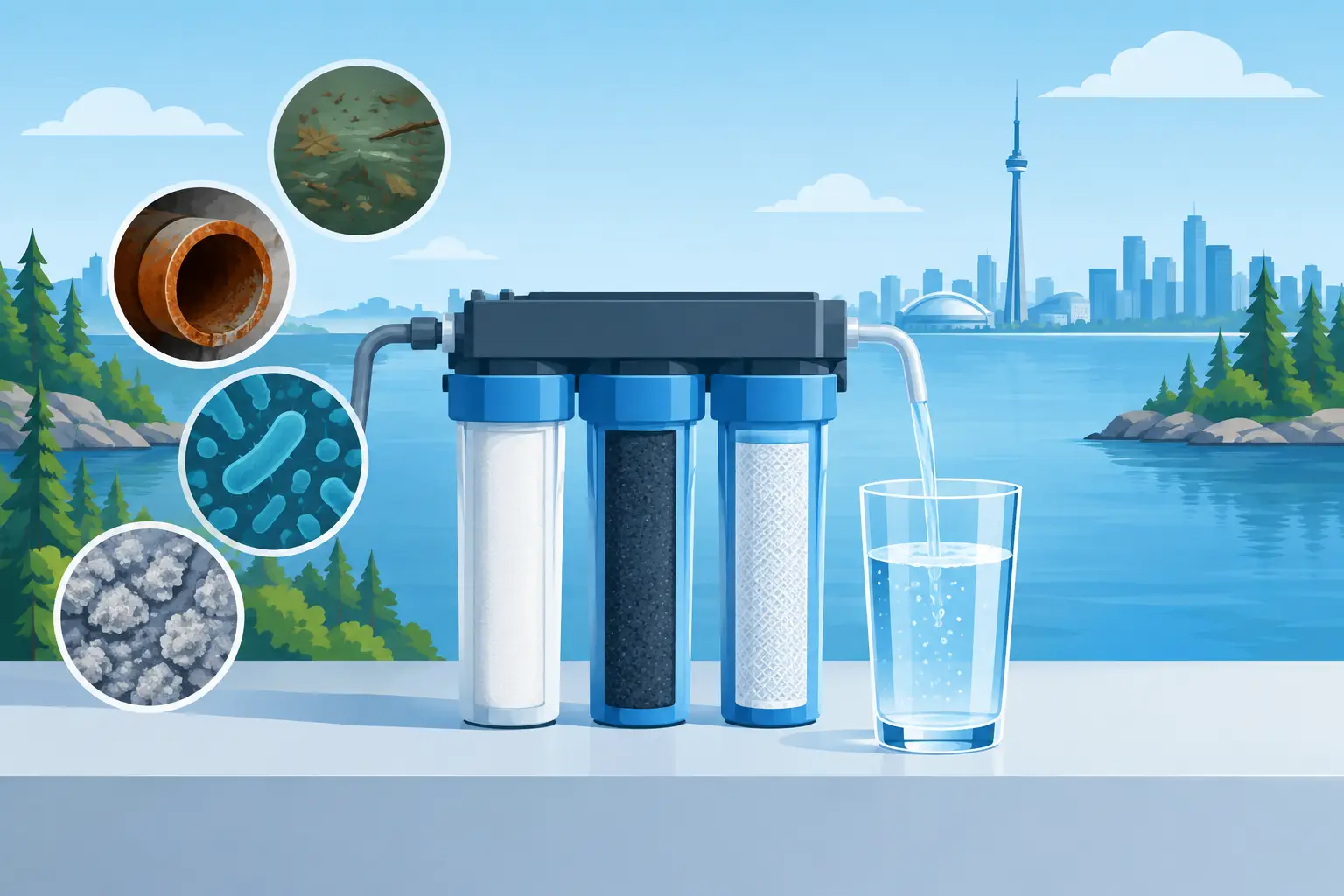
For example, heavy sediment may need to be removed before a carbon filter, ultraviolet sterilizer, or reverse osmosis membrane. Otherwise, the downstream equipment can clog, lose performance, or require service too frequently. When iron and hardness are both present, treatment sequencing matters just as much. A system should be engineered to work as a complete solution rather than a collection of unrelated components.

Whole-home water filtration solves daily-use problems

Whole-home systems treat water as it enters the building, protecting every fixture and water-using appliance. That makes them a practical choice when the concern extends beyond a glass of drinking water. Showers, laundry, dishwashers, water heaters, humidifiers, ice makers, and boilers all benefit when the incoming water is properly treated.

Hard water is one of the most common Ontario concerns. It leaves scale on fixtures, reduces soap performance, makes glassware look cloudy, and can shorten the service life of hot-water equipment. A water softener removes hardness minerals through ion exchange, reducing scale before it reaches the plumbing. While a softener is often discussed alongside water filtration, it serves a different purpose. It is designed for calcium and magnesium, not for every possible contaminant.

Carbon filtration is a strong option for chlorine taste, chemical odours, and certain organic compounds. It can make water more pleasant to drink and bathe in, particularly in homes on municipal supplies. However, carbon media has a service life and needs to be properly sized. An undersized filter may improve water briefly but will not provide consistent performance for a busy household.

Iron and sulphur removal systems address common well-water frustrations. Iron can produce orange, red, or brown stains on sinks, toilets, and laundry. Sulphur can create a rotten-egg odour. The correct treatment method depends on the concentration, water chemistry, and flow requirements. In some cases, an oxidizing filter is appropriate; in others, a specialized media system or pre-treatment stage is needed.

Drinking-water systems add focused protection

A whole-home system and a drinking-water system are often best used together, not treated as competing choices. Whole-home treatment manages broad issues such as hardness, sediment, chlorine, and staining. A point-of-use system at the kitchen sink provides a further level of treatment for water used for drinking and cooking.

Reverse osmosis systems are widely used for this purpose. They reduce a broad range of dissolved substances and can significantly improve taste. They are especially useful where homeowners are concerned about lead, certain dissolved minerals, or the quality of water used for infant formula, coffee, soups, and daily drinking.

There are trade-offs. Reverse osmosis systems produce water more slowly than a standard tap and use a storage tank or tankless design to make purified water available when needed. They also require regular filter changes and periodic membrane maintenance. A properly installed system makes that upkeep straightforward, but it should never be treated as maintenance-free.

Lead removal deserves specific attention in older homes and buildings. Lead can enter water through service lines, solder, fixtures, or aging plumbing components even where the municipal supply itself meets treatment standards. Testing and selecting a treatment system certified for the concern are sensible steps, particularly for families with young children and for facilities serving vulnerable populations.

Ultraviolet treatment protects private water supplies

For well and lake water, ultraviolet sterilization can be a critical safeguard against microbiological contamination. UV systems use ultraviolet light to inactivate bacteria and other microorganisms without adding chemicals to the water. They are highly effective when the water reaching the chamber is clear enough for the light to work properly.

That condition matters. Sediment, iron, or cloudy water can shield microorganisms from the UV light. Pre-filtration is therefore often required, and the lamp must be replaced on schedule. UV is not a substitute for filtration, softening, or iron removal. It is a dedicated disinfection stage within a properly designed water treatment system.

Installation and service determine long-term performance

Even high-quality equipment will underperform if it is installed incorrectly, poorly sized, or left without maintenance. Plumbing connections, drain requirements, bypass valves, pressure considerations, electrical connections for UV units, and code compliance all affect the finished system. Installation should also allow practical access for filter changes, salt loading, media service, and future inspection.

For commercial properties, the stakes are higher. Downtime, pressure loss, poor water quality, and unplanned repairs can disrupt operations and affect tenants, guests, staff, or patients. Equipment should be selected for the building’s actual peak flow, treatment goals, and maintenance capacity. In many cases, custom-engineered systems offer better reliability than trying to adapt a residential-style unit to a demanding application.

Canadian Smart Home Solutions approaches water treatment as a diagnosis-and-design process, combining water analysis, properly matched equipment, professional installation, and ongoing support. That approach helps avoid common mistakes such as treating only the kitchen tap while scale damages the rest of the home, or installing a UV unit without addressing the sediment that limits its effectiveness.

Choose a system based on the result you need

The best question is not, “What filter should I buy?” It is, “What do I want my water to do better?” If your priority is protecting plumbing from scale, a softener may be central to the solution. If drinking-water taste and dissolved contaminants are the concern, reverse osmosis may be appropriate. If a well produces staining and odour, iron and sulphur treatment should be evaluated. If the source is private water, UV disinfection may also be necessary.

Water quality can change with seasons, well conditions, plumbing upgrades, and household usage. Treat your system as part of the property’s essential infrastructure, and have it assessed when a new odour, stain, taste, or appliance problem appears. The right treatment plan gives you cleaner water at the tap and fewer water-related problems everywhere else.

What Lead Filters Work for Ontario Homes?

Lead filters are not a cosmetic upgrade when a home has a potential lead concern. They are a practical barrier between plumbing-related contamination and the water your family drinks, cooks with, and uses to prepare infant formula. The right system can substantially reduce lead at the tap, but only when it is matched to the source of the problem, certified for the job, and maintained on schedule.

In Ontario, lead can be an issue in older homes with lead service lines, older interior plumbing, lead-based solder, or certain brass fixtures. Municipal water may leave the treatment plant meeting required standards, yet water can pick up lead while travelling through the service line or household plumbing. That distinction matters because a general sediment filter or water softener is not automatically a lead removal solution.

Where lead enters household water

A lead service line is the pipe that connects a municipal water main to a building. Many Ontario municipalities have programs to identify and replace these older lines, but replacement can take time and private-side piping may remain the property owner’s responsibility. Homes built or renovated decades ago may also have older soldered copper pipes or fixtures that contribute small amounts of lead.

Lead levels can change from one day to the next. Water that has been sitting in pipes for several hours often has a greater chance of collecting lead than water that has been running. Water chemistry, pipe condition, temperature, and recent plumbing work can all affect results.

That is why taste and appearance are not reliable indicators. Lead has no dependable taste, smell, or colour at levels that may be a health concern. Clear, good-tasting water can still require treatment.

Start with testing, not assumptions

Before selecting a filter, arrange appropriate water testing. A test helps confirm whether lead is present and provides a clearer picture of water conditions that can affect treatment, including pH, hardness, iron, turbidity, and other contaminants.

For municipally supplied homes, the local municipality may provide guidance on lead sampling or identify neighbourhoods with known lead service lines. An accredited laboratory can also provide detailed results. Sampling instructions matter. A first-draw sample, taken after water has remained unused for a specified period, may be used to assess plumbing-related lead exposure. Follow the laboratory or municipal instructions carefully so the result is meaningful.

Well-water properties need a different approach. Lead can still come from household plumbing, pumps, fittings, or components, but well water may also contain iron, manganese, bacteria, or sediment that affects how a lead treatment system performs. A complete analysis is especially valuable before installing equipment on a private well.

Choosing lead filters that actually address the problem

The most dependable residential option is often a point-of-use system installed at the kitchen sink. This treats water where it is used for drinking and food preparation, rather than requiring every litre used for showers, laundry, and toilets to pass through specialized media.

Look for products certified to reduce lead under a recognized performance standard. NSF/ANSI 53 certification is commonly associated with lead reduction in carbon block filters, while NSF/ANSI 58 applies to reverse osmosis systems. Certification should apply to the actual filter model and its lead-reduction claim, not simply to one component or to the brand in general.

Carbon block filters

A high-quality carbon block filter can reduce lead while also improving chlorine taste and odour. It is a practical choice where municipal water is otherwise in good condition and a homeowner wants filtered drinking water from a dedicated faucet or compatible kitchen tap.

Its limitation is capacity. Every cartridge has a rated service life, and that life may be shorter when water contains high sediment levels or when household consumption is greater than expected. A filter that is overdue for replacement should not be treated as continued lead protection.

Reverse osmosis systems

Reverse osmosis, often called RO, is a point-of-use system that uses a membrane to reduce a broad range of dissolved contaminants, including lead. It can be an excellent choice for homeowners who want very high-quality drinking and cooking water, particularly when testing identifies more than one concern.

RO systems require professional consideration of water pressure, pretreatment, drain connections, and maintenance. Hard water can shorten membrane life if it is not addressed properly. For many homes, an RO system paired with suitable prefiltration provides a reliable, convenient drinking-water solution.

Whole-home lead treatment

A whole-home system may make sense when lead needs to be managed at multiple drinking-water locations, in a large residence, or in a commercial or institutional setting. However, whole-home lead treatment must be engineered for the property’s flow rate, water chemistry, and peak demand.

Not every whole-home filter removes dissolved lead. Standard sediment cartridges catch particles, but dissolved lead requires the right treatment media and validated performance. A system also needs enough contact time to work at realistic flow rates. Installing an undersized filter at the main water line can reduce pressure without delivering the intended protection.

For schools, care facilities, hotels, and other high-use buildings, point-of-use filtration at drinking fountains, kitchen stations, and bottle-filling areas may be combined with central treatment. The best design depends on building plumbing, occupancy, testing results, and maintenance capacity.

Installation details that protect performance

A filter is only as dependable as its installation. Point-of-use filters should be installed on the cold-water line used for drinking and cooking, unless the manufacturer specifically approves another application. Hot water can affect filter materials and may contain higher levels of metals released from plumbing.

The system should also be accessible. If changing a cartridge requires moving appliances, shutting off multiple valves, or reaching an awkward location, maintenance is more likely to be delayed. A professional installation can include shut-off valves, pressure checks, correct tubing connections, and a clear service schedule.

In homes with visibly cloudy water, sediment, iron, or severe hardness, pretreatment may be necessary. Sediment can block cartridges prematurely, while hardness can interfere with some treatment equipment. Solving the full water-quality picture usually produces better results than adding a single filter to a complicated water problem.

Maintenance is part of lead reduction

Lead filters need scheduled service. Replace cartridges and membranes according to the manufacturer’s rated capacity, time limit, or whichever comes first. Do not wait for a change in taste or water flow. Those signs may occur too late, and lead itself is not something you can taste.

Keep a simple record of installation dates, replacement dates, filter model numbers, and any water test results. This is particularly useful for rental properties, businesses, and facilities where several people may be responsible for maintenance.

After extended periods away from home, run cold water before drinking or cooking, especially if the home has older plumbing. Use cold water for consumption and heat it separately when needed. Boiling water does not remove lead and can increase its concentration as water evaporates.

A filter helps, but pipe replacement remains the permanent fix

Certified lead filtration is an effective immediate safeguard, but it does not remove lead from a service line or eliminate old plumbing materials. Where a lead service line is confirmed, replacement is the long-term solution. Until that work is complete, properly maintained filtration and good flushing habits can reduce exposure at the tap.

Canadian Smart Home Solutions can assess test results, household water use, and existing equipment to recommend a lead reduction approach that fits the property. The goal is not to sell a one-size-fits-all cartridge. It is to provide dependable drinking water protection without creating pressure, maintenance, or compatibility problems elsewhere in the home.

If you are concerned about lead, begin with a water test and a close look at the age of your plumbing. A clear result and a correctly selected filter can turn an uncertain water concern into a practical plan your household can maintain with confidence.

Private Well Treatment Guide for Ontario Homes

A private well gives your household independence, but it also makes you responsible for the water entering every tap, appliance, and plumbing fixture. This private well treatment guide helps Ontario homeowners move beyond the guesswork of stained sinks, sulphur odours, hard water scale, or concerns about bacteria and build a treatment plan based on what is actually in their water.

Well water can change with the seasons, heavy rainfall, nearby construction, changes to groundwater, or issues with the well cap and casing. A system that worked well for years may need adjustment when water conditions shift. The right answer is rarely a single filter. It is usually a properly sequenced treatment system designed around your water test, household demand, and specific water quality concerns.

Start With a Complete Well Water Test

Water treatment should begin with analysis, not equipment selection. Clear water can still contain dissolved minerals, bacteria, nitrates, lead, or other contaminants that cannot be seen or smelled. Conversely, orange water may look alarming but be caused primarily by iron, which is often manageable with the right filtration equipment.

For most private wells, testing should assess bacteria, hardness, iron, manganese, pH, alkalinity, total dissolved solids, sulphur or hydrogen sulphide where odours are present, and nitrates or nitrites where relevant. A more detailed analysis may be warranted for arsenic, lead, uranium, sodium, tannins, pesticides, or other concerns based on the property, plumbing, local conditions, and previous test results.

Bacterial testing deserves special attention. Total coliform and E. coli results can indicate a pathway for contamination, such as a damaged well cap, surface water entering the well, poor drainage, or a compromised well casing. Treatment equipment can provide protection, but an underlying well defect should also be investigated and corrected.

A laboratory test is the strongest basis for a system recommendation. Home test strips can be useful as a quick screening tool for hardness or pH, but they do not replace a professionally collected and interpreted water analysis. Retest at least once a year for bacteria and whenever the taste, odour, colour, or clarity changes. Testing after flooding, plumbing work, or a long period of vacancy is also prudent.

Identify the Problem Before Choosing Treatment

A well-water system should solve the problem without adding unnecessary complexity. The most common issues in Ontario homes often occur together, which is why whole-home treatment is frequently more effective than installing one point-of-use filter at the kitchen sink.

Hard Water and Scale Buildup

Hardness is caused mainly by calcium and magnesium. It leaves white mineral deposits on faucets, shower glass, kettles, humidifiers, and inside water-using appliances. Over time, scale can reduce the efficiency and service life of water heaters, dishwashers, washing machines, fixtures, and plumbing components.

A properly sized water softener removes hardness before it travels through the home. Sizing matters. A unit that is too small may regenerate excessively or allow hardness to pass through during peak household demand. A system that is too large can use more salt and water than necessary. Household size, water use, hardness level, and iron content all affect the correct choice.

Iron, Manganese, and Staining

Iron can create orange, red, or brown staining on toilets, tubs, clothing, and fixtures. Manganese often produces darker brown or black staining and can be more difficult to remove. Both may affect water taste and can foul plumbing, softeners, and reverse osmosis membranes if left untreated.

The appropriate solution depends on the form and concentration of the iron or manganese. Sediment filtration may capture particles already suspended in water, while dissolved iron often needs oxidation followed by specialized media filtration. In some cases, air injection, an oxidizing filter, or a chemical feed system is appropriate. Iron bacteria can create slime and recurring odours, requiring a different approach that may include well cleaning or disinfection along with treatment.

Sulphur Odour and Bad-Tasting Water

The familiar rotten-egg smell is commonly associated with hydrogen sulphide gas. It can be strongest when hot water runs, because heat releases the gas more quickly. The odour may originate in the well water, the water heater, or bacteria within the plumbing system.

An odour problem should be diagnosed before selecting equipment. A water heater issue may require maintenance or an anode adjustment, while hydrogen sulphide in the incoming water may call for aeration, oxidation, or specialized filtration. If iron, manganese, and sulphur occur together, a combined treatment system may be more practical than separate units.

Sediment, Turbidity, and Cloudy Water

Sand, silt, rust particles, and other sediment can make water cloudy and wear out fixtures, valves, and appliances. Sediment filtration is often the first stage of a treatment train because it protects downstream equipment. The filter size and micron rating should reflect the amount and type of material present.

A very fine cartridge can improve clarity, but it may plug quickly when sediment is heavy. For properties with recurring sand or high turbidity, a backwashing filter or sediment separator may be a better long-term choice. The goal is reliable flow as well as cleaner water.

Build the Right Private Well Treatment System

Most well water treatment systems work best in stages. The sequence prevents one issue from undermining the next piece of equipment. For example, sediment should generally be removed before a UV system, because particles can shield microorganisms from ultraviolet light. Iron and hardness removal before reverse osmosis can also protect the membrane and reduce maintenance.

A common whole-home sequence may include sediment filtration, iron or sulphur removal, water softening, and ultraviolet sterilization. A reverse osmosis drinking water system can then be installed at the kitchen sink for high-quality water used for drinking, cooking, coffee, ice, and infant formula preparation.

Not every home needs every component. If the water is bacteriologically safe but hard and high in iron, the focus may be iron removal and softening. If bacteria are a recurring concern, a correctly sized UV sterilizer can provide a valuable final barrier, provided the water is clear enough for UV treatment to work effectively. If lead is a concern from older plumbing components, a certified point-of-use lead reduction solution may be appropriate at drinking water taps.

Flow rate is a critical design factor. A system must keep up when showers, toilets, laundry, and kitchen taps operate at the same time. This is especially relevant for larger homes, homes with multiple bathrooms, and properties with irrigation or high-demand fixtures. Treatment equipment that is undersized can create pressure loss, inconsistent results, and homeowner frustration.

Protect Drinking Water and the Entire Home

A kitchen filter alone may improve taste, but it does not protect shower fixtures, water heaters, laundry equipment, dishwashers, or plumbing from hard water, iron, and sediment. Whole-home treatment addresses water quality at the point where it enters the building, delivering benefits throughout the property.

That said, point-of-use treatment still has a role. Reverse osmosis provides an additional level of purification at the drinking water tap and can reduce a broad range of dissolved contaminants. It is an excellent complement to a whole-home system, not always a replacement for one.

Commercial and institutional well systems require the same disciplined process at a larger scale. Hotels, schools, nursing homes, and other high-use facilities need accurate testing, engineered flow capacity, appropriate disinfection, dependable controls, and a maintenance plan that supports consistent water quality. High water demand makes proper sizing and professional installation especially important.

Plan for Maintenance From Day One

Water treatment is not a set-it-and-forget-it purchase. Filters need changing, softeners need salt, backwashing systems need correct programming, UV lamps need scheduled replacement, and water quality needs periodic verification. Maintenance protects performance and helps identify changes in the well before they become a larger household problem.

Keep a simple record of test results, service dates, filter changes, and any changes in water appearance or odour. If pressure drops, staining returns, salt use changes sharply, or a UV alarm activates, arrange service promptly rather than waiting for the issue to worsen.

Professional installation also matters. Proper bypass valves, drain connections, electrical supply for UV equipment, and plumbing configuration affect both performance and serviceability. An experienced water treatment specialist can size the system for your home, install it cleanly, and explain the maintenance requirements in practical terms.

Canadian Smart Home Solutions helps Ontario homeowners assess well water concerns and install treatment systems that address the full picture, from staining and scale to odours and disinfection needs. The best next step is a current water analysis and a treatment plan built around your actual water, your household, and the protection your property needs.

Hospital Water Quality Guide for Safer Care

A hospital cannot treat water quality as a background utility issue. Water reaches patient rooms, kitchens, laboratories, dialysis areas, sterilization equipment, cooling systems, humidification equipment and staff facilities. A problem that begins as hard-water scale, corrosion, poor taste or bacterial growth can quickly affect patient safety, equipment reliability and operating costs. This hospital water quality guide outlines the practical steps Ontario healthcare facilities can take to understand their water, manage risk and install treatment systems that perform under demanding conditions.

Start with a complete water assessment

Municipal water is treated before it enters a hospital, but that does not mean it will meet every point-of-use requirement inside the building. Water chemistry can change as it moves through service lines, storage tanks, older plumbing, hot-water systems and specialized equipment. Facilities supplied by wells or surface water require even more detailed assessment because source-water conditions can vary by season.

A proper assessment begins at the incoming water supply and extends to representative points throughout the facility. Testing may include hardness, iron, manganese, pH, total dissolved solids, turbidity, chlorine or chloramine residual, lead, copper and microbiological indicators. The right test panel depends on the facility, its water source, the age and materials of its plumbing, and the equipment in use.

For example, a hospital experiencing frequent boiler maintenance may need a focused review of hardness and silica. A building with older fixtures may need lead and corrosion-related testing. If there are concerns about odours, discoloured water, low disinfectant residuals or stagnant areas of plumbing, the investigation should also consider microbial control and the building’s water-management plan.

One sample is rarely enough. Water quality should be assessed at locations that reflect real use, including incoming water, hot-water outlets, low-use areas and departments with specialized needs. This creates a baseline for selecting treatment equipment and establishing sensible monitoring intervals.

Match water quality to each hospital use

Not every tap requires the same degree of treatment. A whole-building solution should protect the plumbing infrastructure and provide consistently high-quality water for general use, while critical departments may need additional point-of-use treatment. Treating every litre to the highest possible standard can add unnecessary cost and maintenance. Under-treating, however, can leave sensitive equipment and vulnerable patients exposed to avoidable risk.

General domestic water may benefit from filtration, softening and disinfection support. Food service often requires better-tasting water and protection for ice machines, steam equipment and dishwashers. Laundry systems need water conditions that support cleaning performance and reduce scale. Mechanical systems may require treatment that protects heat exchangers, boilers and cooling equipment.

Specialized clinical applications require their own specifications and validation procedures. Dialysis water, sterile processing, laboratory feed water and other clinical processes should be designed according to the applicable manufacturer requirements, infection prevention protocols and healthcare standards. A commercial water treatment provider can support the incoming-water and pretreatment side of these systems, but the final design must align with the equipment supplier and facility compliance team.

Hard water and scale are operational problems

Hard water is one of the most common and costly issues in Ontario facilities. Calcium and magnesium form scale inside water heaters, pipes, valves, steam equipment and appliances. That scale reduces heat transfer, restricts flow and increases energy use. It can also shorten the service life of equipment that hospitals depend on every day.

Commercial water softeners are often the practical answer where hardness is high and flow demand is substantial. The system must be sized for peak demand, regeneration capacity, water pressure, available drain connections and service continuity. In a hospital, an undersized softener is not a minor inconvenience. It can allow untreated water to reach sensitive equipment during high-use periods.

Duplex or alternating softener configurations can provide continuous service during regeneration. The correct choice depends on water use patterns, redundancy requirements and the departments being served. Salt storage, brine handling and routine service access should also be planned before installation, not after equipment arrives.

Filtration, carbon and reverse osmosis have different roles

Sediment filtration removes suspended particles that can foul valves, ultraviolet systems and downstream membranes. Carbon filtration can improve taste and odour while reducing chlorine or chloramine where that is appropriate for the application. It may also be used as pretreatment for certain equipment.

Reverse osmosis removes a much wider range of dissolved contaminants than standard filtration. It is often selected where low-mineral water is needed for specialized equipment or drinking-water applications. However, reverse osmosis requires sound pretreatment, periodic membrane monitoring and responsible management of reject water. It should be specified for a clear purpose, rather than treated as a universal solution for every hospital fixture.

Iron, manganese, sulphur odours and turbidity may be more relevant to facilities using private wells or lake-water sources. These issues can stain fixtures, clog equipment and create unpleasant odours. Depending on the test results, an engineered system may combine oxidation, specialized media filtration, softening and disinfection.

Control microbiological risk throughout the plumbing system

Water treatment equipment is only one part of a hospital’s microbial risk strategy. Buildings also need active water management practices that address temperature control, flow, dead legs, storage, stagnation and maintenance. This is particularly relevant for opportunistic waterborne pathogens, including Legionella, which can multiply under favourable conditions in complex building plumbing.

A treatment system should never be used as a substitute for a documented water-management plan. Hot-water temperature management, recirculation performance, flushing procedures and corrective-action protocols all matter. Low-use rooms, vacant wings, rarely used fixtures and renovation areas deserve close attention because water can stagnate there.

Ultraviolet sterilization can provide an additional disinfection barrier at a specific point in the system. It is effective only when the water is clear enough for UV light to penetrate and when the equipment is correctly sized, monitored and maintained. UV does not leave a residual disinfectant in the distribution system, so it cannot solve every downstream plumbing issue on its own.

Where a facility uses carbon filtration, the design and service schedule are especially important. Carbon can improve water quality, but poorly maintained media can become a maintenance concern. Proper prefiltration, planned replacement intervals and regular inspection help keep the system performing as intended.

Build redundancy into critical treatment systems

Hospitals operate around the clock. A treatment system that requires shutdown for servicing may be suitable for a small commercial site, but it can be a poor fit for a large healthcare facility. Critical applications may need duty-standby equipment, bypass arrangements, isolation valves, alarm monitoring and clear service procedures.

Redundancy does not always mean duplicating every component. It means identifying what cannot be allowed to fail without affecting patient care, food service, sterilization, mechanical operations or infection-control measures. For some facilities, that may mean parallel filters and duplex softeners. For others, it may mean reserve capacity, spare parts on site and a service partner able to respond quickly.

System design should also account for peak flow rates, pressure drop, available floor space, drain capacity and future expansion. A treatment room that is difficult to access or impossible to service safely will create ongoing operational problems. Engineered commercial systems should fit the building, not force the building to work around them.

Monitor performance after installation

Installation is the beginning of water quality control, not the finish line. Filters load with sediment, softeners consume salt, UV lamps age, carbon media requires replacement and reverse osmosis membranes need regular performance checks. Without monitoring, a facility may not know performance has declined until equipment scales up, water quality changes or a department reports a problem.

A practical maintenance program should document test results, service dates, consumable changes, alarm conditions and corrective actions. Facility teams should know which readings are normal, who receives alarms and what happens if a treatment component is offline. For critical equipment, response steps should be written, accessible and understood before an issue occurs.

Canadian Smart Home Solutions can help hospitals and other institutional facilities assess incoming water, identify scaling or contamination concerns, and design commercial treatment equipment suited to high-flow, high-demand operations. The strongest results come from combining accurate water testing with professional installation and ongoing service.

The right hospital water treatment plan is rarely a single filter or one-time repair. It is a practical, monitored system that protects the people using the building and the equipment they rely on. Begin with the water your facility actually has, then design for the risks, flow demands and care activities that make your hospital unique.

Lake Filtration for Safe, Reliable Water at Home

A lake can provide a practical, abundant water source for a cottage, seasonal property, or year-round home. It can also change quickly after rain, wind, algae growth, or heavy seasonal use. Effective lake filtration is not one filter attached to a pump. It is a properly planned treatment system that addresses the water entering the property, protects the plumbing, and produces water suitable for its intended use.

For Ontario property owners, the goal is straightforward: reduce sediment, control microbiological risk, improve taste and odour, and keep treatment equipment working reliably when lake conditions shift. The right system starts with understanding what is actually in the water.

Why Lake Water Needs More Than a Basic Filter

Lake water is surface water. Unlike a municipal supply, it is exposed to runoff, wildlife, decaying vegetation, shoreline activity, and changing weather. Water that looks clear at the tap may still contain fine particles, bacteria, parasites, organic material, or tannins that affect safety, appearance, and taste.

Sediment is often the first issue homeowners notice. Sand, silt, algae, and organic debris can block faucet aerators, reduce water pressure, damage pumps, and shorten the life of cartridge filters. After a storm or a busy weekend on the lake, sediment levels can rise enough to overwhelm an undersized system.

Microbiological contamination is the more serious concern. Surface water can contain bacteria and other organisms that should not be assumed safe for drinking, cooking, brushing teeth, or washing food. A quality lake water treatment design therefore needs both physical filtration and a dependable disinfection step.

Odours and colour may also be a problem, particularly when the lake contains algae, decaying leaves, or dissolved organic matter. Water may smell earthy, musty, or swamp-like even when it is not visibly dirty. These concerns can often be treated effectively, but the equipment must be selected for the source water rather than guessed at from appearance alone.

How a Lake Filtration System Should Be Built

A complete lake filtration system uses stages. Each stage has a specific job, and placing them in the right order matters. Trying to make one cartridge or one ultraviolet unit solve every problem usually leads to poor flow, frequent maintenance, or inadequate protection.

Start With Proper Water Intake and Pump Protection

Treatment begins at the lake intake. The intake should be positioned and screened to limit large debris, weeds, and bottom sediment from entering the line. It should also be installed in a location that maintains adequate water depth through changing seasonal levels.

A coarse intake screen is not drinking-water filtration, but it is essential equipment protection. It reduces the load on the pump and the treatment system inside the property. Where water levels, shoreline conditions, or winter use are challenging, the intake and pump arrangement require careful planning before filters are selected.

Remove Sediment Before Fine Treatment

The first indoor treatment stage generally targets suspended material. Depending on water quality, this may include a washable spin-down filter, a backwashing sediment filter, or replaceable cartridge filtration. A larger, backwashing filter is often the better choice for properties with consistently high sediment because it avoids the inconvenience and expense of replacing clogged cartridges every few weeks.

Fine sediment filtration follows when needed. This step improves water clarity and protects downstream equipment, especially ultraviolet sterilizers. UV systems work best when the water is clear because particles can shield microorganisms from the UV light.

The correct micron rating depends on the quality of the source water and the flow rate required. A filter that is too coarse may leave excessive particles behind. One that is too fine can cause pressure loss and require frequent service. This is why water testing and a review of peak water demand are as important as the filter itself.

Treat Taste, Odour, and Organic Material When Needed

Activated carbon is commonly used where lake water has unpleasant taste or odour. It can reduce earthy, musty, chlorine-like, or organic smells and improve the overall drinking experience. Carbon treatment may also help with some dissolved contaminants, but it is not a substitute for disinfection.

Carbon needs regular maintenance. When organic material builds up in neglected media or cartridges, it can become a source of bacterial growth. For that reason, system design should account for service access, replacement schedules, and seasonal shutdown procedures at cottages.

In some cases, tannins or heavy organic loading require more specialized equipment. Yellow or tea-coloured water does not always respond to standard carbon filtration. A water analysis helps identify whether the issue is sediment, tannins, algae-related organics, iron, or another source altogether.

Use UV Disinfection for Microbiological Protection

Ultraviolet disinfection is a core component of many lake water systems. UV light treats water as it passes through the chamber, deactivating bacteria and other microorganisms without adding chemicals to the water. For homes and cottages drawing from a lake, it is often the final safeguard before water reaches the taps.

However, a UV unit is only dependable when it is correctly sized, installed after adequate pre-filtration, and maintained on schedule. The lamp has a service life even if it still appears to be lit. The quartz sleeve also needs cleaning because mineral scale or organic film can reduce UV transmission.

A UV system should be sized for the property’s actual flow demand, not simply the number of people staying there on an average weekend. A home with several bathrooms, a dishwasher, laundry, and outdoor use may need greater capacity than a small seasonal cabin. Commercial and institutional properties require engineered equipment designed for higher and more consistent flow rates.

Testing Guides the Right Lake Water Treatment Plan

Lake water should be tested before a treatment system is specified and re-evaluated when conditions change. At minimum, testing can identify microbiological concerns, turbidity, pH, hardness, iron, manganese, tannins, and other factors that affect treatment performance.

Testing is particularly valuable when a property has a new intake, a changed shoreline, recurring odours, staining, pressure loss, or a history of failed filters. It prevents the common mistake of buying equipment based on a neighbour’s setup. Two cottages on the same lake can have very different water because their intakes, depths, shoreline runoff, and plumbing systems are different.

Seasonal testing also makes sense for properties that see significant variation between spring runoff and late summer. If water becomes cloudier after rain or develops a stronger odour during warm weather, the treatment system may need more sediment capacity, carbon treatment, or adjustments to maintenance frequency.

Lake Filtration for Seasonal and Year-Round Properties

A cottage used only in summer has different operational needs from a permanent lakeside home. Seasonal systems must be easy to shut down, drain, and protect from freezing. Filters and UV equipment should be serviced before opening and closing the property so the system starts each season in good condition.

Year-round homes need greater attention to freeze protection, reliable pressure, and continuous disinfection. If the property is left unattended for periods of time, the system should be designed to minimize avoidable service issues and provide clear maintenance requirements. Equipment that is difficult to access or poorly matched to the home’s water use tends to be neglected.

For larger buildings, rental properties, resorts, and camps, the stakes are higher. High flow rates and varying occupancy can place major demands on filtration and disinfection equipment. These applications benefit from a custom approach that considers peak demand, storage, redundancy, monitoring, and local installation requirements.

Maintenance Protects Water Quality and Equipment

Even the best system needs routine service. Sediment filters must be cleaned, backwashed, or replaced as required. Carbon media and cartridges need scheduled replacement. UV lamps and sleeves need annual attention, and the intake should be inspected for debris or damage.

Ignoring maintenance can lead to reduced pressure, poor taste, shortened equipment life, and lower disinfection performance. It can also make a small, manageable water issue look like a major system failure. A clear service schedule helps property owners plan ahead, especially before cottage season begins.

Canadian Smart Home Solutions can assess lake water conditions, recommend the right treatment stages, and install a system built around the property’s actual water demand. The objective is not to add unnecessary equipment. It is to provide reliable water treatment that protects the people using the water and the plumbing that carries it.

A lake should be one of the best parts of owning a property, not a source of uncertainty at every tap. With proper testing, correctly sized filtration, dependable UV disinfection, and regular maintenance, lake water can be treated with confidence throughout the season and beyond.

Call Now
Get a Quote