
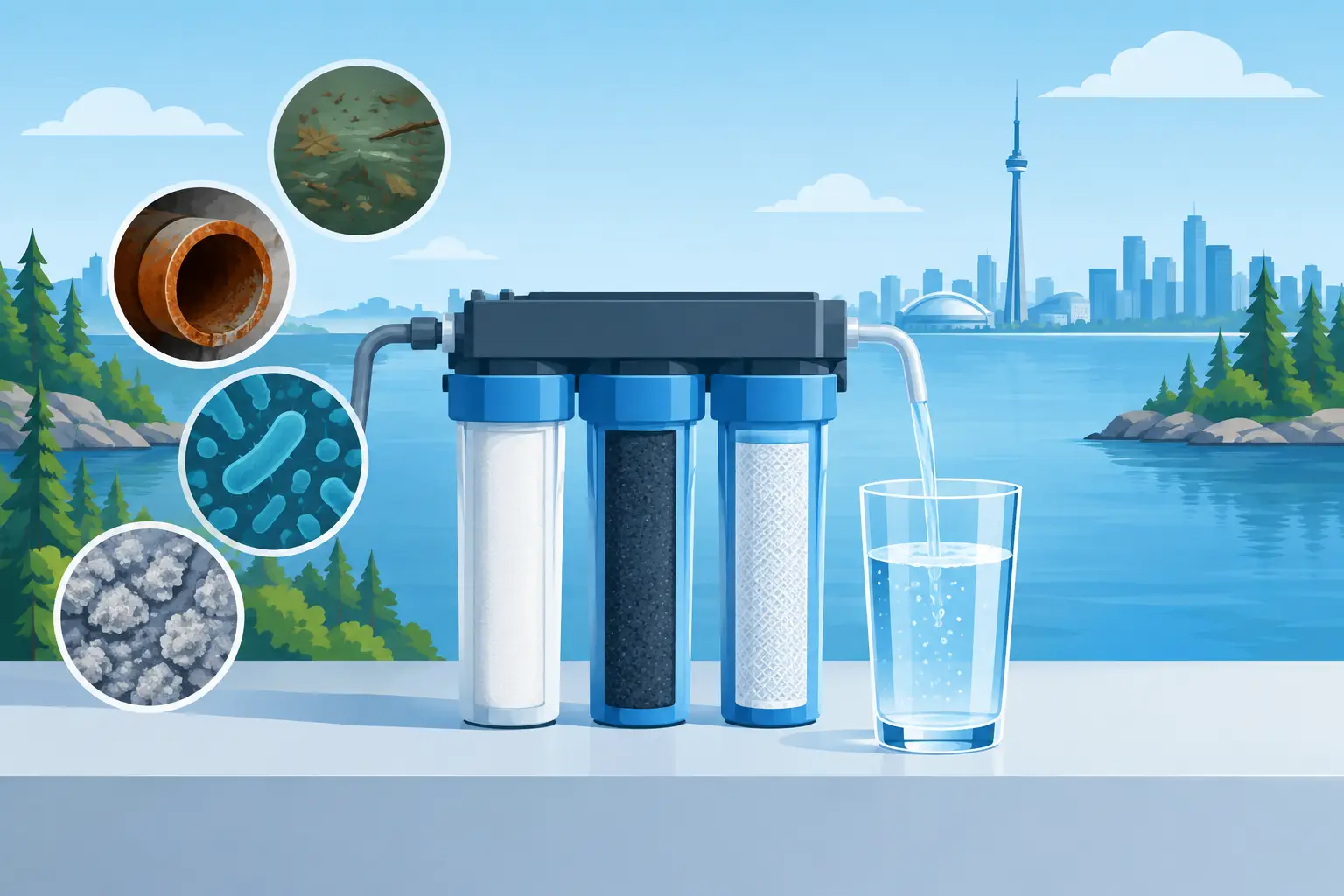
A white crust around the kettle, orange staining in the toilet, a sulphur smell at the tap, or water that simply tastes off are not cosmetic annoyances. They are signs that your water needs attention. Effective water filtration starts by identifying what is actually in the water, then selecting a system that addresses the problem at the right point in the building.
For Ontario homeowners, water quality can vary sharply from one neighbourhood to the next. Municipal water may be safe but hard, chlorinated, or affected by older plumbing. Private wells can contain iron, manganese, sulphur, sediment, bacteria, or excessive hardness. Lake water brings another set of treatment needs. A good solution protects the people using the water, the plumbing carrying it, and the appliances that depend on it every day.
Water filtration is not one-size-fits-all
A basic filter can improve taste, but it will not necessarily remove lead, stop scale buildup, treat bacteria, or clear iron stains. This is where many property owners spend money on equipment that does not solve the original issue. The right treatment plan depends on the water source, the contaminant, household demand, plumbing layout, and whether the concern is drinking water, whole-home performance, or both.
Municipal water often benefits from carbon filtration to reduce chlorine taste and odour, along with a water softener where hardness is high. Homes supplied by a well may need sediment filtration, iron and sulphur removal, softening, ultraviolet disinfection, or several stages working together. A cottage using lake water requires careful treatment and disinfection designed around changing source-water conditions.
Commercial and institutional facilities require the same disciplined approach at a larger scale. A hotel, school, healthcare facility, restaurant, or multi-unit property may need high-flow equipment that maintains pressure while treating a much greater volume of water. Treatment equipment must be sized for peak demand, not just average use, or occupants may experience poor flow and inconsistent results.
Start with a water test, not a product
Water testing is the most useful first step because appearances can be misleading. Clear water can still contain dissolved minerals, lead, or contaminants that affect health and equipment. Conversely, a noticeable odour or stain can point to a specific treatment need that a general-purpose filter will not fix.
A proper analysis can assess hardness, iron, manganese, sulphur, pH, total dissolved solids, turbidity, and other factors relevant to the property. For private water supplies, bacterial testing and source conditions also matter. The results help determine not only which equipment is required, but the order in which systems should be installed.
For example, heavy sediment may need to be removed before a carbon filter, ultraviolet sterilizer, or reverse osmosis membrane. Otherwise, the downstream equipment can clog, lose performance, or require service too frequently. When iron and hardness are both present, treatment sequencing matters just as much. A system should be engineered to work as a complete solution rather than a collection of unrelated components.
Whole-home water filtration solves daily-use problems
Whole-home systems treat water as it enters the building, protecting every fixture and water-using appliance. That makes them a practical choice when the concern extends beyond a glass of drinking water. Showers, laundry, dishwashers, water heaters, humidifiers, ice makers, and boilers all benefit when the incoming water is properly treated.
Hard water is one of the most common Ontario concerns. It leaves scale on fixtures, reduces soap performance, makes glassware look cloudy, and can shorten the service life of hot-water equipment. A water softener removes hardness minerals through ion exchange, reducing scale before it reaches the plumbing. While a softener is often discussed alongside water filtration, it serves a different purpose. It is designed for calcium and magnesium, not for every possible contaminant.
Carbon filtration is a strong option for chlorine taste, chemical odours, and certain organic compounds. It can make water more pleasant to drink and bathe in, particularly in homes on municipal supplies. However, carbon media has a service life and needs to be properly sized. An undersized filter may improve water briefly but will not provide consistent performance for a busy household.
Iron and sulphur removal systems address common well-water frustrations. Iron can produce orange, red, or brown stains on sinks, toilets, and laundry. Sulphur can create a rotten-egg odour. The correct treatment method depends on the concentration, water chemistry, and flow requirements. In some cases, an oxidizing filter is appropriate; in others, a specialized media system or pre-treatment stage is needed.
Drinking-water systems add focused protection
A whole-home system and a drinking-water system are often best used together, not treated as competing choices. Whole-home treatment manages broad issues such as hardness, sediment, chlorine, and staining. A point-of-use system at the kitchen sink provides a further level of treatment for water used for drinking and cooking.
Reverse osmosis systems are widely used for this purpose. They reduce a broad range of dissolved substances and can significantly improve taste. They are especially useful where homeowners are concerned about lead, certain dissolved minerals, or the quality of water used for infant formula, coffee, soups, and daily drinking.
There are trade-offs. Reverse osmosis systems produce water more slowly than a standard tap and use a storage tank or tankless design to make purified water available when needed. They also require regular filter changes and periodic membrane maintenance. A properly installed system makes that upkeep straightforward, but it should never be treated as maintenance-free.
Lead removal deserves specific attention in older homes and buildings. Lead can enter water through service lines, solder, fixtures, or aging plumbing components even where the municipal supply itself meets treatment standards. Testing and selecting a treatment system certified for the concern are sensible steps, particularly for families with young children and for facilities serving vulnerable populations.
Ultraviolet treatment protects private water supplies
For well and lake water, ultraviolet sterilization can be a critical safeguard against microbiological contamination. UV systems use ultraviolet light to inactivate bacteria and other microorganisms without adding chemicals to the water. They are highly effective when the water reaching the chamber is clear enough for the light to work properly.
That condition matters. Sediment, iron, or cloudy water can shield microorganisms from the UV light. Pre-filtration is therefore often required, and the lamp must be replaced on schedule. UV is not a substitute for filtration, softening, or iron removal. It is a dedicated disinfection stage within a properly designed water treatment system.
Installation and service determine long-term performance
Even high-quality equipment will underperform if it is installed incorrectly, poorly sized, or left without maintenance. Plumbing connections, drain requirements, bypass valves, pressure considerations, electrical connections for UV units, and code compliance all affect the finished system. Installation should also allow practical access for filter changes, salt loading, media service, and future inspection.
For commercial properties, the stakes are higher. Downtime, pressure loss, poor water quality, and unplanned repairs can disrupt operations and affect tenants, guests, staff, or patients. Equipment should be selected for the building’s actual peak flow, treatment goals, and maintenance capacity. In many cases, custom-engineered systems offer better reliability than trying to adapt a residential-style unit to a demanding application.
Canadian Smart Home Solutions approaches water treatment as a diagnosis-and-design process, combining water analysis, properly matched equipment, professional installation, and ongoing support. That approach helps avoid common mistakes such as treating only the kitchen tap while scale damages the rest of the home, or installing a UV unit without addressing the sediment that limits its effectiveness.
Choose a system based on the result you need
The best question is not, “What filter should I buy?” It is, “What do I want my water to do better?” If your priority is protecting plumbing from scale, a softener may be central to the solution. If drinking-water taste and dissolved contaminants are the concern, reverse osmosis may be appropriate. If a well produces staining and odour, iron and sulphur treatment should be evaluated. If the source is private water, UV disinfection may also be necessary.
Water quality can change with seasons, well conditions, plumbing upgrades, and household usage. Treat your system as part of the property’s essential infrastructure, and have it assessed when a new odour, stain, taste, or appliance problem appears. The right treatment plan gives you cleaner water at the tap and fewer water-related problems everywhere else.