
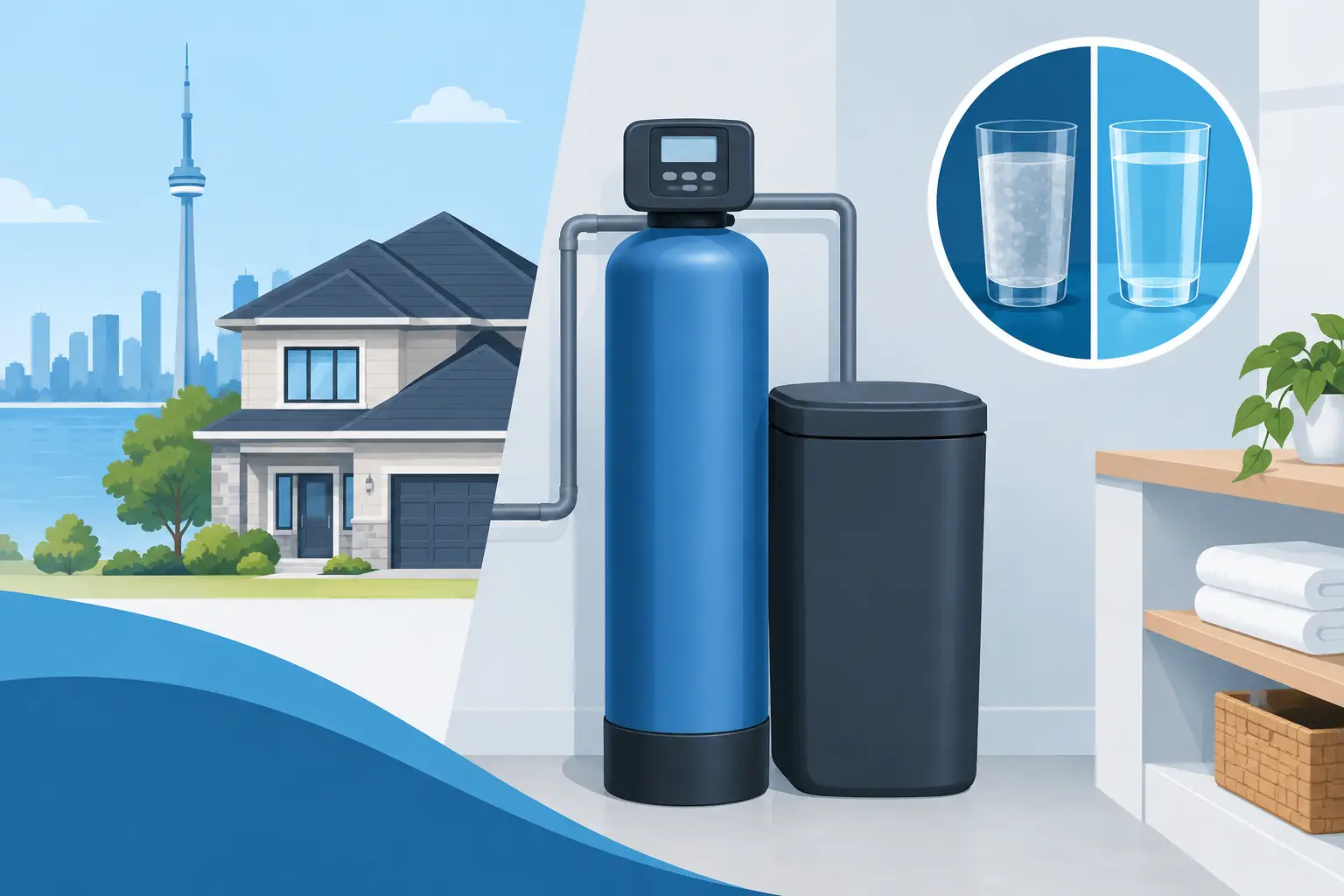
Hard water often announces itself long before a water test confirms it. White crust builds around faucets and showerheads, glassware comes out of the dishwasher cloudy, and soap seems to disappear without producing a proper lather. Water softeners address the minerals behind these frustrations, helping Ontario homeowners protect plumbing, appliances, fixtures, and everyday comfort.
For many properties, hardness is not a health emergency. It is a costly maintenance issue that gets worse quietly. Calcium and magnesium can accumulate inside hot-water equipment, reduce efficiency, leave residue on finished surfaces, and shorten the service life of appliances that use water every day. The right treatment system can stop that cycle at the source.
What hard water does to a home
Hardness occurs when water contains elevated levels of dissolved calcium and magnesium. These minerals are common in municipal and private well water across Ontario. You may not see them in a glass of water, but heat and evaporation make their effects visible quickly.
The most familiar sign is scale. It can collect on taps, shower glass, kettles, humidifiers, coffee makers, and dishwasher components. Inside your plumbing, the same deposits can restrict flow over time. Water heaters are especially vulnerable because heat accelerates mineral buildup. A layer of scale makes the equipment work harder to transfer heat, which can increase energy use and contribute to premature repairs or replacement.
Hard water also affects cleaning. It reacts with soap and detergent, leaving residue on skin, hair, clothing, dishes, and bathroom surfaces. Families may use more shampoo, laundry detergent, or cleaning products without realizing the water quality is part of the problem. Softened water improves soap performance, makes rinsing easier, and reduces the amount of residue left behind.
How water softeners solve scale problems
Most conventional water softeners use ion exchange. Water flows through a tank containing resin beads that are charged with sodium or potassium ions. As hard water passes through the resin, calcium and magnesium attach to the beads while the sodium or potassium ions are released into the water.
Over time, the resin needs to be regenerated. A brine solution from the salt tank flushes the collected hardness minerals away and recharges the resin. Modern demand-initiated systems use a metered valve to regenerate based on household water use rather than a fixed calendar schedule. This approach helps manage salt and water consumption while ensuring the system keeps up with demand.
A properly selected softener is typically installed where water enters the home, so treated water reaches the fixtures, appliances, bathrooms, and laundry areas that benefit most. Some households choose to keep an unsoftened cold-water line to the kitchen or an outdoor tap. The best configuration depends on the plumbing layout, water source, and the family’s preferences.
Choosing the right water softener size
A water softener that is too small may regenerate frequently, use more salt than necessary, and struggle during busy periods. One that is oversized can cost more upfront than the home requires. Sizing should be based on more than the number of bathrooms.
A water analysis identifies the hardness level, usually measured in grains per gallon or milligrams per litre. Daily water use, number of occupants, plumbing flow rate, and peak demand also matter. A household with four people, multiple bathrooms, and frequent laundry use requires a different system from a small home with one resident, even if the measured hardness is identical.
Private well owners should take sizing particularly seriously. Well water may contain iron, manganese, sulphur, sediment, or bacteria in addition to hardness. Iron can foul softener resin, while sulphur can create a noticeable rotten-egg odour. In these cases, a water softener may be one part of a larger treatment design that includes sediment filtration, iron and sulphur removal, ultraviolet disinfection, or other equipment suited to the test results.
Salt-based softeners versus salt-free conditioners
Salt-based ion-exchange systems remove hardness minerals and are the most dependable choice when the goal is to eliminate scale and improve soap performance throughout the home. They require salt, a drain connection, electricity for the control valve, and periodic maintenance.
Salt-free conditioners are sometimes marketed as alternatives for homeowners who want to avoid salt. These systems do not remove calcium and magnesium from the water. Depending on the technology and water conditions, they may alter how minerals behave and can help reduce scale adhesion in certain applications. They do not provide the same results for laundry, bathing, or mineral removal.
That distinction matters. If you have severe scale, cloudy dishes, stiff laundry, or a water heater affected by mineral buildup, a conventional softener is generally the more effective solution. If reducing salt handling is your top priority and your hardness level is moderate, a conditioner may be worth discussing after a proper water assessment.
Sodium concerns and drinking water
A common question is whether softened water adds too much sodium. The amount added depends on the original hardness level and how much water is consumed. For most people, it is not a concern, but households following sodium-restricted diets may prefer potassium chloride for regeneration or maintain a separate drinking-water line.
A reverse osmosis drinking-water system is another practical option. It can reduce dissolved contaminants and improve taste at a dedicated kitchen tap, while the whole-home softener protects the plumbing and appliances. These systems serve different purposes and often work well together.
Installation details that affect performance
A quality water softener is only as reliable as its installation. The unit needs adequate space, access to a drain, a nearby electrical outlet, and a bypass valve so water can continue flowing when maintenance is required. The drain connection must be installed correctly to protect against backflow and meet applicable plumbing requirements.
The location should also make salt delivery and refilling manageable. Placing a brine tank in a difficult corner may seem harmless on installation day, but it can make routine care unnecessarily inconvenient for years. An experienced installer considers access, drainage, water pressure, flow requirements, and the condition of existing plumbing before recommending equipment.
For homes with older pipes, visible staining, or fluctuating well-water quality, testing should come before installation. A softener will not remove lead, kill bacteria, or correct every source of discolouration. It solves hardness. Identifying the full water profile prevents homeowners from purchasing a single system when a combined solution is needed.
Maintaining your system for long-term protection
Water softeners are dependable equipment, but they are not maintenance-free. The brine tank needs the right type of salt and should be checked regularly. Salt bridges, where a hardened layer forms above the water, can stop proper regeneration even when the tank appears full. High-purity salt pellets can help reduce residue and cleanup.
The resin tank and control valve also benefit from periodic service, especially when iron is present. If water begins to feel hard again, scale returns, or the system regenerates unusually often, it is worth having the equipment inspected rather than waiting for a complete failure.
For commercial properties, maintenance planning becomes even more important. Hotels, schools, healthcare facilities, restaurants, and multi-unit buildings can place significant demand on treatment equipment. High flow rates, peak-use periods, and continuous hot-water production may require duplex softeners or engineered systems that regenerate without interrupting treated-water service. Equipment should be designed around actual usage, not simply selected from a residential capacity chart.
When a softener should be part of a complete solution
Hardness is often only one piece of the water-quality picture. Municipal-water customers may be concerned about chlorine taste, lead from aging plumbing, or sediment. Well-water and lake-water properties can face bacteria, tannins, iron, sulphur odours, or seasonal changes in source-water quality.
This is why a water test and a practical site review are so valuable. Canadian Smart Home Solutions can assess the problem, explain which contaminants or minerals are present, and recommend a whole-home treatment plan that matches the property. The goal is not to add equipment unnecessarily. It is to provide the right protection for the water being used and the people relying on it.
If you are constantly cleaning scale from fixtures or replacing appliances sooner than expected, hard water may already be costing more than you think. A properly sized, professionally installed softener turns that ongoing maintenance problem into a controlled, manageable part of home care.