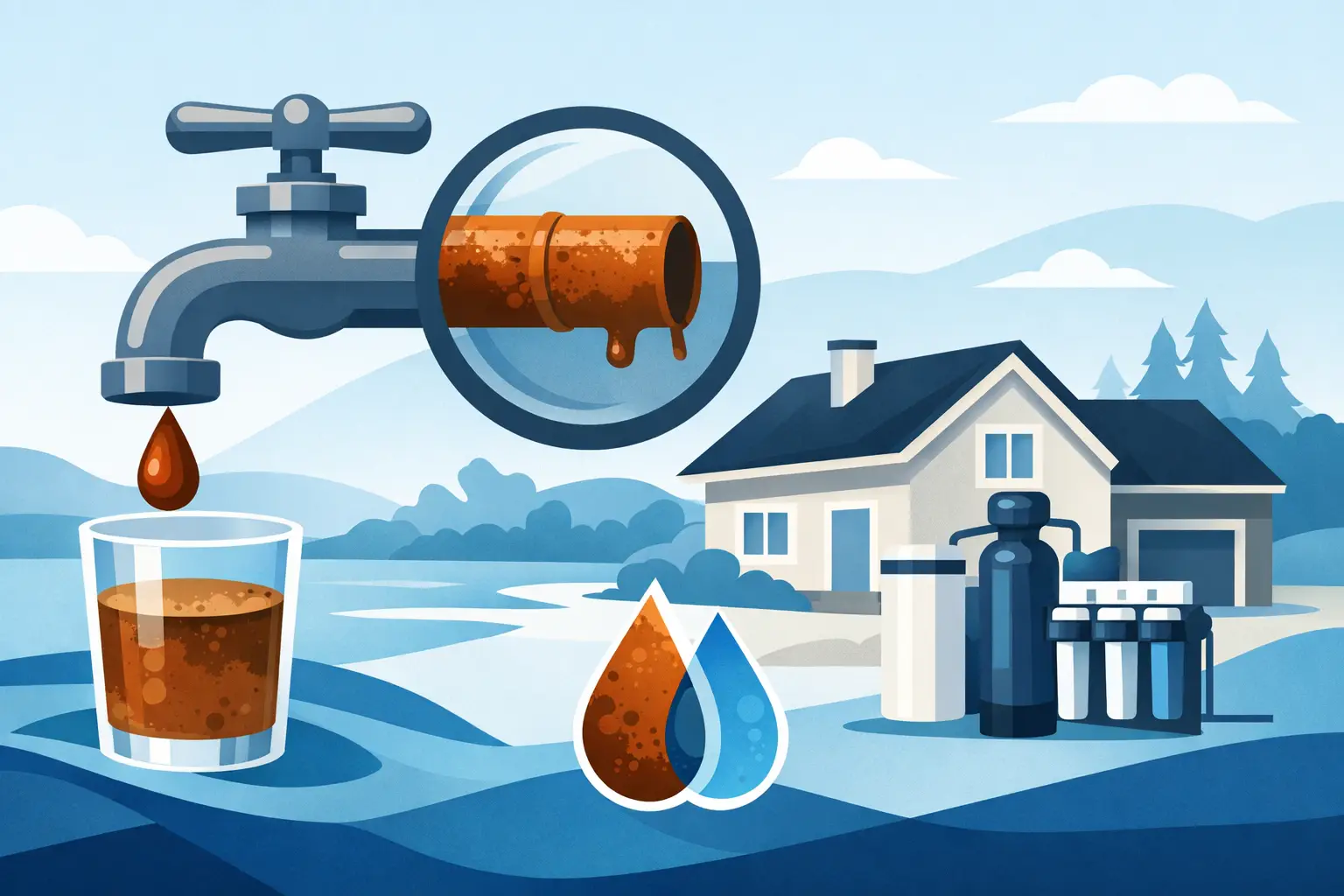
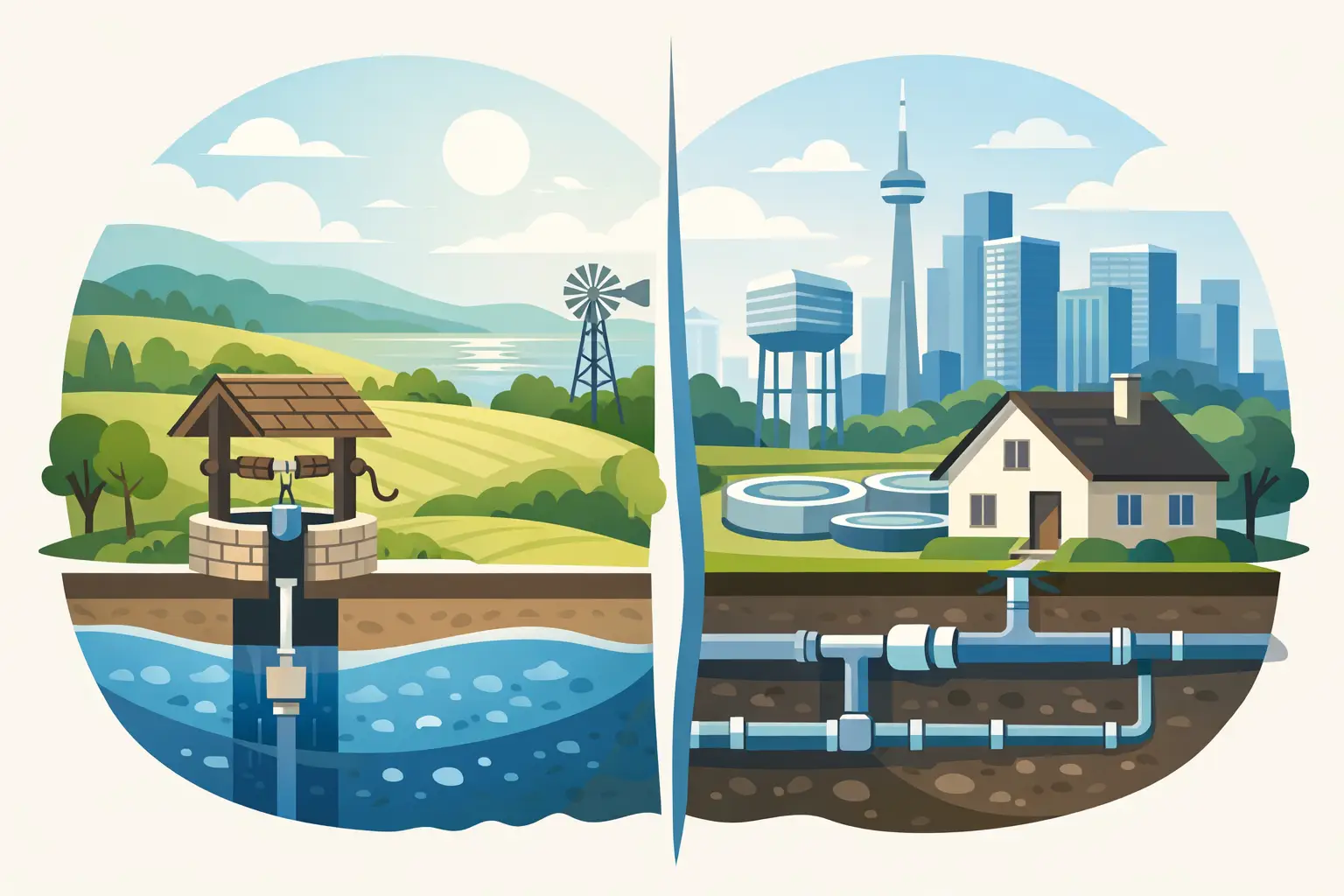
Well Water vs City Water for Ontario Homes

A glass of water can look perfectly clear while carrying the issues that stain fixtures, shorten appliance life or raise legitimate health concerns. In the well water vs city water decision, the real question is not which source is automatically better. It is how your water is managed, what it contains and whether your home has the right treatment for its specific conditions.

For Ontario homeowners, both water sources can provide excellent water when they are properly monitored and treated. The difference is responsibility. A municipal system treats and distributes water to the property line. A private well owner is responsible for the source, the equipment and the water quality inside the home.

Where the Water Comes From Matters

City water comes from a municipal supply, typically sourced from surface water, groundwater or a combination of both. It is treated at a municipal facility to control microorganisms and meet drinking water standards before travelling through water mains to your home. Municipal treatment commonly includes filtration, disinfection and ongoing monitoring.

Well water is drawn from groundwater beneath your property. It may be naturally clean, but it can also pick up minerals, metals, bacteria or other contaminants as it moves through soil and bedrock. Its quality can change with rainfall, flooding, nearby construction, agricultural activity, seasonal groundwater levels and the condition of the well itself.

That distinction changes the approach to water treatment. Municipal water often needs refinement for taste, chlorine, hardness, lead risk or scale control. Well water may need a more comprehensive system that addresses safety as well as nuisance problems such as iron staining, sulphur odour and sediment.

Well Water vs City Water: Who Is Responsible?

With municipal water, the municipality is responsible for treatment and distribution through the public system. Once water enters a building, however, the property owner still needs to consider plumbing materials, building water lines and point-of-use concerns. Older homes may have lead service lines, lead-containing plumbing components or corrosion issues that affect the water at the tap.

With a private well, the homeowner takes on the full responsibility for testing, maintaining and treating the supply. This includes protecting the wellhead, checking the pressure system, inspecting equipment and responding quickly after events that can affect groundwater quality, such as flooding or damage to the well cap.

This does not mean well water is inherently unsafe or city water is free of concerns. It means the monitoring process is different. A well should be tested regularly and whenever the taste, smell, colour or flow changes. Municipal-water households should also test when they are concerned about lead, have older plumbing or notice changes in taste, odour or appearance.

Common Issues With Municipal Water

Municipal water is disinfected for public health protection, but that disinfection can leave a chlorine or chloramine taste and smell that many households find unpleasant. A properly selected whole-home carbon filtration system can reduce these disinfectant byproducts, improving the taste of drinking water and the experience of bathing and showering.

Hardness is another frequent concern in many Ontario communities. Hard water contains calcium and magnesium that can form scale inside water heaters, dishwashers, coffee makers, humidifiers and plumbing fixtures. It can also leave spots on glassware, reduce soap performance and make skin and hair feel dry after washing.

A water softener addresses hardness by removing the minerals that cause scale. For homes with hard municipal water, softening is often one of the most practical investments because it protects costly appliances and reduces ongoing cleaning and maintenance.

Lead is a separate issue. Municipal treatment is designed to manage water quality, but lead can enter water through aging service lines or plumbing components. A certified lead removal system or reverse osmosis drinking water system can provide added protection where testing identifies a concern or where the age of the home makes lead exposure a reasonable worry.

Common Issues With Private Well Water

Private wells often have no chlorine taste because they are not continuously disinfected by a municipal system. That can make the water feel more natural, but it also means microorganisms must be taken seriously. Bacteria testing is essential, particularly for homes with young children, seniors, immune-compromised residents or frequent guests.

Iron and manganese are common well-water problems in Ontario. They can leave orange, brown or black staining on toilets, sinks, laundry and fixtures. Even at levels that do not create an immediate health concern, these minerals can clog plumbing, foul water treatment equipment and make a home look poorly maintained.

Sulphur is another familiar complaint. It produces the rotten-egg smell that can make drinking water, showers and laundry unpleasant. Depending on the source and test results, sulphur may be treated through oxidation, specialized filtration or other engineered treatment methods.

Sediment can also become a problem in wells, especially after heavy rain, changes in groundwater conditions or disruption near the well. Fine sand, silt and debris can damage valves, clog filters and reduce the performance of downstream equipment. A sediment filter may be the first stage of a complete well-water treatment system, but it should not be treated as a substitute for water testing.

Testing Should Drive the Treatment Plan

Buying equipment based only on a neighbour’s system or a visible stain can lead to the wrong solution. Iron, manganese, hardness, sulphur and bacteria may require different treatment methods. One contaminant can also interfere with the treatment of another, which is why the order of equipment matters.

A useful water analysis considers both health-related and practical concerns. For private wells, testing commonly focuses on bacteria, nitrate or nitrite where relevant, hardness, iron, manganese, pH, sulphur indicators and other site-specific conditions. If there is a nearby industrial, agricultural or environmental concern, testing should be broadened accordingly.

For municipal-water homes, a practical analysis can identify hardness, chlorine or chloramine, iron from plumbing, pH and lead risk. Testing is especially worthwhile before choosing a reverse osmosis system, water softener or whole-home filter. The right system should solve the identified issue without adding unnecessary complexity or maintenance.

Choosing the Right Treatment for Your Home

There is no single “best” water system for every home. A condo with treated city water has different needs than a rural home drawing from a deep well. A household that wants better-tasting drinking water may need a reverse osmosis system at the kitchen sink, while a family dealing with scale throughout the house may benefit most from a whole-home softener.

For well water, a complete solution may include sediment filtration, iron and sulphur removal, a water softener and ultraviolet sterilization. UV systems use ultraviolet light to disinfect water without changing its taste, but they require clear water to perform reliably. When sediment or iron is present, pre-treatment is essential.

For city water, whole-home carbon filtration can reduce chlorine taste and odour, while a softener protects plumbing from hardness. If lead is a concern, targeted lead reduction at the point of use can be a sensible additional safeguard. The best layout depends on the home’s plumbing, water use, pressure, peak flow requirements and test results.

Commercial and institutional properties need the same disciplined approach at a larger scale. Hotels, schools, healthcare facilities and multi-unit buildings may require high-flow treatment systems designed around occupancy, equipment loads and water-demand patterns. A system that is undersized can create pressure loss and inconsistent performance, while one that is improperly specified can increase operating costs without solving the underlying water issue.

Maintenance Is Part of Safe Water

Every treatment system requires care. Carbon filters need replacement, softeners need salt and periodic servicing, reverse osmosis systems need filter and membrane changes, and UV systems need lamp replacement and sleeve maintenance. Neglecting these tasks can reduce performance and, in the case of well-water disinfection, create unnecessary risk.

The goal is not to burden homeowners with more equipment. It is to install treatment that is correctly sized, easy to maintain and supported by clear service guidance. Canadian Smart Home Solutions helps Ontario property owners start with the water problem, then recommend an appropriate system and professional installation rather than a one-size-fits-all package.

Whether your home is connected to a municipal supply or relies on a private well, confidence comes from knowing what is in your water and having treatment that matches the results. A current water test is the practical first step toward better-tasting water, protected appliances and a safer supply for the people who rely on it every day.


A Hospital Water Filtration Example That Works

A hospital water filtration example is not simply a large version of a whole-home filter. A hospital’s water system supports patient care, staff hygiene, food service, laundry, sterilization equipment, heating and cooling systems, and sometimes highly sensitive clinical areas. When water quality is inconsistent, the result can be scale damage, poor equipment performance, objectionable taste or odour, and added infection-control concerns.

For Ontario hospitals and healthcare facilities, the right solution starts with understanding where water enters the building, how it travels through the plumbing system, and what each department requires. The goal is not to treat every drop of water the same way. It is to apply dependable treatment at the right point, with enough capacity, redundancy, monitoring, and service access to keep the facility operating.

A practical hospital water filtration example

Consider a mid-sized hospital with municipal water service, several patient floors, a commercial kitchen, on-site laundry, central boilers, cooling equipment, dialysis support areas, and a long-running domestic hot-water loop. The facility has recurring complaints about hard-water scale on fixtures, shortened life of valves and heating components, and sediment collecting in strainers. Its facilities team also wants a stronger approach to water safety management in areas where vulnerable patients may be present.

A practical treatment design could begin with a high-flow sediment filtration system installed after the building’s incoming water meter. This equipment removes suspended solids such as rust particles, sand, and pipe scale before they reach downstream treatment equipment. Choosing the correct micron rating matters. Filtration that is too coarse may allow damaging material through, while filtration that is too fine can create unnecessary pressure loss and frequent filter changes.

From there, the hospital may use duplex water softeners for domestic hot water, laundry, boiler feed, and other equipment-dependent applications. Duplex means two tanks work in sequence, allowing one unit to regenerate while the other continues supplying treated water. In a hospital, continuous service is often more valuable than the lowest initial equipment price.

Carbon filtration may be appropriate where chlorine or chloramine reduction is required for a specific downstream process, taste concern, or equipment application. However, removing a disinfectant residual from water changes the management requirements. Carbon vessels need proper sizing, scheduled maintenance, and a clear plan to prevent stagnation or microbial growth. They are not a universal answer for every hospital water line.

Treatment should follow the water’s use

A hospital has different water-quality targets across the building. General handwashing and washroom water, boiler feed water, kitchen water, ice machines, laboratory equipment, and specialized clinical systems should not automatically receive identical treatment. A site assessment separates these uses and avoids wasting treatment capacity where it is not needed.

Incoming domestic water

At the building entry, sediment filtration protects plumbing and mechanical equipment from particulate matter. If testing confirms hardness at a level that is causing scale, central softening can reduce mineral deposits in hot-water equipment, dishwashers, laundry systems, steam-producing equipment, and fixtures.

Softening does not remove every contaminant. It primarily exchanges hardness minerals, such as calcium and magnesium, to reduce scale. If lead, iron, sulphur odour, organic matter, chlorine by-products, or microbiological risks are part of the water profile, they require separate assessment and treatment methods.

High-risk or specialized outlets

Certain outlets may need point-of-use treatment rather than building-wide treatment. For example, sterile processing, laboratories, dialysis-related applications, and selected clinical areas may require reverse osmosis, deionization, ultrafiltration, ultraviolet treatment, or specialized final filtration. The exact design depends on the equipment manufacturer’s water specifications and the facility’s infection prevention and control requirements.

Reverse osmosis can significantly reduce dissolved minerals and many other contaminants, but it creates a concentrate stream and needs pretreatment to protect its membranes. It is an excellent tool for the right application, not usually the most practical choice for supplying every sink and shower in a large facility.

Final point-of-use filters can add a barrier where water is used by highly susceptible patients or where specific clinical policies call for it. These filters must be selected, installed, labelled, and replaced on schedule. A filter left beyond its service life is not a safety strategy.

Mechanical rooms and equipment protection

Boilers, humidifiers, cooling equipment, commercial dishwashers, and laundry systems often reveal water problems first. Scale acts as insulation on heating surfaces, reducing efficiency and increasing maintenance demands. Sediment can clog valves and strainers. Corrosive water conditions can affect piping and equipment components.

A hospital water treatment plan should therefore include equipment protection as well as drinking-water quality. Pre-filtration, softening, reverse osmosis for selected feedwater, and chemical treatment programs may all have a role. The best combination depends on the system’s flow rate, operating temperature, manufacturer requirements, and incoming water analysis.

Filtration is only one part of water safety

A common mistake is to view filtration as a complete answer to waterborne pathogen control. In healthcare settings, water safety depends on the full system: source water quality, incoming disinfectant residual, pipe condition, storage tanks, hot-water temperatures, flow patterns, dead legs, outlet maintenance, and response procedures.

Legionella management, for example, requires a documented facility-wide approach. Filters and ultraviolet systems may be useful components in specific locations, but they do not replace appropriate temperature control, flushing, cleaning, monitoring, and infection-control protocols. Any modifications to domestic water infrastructure should be coordinated with the hospital’s facilities, clinical engineering, infection prevention, and risk-management teams.

This is also why a central carbon filter requires careful consideration. It can improve water quality for some uses, yet reducing disinfectant residual throughout a large plumbing network may not suit the facility’s water safety plan. The trade-off must be reviewed before equipment is specified.

Capacity, redundancy, and service access matter

Healthcare facilities cannot treat a shutdown as a minor inconvenience. A hospital system should be sized for peak demand, not an average day. Engineers need to consider simultaneous use across patient floors, food service, laundry, mechanical systems, and emergency operations.

Redundancy is equally important. Duplex softeners, parallel filter banks, bypass piping, isolation valves, flow meters, pressure gauges, and automated controls help maintenance teams service equipment without disrupting essential water supply. Where a bypass is installed, it should be clearly identified and managed so untreated water is not unintentionally sent to equipment that depends on treated water.

Service access affects long-term reliability. Filter housings need enough clearance for cartridge replacement. Media tanks need accessible drain connections. Control valves, sample ports, and gauges should be visible and easy to inspect. A technically sound system that is difficult to maintain will eventually underperform.

Start with testing and a site review

No two hospitals have the same water profile or plumbing history. Municipal water chemistry can vary by region and season, while older buildings may contribute sediment, corrosion products, or localized water-quality concerns. Before recommending equipment, collect representative water samples and review available municipal information, building drawings, water-use patterns, pressure, flow requirements, and recurring maintenance records.

Testing should be relevant to the problem being solved. Hardness, iron, manganese, pH, total dissolved solids, chlorine or chloramine residual, turbidity, and microbiological indicators may be considered depending on the application. If lead is a concern, testing must account for where samples are taken and how long water has been sitting in the plumbing.

The findings should produce a clear treatment sequence, not a generic equipment package. Canadian Smart Home Solutions can help Ontario facilities evaluate incoming water issues and specify commercial equipment designed for high-flow, institutional applications.

Ongoing maintenance protects the investment

Every treatment system needs a written maintenance plan. It should define cartridge change intervals, media service requirements, salt delivery for softeners, disinfection procedures where applicable, inspection points, alarms, water testing, and responsible staff. Maintenance intervals should be based on actual water use and measured performance, not only a calendar date.

Documentation matters in a hospital environment. Keeping records of differential pressure, flow, hardness leakage, disinfectant residual, service visits, and corrective actions gives facility managers a practical view of system health. It also helps identify changes before they become equipment failures or operational disruptions.

The most effective hospital water treatment systems are designed around real risks and real demand. When filtration, softening, specialized treatment, and disciplined maintenance work together, the facility gains cleaner water, better protected equipment, and a more dependable foundation for patient care.

A Guide to Water Treatment Equipment in Ontario

A white film on glassware, orange staining in the toilet, a sulphur smell from the tap, or concern about lead are not cosmetic inconveniences. They are signs that your water may need targeted treatment. This guide to water treatment equipment explains how Ontario homeowners, property managers, and facility operators can identify the right system for their water source, usage, and safety priorities.

The right equipment is rarely chosen by brand name alone. A system that works well for municipally supplied water in Toronto may not solve iron, bacteria, or sediment issues in a rural well. Proper water testing and a clear understanding of the problem come first. From there, treatment can be designed to improve water quality at the point of entry, at the drinking-water tap, or across an entire commercial property.

Start With the Water Problem, Not the Product

Water treatment should address measured conditions and real-life symptoms. Hardness minerals, for example, can create scale on shower doors and inside water heaters, while iron may leave rusty stains on fixtures and laundry. Chlorine can affect taste and odour, but bacteria concerns require a different treatment approach altogether.

Municipal water is treated before it reaches the home, yet it can still contain chlorine, sediment, hardness minerals, or trace contaminants that residents prefer to reduce. Older plumbing may also raise concerns about lead. Private wells and lake-water supplies need more comprehensive assessment because water conditions can vary by season, rainfall, and changes around the property.

A professional water analysis identifies what is present and at what concentration. It also helps prevent a common and costly mistake: installing one piece of equipment to solve a problem that requires a complete treatment train. For example, a UV sterilizer is highly effective for disinfection when correctly sized, but it does not remove hardness, iron, or sediment. If the water is cloudy or contains iron, pre-filtration may be necessary to allow the UV system to perform as intended.

A Guide to Water Treatment Equipment by Application

Most residential and commercial systems fall into a few core categories. Each has a specific role, and many properties benefit from combining them.

Whole-home filtration systems

Whole-home filtration treats water as it enters the building, before it reaches faucets, appliances, showers, and water-using equipment. This makes it an effective option for customers who want cleaner water throughout the property rather than only at one drinking-water tap.

Carbon filtration is commonly used to reduce chlorine taste and odour in municipally supplied water. It can make showering and drinking more pleasant while helping protect plumbing fixtures and appliances from sediment and certain water-quality concerns. Sediment filters are often installed ahead of other equipment where sand, silt, rust particles, or debris are present.

The correct filter media, tank size, and flow rate matter. A small system may be suitable for a condo or modest household but can restrict flow in a large home with several bathrooms, a hotel, or a busy commercial kitchen. Equipment must be sized for peak demand, not only average daily use.

Water softeners for hardness and scale

Hard water contains calcium and magnesium minerals. These minerals are not usually a health concern, but they cause scale buildup on fixtures, shorten the life of water heaters and dishwashers, make soap less effective, and leave laundry feeling stiff.

A water softener removes hardness through ion exchange. The result is water that lathers more easily, leaves fewer spots, and helps reduce mineral accumulation in pipes and appliances. For many Ontario homes, a properly sized softener is one of the most practical ways to lower cleaning effort and protect major equipment.

Softening requires salt and periodic regeneration, so it is not a fit for every situation without consideration. Households should select a system based on hardness level, family size, water use, and plumbing capacity. Commercial properties also need to account for flow rates, service access, and the effects of hard water on boilers, dishwashers, steam equipment, and laundry operations.

Reverse osmosis for drinking water

Reverse osmosis, often called RO, is a point-of-use system typically installed under the kitchen sink. It uses a semi-permeable membrane to reduce a wide range of dissolved contaminants, helping provide clear, better-tasting water for drinking, cooking, coffee, and ice.

RO is especially useful for people seeking an additional level of drinking-water treatment, including households concerned about lead, certain dissolved solids, or unpleasant taste. It is not generally intended to replace whole-home equipment. An RO system provides high-quality water at the tap where it matters most, while a whole-home filter or softener protects the rest of the plumbing system.

Membranes and pre-filters need scheduled replacement. Ignoring maintenance can reduce water production and treatment performance. A professional installation can also ensure the system is connected correctly and has sufficient water pressure.

UV sterilizers for microbiological protection

Ultraviolet treatment uses UV light to deactivate bacteria, viruses, and other microorganisms. It is an essential consideration for many private well and lake-water systems, as well as commercial facilities where microbiological water quality is a priority.

UV does not add chemicals to water or change its taste. However, it needs clean water to work effectively. Sediment, turbidity, iron, and manganese can shield microorganisms from the light, which is why UV equipment is often installed after appropriate filtration. The lamp and sleeve require regular service, and the system must be sized to the building’s actual flow rate.

Iron, sulphur, and well-water treatment

Well water can bring unique challenges. Iron produces orange or brown staining, manganese may create dark staining, and hydrogen sulphide can cause a noticeable rotten-egg odour. Some wells also have low pH, tannins, sediment, bacteria, or a combination of several issues.

There is no single well-water system that fits every property. Iron removal may involve oxidation and filtration, while sulphur treatment may require aeration, specialized media, or chemical injection depending on the level and source of the problem. When more than one issue is present, equipment is arranged in stages so each component supports the next.

A well-water treatment plan should be based on laboratory results, not only a quick visual inspection. Water chemistry affects equipment selection, ongoing maintenance, and expected performance. Retesting is also sensible when water taste, smell, colour, or staining changes.

Design Matters as Much as the Equipment

A high-quality system can still underperform when it is poorly installed or incorrectly sized. Treatment equipment should account for the incoming water pressure, pipe size, household occupancy, number of bathrooms, appliance load, drain access, and space available for service. In commercial and institutional settings, engineers and installers also need to consider peak flow, redundancy, storage, local code requirements, and operational continuity.

For a school, healthcare setting, hotel, nursing home, or multi-unit building, treating water is not simply about improving taste. Scale can raise equipment maintenance costs, sediment can affect valves and fixtures, and water-quality interruptions can disrupt daily operations. Custom commercial water treatment equipment is designed around these higher flow rates and specific treatment goals.

At Canadian Smart Home Solutions, recommendations are built around water analysis and practical site conditions. That approach helps customers avoid buying equipment that is oversized, undersized, or incapable of addressing the real issue.

Plan for Service and Long-Term Performance

All treatment equipment needs maintenance, although the level varies by system. Filters require cartridge or media changes, softeners need salt and periodic checks, RO systems need filter and membrane replacement, and UV systems need annual lamp service. Skipping service does not always create an immediate visible problem, but it can reduce protection, waste water, and shorten equipment life.

Before choosing a system, ask what ongoing service involves, how often components are replaced, and whether parts are readily available. A dependable installation should leave clear access for maintenance and include instructions for monitoring normal operation. If a system includes alarms, bypass valves, or automatic regeneration, homeowners and staff should understand what those features mean and when to request service.

Water treatment is most effective when it becomes part of routine property care, much like servicing a furnace or maintaining a water heater. The payoff is cleaner water, fewer stains and odours, less scale, and better protection for the plumbing and appliances that depend on it every day.

If your water has changed, your fixtures are showing persistent staining, or you are unsure whether your current equipment is doing its job, begin with testing and a professional assessment. A properly designed treatment system gives you a clear path from a water problem to a dependable solution.

Nursing Home Water Softener Example for Ontario Care

A nursing home water softener example should start with the realities of daily care, not with a tank size. A long-term care home depends on hot water, laundry, dishwashing, bathing, cleaning, food service, and reliable mechanical equipment every hour of the day. When hard water creates scale, the impact can reach far beyond spotted fixtures. It can reduce water-heater efficiency, shorten equipment life, increase housekeeping time, and create avoidable maintenance disruptions.

For Ontario care facilities, the right system is typically a commercial water softener designed around measured water quality, actual peak demand, and the facility’s operational requirements. It should also be part of a broader water treatment plan where testing identifies iron, manganese, sulphur, lead, bacteria, or other concerns that a softener alone will not address.

A nursing home water softener example

Consider a 96-bed nursing home supplied by municipal water with hardness measured at 20 grains per gallon, or approximately 342 mg/L as calcium carbonate. Staff report white buildup around taps, frequent scale removal in bathing areas, declining water-heater performance, and repeated service calls for commercial laundry and kitchen equipment.

The building’s average water use may appear manageable on paper, but average use is not what determines a successful system. Demand rises sharply during morning personal care routines, laundry cycles, meal preparation, and shift changes. If the softener cannot supply treated water at those peak periods, hard water can pass through precisely when the building needs protection most.

In this example, the solution could be a duplex commercial ion-exchange water softener with alternating tanks. One tank remains in service while the other regenerates, allowing the facility to maintain a continuous softened-water supply. The system would be sized using a combination of peak flow rate, daily water use, incoming hardness, and the desired regeneration frequency.

A practical installation may also include a sediment pre-filter where required, a properly sized brine tank, isolation valves, a bypass arrangement for service, sample points, flow monitoring, and a drain connection suitable for regeneration discharge. The exact configuration depends on site conditions, plumbing layout, local requirements, and the results of a complete water analysis.

Why a duplex system often suits long-term care

A single-tank softener can be appropriate for smaller properties with predictable demand and enough capacity to regenerate overnight. A nursing home is different. Water use is continuous, and service interruptions are not simply inconvenient. Kitchen operations, laundry, housekeeping, bathing, and mechanical systems may all be affected.

A duplex design provides redundancy and can be set up for demand-initiated regeneration. Rather than regenerating on a fixed schedule regardless of usage, the controls track treated-water demand and start regeneration when the resin capacity is nearly used. This can reduce unnecessary salt and water consumption while helping ensure soft water remains available.

Redundancy is valuable, but it is not a substitute for correct sizing. Two undersized tanks will still create performance issues. An experienced commercial water treatment provider assesses the building’s peak flow, water use patterns, incoming pressure, equipment requirements, and available installation space before recommending equipment.

What the softener solves, and what it does not

Water softeners are highly effective at reducing hardness minerals, primarily calcium and magnesium. In a care environment, this can limit scale in water heaters, boilers, mixing valves, showerheads, dishwashers, laundry equipment, pipes, and fixtures. Softer water can also improve detergent performance, making it easier to achieve reliable cleaning results with less soap residue.

However, a softener is not a complete water purification system. It does not disinfect water, and it is not designed to remove every contaminant. If water testing identifies iron or manganese, pre-treatment may be needed to prevent resin fouling. If there are concerns about lead at point-of-use locations, a dedicated lead-reduction solution should be considered. If microbiological protection is required for a private supply, ultraviolet disinfection and appropriate filtration may be part of the treatment design.

This distinction matters in long-term care. Residents may be more vulnerable to the effects of poor water quality, and a system should address the actual issue rather than applying one piece of equipment to every concern. Testing first prevents costly guesswork.

Drinking water and sodium considerations

Conventional ion-exchange softeners use sodium chloride or potassium chloride during regeneration. The treatment process exchanges hardness minerals for sodium or potassium ions. For most building uses, this is a practical and proven approach to scale control. Yet drinking-water planning deserves additional consideration in a care setting, particularly where residents follow sodium-restricted diets.

The level of sodium added depends on the incoming hardness. The facility should review this with its water treatment professional and clinical or dietary leadership where appropriate. A common approach is to soften the water serving the building’s hot-water and equipment systems while providing a separate drinking-water solution, such as reverse osmosis at a kitchen or hydration station. The best arrangement depends on water chemistry, plumbing design, resident needs, and facility policies.

Sizing the system for real building demand

Commercial softener sizing is not a matter of choosing the biggest unit that fits through the mechanical-room door. Oversizing can add unnecessary capital cost, while undersizing can cause frequent regeneration, hard-water breakthrough, high salt use, and premature wear.

For the 96-bed example, the assessment would begin with a water analysis and a review of the water meter or utility records. The design team would then look at the number of resident rooms, bathing fixtures, commercial laundry equipment, kitchen equipment, staff areas, water heaters, and any process equipment. Peak flow is often more critical than total daily volume because a care home can experience several high-demand periods in one day.

The following factors should be confirmed before equipment is selected:

  • Incoming hardness and any iron, manganese, turbidity, chlorine, sulphur, or other water-quality concerns.
  • Peak and average flow rates, including simultaneous laundry, kitchen, bathing, and housekeeping demand.
  • The desired reserve capacity and whether uninterrupted soft water is required during regeneration.
  • Mechanical-room access, drain capacity, electrical supply, floor drainage, and room for salt delivery and service access.
  • The condition of existing water heaters, boilers, mixing valves, and piping, which may already contain significant scale.

A thorough assessment may find that the softener should protect only selected building systems rather than every cold-water outlet. In other cases, a whole-building approach makes more sense. There is no one-size-fits-all answer, especially in an occupied care facility where downtime and plumbing changes must be carefully managed.

Installation planning for an occupied facility

Installation needs to protect residents and keep the facility operating. A commercial softener installation should be planned around access, infection-prevention practices, water shutoff windows, safe staging of materials, and coordination with maintenance and management teams.

A qualified installer will identify where the equipment can be located, confirm that the floor can support the system and salt storage, and verify that regeneration water can be discharged correctly. The brine tank needs enough clearance for filling and routine inspection. Controls, valves, and sample points should be accessible without requiring staff to move heavy equipment or work around unsafe obstructions.

The existing plumbing also needs attention. Old scale does not disappear the moment softened water begins flowing. In heavily scaled systems, valves, aerators, strainers, and heat-transfer surfaces may require cleaning or replacement. Addressing those issues during or shortly after installation helps the facility see the full benefit of treatment.

Ongoing service protects the investment

Commercial softeners are dependable when they receive regular oversight. Staff should know how to check salt levels, recognize alarms, and report changes in water quality or pressure. A service plan can include hardness testing, inspection of control valves and injectors, brine-system checks, resin performance review, and confirmation that regeneration cycles are operating as intended.

Salt delivery and storage should be planned so the system never runs empty. At the same time, excessive salt bridging, moisture exposure, or poor housekeeping around the brine tank can lead to avoidable problems. Routine checks are straightforward, but consistency matters in a high-use facility.

Canadian Smart Home Solutions can assess the water, usage profile, and mechanical space to build a commercial treatment recommendation that fits the facility rather than forcing the facility to fit the equipment. For nursing homes, that practical approach helps protect critical equipment, support cleaner operations, and give maintenance teams one less recurring issue to manage.

The most useful next step is a site-specific water analysis and flow assessment. It gives facility managers a clear basis for choosing a system that supports resident care, protects the building, and performs reliably long after installation day.

Best Filter for Chlorine Taste in Your Home

A glass of municipal water can be safe to drink and still taste like a swimming pool. For Ontario homeowners looking for the best filter for chlorine taste, the answer is usually a properly sized activated carbon filter. The right system removes the chlorine responsible for that sharp taste and odour without making everyday water treatment complicated.

The more useful question is where you want better water: at one drinking tap, throughout the kitchen, or at every faucet, shower, and appliance in the house. That decision determines whether a compact carbon filter, reverse osmosis system, or whole-home filtration system is the better investment.

Why Chlorine Is in Your Water

Municipal water suppliers use chlorine to disinfect water as it moves through treatment plants and distribution pipes. It is an effective and widely used disinfectant. However, residual chlorine can remain in the water by the time it reaches your home, creating an unpleasant chemical taste or odour.

Some people notice it only in drinking water. Others notice it when making coffee, cooking pasta, bathing children, or showering. Chlorine can also dry skin and hair for some households, and it may contribute to faster wear on certain rubber seals and plumbing components over time.

A filter should not be selected on taste alone, though. Water quality can vary by municipality, building age, plumbing condition, and season. A system that improves chlorine taste may need additional treatment if your water also has hardness, lead concerns, iron staining, sulphur odours, or sediment.

The Best Filter for Chlorine Taste: Activated Carbon

Activated carbon is the proven first choice for reducing chlorine taste and odour. Carbon has a highly porous surface that attracts and holds chlorine-related compounds as water passes through the filter media. When the filter is correctly sized and maintained, the improvement is often immediate.

For a kitchen drinking-water application, a high-quality carbon block filter is often an excellent fit. Carbon block filters typically provide more contact time than loose granular activated carbon, helping them reduce chlorine taste effectively while also capturing sediment and other particles, depending on the filter rating.

For homes where chlorine is noticeable from every tap, a whole-home carbon filtration system is the more complete solution. It treats water as it enters the home, so filtered water reaches kitchen faucets, bathrooms, showers, laundry equipment, and appliances. This is particularly practical for families who want better-tasting water throughout the home rather than at one location.

The trade-off is cost and system size. A point-of-use carbon filter is less expensive and focuses on drinking and cooking water. A whole-home carbon system requires professional sizing and installation, but provides broader benefits for bathing, cleaning, and appliance protection.

Chlorine and Chloramine Are Not the Same

Before selecting equipment, confirm whether your local water supply uses free chlorine or chloramine. Chloramine is a combination of chlorine and ammonia used by some municipalities as a longer-lasting disinfectant. It is more difficult to remove than free chlorine.

Standard activated carbon can reduce free chlorine very effectively. Chloramine often requires catalytic carbon, longer contact time, or a system specifically designed for chloramine reduction. Installing an undersized filter may improve taste at first but leave you disappointed as performance drops or flow becomes restricted.

A water assessment helps identify the disinfectant used in your supply and whether other treatment concerns should be addressed at the same time.

When Reverse Osmosis Makes Sense

Reverse osmosis, often called RO, is a strong option when chlorine taste is only one of several drinking-water concerns. An RO system is normally installed under the kitchen sink and produces purified water through a dedicated faucet. It uses several treatment stages, commonly including sediment prefiltration, carbon filtration, a reverse osmosis membrane, and final carbon polishing.

The carbon stages protect the RO membrane by removing chlorine, while the membrane reduces a wide range of dissolved contaminants. Depending on the system and water conditions, reverse osmosis may be appropriate for households concerned about lead, dissolved solids, certain minerals, or older plumbing.

RO is not automatically the best choice solely for chlorine taste. If the only issue is a noticeable chlorine odour in drinking water, a quality carbon filter may solve it at a lower cost and with less maintenance. Reverse osmosis becomes more compelling when water testing or household priorities point to broader purification needs.

It is also important to understand that an under-sink RO system does not treat shower water or protect whole-home plumbing. Many homeowners combine a whole-home carbon filter for chlorine reduction with reverse osmosis at the kitchen sink for premium drinking and cooking water.

Choosing Between a Pitcher, Faucet Filter, Under-Sink Filter, and Whole-Home System

A filter’s location matters as much as its media. Pitcher filters and faucet-mounted filters can provide a low-cost improvement for renters or small households, but they have limited capacity and flow rate. They require frequent cartridge changes, and inconsistent maintenance can quickly reduce their benefit.

An under-sink carbon filter offers a more dependable daily drinking-water solution. It keeps the countertop clear, usually delivers better flow than a pitcher, and can be selected based on the household’s water use and treatment goals. For many Ontario households on municipal water, this is the practical middle ground.

A whole-home system is best when chlorine taste and odour affect more than drinking water. It can improve showering, bathing, laundry, cooking, and cleaning while supplying treated water to appliances. Homes with multiple bathrooms, larger families, or high water demand need a system designed for the required flow rate. A filter that is too small can cause pressure loss and may not provide adequate contact time for chlorine reduction.

What to Look For Before You Buy

The label should clearly state that the filter is intended to reduce chlorine taste and odour. Look for performance claims verified to recognized standards, including NSF/ANSI 42 for aesthetic chlorine reduction. If you are also addressing lead or other health-related contaminants, the system must be specifically certified or rated for those concerns. Do not assume that every carbon filter handles every contaminant.

Capacity is equally important. A cartridge rated for a few months in a small household may be exhausted much sooner in a busy family home. Whole-home carbon tanks are also selected based on water usage, peak flow rate, and the type of disinfectant in the water.

Consider the following practical factors before selecting a system:

  • Your municipality’s disinfectant method – chlorine or chloramine.
  • Whether the issue is limited to drinking water or affects the entire home.
  • Household size, number of bathrooms, and peak water demand.
  • Existing water concerns such as hardness, sediment, lead, iron, or odours.
  • Filter replacement requirements and access for routine service.

The least expensive filter is not always the lowest-cost solution over time. Frequent cartridges, reduced water flow, and a system that does not address the actual problem can cost more than properly designed treatment equipment.

Do Not Overlook Water Softeners and Sediment Filters

A water softener does not remove chlorine taste. Its purpose is to reduce hardness minerals such as calcium and magnesium that cause scale buildup, spotting, and appliance inefficiency. Homes with hard water may benefit from both a softener and a carbon filter, but they solve different problems.

Likewise, a sediment filter can protect downstream equipment from sand, rust, and particles, but it is not a chlorine treatment solution. In some homes, sediment prefiltration is necessary to prevent premature clogging of a carbon filter. The best setup may combine several stages, each with a specific job.

This is why water treatment should be based on the source water and the household’s goals rather than a one-size-fits-all product choice.

Maintenance Determines Whether the Filter Keeps Working

Carbon filters eventually become exhausted. Once their available surface area is used, chlorine taste and odour can return. Delaying replacement may also reduce water flow and allow trapped sediment to build up in the filter.

Follow the manufacturer’s replacement schedule, but treat it as a maximum guideline rather than a guarantee. High water use, heavy sediment, or elevated chlorine levels can shorten cartridge life. Whole-home systems may require periodic media replacement, valve inspection, and service checks to keep performance consistent.

For homeowners who want treatment without guesswork, professional installation and ongoing service provide an advantage. Canadian Smart Home Solutions can assess water conditions, size equipment for the home’s flow requirements, and recommend a practical system that fits both water quality needs and long-term maintenance expectations.

Better water should not require accepting a chlorine smell at the kitchen sink or wondering whether a small filter is doing enough. Start with the source of the taste, choose filtration designed for that specific disinfectant, and make sure the system is sized to deliver clean, pleasant water when your household needs it most.

Water Filtration Trends 2026 for Ontario Homes

A glass of water can look perfectly clear and still leave white scale on fixtures, carry a sulphur-like odour, stain laundry, or raise concerns about lead and other contaminants. That is why water filtration trends 2026 are less about buying a single device and more about identifying what is actually in the water, then treating it properly from the source to the tap.

For Ontario homeowners, the direction is clear: more people are choosing complete, tested water treatment solutions that protect drinking water, plumbing, appliances, and the people who use them. Commercial and institutional property managers are taking a similar approach, particularly where high water use, aging infrastructure, private wells, or specialized health and sanitation needs are involved.

Water Filtration Trends 2026: Treatment Gets More Targeted

The biggest change is a move away from one-size-fits-all filtration. A basic carbon filter can improve taste and reduce certain chlorine-related concerns, but it will not solve every water problem. Hard water needs conditioning or softening. Iron and manganese need dedicated removal equipment. Bacteria in well or lake water may require ultraviolet disinfection. Lead calls for properly rated point-of-use or whole-home treatment depending on the source and plumbing configuration.

In 2026, homeowners are increasingly asking the right first question: what does my water test show? That question prevents wasted money on equipment that does not address the actual issue.

A professional water analysis can identify common concerns such as hardness, iron, sulphur, pH, total dissolved solids, bacteria, and specific metals. Municipal water and private water supplies can have very different treatment needs. Even two neighbouring homes on wells may require different equipment because groundwater conditions vary by location and depth.

The practical trend is not more equipment for its own sake. It is better system design. The right system should address the water quality issue, fit the household’s flow rate and water use, and remain serviceable over the long term.

Whole-Home Protection Is Replacing Tap-by-Tap Fixes

Under-sink drinking water systems remain popular, especially reverse osmosis units that provide highly purified water for drinking and cooking. But many Ontario households are looking beyond the kitchen sink. They want to reduce scale in showers, protect water heaters and dishwashers, prevent staining, and improve the water used throughout the house.

That has increased demand for whole-home filtration and softening systems. A well-designed whole-home setup can combine sediment filtration, iron or sulphur treatment, water softening, carbon filtration, and ultraviolet sterilization where needed. The exact sequence matters. For example, treating iron before ultraviolet equipment can help maintain UV performance, while reducing hardness protects fixtures and appliances from scale accumulation.

There is a cost trade-off. A complete system has a higher initial investment than a countertop filter or a single faucet unit. However, households dealing with chronic scale, staining, odours, or well-water concerns often see value in fewer plumbing repairs, less appliance wear, lower cleaning effort, and more consistent water quality across the home.

For larger homes, multi-unit properties, restaurants, schools, and hotels, capacity is just as important as filtration type. Equipment must deliver the required flow rate without creating pressure loss during peak demand. This is where engineered commercial treatment systems are becoming more common than adapting residential equipment beyond its intended use.

Smarter Monitoring Without Unnecessary Complexity

Smart-home technology is reaching water treatment, but the useful innovations are practical rather than flashy. In 2026, more systems will offer monitoring features that track water use, regeneration cycles, filter life, service needs, and potential leaks. These tools can help homeowners and facility managers avoid surprises, particularly when equipment is installed in basements, mechanical rooms, cottages, or rental properties.

The benefit is early action. A filter nearing the end of its service life, a softener that is not regenerating correctly, or a sudden spike in water use can be addressed before it turns into poor water quality, excess salt consumption, or water damage.

Still, smart controls do not replace maintenance or water testing. A notification can tell you that a cartridge needs replacement based on time or volume, but it cannot always confirm whether changing source conditions have introduced a new issue. Private well owners should continue to test water on an appropriate schedule and after events that may affect groundwater quality, such as flooding, construction, or changes in taste, colour, or odour.

Reverse Osmosis Continues to Grow for Drinking Water

Reverse osmosis remains a leading choice for households seeking high-quality drinking water at the kitchen tap. It is especially relevant for customers who want to reduce a broad range of dissolved contaminants and improve taste without relying on bottled water.

The 2026 trend is toward better integration. Rather than treating reverse osmosis as a standalone purchase, homeowners are pairing it with pre-treatment that protects the membrane and improves system performance. Hard water, sediment, chlorine, iron, and sulphur can all affect treatment equipment if they are not managed correctly.

Water efficiency also matters. Reverse osmosis systems produce purified water while sending some water to drain, and performance varies by design, incoming pressure, temperature, and water quality. A properly selected modern unit can reduce waste compared with older designs, but it should still be sized and installed by a knowledgeable professional. For a household with significant drinking water demand, storage capacity and recovery rate deserve attention alongside contaminant reduction claims.

Lead Removal and Aging Plumbing Remain Key Concerns

Lead concerns are not limited to water coming from the municipal supply. In many cases, the issue can be connected to older service lines, plumbing components, or fixtures within and around a property. That makes testing and system selection particularly important in older Ontario homes, schools, childcare settings, and commercial buildings.

In 2026, more property owners will seek treatment that is specifically certified or designed for the contaminants they are concerned about, rather than assuming every filter performs the same way. This is a positive shift. A product should be selected based on the water test, its intended application, flow requirements, maintenance needs, and verified performance for the target contaminant.

For drinking water, a dedicated point-of-use system can be an effective option when lead risk is concentrated at specific taps. Whole-building solutions may be appropriate in other situations, but they require careful engineering and ongoing service. The best approach depends on the property, the source of the concern, and how water is used.

Well Water and Lake Water Systems Become More Specialized

Private water sources require a different mindset than municipal water. Well water can change with seasonal groundwater conditions, nearby land activity, pump changes, or shifts in the water table. Lake water systems may require more intensive treatment because turbidity, organic material, and microbiological risks can fluctuate significantly.

The growing trend is to build treatment trains rather than depend on a single filter. A typical well-water solution may include sediment removal, iron and sulphur treatment, water softening, and ultraviolet sterilization. Lake water applications may need staged filtration and disinfection designed around the quality of the raw water and the property’s demand.

Maintenance is part of performance. Filters need replacement, media systems need service, UV lamps need scheduled attention, and equipment settings should be checked as water conditions change. Skipping maintenance can reduce treatment effectiveness even when the original system was correctly selected.

Sustainability Means Longer Equipment Life and Less Waste

Sustainability is influencing water treatment decisions in a practical way. Homeowners want to reduce bottled-water use, avoid replacing appliances early because of scale damage, and select systems that use water, salt, and replacement media responsibly.

That does not mean every home should avoid a water softener or reverse osmosis system. It means equipment should be selected and programmed correctly. Demand-initiated softeners, for example, can regenerate according to actual water use rather than a fixed schedule. Proper sizing helps avoid unnecessary regeneration, while pre-filtration can extend the service life of downstream equipment.

For commercial facilities, efficient treatment design can support lower maintenance demands and protect expensive boilers, dishwashers, laundry equipment, and plumbing infrastructure. The savings can be substantial when a system is built for the actual water chemistry and operating load.

What to Look for Before Choosing a System

The strongest water filtration trend is informed decision-making. Before purchasing equipment, start with water testing and a clear description of the problem. Is the concern drinking water quality, hardness, staining, odour, bacteria, lead, appliance scale, or all of the above?

Then consider the source of the water, household size, plumbing layout, peak flow needs, available installation space, maintenance expectations, and budget. A system that performs well on paper may be unsuitable if it cannot meet a home’s flow rate or if required maintenance is unrealistic for the property.

Canadian Smart Home Solutions helps Ontario homeowners, businesses, and institutions turn water test results into practical treatment plans, from reverse osmosis drinking water systems to whole-home and high-flow commercial solutions. The most reliable next step is not guessing from a filter label. It is understanding your water, choosing equipment built for the problem, and keeping it properly maintained for years of dependable service.

Hotel Water Treatment Example: A Practical Plan

A hotel can use thousands of litres of water before lunch. Guest showers, commercial laundry, kitchens, ice machines, boilers, cooling equipment and housekeeping all depend on a reliable supply. This hotel water treatment example shows why a single filter is rarely enough for a busy property, and how a properly designed system can protect guests, equipment and operating budgets.

Consider a 120-room Ontario hotel supplied by municipal water. Management is receiving complaints about dry skin after showering, white residue on bathroom fixtures, spotty glassware in the dining room and an occasional chlorine taste in drinking water. The maintenance team is also replacing heating elements and repairing valves more often than expected. These are not separate problems. They are common signs that the building’s water quality and water use need to be assessed together.

Hotel Water Treatment Example: Start With the Water Use

The first step is not choosing equipment. It is testing the incoming water and understanding where, when and how the hotel uses it. A system sized for a small restaurant may fail during the morning shower rush at a full-service hotel, even if it appears adequate on paper.

For this example, water testing confirms moderately high hardness, measurable chlorine residual and no immediate microbiological concern in the municipal supply. The property also has high peak demand between 6:00 a.m. and 10:00 a.m., when guests shower, laundry begins and the kitchen prepares breakfast service.

That combination matters. Hard water forms scale inside water heaters, dishwashers, steam equipment and plumbing fixtures. Chlorine can affect taste and odour, and may be undesirable in guest-facing drinking water applications. High demand means the treatment system must maintain pressure and treated-water capacity without creating a bottleneck for the building.

A qualified site review should also look at incoming pressure, pipe size, drain access, electrical requirements, mechanical-room space, existing hot-water equipment and local code requirements. Hotels are not standard residential installations. Commercial systems must be engineered around real flow rates, regeneration cycles and service access.

The Treatment Train for This Hotel

Based on the test results and the hotel’s operating profile, the recommended solution is a staged commercial treatment system rather than one piece of equipment trying to solve every issue.

The incoming line first passes through sediment filtration. Even municipally supplied water can carry fine particles released during water-main work or from aging building plumbing. Removing sediment helps protect valves, softening media, carbon filters and other downstream equipment.

Next, a commercial water softener reduces calcium and magnesium hardness. In this example, a duplex softener is a sensible choice. It uses two tanks that alternate during regeneration, so the hotel can continue receiving softened water when one tank is being cleaned and recharged. A single-tank unit can be appropriate for lower-demand properties, but it may not provide the same continuity during peak use.

After softening, activated carbon filtration reduces chlorine taste and odour. This is especially valuable for guest rooms, restaurant service and ice production. Carbon can also help protect certain equipment and improve the overall guest experience, but it must be properly sized. An undersized carbon filter may reduce chlorine briefly, then allow it through during busy periods.

For the hotel’s drinking-water stations, kitchen beverage service and ice machines, reverse osmosis can provide a higher level of purification. Reverse osmosis reduces a broad range of dissolved contaminants and improves taste. It is not usually necessary to send every litre used for showers and toilets through an RO system. Treating all water with RO would add unnecessary operating cost, wastewater and complexity for this particular property.

The final system may include:

  • Sediment pre-filtration to protect downstream equipment
  • Duplex commercial water softening for continuous scale control
  • Activated carbon filtration for chlorine, taste and odour reduction
  • Point-of-use reverse osmosis for drinking water, beverage equipment and ice machines
  • UV disinfection where water testing, private supply conditions or building risk assessment call for it

This approach gives the hotel the right level of treatment at each point of use instead of applying the most intensive process everywhere.

Why Softening Delivers a Fast Return

In many Ontario hotels, hardness is the cost driver. Scale acts as insulation on heating surfaces, forcing hot-water and boiler equipment to work harder. It also restricts flow through showerheads, faucets and valves. The visible evidence is frustrating enough, but the hidden equipment wear is often more expensive.

Once the hotel in this example installs commercial softening, housekeeping spends less time removing mineral residue from glass shower doors and fixtures. Laundry can achieve consistent results with less detergent. The kitchen sees fewer spots on dishware, while water heaters and dishwashing equipment are better protected from scale accumulation.

The savings will vary by water hardness, occupancy, equipment type and local utility costs. A softener does use salt and regeneration water, so it is not a maintenance-free solution. However, for a hotel with significant hard-water exposure, those operating costs are often easier to manage than repeated descaling, premature repairs and avoidable energy waste.

Guest Safety Requires More Than a Filter

Water treatment supports guest comfort and water quality, but it is only one part of responsible hotel water management. A softener removes hardness. Carbon improves taste and odour. Reverse osmosis improves drinking water at selected points. None of these systems replaces proper plumbing maintenance, temperature control or a building-specific plan for managing microbial risks.

For a hotel using municipal water, ultraviolet disinfection may not be necessary at every location. It can be valuable where a property has a well, a lake-water source, storage tanks, recurring microbiological concerns or treatment requirements identified through testing. UV systems require clear water and regular lamp or component maintenance to work as intended.

The same principle applies to lead. If testing identifies lead concerns from aging plumbing or fixtures, the solution may involve certified point-of-use lead reduction, pipe or fixture replacement, or a combination of both. Treat the result, not the assumption.

Installation Details That Affect Performance

Even high-quality equipment will underperform if it is installed without enough space, bypass valves, drainage capacity or proper flow control. In a hotel, the treatment system should be accessible for service without disrupting operations. A well-planned installation includes isolation valves, pressure gauges, sample points and clear labelling so the maintenance team can monitor the system confidently.

The softener’s regeneration schedule should be programmed around actual usage, not guessed at. Metered systems regenerate according to water consumption, which can reduce unnecessary salt and water use compared with a fixed calendar schedule. For properties with seasonal occupancy, this adjustment can be particularly useful.

Commercial equipment also needs a realistic maintenance plan. Filters require replacement, softeners need salt, carbon media eventually requires service, and reverse osmosis membranes need monitoring. Neglecting maintenance can reduce water quality, pressure and equipment protection. Ongoing service turns a treatment system from a short-term installation into a dependable part of the building’s infrastructure.

When This Example Would Change

Not every hotel needs the same treatment train. A property supplied by a private well may need iron, manganese, sulphur or tannin removal before softening. A lake-water property may require more extensive filtration and disinfection. A boutique hotel with lower demand may not require duplex softening, while a large convention hotel may need multiple commercial tanks, larger storage capacity and higher-flow filtration.

Water testing provides the starting point, but hotel managers should also consider occupancy patterns, future expansion, laundry volume, food-service operations and the condition of existing plumbing. The correct design balances capital cost, operating cost, guest expectations and equipment protection.

For hotel owners and managers, the most useful next step is a water analysis paired with a site-specific flow assessment. It replaces guesswork with a practical plan – and gives the property a clearer path to cleaner water, fewer maintenance headaches and a better stay for every guest.

Best Solutions for Rusty Water in Ontario Homes

A glass of water that looks yellow, orange, or reddish-brown is more than an inconvenience. Rusty water can stain laundry and fixtures, leave metallic tastes in food and drinks, clog plumbing components, and raise reasonable questions about what is entering your household water supply. The best solutions for rusty water depend on one critical detail: whether the colour is caused by iron in the source water, sediment, deteriorating plumbing, or a combination of these issues.

For Ontario homeowners, especially those using private wells, guessing can lead to the wrong equipment and unnecessary expense. A proper water assessment identifies the source first, then matches it to treatment that delivers clear water throughout the home.

Why Water Turns Rusty

Rust-coloured water is commonly associated with iron. Iron is naturally present in many Ontario groundwater sources and may dissolve into well water without being visible at first. Once the water reaches air, pressure changes, or household plumbing, the iron oxidizes and produces the familiar orange or brown colour. It can also form particles that settle in toilet tanks, water heaters, filters, and plumbing fixtures.

Not every rusty-water problem starts in the well. If discolouration appears only when hot water is running, the water heater may be corroding internally. If it happens after the water has sat unused, older iron pipes may be releasing rust into the water. Municipal water customers can also see temporary brown water after hydrant flushing, water-main work, or changes in water flow.

The timing matters. Water that is clear at first but turns orange after several minutes often points to dissolved iron. Water that is immediately brown and contains visible grit may indicate oxidized iron, sediment, or pipe corrosion. These distinctions guide the treatment decision.

Start With Water Testing and Plumbing Diagnosis

Before installing a filter, test the water and inspect the plumbing conditions. Iron concentration is only part of the picture. Manganese, hardness, pH, alkalinity, sulphur odour, tannins, bacteria, and sediment can all affect which system will perform reliably.

A well with moderate iron and low pH may require a different approach than a well with high iron, manganese, and hydrogen sulphide. A cartridge filter alone may make water look better for a short time, but it can clog rapidly if it is asked to handle heavy iron. Likewise, a softener can reduce certain forms of iron, but it is not always the right primary solution for rusty water.

A professional assessment should also identify whether the issue is isolated to a single tap, the hot-water system, or the entire property. Treating a corroded water heater with a whole-home iron filter will not solve the underlying equipment problem. In commercial and institutional settings, flow rate, peak demand, pipe size, and operational requirements must be reviewed before a system is selected.

Best Solutions for Rusty Water by Cause

Iron removal filters for well water

For many private well owners, a dedicated iron removal system is the most effective answer. These whole-home systems are designed to oxidize and filter iron before it reaches faucets, appliances, toilets, and laundry equipment. Depending on the water chemistry, the system may use air injection, an oxidizing media, a backwashing filter, or a chemical feed process.

Air-injection iron filters are often a practical choice for clear-water iron and can also address certain sulphur odours. The system introduces air to convert dissolved iron into filterable particles, then automatically backwashes to flush contaminants away. This protects the home without requiring frequent cartridge changes.

Higher iron levels, difficult manganese, or mixed contamination may require a more engineered approach. Oxidizing filtration media or chemical oxidation can provide dependable treatment when standard equipment is not sufficient. The right configuration depends on tested water results and the household’s water use, not simply the colour in a glass.

Water softeners when hardness and iron occur together

Hard water and iron often appear together in Ontario well water. A water softener removes hardness minerals that create scale on fixtures, reduce appliance efficiency, and leave dishes looking dull. It can also remove small amounts of dissolved ferrous iron.

However, there is a limit. When iron is significant, relying on a softener alone can foul the resin, reduce softening performance, and increase maintenance. In these cases, an iron filter installed ahead of the softener is usually the better arrangement. The iron filter protects the softener, while the softener handles calcium and magnesium hardness.

This combined approach helps reduce orange staining and the white scale buildup that shortens the life of water heaters, dishwashers, laundry equipment, and plumbing fixtures.

Sediment filtration for visible particles

If rusty water contains sand, grit, flakes, or suspended particles, sediment filtration may be required. A sediment pre-filter protects downstream treatment equipment from plugging and helps keep water clear. It is especially useful where a well produces fine particles or where plumbing corrosion has released scale.

The trade-off is maintenance. Disposable cartridges can be effective for light sediment loads, but they are not designed to be a long-term answer for high iron concentrations. Heavily contaminated water may require a backwashing sediment filter or a properly sized multimedia filtration system to avoid constant cartridge replacement.

Pipe repair or replacement for corrosion-related rust

When water testing shows the incoming supply is acceptable but rusty water appears at specific fixtures or after periods of non-use, the problem may be in the building plumbing. Older galvanized steel pipes are particularly prone to internal corrosion. As the pipe interior deteriorates, rust particles can enter the water and restrict flow.

In that situation, filtration may capture some debris, but it does not restore the pipe. Replacing affected plumbing is the lasting solution. A qualified plumber can determine whether corrosion is isolated to a branch line, a water heater connection, or widespread throughout the building.

Water heater service for rusty hot water

Rusty hot water with clear cold water is a strong sign to inspect the water heater. The anode rod, tank lining, internal corrosion, or sediment accumulation may be responsible. Servicing or replacing the water heater can resolve the issue when the source is contained within the unit.

For well water with iron, treating the incoming water is still worthwhile. It reduces the iron load entering the replacement heater and helps prevent future sediment and staining problems.

Do Not Ignore Bacteria and Sulphur Odours

Iron bacteria are not generally considered a health threat, but they can create slimy deposits, foul odours, clogged plumbing, and recurring orange or brown staining. They often occur alongside iron-rich well water. Shock chlorination may provide temporary relief, but persistent cases need a complete treatment strategy that addresses both water chemistry and the well system.

A rotten-egg smell can indicate hydrogen sulphide, which frequently occurs with iron and manganese. A treatment system designed only for iron may not fully remove the odour. This is why comprehensive water testing is more valuable than choosing equipment based on one visible symptom.

Choosing a Whole-Home System That Will Last

The best system should treat water at the point where it enters the property, before iron can stain fixtures or damage equipment. It also needs enough capacity for the household. A system sized for a small home may struggle in a property with multiple bathrooms, a large family, irrigation demand, or high-flow fixtures.

For businesses, schools, hotels, healthcare facilities, and multi-unit buildings, equipment selection requires even more care. High flow rates, continuous use, service access, water demand patterns, and local code requirements all influence the design. Custom commercial treatment equipment may be necessary to maintain water quality without creating pressure loss or operational interruptions.

Canadian Smart Home Solutions helps Ontario property owners move from uncertain water symptoms to properly sized treatment and installation plans. The goal is not to sell the most equipment. It is to provide clear, reliable water while protecting plumbing, appliances, and the people who use them.

If rusty water has become part of your routine, collect details before choosing a fix: when the colour appears, whether it affects hot and cold water, whether there is an odour, and whether staining is getting worse. Combined with a professional water test, those observations can turn a frustrating problem into a treatment plan that works for years.

Home Water System Maintenance Checklist

A filter that looks clean can still be exhausted. A water softener can keep cycling while a salt bridge prevents proper regeneration. And a UV lamp can still glow after it has lost much of the germicidal output your system depends on. This home water system maintenance checklist helps Ontario homeowners protect drinking water quality, reduce appliance-damaging scale, and catch small issues before they become costly service calls.

Your exact schedule depends on your water source, household water use, and equipment. A municipal-water home with a sediment and carbon filter has different needs than a rural property treating well water with iron, sulphur, hardness, and bacteria concerns. The best approach is to keep a simple service record, follow the equipment manufacturer’s requirements, and arrange professional testing whenever water conditions change.

Start with a monthly visual and performance check

A short monthly inspection is one of the most effective habits for any water treatment system. It takes only a few minutes and can reveal leaks, clogged filters, low salt, unusual odours, or a loss of water pressure.

Check around tanks, filter housings, shut-off valves, drain connections, and the floor beneath the equipment. Moisture, white mineral deposits, rust marks, or staining around fittings can indicate a slow leak. A small leak may not affect water quality immediately, but it can damage flooring, encourage mould, and worsen quickly under household pressure.

Pay attention to performance at the tap. Changes in taste, smell, colour, pressure, soap lather, spotting on glassware, or orange and black staining should be recorded rather than ignored. They can point to an exhausted filter, a softener problem, changing well-water chemistry, or an issue upstream of the treatment system.

For a practical monthly check, confirm these points:

  • Filter housings are dry, secure, and free of cracks or swelling.
  • Water pressure is consistent at several fixtures in the home.
  • The softener brine tank has enough clean salt for the next regeneration cycles.
  • The control valve display shows the correct time and no error messages.
  • There are no unusual smells, especially rotten-egg sulphur odour or musty odour.
  • The drain line is secure and not blocked, kinked, or leaking.

Home water system maintenance checklist by equipment type

Sediment and carbon filters

Sediment filters protect downstream equipment by capturing sand, silt, rust, and other particles. Carbon filters are commonly used to reduce chlorine, improve taste and odour, and address selected organic contaminants. Both need replacement on schedule because a clogged cartridge restricts flow, while an exhausted carbon cartridge may no longer provide the treatment you expect.

Replacement timing varies widely. Some cartridge filters need changing every three to six months, while larger-capacity systems may last longer. Do not rely on appearance alone. Follow the rated capacity and change the filter sooner if pressure drops noticeably, the water taste changes, or sediment becomes visible.

When replacing cartridges, shut off the water supply, relieve pressure, and inspect the housing O-ring. Clean and lubricate the O-ring only with a product approved for potable-water equipment. A flattened, cracked, or dirty O-ring is a common source of leaks after filter changes.

Water softeners

Hard water is common in many Ontario communities. A properly maintained water softener helps prevent scale on fixtures, protects water heaters and dishwashers, and improves soap performance. Its maintenance is straightforward, but missed steps can reduce results.

Check the salt level monthly and keep the brine tank appropriately filled with high-quality water-softener salt. Avoid overfilling it to the top for long periods, particularly in humid areas, because salt can harden into a bridge above the water level. If the tank looks full but the water remains hard, gently check for a hollow space beneath the salt.

Clean the brine tank when salt residue, sediment, or sludge builds up, often every one to two years. The frequency depends on salt type, water conditions, and system use. If your system uses a resin cleaner, use only the product and dosing method recommended for that equipment. An annual service visit can also confirm that the control valve, injector, drain line, and regeneration settings match your current household demand.

Reverse osmosis drinking water systems

A reverse osmosis, or RO, system provides highly treated drinking water at a dedicated faucet and may supply a refrigerator line. It typically includes prefilters, a membrane, a storage tank, and a post-filter. Because it treats water at the point of use, routine filter changes are essential.

Prefilters are commonly replaced every six to 12 months, while membrane life often ranges from two to five years. Actual life depends on source-water quality, pressure, incoming chlorine, and how much water the household uses. An exhausted prefilter can damage the membrane, so it is rarely economical to delay scheduled changes.

Sanitize the RO system during scheduled service or whenever contamination is suspected. Check the faucet for slow flow, inspect tubing and connections, and have the system assessed if tank output has dropped significantly. A technician can test production quality and tank pressure rather than replacing parts based on guesswork.

Ultraviolet water purification systems

UV systems are frequently used on private wells, lake-water systems, and homes where microbiological protection is required. UV does not remove sediment, hardness, iron, or chemical contaminants. It works best when the water reaching the chamber is clear and properly prefiltered.

Replace the UV lamp every 12 months, even if it still produces visible light. Visible brightness is not a reliable measure of germicidal performance. Clean or replace the quartz sleeve as needed, especially where hardness or iron can leave a coating that blocks UV energy. Before servicing, disconnect power and follow the manufacturer’s safety instructions, since lamps and sleeves are fragile.

If the UV controller alarm sounds, treat it as a priority. Do not simply silence the alarm. Determine whether the issue is a lamp, sensor, ballast, power supply, or overdue service requirement.

Iron, sulphur, lead, and specialty treatment systems

Homes with well water often require more than one treatment stage. Iron and sulphur removal systems may need periodic backwashing, media replacement, or air-injection servicing. Lead removal equipment must be maintained according to its certified capacity and replacement schedule. Some systems need testing to verify performance, particularly when lead risk, private wells, or vulnerable household members are involved.

These systems should be assessed after major changes in source water, such as flooding, well repairs, seasonal odours, new staining, or a change in nearby land use. Treatment equipment is only as effective as the water analysis it was designed around.

Keep testing at the centre of your maintenance plan

A maintenance schedule protects the equipment, but testing confirms whether it is solving the right problem. Municipal water can change seasonally in taste, chlorine level, and hardness. Private wells can change more significantly due to groundwater movement, runoff, plumbing work, or natural mineral variation.

For private wells, arrange routine testing for bacteria and relevant chemical concerns based on local conditions and your treatment system. Test promptly after flooding, a damaged well cap, plumbing repairs, a noticeable change in water appearance or odour, or gastrointestinal illness within the household. If you rely on treatment for lead, bacteria, iron, sulphur, or nitrate concerns, periodic verification is part of responsible ownership.

Keep results with your service record. Over time, they help identify whether a filter-change interval should be shorter, whether a softener setting needs adjustment, or whether the system requires an upgrade.

Know when to call a water treatment professional

Homeowners can handle many routine tasks, including checking salt, replacing approved filter cartridges, and watching for leaks. More complex work is best left to trained service technicians. This includes control-valve repairs, UV electrical faults, persistent hard water after regeneration, low RO production, media replacement, well-water treatment changes, and any concern about bacterial safety or lead.

Do not place a treatment system in bypass simply because performance changes, especially if it is addressing a known water-quality concern. Bypass may be necessary during service, but it should be temporary and deliberate. If water suddenly becomes discoloured, develops a strong odour, or shows a major pressure change, avoid assuming that a new filter alone will solve the cause.

Canadian Smart Home Solutions can assess the water, inspect the equipment, and recommend maintenance or system changes suited to the property rather than applying a one-size-fits-all schedule. A properly maintained system should be quiet in the background: cleaner water at the tap, fewer scale marks, and confidence that the equipment is doing the work it was installed to do.

Best Lead Filter Pitchers for Ontario Homes

A water pitcher is often the first thing an Ontario homeowner buys after hearing that older plumbing can contribute lead to drinking water. The best lead filter pitchers can be a sensible, affordable point-of-use option for drinking and cooking water, but only when the filter is specifically certified for lead reduction and maintained correctly.

That distinction matters. A pitcher that improves chlorine taste is not automatically designed to reduce dissolved lead. For families, renters, and owners of older properties, the right choice starts with the filter’s certification and capacity, not the brand name on the jug.

What Makes a Pitcher Effective for Lead?

Lead can enter water after it leaves the municipal treatment plant. The concern is most common in homes with older service lines, lead-containing plumbing components, or brass fixtures. Water may look, smell, and taste normal even when lead is present, so taste is not a reliable test.

For a pitcher, look for a filter certified to NSF/ANSI Standard 53 for lead reduction. This standard evaluates whether a product reduces a health-related contaminant, including lead, under defined test conditions. The product packaging, manufacturer documentation, or replacement cartridge information should clearly state the certification and the specific claim.

NSF/ANSI Standard 42 is different. It commonly covers aesthetic improvements such as chlorine taste and odour. That can make water more pleasant to drink, but it does not by itself confirm lead reduction. Some filters carry both certifications, which can be useful for municipal water that has a chlorine taste as well as a lead concern.

Capacity is equally important. A filter may be certified for lead reduction only up to a stated number of litres. Once it reaches that limit, its ability to reduce contaminants cannot be assumed. A larger pitcher with a longer-life cartridge may cost more upfront but can be the more practical choice for a household that fills it several times a day.

How to Compare the Best Lead Filter Pitchers

The best model depends on who will use it, how much treated water they need, and whether the pitcher will realistically be maintained. A very capable filter does not help if the cartridge change schedule is ignored.

Confirm the lead-reduction claim

Start with the exact cartridge, not simply the pitcher model. Manufacturers sometimes sell multiple replacement filters that fit the same jug, with different contaminant claims. Choose the cartridge that explicitly lists certified lead reduction. If the wording is vague, or only refers to cleaner-tasting water, keep looking.

Be cautious with broad marketing language such as “removes heavy metals” unless it is supported by a named certification and a lead-specific performance claim. Lead treatment is a health and safety decision. Clear, verifiable information is worth more than an impressive-looking package.

Match the capacity to your household

A small pitcher may suit one person who mainly wants filtered water for drinking. A family preparing infant formula, filling reusable bottles, making coffee, and cooking with filtered water will use much more. In that situation, a high-capacity pitcher or dispenser is usually easier to live with.

Check the rated cartridge life in litres, not only months. Calendar-based replacement guidance is helpful, but actual water use varies widely. A household of four can reach a filter’s rated capacity well before its suggested replacement date.

Consider filtration speed and daily use

Lead-reduction media can filter more slowly than a basic taste-and-odour cartridge. That is not necessarily a problem, but it affects convenience. A pitcher that filters too slowly may lead people to use unfiltered tap water when they are in a hurry.

Look for a design with enough reservoir volume to keep a supply in the refrigerator. A covered spout, comfortable handle, sturdy lid, and easy-to-read cartridge indicator are practical features. They are not substitutes for certification, but they make consistent use more likely.

Factor in replacement filter availability

The ongoing cost is the real cost of a pitcher. Before purchasing, confirm that certified replacement cartridges are readily available and that their price fits your budget. A lower-priced pitcher can become expensive if it relies on costly or difficult-to-find cartridges.

Also follow the manufacturer’s storage and cleaning instructions. Keep the pitcher refrigerated, wash the reservoir regularly, and avoid allowing water to sit for extended periods. Filters are not intended to compensate for poor handling or a dirty container.

Pitcher Filters Have Important Limits

A lead-certified pitcher treats only the water that passes through it. It does not address lead at the kitchen faucet, bathroom taps, refrigerator dispenser, laundry sink, or any other fixture in the home. That is often acceptable for a renter or a household focused strictly on drinking and cooking water. It is less suitable where exposure may occur at several taps or where a consistent, larger-volume supply is needed.

Pitchers also require patience. You need to fill them, wait for filtration, monitor cartridge life, and ensure every person in the household uses the treated water. For families with young children, this routine can be difficult to maintain every day.

A pitcher should not be treated as a catch-all water solution. It may not address hardness, iron, sulphur odours, bacteria, sediment, or other contaminants that can occur in Ontario private wells and lake-water systems. Water with significant sediment can also shorten filter life and reduce convenience.

When a Faucet Filter or Reverse Osmosis System Is Better

A faucet-mounted filter can be a step up from a pitcher when treated water is needed more frequently at one sink. As with pitchers, verify the exact lead-reduction certification for the cartridge being used. The installation must also be compatible with the faucet, and not every kitchen fixture can accept this type of unit.

An under-sink reverse osmosis system is often the stronger option for homeowners who want dependable, high-volume drinking water treatment at the kitchen sink. Properly designed systems can reduce a broad range of dissolved contaminants and provide filtered water through a dedicated faucet. They are particularly useful for households that cook often, fill multiple water bottles, or do not want to rely on a refill routine.

For a property with a confirmed lead issue, the source of the lead should also be considered. Replacing lead service lines, problematic plumbing components, or outdated fixtures may be part of the long-term solution. Filtration protects the water you use, while plumbing upgrades can reduce the contamination source itself.

Canadian Smart Home Solutions helps Ontario homeowners assess water concerns and select treatment equipment that fits the property, water use, and confirmed water quality. For lead, the right recommendation may be a point-of-use drinking water system, a plumbing improvement, or a broader treatment plan rather than a one-size-fits-all product.

Start With Water Testing and Plumbing History

If you are concerned about lead, testing is the clearest way to move from uncertainty to action. Municipal water reports describe the general supply, but they cannot determine what happens inside your specific service line and household plumbing. A home-specific sample can provide a more useful picture.

Testing approach matters because lead levels can vary depending on whether water has been sitting in the pipes. A qualified laboratory or local public health authority can provide sampling directions. Follow them closely, especially instructions about first-draw samples, flushing, and the type of collection bottle required.

Until you have results and a suitable treatment plan, use cold water for drinking, cooking, and preparing infant formula. Hot tap water can dissolve metals more readily and should not be used as a shortcut for cooking water. If water has been sitting in the plumbing for several hours, flushing the cold tap can also reduce water that has had prolonged contact with pipes. These measures are sensible precautions, not replacements for testing or certified treatment where lead is confirmed.

A Practical Choice for the Right Situation

A lead-certified pitcher is a practical starting point for a small household, a rental unit, or anyone needing an immediate drinking-water option while they investigate plumbing and water quality. Choose based on NSF/ANSI Standard 53 lead certification, realistic cartridge capacity, and replacement filters you will actually change on schedule.

When a pitcher feels too small for the job, that is useful information. It may be time to move to a dedicated under-sink system or address the plumbing source directly. The best outcome is not simply filtered water in the fridge, but a treatment plan that gives your household confidence every time the tap is used.

Call Now
Get a Quote