
A well water UV system review should start with one practical question: is the system being asked to disinfect clear, properly treated water, or to compensate for water quality problems that have not been addressed? Ultraviolet treatment can be an excellent safeguard for private wells, but its performance depends on water clarity, correct sizing, installation quality, and ongoing maintenance.
For Ontario homeowners, UV disinfection is often part of a complete well water treatment plan. It is not a filter for sediment, iron, sulphur odour, hardness, or chemicals. Its job is to inactivate microorganisms as water passes through the treatment chamber. When the water has been properly pretreated and the equipment is matched to household demand, a UV system provides dependable, chemical-free protection at every tap.
What a UV System Does for Well Water
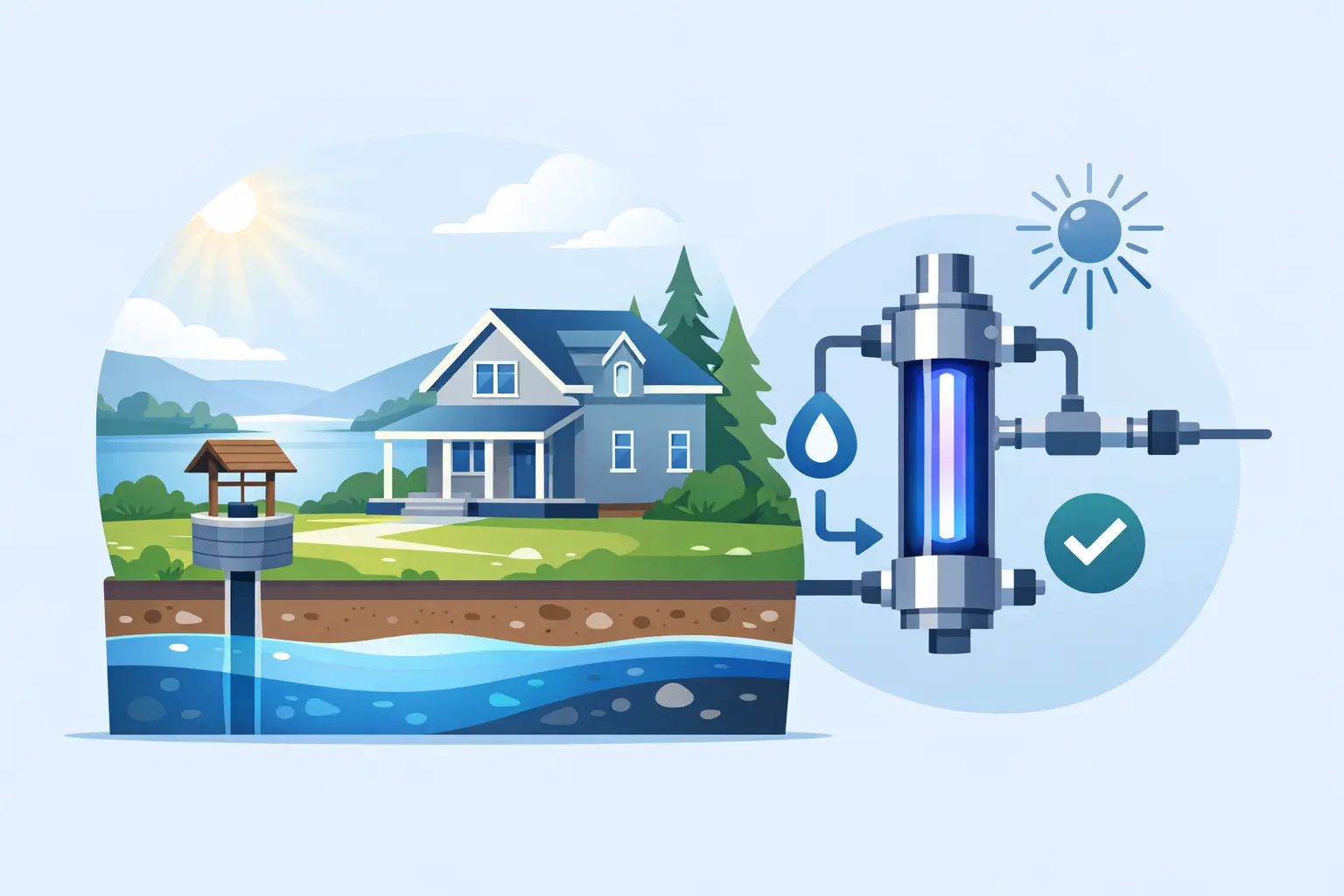
A UV sterilizer exposes flowing water to a controlled dose of ultraviolet light. That light damages the genetic material of bacteria, viruses, and other microorganisms, preventing them from reproducing. Unlike chlorination, it does not change the taste or smell of the water, add chemicals, or leave a disinfecting residual in your plumbing.
This makes UV especially attractive for families using private wells, cottages with year-round water systems, and rural properties where bacterial quality may change after heavy rain, flooding, repairs to the well cap, or seasonal groundwater movement. It can also be appropriate for commercial properties supplied by a private water source, provided the system is engineered for the required flow rate and monitored appropriately.
The limitation matters just as much as the benefit. UV only treats water that passes through the chamber. It does not remove dead microorganisms, prevent recontamination after treatment, repair a damaged well, or solve a persistent source of contamination. If a water test shows ongoing bacterial concerns, the well itself, pressure tank, plumbing, and surrounding drainage may also need attention.
Well Water UV System Review: The Factors That Matter Most
The best UV unit is not simply the one with the highest stated flow rate or the lowest purchase price. For well water, the most important factor is whether the system can consistently deliver the required UV dose under real household conditions.
Correct flow rate and sizing
A UV system must be sized for peak demand, not average daily water use. A small home with one bathroom has very different requirements from a home with multiple bathrooms, a large soaker tub, irrigation, frequent laundry, and a growing family. If water moves through the chamber too quickly, the UV exposure time may be insufficient.
Professional sizing considers the service flow rate, pressure tank cycle, plumbing layout, and the other treatment equipment ahead of the UV system. For commercial applications, this becomes even more critical. Hotels, schools, healthcare facilities, and high-use buildings need systems engineered for their actual peak flow, not a residential unit stretched beyond its intended capacity.
Water quality before the UV chamber
This is the point most often missed in a basic UV review. Cloudy water, sediment, iron, manganese, tannins, and hardness can interfere with UV performance. Particles may shield microorganisms from the light, while mineral scale can coat the quartz sleeve around the lamp.
A sediment filter is commonly installed ahead of UV, but it may not be enough on its own. Water with iron staining, black manganese deposits, sulphur odour, or significant hardness often needs additional treatment first. Depending on the water analysis, that may mean an iron and sulphur removal system, a water softener, specialized filtration, or a combination of treatment stages.
Clear-looking water is not always UV-ready water. A proper water test helps identify the conditions that can reduce light transmission and shorten maintenance intervals. It also prevents spending money on a UV unit when the primary issue is chemical, mineral, or aesthetic rather than microbiological.
Monitoring and safety features
A basic UV unit may simply turn on when it has power. A better system gives the homeowner meaningful warning when the lamp reaches the end of its service life, when the unit loses power, or when UV output falls below the intended level.
Lamp-life reminders are useful, but intensity monitoring provides a stronger level of confidence because it measures actual UV performance rather than assuming a new lamp is working perfectly. Some systems can also include audible alarms, visual indicators, or a shut-off feature that stops untreated water from flowing if the system is not operating correctly.
The right level of monitoring depends on the property. For a seasonal cottage, a basic unit with disciplined maintenance may be appropriate. For a family home with a vulnerable occupant, rental property, or commercial facility, more active monitoring and fail-safe protection are often worth the additional investment.
Installation location and plumbing details
UV equipment is generally installed after other whole-home treatment equipment, close to where treated water enters the home distribution system. This placement protects the lamp and sleeve from sediment and minerals while ensuring water delivered to fixtures has passed through disinfection.
The installation must also allow enough room to service the lamp and sleeve. A UV lamp is longer than the treatment chamber, so tight mechanical rooms can create avoidable maintenance problems. A bypass arrangement, shut-off valves, electrical access, and proper orientation all make future service safer and more straightforward.
Expert installation matters because a UV system is only one part of the water treatment system. Pressure loss, improperly selected filters, undersized plumbing, and poor equipment sequence can affect performance throughout the home.
Ongoing Costs and Maintenance Expectations
UV systems are relatively low-maintenance, but they are not maintenance-free. Most lamps require replacement on a regular schedule, commonly once per year, even if the lamp still appears to be lit. UV output declines over time, and visible light is not a reliable measure of disinfection strength.
The quartz sleeve also needs inspection and cleaning. In hard water areas, scale can build up on the sleeve and block UV light. Where iron or manganese is present, staining can occur even faster. Effective pretreatment reduces this workload and helps protect the system’s performance.
Budget for replacement lamps, sleeve cleaning, sediment filter changes, and periodic water testing. These are predictable ownership costs, and they are far less disruptive when planned in advance than when a system alarm sounds during a busy weekend or cold-weather service call.
When UV Is the Right Choice and When It Is Not Enough
UV is a strong choice when microbiological protection is the concern and the water can be made clear enough for effective treatment. It is particularly valuable after well repairs, after a positive bacterial test, or as a permanent final barrier in a properly designed well water system.
It is not a substitute for source correction. If surface water is entering the well, the well cap is damaged, the casing is compromised, or nearby drainage is directing runoff toward the well, those issues should be corrected. Similarly, UV will not remove lead, nitrate, salt, pesticides, fuel-related contaminants, or dissolved minerals. Those require treatment selected specifically for the water test results.
For many Ontario homes, the best solution is a treatment train rather than a single device: sediment reduction first, removal of iron, sulphur, manganese, or hardness as needed, then UV disinfection as the final stage. This approach protects the equipment, improves water appearance and taste, and delivers the conditions UV needs to work properly.
A Practical Buying Decision
Before choosing a UV system, arrange a current well water analysis and discuss how much water the property uses at peak demand. Ask whether the proposed unit is sized for that flow rate, what pretreatment is required, how the system alerts you to a problem, and what annual service involves.
Canadian Smart Home Solutions can assess the complete water picture rather than treating UV as a stand-alone answer. That means matching the system to the well water, the plumbing, and the needs of the people relying on it every day.
The most reassuring UV installation is one you rarely have to think about because it was correctly sized, properly protected from sediment and mineral buildup, and maintained on schedule. Start with the water test, then build the treatment system around what your well actually needs.