
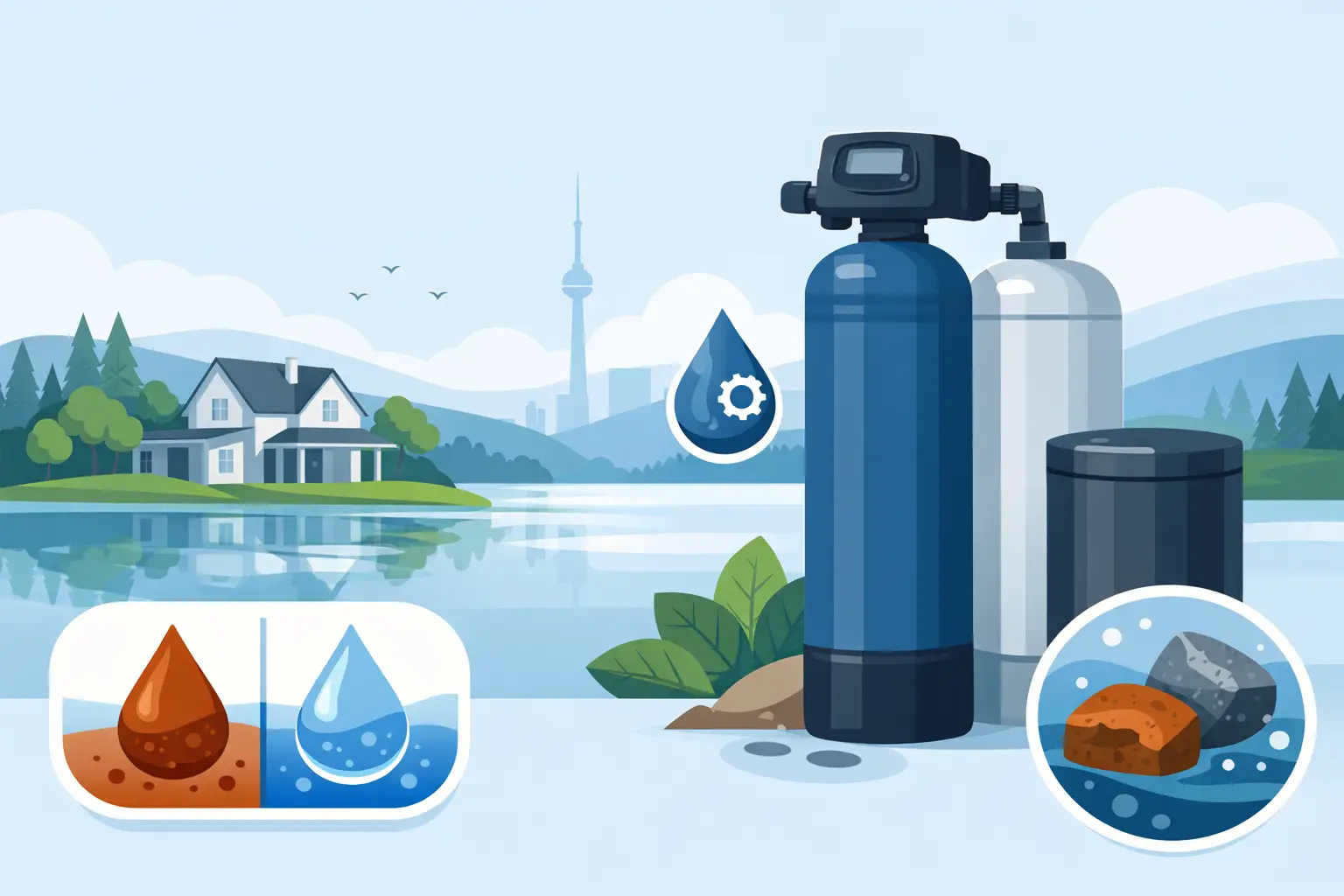
Orange streaks in toilets, rust-coloured laundry, a metallic taste at the kitchen tap, and clogged plumbing fixtures are not simply cleaning problems. They are common signs of iron in the water supply. Properly selected iron removal water systems address the source of those problems at the point where water enters the building, protecting fixtures, appliances, plumbing, and daily water quality throughout the property.
For many Ontario homes with private wells, iron is a persistent issue. It can also affect lake-water supplies and some commercial properties with their own water sources. The right treatment is rarely a one-size-fits-all filter. Iron behaves differently depending on its form, concentration, pH, hardness, sulphur levels, manganese, bacteria, and the flow rate the building requires. A water test and a system designed around the results are the reliable path to clear, clean water.
What Iron Does to Your Water and Property
Iron is a naturally occurring mineral that can enter groundwater as it moves through soil and rock. It is not always a health concern at typical residential levels, but it can create expensive and frustrating practical problems. Clear water may turn yellow, orange, or brown after it sits in a glass or meets air. White sinks, tubs, toilets, and shower walls develop stubborn rust stains. Light-coloured laundry can take on a yellow or orange tint, while dishes and glassware may come out of the dishwasher with spots.
Iron also affects the equipment behind the walls. Mineral deposits can restrict pipes, foul water heaters, stain humidifiers, and reduce the performance of washing machines, dishwashers, and filtration equipment. Where iron is combined with sulphur, homeowners may also notice a rotten-egg odour. In commercial settings, the same issues can lead to increased housekeeping time, guest complaints, equipment downtime, and premature replacement costs.
The goal of treatment is not just better-looking water. It is to reduce staining, eliminate unpleasant taste and odour concerns where applicable, and help preserve the systems that depend on a reliable water supply.
Choosing Iron Removal Water Systems by Water Type
The best treatment method depends on the type of iron present. A professional water analysis identifies what is in the water before equipment is recommended. This matters because a system that works well for one well may underperform on another, even when both properties show orange staining.
Clear-Water Iron
Clear-water iron, also called ferrous iron, is dissolved in the water and may be invisible when it first comes from the tap. Once exposed to oxygen, it oxidizes and creates the familiar orange or brown colour. This type is often treated by oxidizing the iron and filtering out the particles that form.
Air-injection systems are a common option. They introduce air into a treatment tank, which changes dissolved iron into a filterable solid. The media bed then captures the iron, and the system periodically backwashes to rinse accumulated material to drain. These systems can be an effective choice for many well-water applications and may also reduce certain odours.
Red-Water Iron and Iron Sediment
When water already appears orange, brown, or rusty at the tap, the iron has typically oxidized before reaching the home. This particulate iron may require sediment filtration, an iron filter, or a staged treatment setup depending on the amount of material present.
A simple cartridge filter can catch some visible sediment, but it is not always an appropriate primary solution for elevated iron. Cartridges may plug quickly, reduce water pressure, and require frequent replacement. Backwashing filtration systems are generally better suited to ongoing whole-home treatment because they are designed to clean the media bed automatically.
Iron Bacteria
Iron bacteria are different from dissolved iron. They are organisms that use iron as part of their growth cycle and can create slimy orange, brown, or black deposits in toilet tanks, plumbing, and pressure tanks. Water may have a swampy or musty odour, and filters can clog faster than expected.
Treating iron bacteria often requires more than a standard iron filter. Well cleaning or disinfection may be needed, followed by a treatment system that can manage the remaining iron and organic material. The correct approach depends on the severity of the growth and the condition of the well and plumbing. Treating only the visible stains without addressing the source can lead to recurring problems.
Why Water Testing Comes First
A system should be sized for the water, not selected from a shelf based on one symptom. Iron concentration is only one part of the decision. A complete analysis should also consider manganese, hydrogen sulphide, hardness, pH, alkalinity, turbidity, tannins, bacteria where relevant, and total dissolved solids.
pH is especially important. Some iron filtration media work best within a certain pH range. If water is acidic, a neutralizing filter may be required before or alongside iron treatment. If hardness is high, a water softener may be part of the solution. If manganese is present, the treatment media and regeneration requirements may need to change.
Flow rate matters just as much as chemistry. A small system may be acceptable for a modest household but struggle when several showers, appliances, and fixtures operate at once. Hotels, schools, healthcare facilities, and other high-use properties require engineered equipment that can maintain required flow while still providing adequate contact time and filtration performance.
Common Treatment Options and Their Limits
There is no single “best” filter for every iron problem. The appropriate system depends on water quality and the demands of the property.
A water softener can remove limited amounts of clear-water iron while addressing hard-water minerals such as calcium and magnesium. However, it is not always the right first line of treatment for higher iron levels. Excess iron can foul the softener resin, increase maintenance, and reduce softening performance. In many homes, an iron filter installed before the softener provides better long-term results.
Oxidizing iron filters use air, specialized media, or another oxidation process to convert dissolved iron into particles that can be captured and backwashed away. They are often a strong fit for well water with iron, manganese, or sulphur concerns, provided the water chemistry supports the chosen media.
Chemical injection systems may be recommended for more challenging water conditions, higher contaminant levels, or commercial applications. These systems can provide controlled oxidation and treatment capacity, but they require proper setup, storage considerations, monitoring, and regular service. The added complexity is worthwhile when simpler equipment cannot reliably achieve the required result.
For lake water or water with significant sediment, treatment may include pre-filtration before iron removal. If bacteria, lead, or drinking-water taste concerns are also present, additional equipment such as ultraviolet disinfection, lead reduction, or reverse osmosis may be included as part of a complete water treatment plan.
Installation Details That Affect Performance
Even a quality system can disappoint when it is installed without attention to the property. Iron removal equipment needs a suitable drain for backwashing, enough water flow to clean the media bed, an appropriate electrical connection where required, and protection from freezing temperatures. The location must also allow access for maintenance and future servicing.
On well systems, pressure tank condition and pump output should be considered. A system that does not receive adequate flow during its backwash cycle may fail to clean itself properly. Over time, that can cause channeling in the media, reduced iron removal, and declining pressure.
Correct sizing also prevents a common frustration: clean water at low demand but staining or breakthrough during heavy use. A properly designed whole-home system treats water before it reaches bathrooms, laundry equipment, kitchen fixtures, and water-using appliances. Canadian Smart Home Solutions evaluates water conditions and installation requirements so the equipment is matched to the building rather than guessed at.
Maintaining an Iron Treatment System
Most whole-home iron filters are designed for low day-to-day involvement, but no water treatment equipment is maintenance-free. Backwashing systems need their control valves and settings checked periodically. Some media require replacement after a number of years, depending on water quality and usage. Systems using chemicals need refilling and routine inspection, while cartridge pre-filters need replacement before pressure drops significantly.
Watch for returning orange stains, lower water pressure, a change in odour, or water that becomes discoloured after sitting. These can indicate that the system needs service, the media is exhausted, the well water has changed, or a mechanical component requires attention. Retesting water is sensible after major changes to the well, plumbing, property use, or treatment equipment.
A dependable iron treatment system should make water feel like one less thing to manage. When staining, odours, or metallic taste become part of daily life, start with a proper water analysis and select equipment built for the actual conditions at your property. The result is cleaner fixtures, better-performing appliances, and water that is easier to trust every time you turn on the tap.