
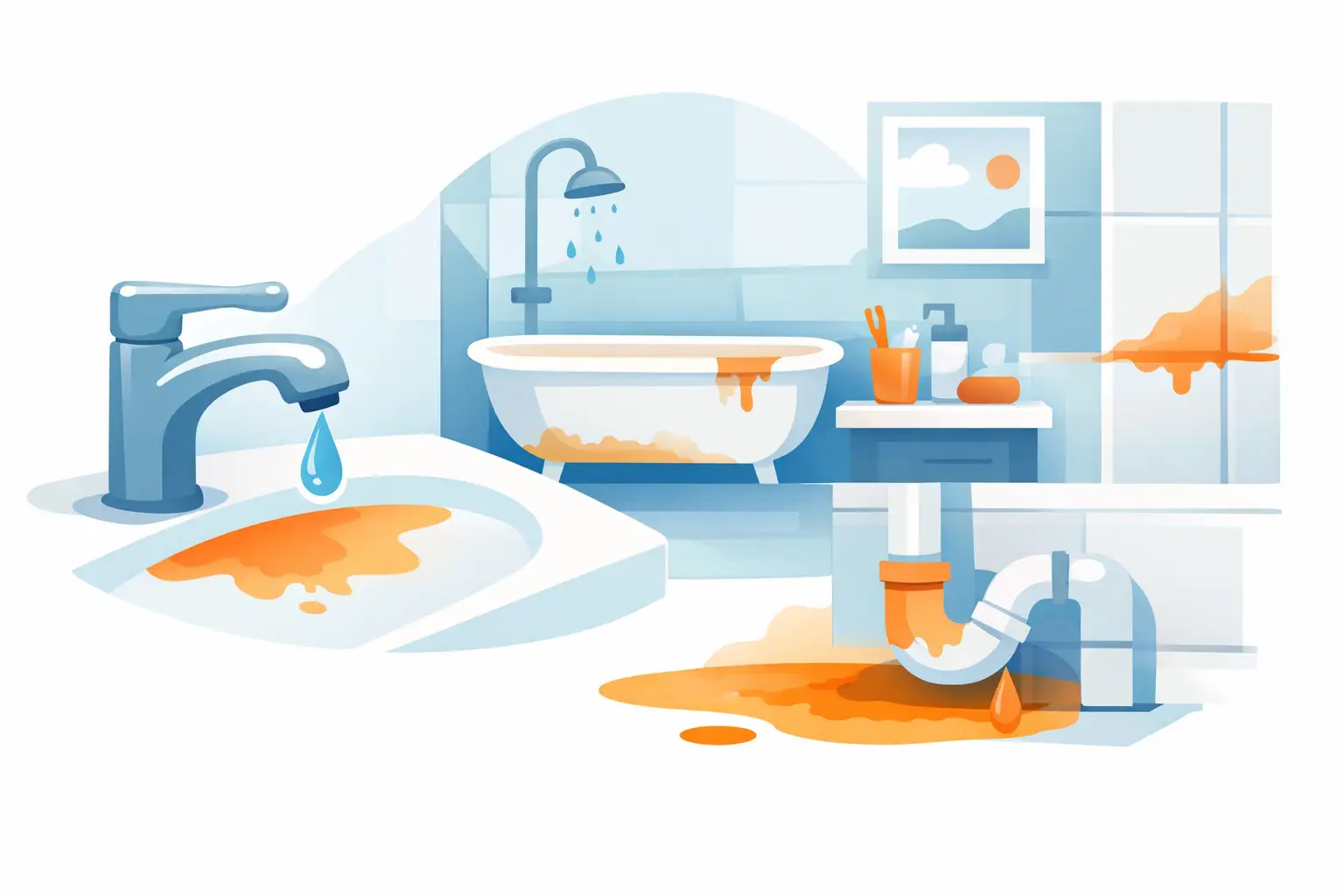
An orange ring around the toilet bowl, rust-coloured streaks in a sink, or staining on freshly washed laundry can make a clean home look neglected. If you are asking why water leaves orange stains, the answer is usually iron in the water supply, although ageing plumbing and certain bacteria can also be involved. The right fix depends on identifying the source before choosing equipment.
For Ontario homeowners, this issue is especially common with private wells, rural properties, and homes supplied by water that picks up minerals underground. It can also affect commercial washrooms, laundry rooms, kitchens, and mechanical equipment where large volumes of water move through fixtures every day.
Why water leaves orange stains
Orange, reddish-brown, or yellow-brown staining is most often caused by dissolved iron. Water can look perfectly clear when it comes from the tap because the iron is invisible while dissolved. Once that water meets air, it oxidizes and forms tiny rust-coloured particles that settle on porcelain, fiberglass, grout, clothing, and appliances.
This is why stains often become more noticeable around drains, toilet waterlines, humidifiers, dishwashers, and areas where water sits or evaporates. A small amount of iron may create a mild yellow tint over time. Higher iron levels can produce dark orange streaks quickly and may leave sediment in toilet tanks or filter housings.
Iron is a naturally occurring mineral, not automatically a health emergency. However, it is a serious practical water-quality problem. It creates ongoing cleaning work, affects the appearance of fixtures and laundry, can add a metallic taste to water, and may shorten the service life of plumbing components and water-using appliances.
The main sources of orange staining
Iron in well water
Groundwater travels through soil and rock that may contain iron. Private well owners are more likely to see orange staining because well water is not treated in the same way as municipal water. Iron levels can also change with seasonal groundwater conditions, well depth, rainfall, and changes in the local water table.
Iron may appear in several forms. Clear-water iron is dissolved and often only becomes visible after the water has been exposed to oxygen. Oxidized iron is already particulate, so it may make water look yellow, orange, or cloudy right from the tap. Some properties have both forms, which affects the type of filtration needed.
Corroding plumbing or an old water heater
If staining appears only at one faucet, or only with hot water, the source may be inside the building rather than the incoming supply. Old galvanized steel pipes can corrode internally and release iron particles. A deteriorating water heater can also contribute to discoloured hot water, particularly after the water has sat unused.
A useful clue is consistency. When every cold-water fixture shows staining, the incoming water should be tested. When the issue is limited to a single tap or the hot-water side, a plumbing assessment may be required alongside water testing.
Iron bacteria
Iron bacteria are naturally occurring organisms that use iron as part of their growth process. They do not usually cause disease, but they can create an orange, brown, or slimy buildup in toilet tanks, well equipment, and plumbing lines. Some people describe it as rust-coloured sludge or a film that returns soon after cleaning.
Iron bacteria can worsen staining and clog filters, pressure switches, and small plumbing passages. Treatment may require well disinfection or cleaning in addition to an iron-removal system. Installing a standard filter without addressing bacterial growth can lead to frequent maintenance and disappointing results.
Municipal water and building-specific issues
Municipal water is generally treated before it reaches homes and businesses, but orange staining can still occur. Corrosion within a building, disturbances in older distribution lines, or mineral-rich source water can contribute. Property managers should not assume a stain is harmless simply because the building is on municipal water. Testing provides a clear starting point and helps separate a plumbing issue from a treatment need.
What orange stains can do to your home or facility
The visual impact is obvious, but staining is rarely limited to appearance. Iron deposits can build up in washing machines, dishwashers, water heaters, humidifiers, ice makers, and fixtures. Over time, this buildup may reduce efficiency, interfere with valves, and increase maintenance costs.
Laundry is another common frustration. White fabrics can develop a yellow or orange cast, while light-coloured loads may come out looking dull despite using the correct detergent. Bleach is not a reliable solution for iron staining and can sometimes make the discolouration more difficult to remove.
In commercial settings, stained washrooms and linens affect guest, resident, patient, and customer perceptions. Hotels, healthcare facilities, schools, and multi-unit properties also have more equipment at risk. A properly engineered system needs to account for the water chemistry and the facility’s peak flow rate, not only the visible stain.
Do not guess – test the water first
An orange stain points toward iron, but appearance alone cannot tell you how much iron is present or what else is in the water. Manganese, hardness minerals, sulphur, pH, tannins, sediment, and bacteria can influence treatment performance. Water that contains iron and sulphur, for example, may need a different approach than water with iron alone.
A professional water analysis identifies the relevant conditions and prevents common mistakes, such as installing a softener when dedicated iron removal is needed or choosing a filter that is too small for household demand. For well water, testing should also consider microbiological quality and any changes after flooding, construction, or a noticeable shift in taste, smell, or colour.
The test results should guide the recommendation. A dependable solution is designed around the source water, household size or building demand, plumbing layout, and maintenance expectations.
Treatment options that actually address iron
There is no single system that suits every orange-stain problem. The best option depends on the form of iron, its concentration, the presence of other contaminants, and how much water the property uses.
For lower levels of dissolved iron, a water softener may help reduce staining while also controlling hardness and scale. This can be a practical choice where iron is modest and hard water is already causing spotting, mineral buildup, and reduced appliance efficiency. However, softeners are not the best standalone choice for significant iron levels or iron bacteria.
An iron removal filter is often the more direct solution for well water with noticeable staining. These systems typically oxidize iron and filter the resulting particles before water reaches fixtures. Depending on the water conditions, treatment may use air injection, specialized media, chemical oxidation, or a combination of processes.
Where sulphur odour, manganese, sediment, or bacteria are also present, a multi-stage whole-home treatment system may be needed. The goal is not merely to make one sink look cleaner. It is to protect the plumbing system, appliances, laundry, and water quality throughout the property.
Point-of-use systems, such as reverse osmosis, can improve drinking water at a kitchen tap, but they do not stop stains in toilets, showers, laundry, or water-using equipment. For a whole-home staining issue, treatment should generally be installed where water enters the building.
Cleaning existing stains without damaging fixtures
Treatment stops new staining, but existing deposits still need to be removed. Use a cleaner specifically intended for rust or iron stains and follow the product directions for the surface being cleaned. Porcelain, acrylic, natural stone, and coloured grout may react differently, so test a small hidden area first.
Avoid aggressive abrasives that can scratch a fixture. A scratched surface holds deposits more easily and can make the problem appear to return faster. If stains are severe, repeated gentle cleaning may be safer than one harsh attempt.
It is also worth checking toilet tanks and aerators. These areas can collect iron sediment and continue releasing discolouration even after treatment has been installed. A service professional can advise whether plumbing components need flushing, repair, or replacement.
When to call a water treatment professional
Persistent orange stains, metallic taste, visible particles, foul odours, changing water colour, or recurring slime in toilet tanks are all reasons to arrange water testing. The same applies when a property already has treatment equipment that is no longer keeping up. Filters and media have limits, and changing water conditions may require service, adjustment, or a system upgrade.
Canadian Smart Home Solutions can assess the water issue, recommend treatment that fits the property, and install a whole-home system designed for lasting performance. For homes and facilities across Ontario, a properly sized iron-removal solution can replace constant scrubbing with cleaner fixtures, better-protected equipment, and water that is easier to live with.
Orange stains are a useful warning sign, not a cleaning failure. Once the water is tested and the cause is confirmed, the path to cleaner fixtures and dependable water becomes much more straightforward.