
Best Under Sink Water Purifiers for Ontario Homes

A glass of water can look perfectly clear and still carry concerns that matter to Ontario households: chlorine taste, lead from older plumbing, dissolved minerals, bacteria in private wells, or sediment released from aging pipes. The best under sink water purifiers address the contaminants actually present in your water, rather than relying on a one-size-fits-all filter.

An under-sink system treats water at the point where you drink and cook. It is usually installed inside the kitchen cabinet and supplies a dedicated drinking-water faucet, although some systems can connect to a compatible main faucet. For families who want better-tasting water without carrying bottled water home each week, it is a practical, space-saving solution. The right choice depends on your water source, plumbing, household needs, and test results.

What makes an under-sink purifier the right choice?

Under-sink filtration is designed for drinking water, food preparation, coffee, tea, and pet water. It does not replace a whole-home system when the problem affects every fixture in the house. If hard water is leaving scale on faucets, iron is staining toilets, or sulphur odours are noticeable in showers, treatment should begin at the main water supply.

That distinction saves money and frustration. A reverse osmosis system can produce excellent drinking water at one tap, but it will not protect a water heater, dishwasher, plumbing fixtures, or laundry from hard-water scale. Conversely, a whole-home filter may improve water throughout the house but may not reduce dissolved contaminants to the level a dedicated reverse osmosis system can achieve at the kitchen sink.

For many Ontario homes, the strongest approach is a whole-home treatment system for broad water-quality issues plus an under-sink purifier for refined drinking water. This is particularly common in homes on well water, lake water, or municipal water with a noticeable chlorine taste.

Best under sink water purifiers by water concern

Reverse osmosis for broad dissolved-contaminant reduction

Reverse osmosis, often called RO, is one of the most capable under-sink options. It pushes water through a semi-permeable membrane, reducing many dissolved substances that ordinary carbon filters do not reliably address. Depending on the system and the water chemistry, RO can reduce contaminants such as lead, sodium, fluoride, nitrates, and total dissolved solids, while also improving taste.

This makes RO a strong choice for homeowners concerned about older service lines, municipal water quality, or well-water contaminants identified through testing. A quality system normally uses several stages, including sediment and carbon pre-filtration to protect the membrane, followed by the RO membrane and a final polishing filter.

The trade-off is that RO systems need more cabinet space than a simple filter, require scheduled filter and membrane changes, and produce some reject water during purification. Modern high-efficiency designs can reduce waste compared with older equipment, but efficiency varies by model, incoming pressure, and water temperature. Homes with low water pressure may need a booster pump for reliable performance.

Carbon block filtration for chlorine, taste, and odour

A carbon block filter is often the best fit when the primary issue is chlorine taste, chloramine, unpleasant odour, or minor sediment in municipally supplied water. Carbon adsorption improves the taste of drinking water and can reduce many organic compounds, but performance depends on the specific filter media, contact time, and replacement schedule.

This option is generally less costly and simpler than reverse osmosis. It is well suited to households where water testing does not identify a concern requiring membrane treatment. However, a basic carbon filter should not be assumed to solve lead, nitrate, arsenic, bacteria, or high dissolved solids. The product’s performance claims need to match the problem you are trying to correct.

Lead-certified filtration for older Ontario plumbing

Lead is a concern worth taking seriously in older homes, particularly where lead service lines, brass components, or aging plumbing may be present. Water can pick up lead after it enters the property, which means a municipal treatment plant’s water quality report does not always reflect the water coming from your kitchen faucet.

For this concern, choose an under-sink system specifically certified for lead reduction, and have the water tested where possible. Both specialized carbon filters and reverse osmosis systems may be appropriate, but certification and correct installation matter more than a broad marketing label. Filter cartridges must also be replaced on time. An overdue cartridge can lose effectiveness long before water begins to look or taste different.

UV purification for bacteria and well-water risks

Ultraviolet systems disinfect water by exposing it to UV light. They are valuable when testing identifies bacteria or when a private well or lake-water supply has a microbiological risk. UV does not remove sediment, hardness, iron, chemicals, or dissolved minerals. In fact, cloudy water can reduce UV effectiveness because particles may shield microorganisms from the light.

For that reason, UV is often paired with sediment filtration and, in many well-water applications, broader pre-treatment. A point-of-use UV unit can support a kitchen drinking-water system, but a whole-home UV system is often more appropriate when bacteria could affect showers, bathroom taps, ice makers, and other fixtures.

How to choose between the best under sink water purifiers

Start with the source of your water. Municipal water and private well water present very different treatment needs. Municipal water may have disinfectant taste, sediment, or concerns related to local plumbing. Well water can vary widely from property to property and may contain hardness, iron, manganese, sulphur, bacteria, nitrates, or other naturally occurring substances.

A proper water test gives you a clear starting point. It prevents the common mistake of buying equipment for a problem you do not have while missing the one you do. For example, a carbon filter may make sulphur odour less noticeable at the kitchen tap, but it will not resolve iron staining or protect appliances. An RO system may reduce dissolved solids, yet it is not the first line of defence for heavy sediment or untreated bacterial contamination.

When comparing systems, assess these practical factors:

  • The contaminants the system is certified or designed to reduce, based on your water test.
  • Available cabinet space, drain access, water pressure, and whether a dedicated faucet is acceptable.
  • Filter replacement intervals, membrane life, and the ongoing cost of maintenance.
  • Daily water demand, especially for larger families, frequent cooking, or refrigerator and ice-maker connections.
  • Whether a whole-home filter, softener, iron removal system, or UV treatment is needed before the under-sink unit.

Do not choose by filter stage count alone. More stages do not automatically mean better water. Each stage should have a defined role, such as sediment removal, chlorine reduction, membrane protection, dissolved-contaminant reduction, or final taste polishing.

Installation details that affect performance

Under-sink purifiers are compact, but their installation should not be treated as an afterthought. The system needs a sound cold-water connection, a properly installed drain saddle where required, sufficient clearance for cartridge changes, and a faucet mounted securely through the sink or countertop. Reverse osmosis systems also need the storage tank positioned where it can be serviced.

Poor installation can lead to leaks, low flow, premature filter wear, or a system that is difficult to maintain. This is especially relevant in condominiums, older homes, and properties with limited cabinet space or non-standard plumbing. Professional installation also helps ensure the system is selected and configured for the incoming water conditions rather than simply fitted beneath the sink.

Canadian Smart Home Solutions can assess water quality and recommend an under-sink system that works with, rather than against, your home’s existing treatment equipment. For homes with hardness, staining, odours, or well-water concerns, the recommendation may include a complete treatment plan instead of placing all expectations on a single kitchen filter.

Maintenance is part of clean drinking water

Every purifier has a service schedule. Sediment and carbon filters are commonly replaced more often than RO membranes, while UV lamps require regular replacement even if the light still appears to be working. The exact timing depends on the equipment, water use, sediment load, and the manufacturer’s instructions.

Keep a record of cartridge changes and sanitization service. If flow slows noticeably, taste changes, or the system has been unused for an extended period, arrange maintenance before assuming the unit is still performing as intended. Families using private wells should also retest their water periodically, particularly after flooding, nearby construction, changes in taste or odour, or work on the well or plumbing.

The best result is not simply a filter under the sink. It is a properly sized, professionally installed system maintained on schedule and chosen from real information about your water. That gives your household confidence every time the kitchen tap is turned on.
Top Commercial Water Treatment Solutions

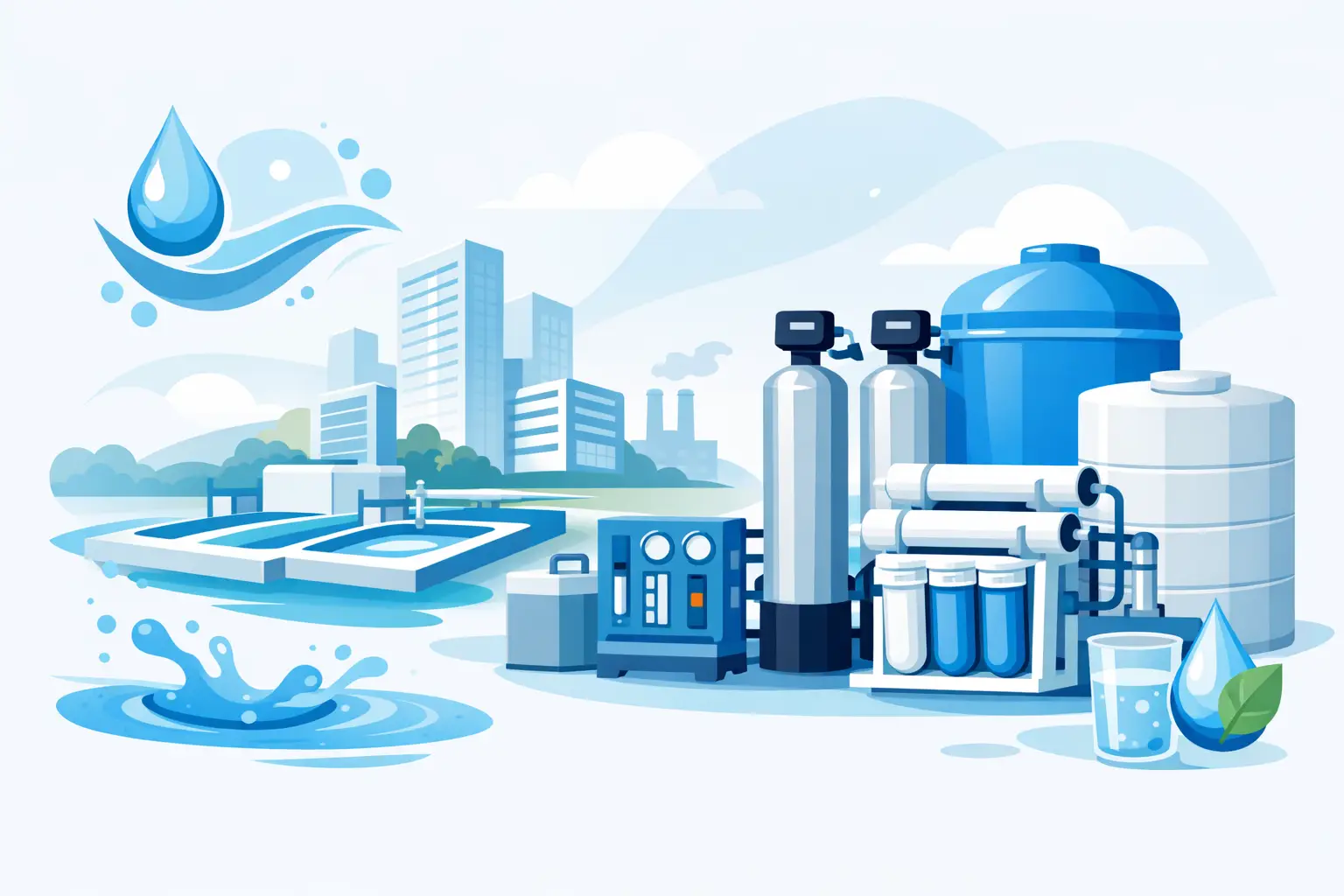
A hotel’s laundry machines scaling up, a school dealing with drinking-water concerns, or a long-term care facility facing sulphur odours all have the same underlying problem: untreated water can affect safety, operating costs, and confidence in the building. The top commercial water treatment solutions are not one-size-fits-all products. They are properly sized systems designed around the facility’s water source, flow demand, occupancy, and specific water-quality results.

For Ontario businesses and institutions, the right treatment system can reduce equipment damage, improve water taste and appearance, support sanitation procedures, and help deliver dependable water at every tap. The starting point is always a professional water analysis. A system built to solve the wrong problem can add expense without producing the result your facility needs.

Start With the Water Problem, Not the Equipment

Commercial water treatment should begin with a clear look at where the water comes from and what it contains. Municipal water may be disinfected, but it can still carry hardness minerals, chlorine taste, lead from plumbing components, or sediment. Private well water can introduce iron, manganese, sulphur, bacteria, tannins, and changing seasonal conditions. Lake water requires a different level of treatment again, particularly where turbidity and microbiological contamination are concerns.

Flow rate matters just as much as water chemistry. A small office may need a modest point-of-use drinking-water system, while a hotel, school, manufacturing operation, or multi-unit property may require high-flow filtration, multiple treatment tanks, storage capacity, and redundant equipment. Commercial systems must maintain performance during peak demand, not only during a quiet afternoon.

A proper assessment considers water test results, plumbing layout, incoming pressure, daily usage, peak flow, drainage capacity, and the equipment that needs protection. Boilers, dishwashers, ice machines, coffee equipment, laundry systems, steam equipment, and commercial water heaters can all be affected by poor water quality.

Top Commercial Water Treatment Solutions for Ontario Facilities

The most effective commercial systems often combine several treatment methods. Each component has a defined job, and together they address the full range of water concerns present at the property.

Commercial Water Softeners

Hard water is one of the most common and costly issues in Ontario. Calcium and magnesium create scale inside pipes, water heaters, boilers, fixtures, dishwashers, and other equipment. The visible signs may be white residue on glassware and fixtures, but the more serious cost is often hidden inside expensive appliances and mechanical systems.

A commercial water softener removes hardness minerals through ion exchange. Properly sized softeners can improve cleaning results, reduce soap consumption, help water-heating equipment operate more efficiently, and extend the service life of plumbing-connected equipment.

For high-demand facilities, a duplex or alternating softener system may be the better choice. One tank can remain in service while the other regenerates, helping maintain a continuous supply of softened water. The trade-off is higher upfront cost and the need for salt storage and drainage, but the operational protection can be substantial for facilities that cannot tolerate untreated water during regeneration.

High-Flow Sediment and Carbon Filtration

Sediment filtration removes particles such as sand, rust, silt, and debris before they reach fixtures and downstream treatment equipment. This is particularly valuable for well water, older plumbing systems, lake-water applications, and properties with visible particulate matter. Removing sediment early protects valves, membranes, ultraviolet lamps, and other sensitive components.

Carbon filtration is commonly used to improve taste and odour by reducing chlorine and certain organic compounds. In municipal-water facilities, carbon can make a noticeable difference to drinking water, coffee, ice, and food preparation. It can also protect reverse osmosis membranes from chlorine exposure.

Filter selection depends on the contaminant and required flow rate. Cartridge filters are useful in some applications but need regular replacement. Backwashing media filters can be a more practical option for larger commercial demands because they are designed for higher volumes and reduced service interruption.

Reverse Osmosis Systems

Commercial reverse osmosis, often called RO, is used when a facility needs highly purified water for drinking, food service, specialty equipment, laboratories, or other applications where dissolved solids are a concern. RO uses a membrane to reduce a broad range of dissolved contaminants, including many salts, minerals, and metals.

This is not usually a whole-building solution. RO systems work best when installed at the point of need, such as a commercial kitchen, bottle-filling station, laboratory, coffee service area, or equipment feed line. They require pre-treatment, regular membrane maintenance, and adequate water pressure. They also produce a concentrate stream, which must be considered when planning water use and drainage.

Where taste, mineral content, or sensitive equipment performance is the priority, RO can be an excellent choice. Where the main issue is hard water or iron staining, a softener or iron-removal system may be more appropriate and more economical.

Ultraviolet Water Disinfection

Ultraviolet, or UV, systems use UV light to deactivate bacteria, viruses, and other microorganisms. They are especially important for private wells, lake-water systems, rural facilities, and any building where microbiological safety needs added protection.

UV does not remove sediment, hardness, iron, sulphur, or dissolved chemicals. In fact, cloudy water, iron, and sediment can reduce UV effectiveness by blocking the light. That is why a commercial UV system is usually installed after the appropriate pre-filtration and water conditioning equipment.

For a school, clinic, food-service operation, or care facility, UV can add a critical barrier against microbiological contamination. The unit must be sized for the actual peak flow, maintained according to schedule, and equipped with the right monitoring features to verify lamp performance.

Iron, Manganese, and Sulphur Removal

Orange staining, black deposits, metallic taste, and rotten-egg odours are familiar well-water problems across Ontario. Iron and manganese can stain fixtures, clog plumbing, and damage appliances. Hydrogen sulphide produces a strong sulphur smell that can make water unpleasant to use even when it is not visibly discoloured.

Commercial iron and sulphur removal systems may use oxidation, specialized filtration media, aeration, or chemical treatment depending on the water chemistry and concentration levels. The correct approach depends on whether iron is dissolved or particulate, whether bacteria are present, and whether pH adjustment is required.

These systems need engineering attention. A solution that works well for a home may not have the flow capacity, backwash rate, or media volume required for a commercial property. Water testing and accurate sizing are essential to prevent staining and odours from returning during high-use periods.

Lead Reduction Systems

Lead concerns require a targeted response. The source may be older service lines, plumbing, fixtures, or solder rather than the municipal water supply itself. Point-of-use lead-reduction systems, certified filtration technologies, and properly planned drinking-water stations can help protect employees, residents, students, and visitors.

The right design depends on where people consume water. A building may benefit from treatment at kitchen taps, staff areas, hydration stations, or other designated drinking-water locations rather than attempting unnecessary treatment throughout every plumbing line. Follow-up testing is valuable because it confirms that the selected solution is achieving the intended reduction.

Design for Reliability, Service, and Growth

A commercial treatment system has to work after installation day. Access for maintenance, media replacement, salt delivery, filter changes, lamp replacement, drainage, bypass plumbing, and monitoring should all be addressed before equipment is installed. A system hidden in an inaccessible mechanical room may be technically capable but difficult to maintain properly.

For facilities with high occupancy or critical water needs, redundancy deserves consideration. Parallel filters, duplex softeners, duty-and-standby pumps, and monitored alarms can reduce the risk of a water-quality issue disrupting operations. Remote monitoring may also be useful where onsite maintenance staff are limited.

It is also wise to plan for growth. A facility adding rooms, equipment, residents, or production capacity may outgrow an undersized system quickly. Choosing equipment with a practical expansion path can protect the initial investment.

Professional Installation Makes the Difference

Commercial water treatment is as much about system design and installation as the equipment itself. Incorrect pipe sizing, inadequate drainage, poor pre-treatment, or an improperly positioned UV unit can limit performance. Local installation expertise also helps ensure systems are integrated correctly with the building’s plumbing and operational requirements.

Canadian Smart Home Solutions provides commercial and custom water treatment equipment for Ontario properties that need practical answers to hard water, staining, odours, lead concerns, filtration, and high-flow treatment demands. The best recommendation comes after understanding the building and testing the water, not after selecting a product from a shelf.

Better water should make daily operations easier: cleaner fixtures, protected equipment, more dependable drinking water, and fewer avoidable maintenance calls. When treatment is matched to the actual conditions at your property, that is the result a commercial system is built to deliver.

How to Remove Water Stains and Stop Them Returning

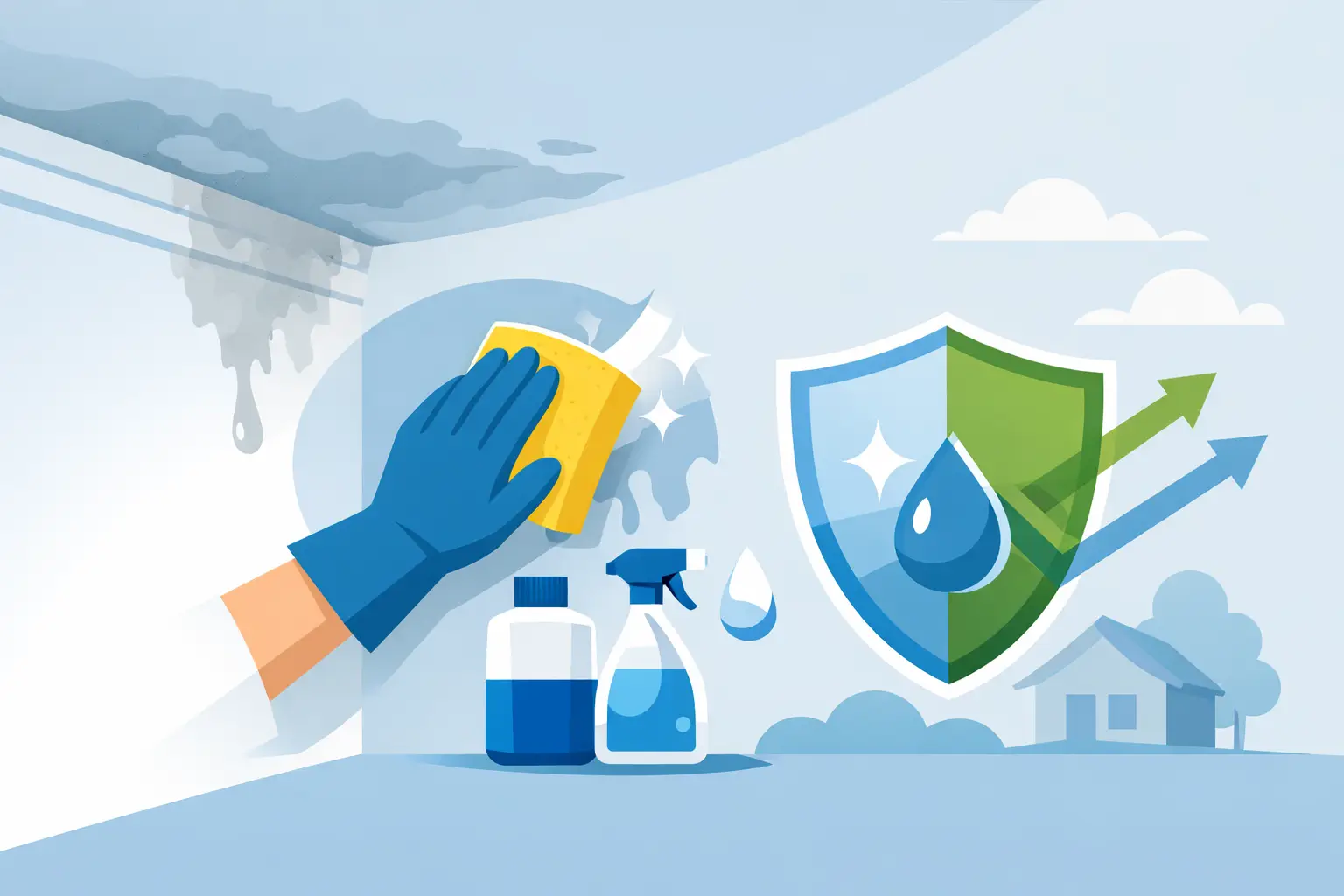
A white film on the shower door, orange rings in the toilet, or crust around a faucet are not simply cleaning problems. They are often evidence of what is travelling through your water supply. Knowing how to remove water stains starts with identifying the stain, cleaning the surface safely, and addressing the water condition that is causing it.

For Ontario homes with hard municipal water, private wells, or lake water systems, stains can return quickly after cleaning. A whole-home treatment solution can reduce the minerals and metals behind recurring buildup, helping protect fixtures, appliances, plumbing, and the time you spend cleaning.

Identify the type of water stain first

Water stains look similar at first glance, but their causes require different approaches. Using the wrong cleaner may waste time or damage a delicate finish.

White, chalky marks on glass, chrome, tile, coffee makers, and shower fixtures are usually caused by hard water minerals. Calcium and magnesium remain behind when water evaporates, eventually forming scale that can feel rough or crusty.

Orange, reddish-brown, or yellow staining is commonly linked to iron in the water. This is especially common in homes supplied by a well. Iron can leave stains in toilets, sinks, tubs, laundry, and even on exterior surfaces where irrigation water dries.

Blue-green stains around plumbing fixtures may indicate copper corrosion. Black or dark brown staining can be caused by manganese, while pink or reddish residue around drains and toilet bowls is often a bacterial film that thrives in damp areas rather than a mineral deposit.

If the staining is persistent, widespread, or accompanied by metallic taste, sulphur odour, discoloured water, or reduced water pressure, cleaning alone is not the right long-term answer. Water testing can identify the underlying issue and guide the appropriate treatment system.

How to remove water stains from common surfaces

Start with the mildest effective method. This protects the surface and reduces exposure to stronger cleaning products. Always test a cleaner in an inconspicuous area first, particularly on natural stone, coloured grout, specialty metals, and refinished tubs.

Glass shower doors and chrome fixtures

For light hard water spotting, apply white vinegar to a microfiber cloth or paper towel and lay it over the affected area for 15 to 30 minutes. The mild acid helps loosen calcium deposits. Wipe the surface, rinse with clean water, and dry thoroughly with a clean microfiber cloth.

For heavier buildup, make a paste with baking soda and a small amount of water. Gently work it over the stain using a non-abrasive sponge, then rinse and dry. Avoid steel wool, scouring pads, and harsh powders on chrome and glass. They can create fine scratches that make future stains cling more easily.

Vinegar is useful on many hard surfaces, but it should not be used on marble, limestone, travertine, or other natural stone. Acidic cleaners can etch these materials and leave dull spots that are more difficult to repair than the original stain.

Toilets, sinks, and porcelain tubs

Mineral rings in a toilet bowl can often be treated with a toilet-safe descaling cleaner. Apply it according to the product directions, allow adequate contact time, then scrub with a toilet brush or non-scratch pad. For a stubborn hard water ring, a pumice stone designed specifically for wet porcelain may help, but use very light pressure and keep both the stone and surface wet to avoid scratching.

Orange iron stains usually need a cleaner formulated for rust or iron deposits. Follow the label carefully, wear gloves, and provide ventilation. Never mix cleaners, especially products containing bleach with acidic or ammonia-based products. Mixing household chemicals can produce dangerous fumes.

For sinks and tubs, avoid abrasive cleaning tools on acrylic, fibreglass, and enamel surfaces. A soft cloth, non-scratch sponge, and suitable mineral or iron stain cleaner are safer choices. Rinse fully after cleaning so residue does not remain on the finish.

Faucets, aerators, and showerheads

Scale around a faucet base can be softened with a vinegar-soaked cloth. If the aerator or showerhead has reduced flow, mineral buildup may be blocking small openings. Remove the aerator or showerhead if it is designed to be detached, soak it in vinegar for several hours, brush gently, and rinse before reinstalling.

Take care with older fixtures or finishes such as brushed nickel, oil-rubbed bronze, and matte black. Manufacturer-approved cleaners are often the safest option. If scale has become heavy enough to affect fixture performance, it may also be accumulating inside appliances and plumbing components.

Dishes, glassware, and small appliances

Cloudy drinking glasses can be caused by mineral film, although permanent etching from dishwasher heat and detergent is also possible. Soak mineral-film haze in vinegar, rinse, and dry. If the cloudiness does not improve, the glass may be etched and cannot be cleaned away.

For kettles, coffee makers, and humidifiers, follow the manufacturer’s descaling instructions. These appliances often need regular maintenance in hard water areas. Repeated scale buildup can reduce efficiency, shorten equipment life, and affect performance.

Why stains come back after cleaning

A clean fixture can look new for a few days, then show the same marks again because the source water has not changed. This is the key difference between cleaning a symptom and solving the problem.

Hard water is one of the most common causes of recurring white scale. A water softener reduces hardness minerals before they move through the home’s plumbing system. This can reduce spotting on shower doors and fixtures, make cleaning easier, help soaps lather more effectively, and limit scale in water heaters, dishwashers, washing machines, and tankless systems.

Iron and manganese require a different approach. Depending on the water chemistry and concentration, an iron removal system, oxidation and filtration system, or custom well water treatment setup may be recommended. Sulphur odours, sediment, bacteria concerns, pH, and water usage also affect system selection. A proper water analysis matters because one treatment method is not suitable for every well or property.

For drinking water concerns, such as lead or dissolved contaminants, point-of-use treatment like reverse osmosis may be appropriate at the kitchen sink. However, reverse osmosis is not designed to replace a whole-home softener or iron filtration system when the primary concern is staining and scale throughout the building.

Prevent water stains between cleanings

Small habits can slow stain formation, but they work best when paired with the right water treatment. Wipe shower glass and fixtures after use, particularly in areas with hard water. Repair dripping faucets and running toilets, since constant water exposure concentrates deposits in one location.

Use the correct dishwasher detergent and rinse aid for your water conditions. If glasses remain spotted despite proper dishwasher settings, hardness may be too high for the appliance to manage effectively. Keep humidifiers, coffee equipment, and ice makers on a regular cleaning schedule, since scale can build inside before it becomes visible.

Property managers and commercial facility operators should pay particular attention to water heaters, boilers, dishwashing equipment, laundry systems, and high-use washrooms. Scale and iron staining create both a visual maintenance issue and an operational cost. In hotels, schools, healthcare facilities, and multi-unit buildings, treatment equipment should be sized for actual flow rates and demand rather than selected as a one-size-fits-all solution.

When to arrange water testing

Consider professional water testing when stains are recurring, change colour, appear in multiple fixtures, or are joined by odours, sediment, poor taste, appliance failures, or visible discolouration. Well owners should be especially proactive, as groundwater quality can vary over time and by season.

A water test can measure hardness, iron, manganese, pH, sulphur-related conditions, and other relevant factors. The results make it possible to recommend a treatment system that targets the cause instead of relying on repeated bottles of cleaner. Canadian Smart Home Solutions can assess Ontario water conditions and install whole-home equipment suited to the property’s needs.

Clean surfaces are satisfying, but the real improvement is water that leaves less behind. When stains become less frequent, fixtures stay brighter, appliances work under less strain, and routine cleaning becomes a quick task instead of a recurring project.

Sulphur Smell in Water: Causes and Fixes

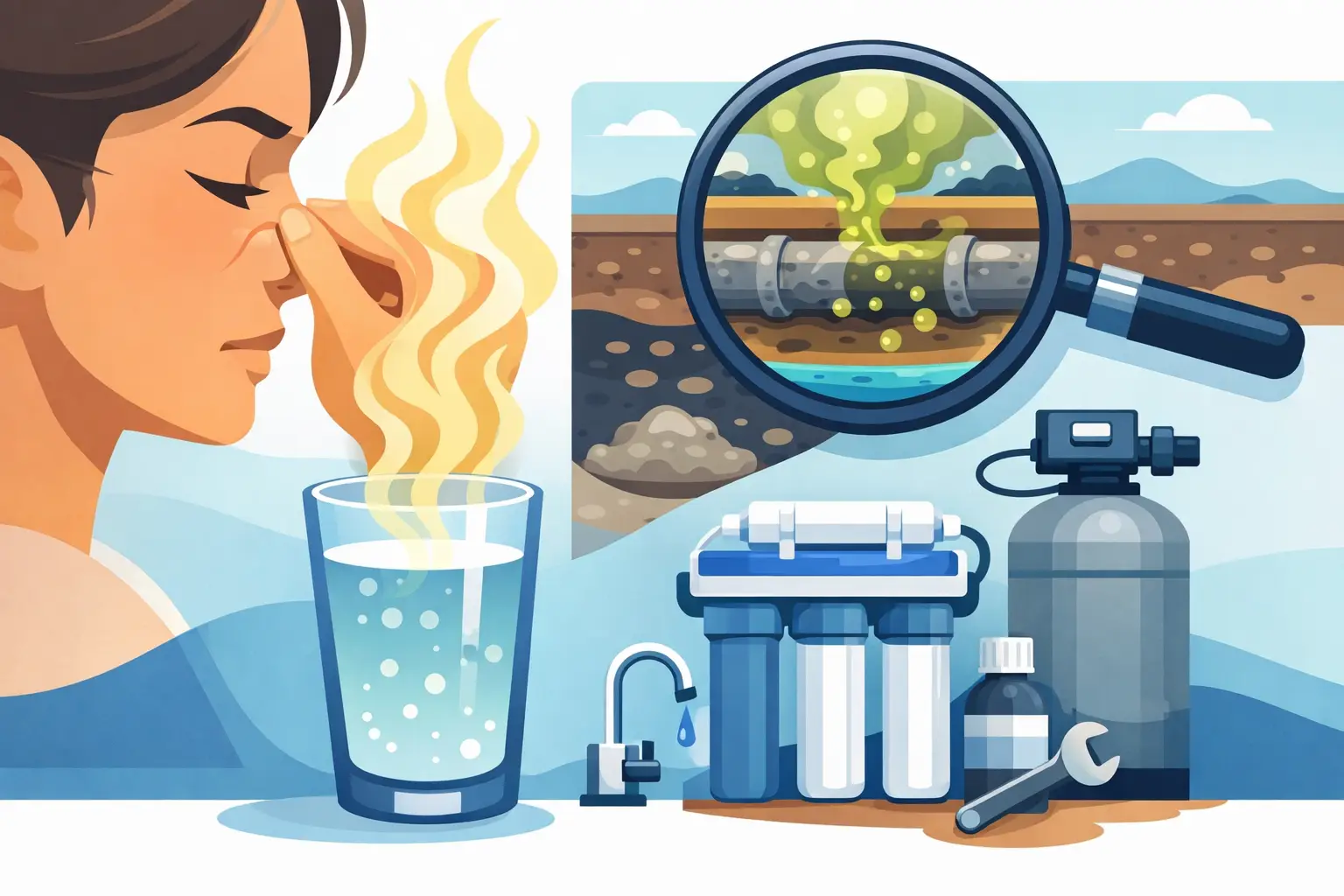
Turn on a tap and catch that rotten egg odour, and the problem becomes hard to ignore fast. A sulphur smell in water is one of the most common complaints we hear from Ontario homeowners, especially on well water, but it can also show up in cottages, rural properties, and some commercial buildings. The good news is that the smell usually has a clear cause, and with proper testing, it can be treated effectively.

What causes sulphur smell in water?

In most cases, the odour comes from hydrogen sulphide gas in the water. Even at low levels, hydrogen sulphide can create a strong smell that makes water unpleasant to drink, cook with, or use for bathing. It may not always signal a serious health issue, but it is a clear sign that the water needs attention.

Hydrogen sulphide can enter water naturally as groundwater moves through soil and rock that contain sulphur-bearing minerals. That is why the issue is especially common in private well systems. In other cases, sulphur-reducing bacteria can produce the gas inside a well, plumbing system, or water heater.

Sometimes the source is not the incoming water supply at all. If the smell only appears when using hot water, the problem may be inside the water heater. A magnesium anode rod can react with naturally occurring sulphates and create that familiar rotten egg smell. That is a very different issue from a whole-home water problem, which is why proper diagnosis matters.

When sulphur smell in water points to a bigger issue

The smell itself is unpleasant, but the larger concern is what it may be telling you about your water system. Odours can travel with other water quality problems such as iron, manganese, sediment, staining, or bacterial activity. If you are on well water, a sulphur odour is often part of a broader treatment need rather than a stand-alone issue.

For homeowners, this can mean orange or black staining in sinks and toilets, metallic taste, slimy buildup, or recurring maintenance problems with fixtures and appliances. For commercial and institutional properties, the impact can be even more disruptive. Guests, tenants, staff, or residents notice water odours quickly, and complaints tend to follow. In buildings with high water use, even a moderate odour issue can affect daily operations, cleaning, laundry, and food service.

That is why a basic filter swap is not always the answer. If the cause is bacterial, chemical, or equipment-related, the right fix depends on the source.

How to tell where the smell is coming from

A simple observation can narrow things down.

If the smell is present in both hot and cold water, the source is more likely the incoming water supply. That often points to hydrogen sulphide in the well water or bacterial activity somewhere in the system.

If the smell is only in hot water, the water heater becomes the first place to investigate. This is common in homes where the cold water seems fine but showers and hot taps have a strong odour.

If the smell is strongest after water has been sitting in the pipes, bacteria may be growing in the plumbing. If it is strongest from one tap only, the issue may be local to that fixture rather than the entire property.

There is also a difference between a true sulphur smell and other odours. Water that smells musty, earthy, or like chlorine points to a different treatment path. That is another reason testing matters before equipment is recommended.

Why water testing should come first

A proper water test helps determine whether the issue is hydrogen sulphide, sulphates, iron bacteria, manganese, coliform bacteria, or a combination of factors. Without that step, treatment can become guesswork.

For example, activated carbon may reduce mild odours in some cases, but it will not solve every sulphur problem. A softener may help with hardness, but it is not designed to handle hydrogen sulphide on its own. Shock chlorination may provide short-term relief if bacteria are involved, but if the underlying conditions remain, the smell often returns.

An experienced water treatment provider looks at the full picture: water source, flow rate, household or building demand, other contaminants, plumbing setup, and whether the problem is constant or occasional. That is how you move from temporary relief to a dependable long-term solution.

Treatment options for sulphur smell in water

The right solution depends on what the water test shows and where the odour is being generated.

For hydrogen sulphide in well water, oxidation is one of the most effective treatment methods. This process changes the gas into a form that can be filtered out. Depending on the application, that may involve an air injection system, chemical oxidation, or specialized media designed for iron and sulphur removal. These systems are often installed as point-of-entry equipment so the whole building benefits, not just one tap.

When iron and manganese are also present, combination treatment is often the smarter route. That is common in Ontario well water. Instead of trying to solve one problem at a time, a properly sized system can address odours, staining, and nuisance minerals together.

If sulphur-reducing bacteria are part of the problem, shock chlorination may be used as an initial step to disinfect the well and plumbing. In persistent cases, continuous disinfection or a more advanced filtration setup may be needed. The key point is that bacteria-related odours often come back if the root cause is not fully addressed.

If the smell is isolated to hot water, the fix may involve servicing the water heater, replacing the anode rod, or adjusting the heater setup. That is a much more targeted repair than installing full-home treatment equipment.

For commercial properties, system design matters even more. A hotel, school, long-term care home, or industrial facility has different flow requirements than a single-family home. Equipment must be sized properly for demand, peak use, and maintenance access. Under-sizing a system may reduce odour briefly but fail under real operating conditions.

Why off-the-shelf fixes often fall short

A lot of property owners try the simplest first step: a jug filter, a basic under-sink cartridge, or a hardware store treatment product. These can help with taste in limited situations, but sulphur odours usually need a more specific solution.

That is because the smell is often tied to chemistry, bacteria, or equipment conditions that consumer-grade products are not built to manage. In some cases, the wrong media can even foul quickly, reduce water pressure, or create maintenance issues without removing the odour completely.

Whole-home and engineered treatment systems cost more upfront, but they are built for the actual problem. They also protect more than drinking water. When the source water is treated properly, you improve water quality at every tap, reduce nuisance odours in bathrooms and laundry, and help protect plumbing fixtures and appliances from related buildup or contamination issues.

Residential and commercial needs are not the same

For a homeowner, the goal is usually simple: safe, clean, better-tasting water without odour. That often means a whole-home sulphur removal system, possibly paired with filtration, softening, or UV treatment if other issues are present.

For a commercial or institutional site, the conversation is broader. Water quality affects reputation, maintenance costs, tenant satisfaction, regulatory confidence, and equipment performance. A food service operation may need consistent water quality for cooking and beverage systems. A healthcare facility may need a more comprehensive approach that considers sterilization, scaling, and source reliability together.

This is where system engineering and installation experience matter. The best answer is rarely the most generic one.

What to do if your water smells like sulphur

Start by noticing when and where the odour appears. Check whether it affects hot water, cold water, or both. Think about whether you also have staining, taste issues, or slime in toilets and fixtures. Then arrange proper water testing before investing in equipment.

If you are on a private well, avoid assuming the smell is harmless just because it is common. Even when hydrogen sulphide itself is not the main health concern, it may point to conditions that deserve closer inspection. If you manage a larger property, address it early. Water odours rarely improve on their own, and complaints tend to grow faster than the problem does.

At Canadian Smart Home Solutions, we approach sulphur and well water issues with testing, system matching, and installation that fits the property, not a one-size-fits-all recommendation. That leads to better performance and fewer surprises after installation.

A sulphur odour in your water is unpleasant, but it is also useful information. Once you know what is causing it, the path forward becomes much clearer – and so does the water coming out of your taps.

All You Need to Know About a Well Water System to Keep Water Safe!

According to a study, about 3 million Canadian residents use private wells. But they are unaware that many issues and contaminants can impact the groundwater that supplies well.

Careful observation, frequent testing, and regular treatment help maintain water safety and softness. Thus, the professionals always recommend using a well water system to filter and soften the water and make it drinkable and safe for human use. Learn to spot some frequently occurring well water problems!

The Most Common Well Water Issues

Have a look at the following signs to spot the problem!

Stains in sinks and tubs

The most common signs of iron in well water are rust or reddish-orange stains in sinks and tubs. You can also find brown, black or blue-green spots indicating other issues.

Scaling, soap scum and spots

Hard water is common in wells, and it may cause scaling or lingering soap scum on drains, faucets, tubs and showers, leaving dishes spotty after washing.

Strange tastes or smells

You will never want to use water with strange tastes and smells for drinking or cooking, right. It is an irritating issue because it makes your entire routine a mess. So, do not wait and find a well water system soon!

Cloudy or discoloured appearance

It is a sign of a water problem and indicates numerous causes, such as sediment, turbidity (issues with clarity) or suspended solids.

A dry scalp or skin after showering

If you feel that your hair and skin become dry and dull after using the water, you must find a well-water professional to treat the problem.

How to Keep Your Well Water Safe?

When you know that your water has some issues, obey the following steps to purify it. Here you go!

Test well water

Use simple home testing or comprehensive lab testing to find out the issue.

Soften and filter water

Now, you need to soften and filter the polluted water to make it safe and drinkable again.

Bottom Line

Hopefully, now you have understood the correct way to keep your water safe with a well water system. If you want to know more, read a few more blogs.

All Crucial Info About A Premium Whole House Water Filter!

A whole house water filter is a filtration system that removes all the impurities from water. The system treats water and ensures the water that flows from every faucet, every showerhead, and even in your washing machine is clean and filtered.

A premium whole house water filter is a point of entry (POE) filter. They are basically gateways for your tap water and allow only freshwater to flow to your appliances and faucets.

Let us mention all the vital information about this product and then contact us!

What Does A Premium Whole House Water Filter System Do?

A whole house water filtration system removes contaminants that you do not want in your home’s water supply. Depending on your home’s water source, you may want to decrease the hardness level, eliminate sediment, or remove the smell of chlorine.

Whole house water filters vary in function. Hence, you will get the appropriate device to solve issues related to water quality.

What Do Whole House Filtration Systems Eliminate From Water?

A premium whole house water filter removes all types of contaminants from water and treats different water quality issues. Our system can determine which contaminants need to get removed. And we guide which filter is the best choice for your home.

Water Softeners Remove:

  • Calcium and magnesium
  • Dissolved iron and manganese
  • Scale

Ultraviolet Purification Disinfects:

  • Parasites
  • Bacteria
  • Viruses
  • Algae
  • Fungi

Sediment Filters Remove:

  • Turbidity
  • Dirt, sand, and clay
  • Rust flecks from aging pipes

Carbon Filters Remove:

  • Chlorine
  • Trihalomethanes
  • Chloramines
  • Bad odours and tastes
  • Pesticides and herbicides

Whole House Filters Vs. Under Sink And Countertop Filters

Whole house water filters are the point of entry (POE) filters. That means they get installed at the entrance of the main water line and filter all the water.

On the flip side, countertop and under sink water filters are the point of use (POU) filters. You will find them attached to a single fixture, such as the kitchen sink, or installed on the countertop. And they only filter the water that you use in that specific place.

Whole house water filters treat every drop of water. That means you can use clean water for drinking, cooking, showering, brushing your teeth, and doing laundry.

Bottom Line!

To buy a premium whole house water filter, you can choose a reliable company like Canadian Smart Home Solutions. They aim to provide the best water treatment solutions to improve water quality. You can go through our other blogs for more tips.

Chemical Removal Water System Is The Best Solution To Get Safe Water!

What is in your water? You should know the answer by being a responsible homeowner. There are thousands of chemicals that can contaminate the drinking water that comes into your house. Obviously, nobody should drink that.

Only a quality chemical removal whole house water system can make water toxic-free.

If you are new to this concept, make sure you read the blog till the end. Here, we have mentioned some toxic chemicals found in your tap!

The Toxic Chemicals That Get Removed By A Chemical Removal Water System

There are thousands of chemicals that can pollute drinking water. Chloramines, Chlorine, THM, and various other volatile and organic chemicals often lead to severe health and structural damage to your body. Get the list form below:

Heavy metals:

It means to lead, arsenic, and mercury. Metals can get mixed with water bodies from coal-burning power plants and industrial facilities.

Pesticides and fertilizers:

Rainwater carries these chemicals from agricultural fields into all the water resources.

Bacteria:

The sewage water can pollute water supplies and produce bacteria.

BPA and other harmful chemicals:

These everyday chemicals can leak all the water supplies. They include plastic chemicals, detergents and more.

Biological contaminants:

These are organisms in the water. Experts call it microbes or microbiological contaminants. Some microbial contaminants include viruses, protozoa, and parasites.

Radiological contaminants:

These chemical elements come with an unbalanced number of protons and neutrons resulting in atoms that can emit ionizing radiation. These are significantly harmful to our health. Some radiological contaminants are caesium, plutonium and uranium.

What Can A Chemical Removal Water System Do?

Since chemicals produce various health problems, it is necessary to get rid of them.

1) A chemical removal system can effectively remove all the chemicals and make toxic-free, safe and clean drinking water.

2) These systems have a powerful, energy-efficient transformer along with a smart filter distributor. They get designed to save more water and stop the chemical discharge.

3) A chemical removal filter filters unwanted elements from the pipeline to promote the flow of fresh, pure and safe water throughout your home. If you consider a leading company, their products come with a 10-year warranty. And does not use any chemicals or water softening salts in its process.

Bottom Line!

To buy a chemical removal whole house water system, you can consider our company like Canadian Smart Home Solutions. We offer the best water treatment solutions to improve water quality. You can go through our other blogs to become more informed.

Looking to Install School Water Softener? – Learn the basics!

Several individuals search ‘what is the best water softener’. However, it is not the type of school water that matters more than your needs. Installing a school water softener can improve the quality of your drinking water. And it will keep cafeteria equipment running efficiently and keep your building from developing costly expenses.

Hard water coming from your tap contains minerals, iron and other impurities. These can clog up many water appliances in your school

Benefits of School Water Softeners

Installing a commercial-grade water softener in your school brings several benefits. Following are a few of them:

  • This system increases water heater efficiency by almost 30%. And it extends the life of your water heater by many years.
  • Water softeners improve water flow and pressure by eliminating calcium pileup in pipes.
  • It reduces mineral stains and odours on clothing and sanitation fixtures.
  • It would not leave build-up or hard water spots on your school drinking fountains.

Importance of Water Filtration for Schools

There is no reality in the “one size fits all” saying to school water softeners. No matter what your educational facility needs, we can build a custom water treatment application for you. And our licensed specialists will listen to what your school needs. Then we will do a site survey and produce a custom quote specifically for your school premises.

Tips For Buying a School Water Softener

Here are some tips to follow before making your decision.

1) Ensure you have hard water that needs softening – First and foremost. Hard water is what has more hardness minerals than one grain per gallon.

2) Determine how much-softened water you need daily. As you already know, buying a school water softener is not an easy decision. Thus, decide whether it should be fully manual, semi-automatic or fully automatic.

3) Is it necessary to remove iron and manganese from drinking water. If you buy a self-based water softener, ensure to see if the salt might cause health problems.

Why Choose Us?

Other companies might sell water treatment products and expect you to figure it out. But not us! We are the market leader in the whole home water filtration, under-the-counter, and school water filtration systems. Our motto is to provide the best water treatment solutions to improve water quality.

Conclusion

You can visit our other social media pages to accumulate more information about School Water Softeners. You can also contact us if you have any confusion regarding our services

Avoid Negative Hard Water Consequences with Commercial Water Softener

Research shows that “in Ontario, the hardness of groundwater supplies was higher, and its level ranges from 40 to 1300 mg/L, with an average of 294 mg/L.” Having minerals in water is natural. But the elevation in calcium, magnesium, and to an extent, iron is a serious issue. Thus, the experts suggest using a top-quality commercial water softener to purify the water of your industrial sectors.

However, we have enlisted a few negative consequences caused by hard water you may face if you do not use our softener system. So, read the following carefully and explore what danger is lurking for you!

Skin and Hair Issues

You probably know the impact of hard water on the formation of soap scum. It will give you a clue about how this material affects our skin and hair. This mineral content can lead to clogged skin pores, preventing the formation of natural oils. This oil keeps our skin and hair hydrated naturally.

So, if you have a hotel or restaurant, you must use a water softener to offer your customers the purest water possible.

Damaged Appliances

Hard water may damage water-using appliances such as dishwashers, washers, high-end plumbed-in coffee machines, water heaters, and more. The scale formation narrows the plumbing pipes, lowering the water pressure you need to run the appliances efficiently.

It will make you pay repair costs and burn your pocket. So, avoid these problems by installing our top-rated commercial water softener.

Weird Taste and Odor

Drinking water should have no discernible taste or odour under normal conditions. But when it tastes and smells weird, you must take this seriously. High concentrations of iron or other minerals may cause this situation, and turning to a water softener is the only way to stop this problem. Otherwise, it will make a poor impression on your business in the eyes of your clients and employees.

Strange Stains

Ugly reddish/brown stains on plumbing fixtures and water-using appliances are another phenomenon that accompanies hard water. You may know hard water is corrosive, and older iron pipes are susceptible to this damage. The ultimate solution to this problem is softening the hard water with the best system.

Wrapping Up!

So, after understanding what problems may occur with using hard water and avoiding commercial water softener, you should not waste your time and come to us. You may also read a few more blogs to get more details and clear your doubts. So, stay tuned!

Do You Know the Impact of Using Hard Water on Your Skin?

Many people overlook the effects of hard water and regret their decisions. Though it looks harmless, the report will tell you the severe impact of using excessive hard water. However, as trusted water specialists, we strive to ensure that every drop of water that flows through your place is clean and safe for you and your family.

However, this blog has come with the relation of hard water and your skin. After reading this post, you will know how hard water damages your skin. Here you go!

Everything About Hard Water

In Canada, hard water is a common issue and could be a prime contributor to all the water-related problems in your place.

According to science, neutral water is 7 on the pH scale, almost 7.3, the natural pH of the human body. On the other hand, hard water has high alkalinity, with high-level calcium, magnesium, or iron ions.

The first sign of hard water is that it will create difficulties for substances such as detergents and soaps to dissolve in water and function as engineered. Hard water lets the mineral deposits accumulate over time in pipework and plumbing. It can eventually cause clogs and damage. Wait! This problem does not remain in this plumbing system. Instead, it influences your skin!

The Impact of Hard Water on Skin

You probably do not know that hard water can leave a surface residue on plumbing fixtures, clothing, as well as your skin and hair. It will lead to skin irritations where the pores become clogged from the mineral build-up causing dry, itchy and flaky skin.

These problems may turn into severe health issues if left untreated. It can be especially problematic for sensitive areas such as the face. Also, the skin gets further inflamed by chafing and rubbing clothing washed in hard water, giving a rough feel to the skin.

If you already have sensitive skin or any skin condition such as eczema or dermatitis, the hard water effects will make it severe. Sometimes, these problems not only cause skin conditions. It can also initiate a flare-up or irritate an existing one. These problems are inevitable with people who frequently wash their hands, who may notice that the combination of soaps and hard water causes dry, irritated and reddened skin.

What Does It Take to Treat Hard Water?

Softening the water is the best way to eliminate these issues. It strives to minimize the excessive mineral ions in the water. In this case, you may contact our experts or buy our efficient water softener product. It will make the water safe and healthy for your body, skin, and water-based appliances.

Give us a call, and our professionals will reach your place as soon as possible. They will examine the water flowing in your home and identify the actual culprit to offer a proper solution. For further details, visit our Facebook page.

Wrapping Up!

Do you ever need the best system or services to purify the water and keep it healthy to use? Then, contact us. Or, read a few more blogs for more details. Stay tuned!

Call Now
Get a Quote