
An orange ring in the toilet bowl, black marks on fixtures, a rotten-egg smell at the tap, or a kettle that scales up quickly are not simply cleaning problems. They are often signs that your well water needs attention. For Ontario homeowners, a private well can provide a dependable water supply, but water quality can change with weather, groundwater conditions, nearby land use, well age, and the condition of the plumbing.
The right answer is not to buy a filter based on one symptom. Effective treatment starts with testing, then matches the equipment to the water issues actually present. That approach protects your family’s water supply, reduces damage to fixtures and appliances, and avoids spending money on a system that does not address the root cause.
Why Well Water Quality Can Change
Municipal water is treated and monitored before it reaches the home. Private well owners are responsible for understanding and managing their own water quality. Groundwater passes through soil and rock before it enters a well, picking up naturally occurring minerals along the way. Iron, manganese, calcium, magnesium, sulphur compounds, and tannins are common concerns in many Ontario areas.
Other issues are less visible. Bacteria can enter a well after heavy rain, flooding, a damaged well cap, surface runoff, or changes around the wellhead. Nitrates, lead from household plumbing components, and other contaminants may also require testing based on the property, location, and household needs.
A change in water does not always mean an immediate hazard, but it should not be ignored. New odours, staining, cloudiness, a metallic taste, reduced water pressure, or repeated appliance problems are useful signals that it is time to test the supply.
Start With a Complete Well Water Test
Water treatment should be based on a current sample, not a guess or a neighbour’s water report. Wells close to one another can still produce very different results. Water chemistry may also vary between seasons, after prolonged rain, or as groundwater levels shift.
A useful analysis looks at the concerns that affect safety, comfort, and equipment performance. This typically includes bacteria, hardness, pH, iron, manganese, sulphur, turbidity, and total dissolved solids. Depending on the property, testing may also include nitrate, lead, tannins, sodium, arsenic, or other parameters recommended for the area.
Bacterial testing deserves particular attention. A clear glass of water can still contain microorganisms that should be addressed. If bacteria are detected, the well itself may need inspection, disinfection, or repair before relying on a treatment device alone. An ultraviolet sterilizer is often an effective final barrier for microbiological control, but it performs best when sediment and cloudiness have already been removed.
For a private well, testing is especially sensible after flooding, a repair to the well or plumbing, a noticeable change in taste or smell, or any concern about contamination. Households with infants, older adults, or people with compromised immune systems should be particularly careful about maintaining reliable water quality.
Common Well Water Problems and What They Mean
Hard water contains elevated calcium and magnesium. It is not usually obvious from the tap, but it leaves white scale on faucets, shower doors, dishes, heating elements, and plumbing fixtures. It can reduce soap performance, make laundry feel stiff, and force water heaters and appliances to work harder. A properly sized water softener exchanges hardness minerals for sodium or potassium, reducing scale throughout the home.
Iron is one of the most familiar well water issues. Clear water may turn orange or brown after it sits, and iron can stain toilets, sinks, clothing, and driveways. Manganese may cause darker brown or black staining. The appropriate removal system depends on the form and concentration of the metals, as well as pH, water flow, and whether iron bacteria are present. A basic cartridge filter is rarely a long-term answer to significant iron staining.
Sulphur-related odours are often described as rotten eggs. The smell may be caused by hydrogen sulphide gas, sulphur bacteria, or, in some cases, the water heater. Treatment can involve oxidation, specialized filtration, or equipment that removes both odour and iron. The best option depends on where the odour occurs and what testing shows.
Low pH water can be acidic and may contribute to corrosion, blue-green staining, pinhole leaks, or metallic taste. High pH water can also affect treatment performance. Correcting pH may be necessary before iron removal, softening, or ultraviolet treatment can perform as intended.
Building the Right Well Water Treatment System
Most homes with well water need more than one stage of treatment, but the sequence matters. Equipment should be designed around the test results, household water use, plumbing layout, and peak flow demand. A system that works for a two-person bungalow may not be adequate for a busy family home with multiple bathrooms, a large soaking tub, and irrigation needs.
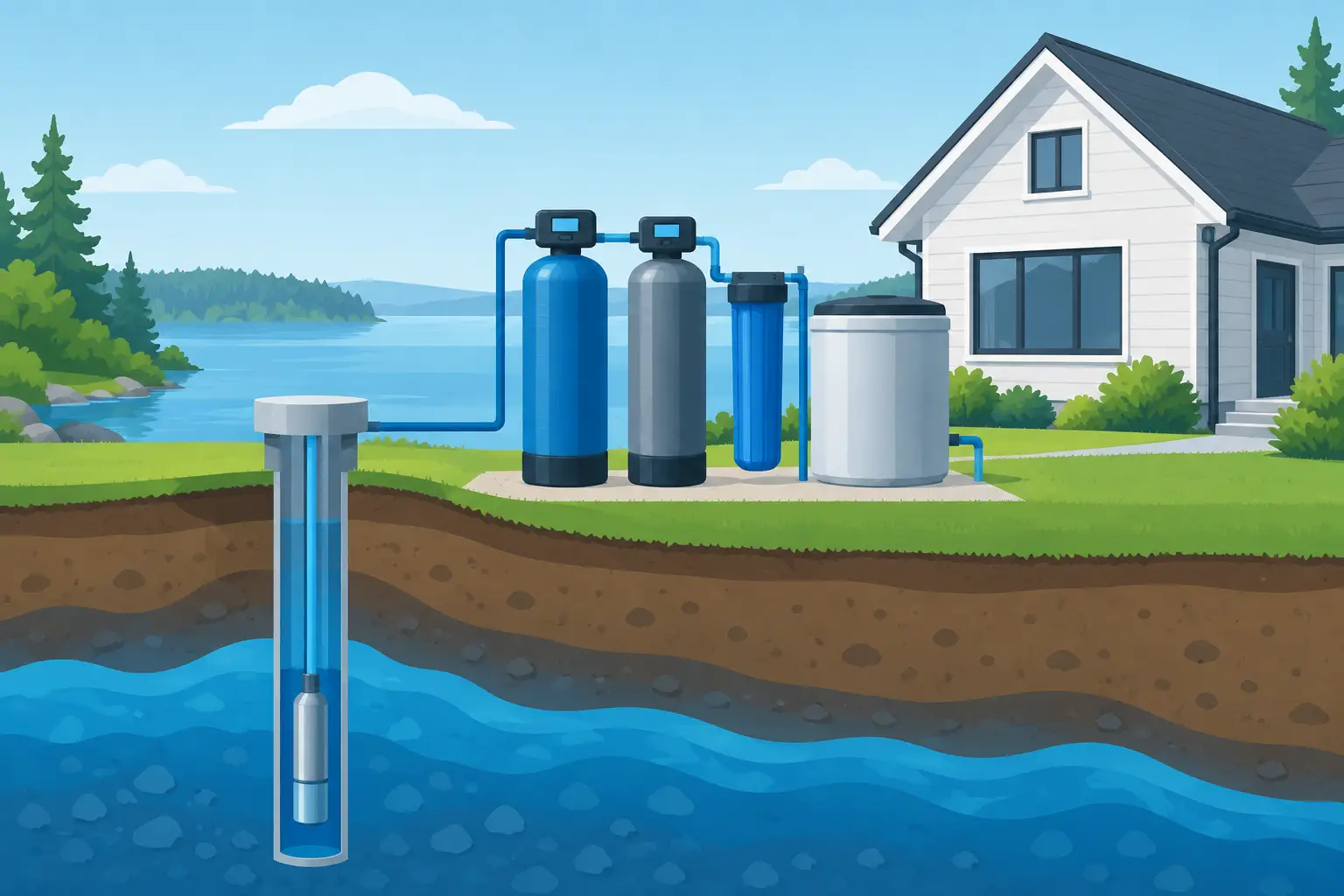
A typical whole-home arrangement may begin with sediment filtration to protect valves and downstream equipment. Depending on the water, this can be followed by iron and sulphur removal, pH correction, a water softener, and ultraviolet disinfection. Drinking water treatment at the kitchen sink may include reverse osmosis when homeowners want an additional level of reduction for specific dissolved contaminants or improved taste.
There is no universal order that suits every property. For example, ultraviolet equipment should generally receive clear water, because sediment can shield microorganisms from the UV light. Iron removal may need to come before softening, although certain water conditions allow a combined approach. The equipment must also be sized for the home’s real flow rate, not only for the number of people living there.
This is where professional water analysis and installation make a practical difference. Canadian Smart Home Solutions designs whole-home well water systems around the conditions at the property, helping homeowners avoid undersized equipment, incorrect filter selection, and treatment trains that create more maintenance than results.
Do Not Treat Symptoms in Isolation
It is tempting to solve one visible problem at a time. An inexpensive filter may reduce sediment temporarily, while stain remover may hide iron marks for a few days. But these measures do not protect plumbing, reduce operating costs, or confirm that the water is suitable for household use.
A better approach considers the entire water supply. If a home has hard water and iron, installing only a softener may improve scale but leave staining. If an ultraviolet unit is added to water with heavy sediment, the system may not provide consistent disinfection. If a reverse osmosis system is installed without addressing odours or hardness at the source, the homeowner may still have unpleasant water in every shower, laundry load, and appliance.
Whole-home treatment focuses on the water used throughout the property, while point-of-use systems serve a specific tap. Both can have a place, but they solve different problems. The best setup depends on the test results and what the homeowner wants to improve first: safety, staining, odour, scale, drinking-water taste, or all of the above.
Maintenance Keeps Treatment Working
Even well-designed water treatment equipment needs service. Filters need replacement, softeners require salt or potassium, ultraviolet lamps need scheduled replacement, and certain media systems need cleaning or periodic inspection. Neglecting maintenance can reduce water flow, allow staining to return, or limit the effectiveness of disinfection equipment.
Homeowners should also pay attention to changes after installation. If water begins to smell different, pressure drops, salt use changes unexpectedly, or stains return, the system may need adjustment or service. Keeping a record of test results, service dates, and any noticeable changes makes it easier to identify patterns over time.
The goal is not complicated water treatment for its own sake. It is dependable water that does not stain fixtures, damage appliances, smell unpleasant, or leave you uncertain every time the tap is turned on. Start with a current water test, address the cause rather than the symptom, and choose equipment that is built for your home’s water and daily demand.