
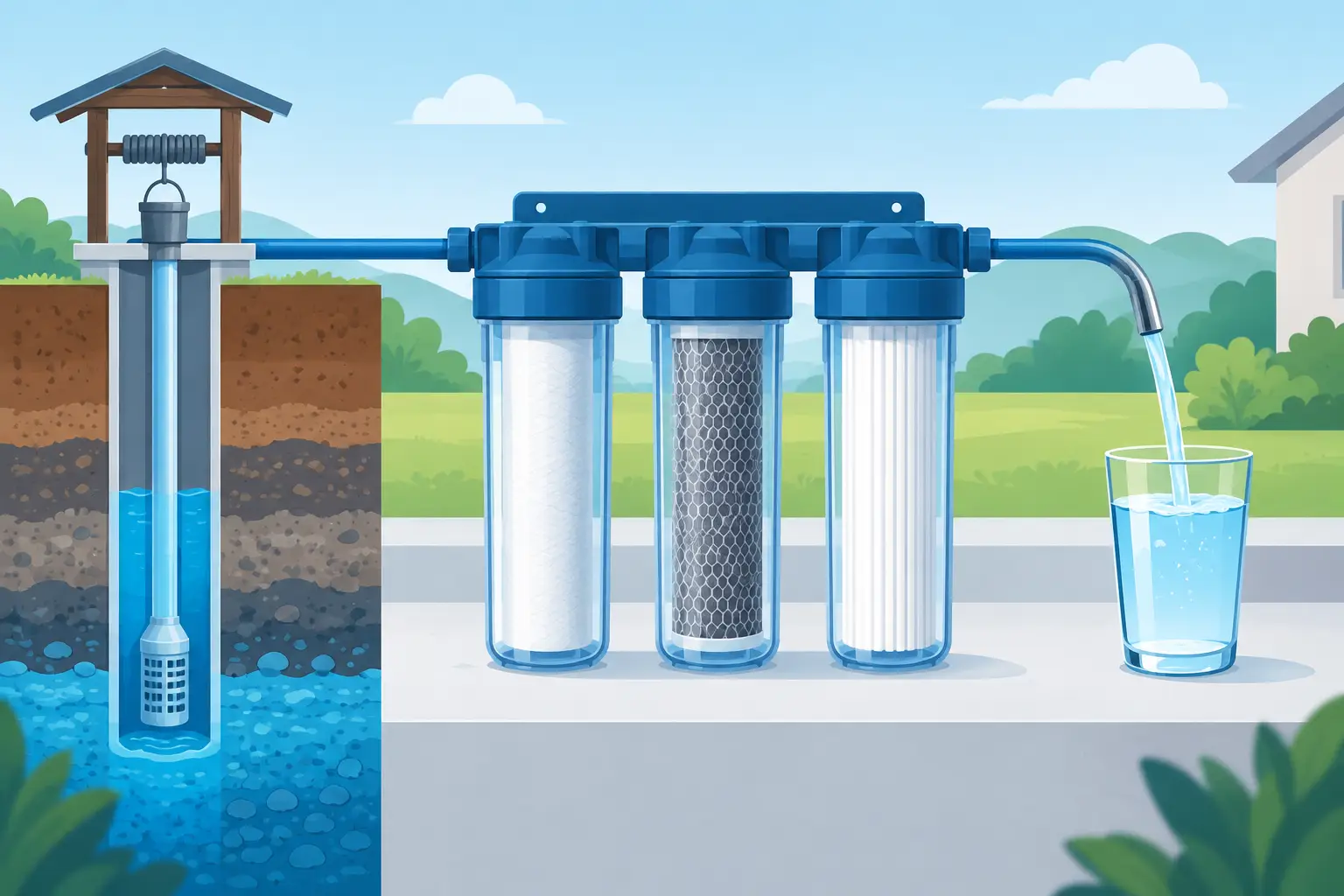
A well can deliver excellent water, but it can also carry sand, silt, clay, rust particles, and fine organic debris into the home. The best sediment filters for wells are not simply the finest filters available. They are the filters sized for your water’s particle load, household flow demand, and the treatment equipment they need to protect.
Choosing the wrong sediment filter can create frustrating pressure loss, frequent cartridge changes, or insufficient protection for a water softener, UV system, plumbing fixtures, and appliances. A properly selected whole-home prefilter keeps abrasive material out of the system while allowing showers, laundry, and kitchen taps to run normally.
What a sediment filter should do for well water
Sediment filtration is the first line of defence for many private wells. It captures suspended particles before they can scratch valve seals, clog aerators, foul ultraviolet sterilizers, or collect in pressure tanks and water heaters. It can also make visibly cloudy water clearer when the cloudiness is caused by physical particles.
However, sediment filters have a specific job. They do not remove dissolved iron, manganese, hardness, sulphur odours, bacteria, nitrates, or lead unless the system includes separate media or treatment stages designed for those contaminants. A cartridge may improve the appearance of water while leaving the underlying water quality issue untouched.
That distinction matters with Ontario well water. One property may need a simple sediment filter because construction activity or seasonal groundwater changes have introduced sand. Another may need sediment protection followed by iron removal, softening, ultraviolet disinfection, or reverse osmosis at the drinking-water tap. Water testing is the reliable starting point.
Best sediment filters for wells by water condition
The best choice depends on the size and type of particles in the water, not just the label on the cartridge. A filter that performs well on visible sand may be unsuitable for fine silt, and a very fine cartridge can restrict water flow in a busy home.
Spin-down filters for sand and larger grit
A spin-down or reusable screen filter is often a practical first stage where a well produces noticeable sand, grit, or larger debris. Water passes through a screen, and captured material collects in a clear housing or flushing chamber. The system can be purged through a valve rather than requiring a replacement cartridge every time debris accumulates.
This option is especially useful where sediment is coarse and recurring. It reduces the burden on downstream cartridge filters and helps protect pumps, softeners, and control valves. It is not usually enough on its own for fine silt or cloudy water, because very small particles can pass through the screen.
Pleated cartridges for variable sediment loads
Pleated sediment cartridges are a strong all-purpose choice for homes with moderate levels of sand, silt, and rust. Their folded surface provides more filtration area than a basic string-wound or spun cartridge, which can support better flow and a longer service interval in the right conditions. Many can also be rinsed and reused, although replacement is often the better choice once staining, damage, or persistent fouling develops.
For a typical well-water application, a pleated cartridge in a large-capacity housing is often a sensible balance between particle removal and household pressure. The actual micron rating should be selected based on testing and observed sediment, not guesswork.
String-wound and depth filters for fine silt
When the water contains fine silt, clay, or a broad mix of particle sizes, a depth-style cartridge can be more effective. String-wound and melt-blown cartridges trap sediment throughout the filter media rather than only on the outer surface. This gives them good holding capacity for fine particulate matter.
The trade-off is that these filters are generally disposable and can plug quickly if the sediment load is heavy. If a 5-micron depth cartridge needs changing every few weeks, the solution may be a larger housing, a coarser first-stage filter, or an automatic backwashing system rather than repeated cartridge changes.
Big-capacity housings for whole-home flow
For most family homes, the housing is as important as the cartridge. Larger whole-home housings hold longer cartridges and provide more surface area, reducing pressure drop and extending service life. They are generally a better fit than small under-sink-style filter housings when the goal is to protect the entire plumbing system.
A properly sized installation should account for peak demand. A home with two bathrooms, a dishwasher, laundry equipment, and multiple occupants may require substantially more flow than a seasonal cottage. Commercial properties, farms, multi-unit buildings, and institutional facilities need engineered filtration capacity that considers sustained flow, pressure, treatment redundancy, and maintenance access.
Choosing the right micron rating
Micron rating describes the approximate size of particles a filter is intended to capture. A lower number catches finer material, but it also creates more resistance as sediment collects. Finer is not automatically better.
A 50- or 100-micron screen may be appropriate as a prefilter for visible sand. A 20-micron cartridge is often used for general sediment reduction. A 5-micron cartridge is common before UV disinfection because suspended particles can shield microorganisms from ultraviolet light. In some applications, 1 micron may be appropriate, but only if the system has enough capacity and the water does not foul the cartridge too quickly.
There is also a meaningful difference between nominal and absolute ratings. A nominal 5-micron filter captures a high percentage of particles around that size, while an absolute-rated filter has a more tightly controlled performance standard. For household well systems, the proper rating depends on the treatment goal and the manufacturer’s specifications.
When a cartridge filter is not enough
A cartridge filter is convenient, but it is not the right answer for every well. If the water contains heavy, ongoing sediment, homeowners can spend too much time replacing cartridges and still experience poor pressure. In these cases, an automatic backwashing sediment filter may provide a more dependable long-term solution.
Backwashing systems use a media bed and periodically reverse the water flow to flush accumulated sediment to drain. They suit homes with significant turbidity or recurring fine material, provided there is adequate flow, drainage, and space for the equipment. They also require correct setup. An undersized drain line or improper backwash rate can limit performance.
Sediment may also be a symptom rather than the only problem. Orange or brown staining can point to iron. Black staining may indicate manganese. A rotten-egg smell can be related to hydrogen sulphide or certain bacteria. Cloudiness may come from silt, but it can also reflect chemistry that needs a different treatment process. A professional water analysis prevents a filter purchase from becoming an expensive trial-and-error exercise.
Installation details that protect the entire system
A whole-home sediment filter is normally installed after the pressure tank and before downstream treatment equipment. This arrangement protects water softeners, iron filters, UV units, and household plumbing from debris. A bypass valve and pressure gauges on each side of the filter make maintenance much easier: a growing pressure difference shows that the cartridge is becoming restricted.
The installation should also allow enough clearance to remove the filter cartridge without struggling around pipes or walls. In cold Ontario basements, utility rooms, and seasonal properties, equipment must be protected from freezing. If ultraviolet treatment is planned, sediment filtration should be matched to the UV manufacturer’s pretreatment requirements.
Canadian Smart Home Solutions approaches well water treatment as a complete system, not a single cartridge sale. The right recommendation begins with the water source, test results, household demand, existing equipment, and the practical maintenance level the property owner can manage.
A practical maintenance plan
Check the filter housing and pressure regularly, especially after heavy rain, spring thaw, well repairs, or nearby excavation. Replace or clean the filter when pressure drops noticeably, water flow slows, or the cartridge is visibly loaded with sediment. Do not wait until taps are barely running, as prolonged restriction places unnecessary strain on the water system.
Keep spare cartridges on hand if your well has seasonal sediment changes. If replacement frequency suddenly increases, investigate the cause. A shift in groundwater conditions, a damaged well component, a failing pump, or disturbed sediment can change what the treatment system needs.
The right sediment filter should become quiet protection: cleaner water at every tap, less wear on valuable equipment, and fewer surprises when your family needs water most.