
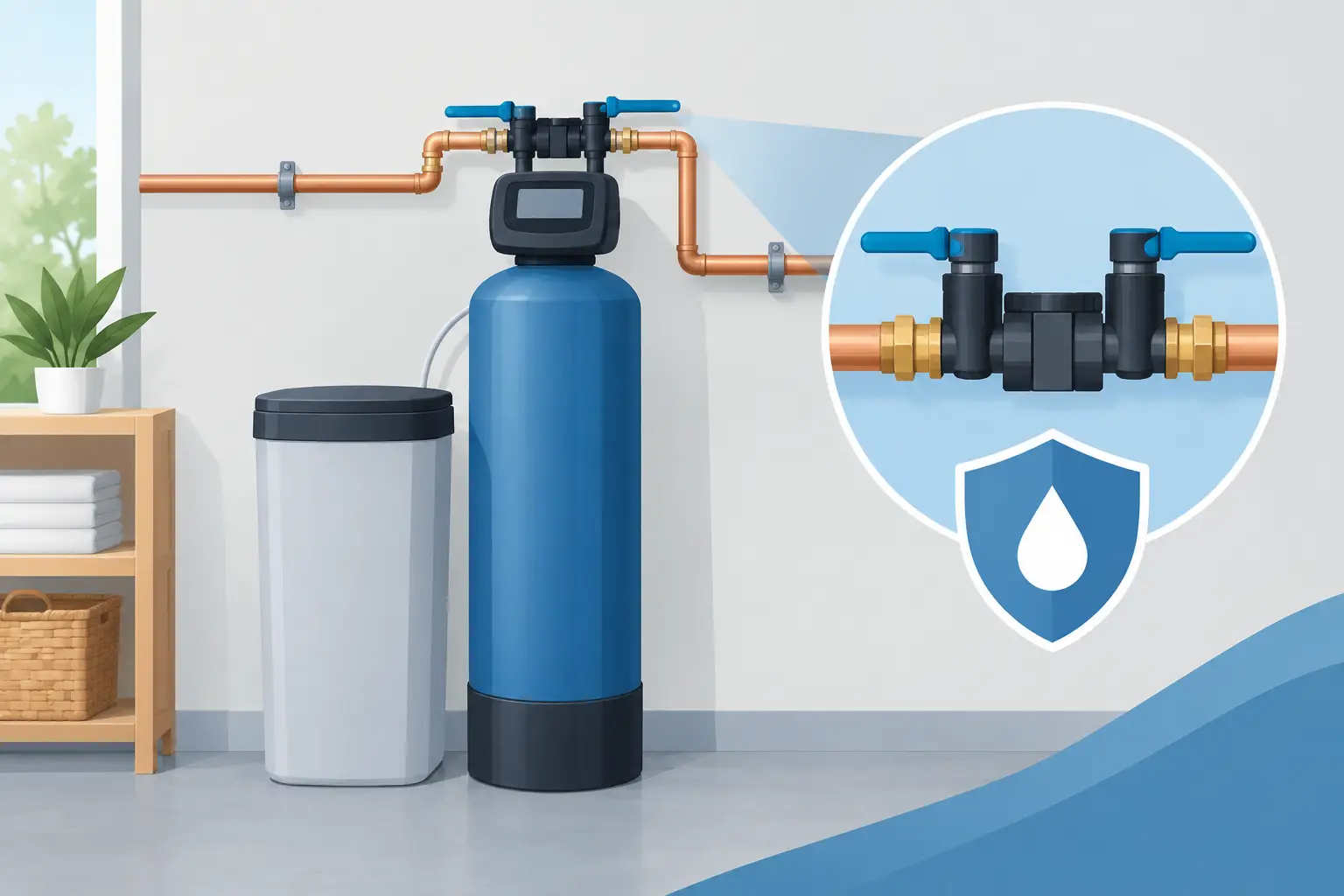
A water softener should make life easier, not leave a home without water when it needs attention. A properly planned softener bypass installation gives you control over the system, allowing water to continue moving through the home while the softener is serviced, repaired, or temporarily taken offline. For Ontario homeowners dealing with hard water, scale, staining, and appliance wear, it is a small plumbing detail with a major practical benefit.
The bypass is not an optional cosmetic add-on. It is part of a serviceable, dependable whole-home water treatment installation. It protects access to water during maintenance and makes it easier for a technician to diagnose a softener issue without disrupting the entire household.
What a Water Softener Bypass Does
A bypass is a plumbing arrangement installed around the water softener. In normal operating mode, incoming water flows through the softener before supplying fixtures and appliances. When the softener needs to be isolated, the inlet and outlet to the unit are closed and the bypass route is opened. Water then travels around the system and continues to the home.
Most installations use a three-valve configuration: one valve on the incoming line, one on the outgoing line, and one on the connecting bypass line. Many modern softeners also include an integrated bypass valve at the control head. Either approach can work well when it is sized correctly, accessible, and installed in the right location.
The key distinction is that bypassed water is not softened. It still contains the minerals responsible for hardness, including calcium and magnesium. That is acceptable for a short period during servicing, but it is not a long-term solution for a home that relies on softened water to control scale.
Why Softener Bypass Installation Matters
Hard water can leave deposits on faucets, shower glass, dishwashers, water heaters, and other equipment. A softener reduces that mineral load, but like any mechanical water treatment system, it needs occasional maintenance. Salt must be checked, settings may need adjustment, and components can eventually require service.
Without a bypass, even routine work can require shutting off the main water supply. That can interrupt showers, laundry, food preparation, cleaning, and business operations. In a busy home, rental property, restaurant, office, or small commercial facility, the inconvenience adds up quickly.
A bypass also makes emergency response safer and faster. If a softener develops a leak, a control valve fails, or a component needs replacement, the system can be isolated while water remains available elsewhere in the building. This is particularly valuable where there are occupants, vulnerable residents, customers, or high daily water demand.
There is a trade-off. Running on bypass for an extended time means untreated hard water returns to the plumbing system. If the property also has iron, sulphur odour, sediment, bacteria concerns, or other water quality issues, the effect depends on where each treatment component sits in the overall system. A bypass should therefore be planned as part of the complete treatment layout, not added without considering the water source and equipment sequence.
Planning a Softener Bypass Installation
The best location is generally on the main cold-water line after the water meter, pressure tank, or well equipment and before the water branches to the rest of the building. The exact position depends on whether the property has pre-filtration, iron removal, ultraviolet disinfection, reverse osmosis, or a dedicated untreated cold-water line.
For example, a home with well water may need sediment filtration and iron or sulphur treatment ahead of the softener. The bypass arrangement must preserve the intended flow path and avoid sending untreated water through equipment that requires pre-treated water. A city-water home with chlorine or lead concerns may have a different layout again.
Accessibility matters as much as pipe routing. Valves should be easy to reach, clearly identified, and positioned where they can be operated without moving salt bags, storage items, or other equipment. The softener itself needs room for salt loading, drain-line inspection, control-head service, and future replacement.
Correct sizing is another important consideration. Undersized valves or restrictive fittings can reduce flow and cause noticeable pressure loss at showers or high-demand fixtures. This is especially relevant for larger homes, multi-unit properties, hotels, schools, and facilities with commercial water treatment systems. The bypass should match the service line size and expected flow rate.
A professional installer will also confirm suitable drainage, an approved air gap where required, secure pipe supports, shutoff placement, and protection from freezing. Ontario plumbing requirements and local municipal rules can affect the installation, particularly in commercial or institutional applications. A system that appears to work can still create maintenance, drainage, or compliance issues if these details are overlooked.
Softener Bypass Installation: The Correct Process
The process begins with an assessment of the existing plumbing and water treatment equipment. Before pipe is cut, the installer should identify the direction of water flow, the building’s main shutoff, pipe material, water pressure, drain location, and any equipment that must remain in service.
The water supply is then shut off and pressure is relieved at a nearby fixture. The softener is isolated and the piping is prepared for the chosen bypass configuration. Depending on the property, the installation may use copper, PEX, CPVC, or another approved material compatible with the existing plumbing and local requirements.
After the valves and bypass line are installed, the plumbing is secured and the system is returned to service gradually. The installer checks each connection for leaks, confirms that water flows through the softener in service mode, and verifies that the bypass route delivers water when the softener is isolated.
Valve positions should be demonstrated before the job is complete. In service mode, the softener inlet and outlet are open while the bypass valve is closed. In bypass mode, the softener inlet and outlet are closed while the bypass valve is open. Getting this sequence wrong can stop water flow, send water through the wrong route, or leave the system partly isolated.
The final step is to run water at several fixtures and inspect the system under normal pressure. If the softener has been disconnected or opened for service, it may also need to be regenerated, reset, or programmed based on the home’s water hardness and household demand. A bypass works best when the treatment system itself is correctly sized and configured.
When to Call a Water Treatment Professional
A homeowner may be comfortable identifying the bypass handle or checking for visible leaks, but installation is not always a simple do-it-yourself task. Professional service is the sensible choice when the main water line must be altered, the plumbing is older, drainage needs to be added, or the softener is part of a larger filtration system.
It is also advisable when water quality concerns go beyond hardness. Iron staining, rotten-egg odour, cloudy water, lead, bacterial risk, and well-water changes require more than a valve arrangement. Water testing and a proper system review help ensure that bypassing one component does not create a new issue elsewhere.
Canadian Smart Home Solutions can assess the water source, existing plumbing, household demand, and treatment equipment to recommend a practical layout for Ontario properties. The goal is not simply to fit a softener into a utility room. It is to provide dependable treated water while keeping the system accessible for the years of service ahead.
Using Your Bypass Without Creating New Problems
Use bypass mode for planned maintenance, repairs, or a confirmed softener fault. Once the work is complete, return the valves to service mode promptly and confirm the softener is operating normally. If water feels different, scale begins appearing again, or the system has been bypassed for more than a short period, arrange service rather than assuming the issue will correct itself.
Keep the bypass area clear, label the valve positions if needed, and make sure other adults in the property know how to isolate the softener in an emergency. That simple preparation can prevent a minor equipment issue from becoming a stressful interruption to the water supply.
A well-installed bypass gives you options when they matter most: water remains available, the softener can be serviced properly, and your plumbing is better prepared for the realities of long-term water treatment.