
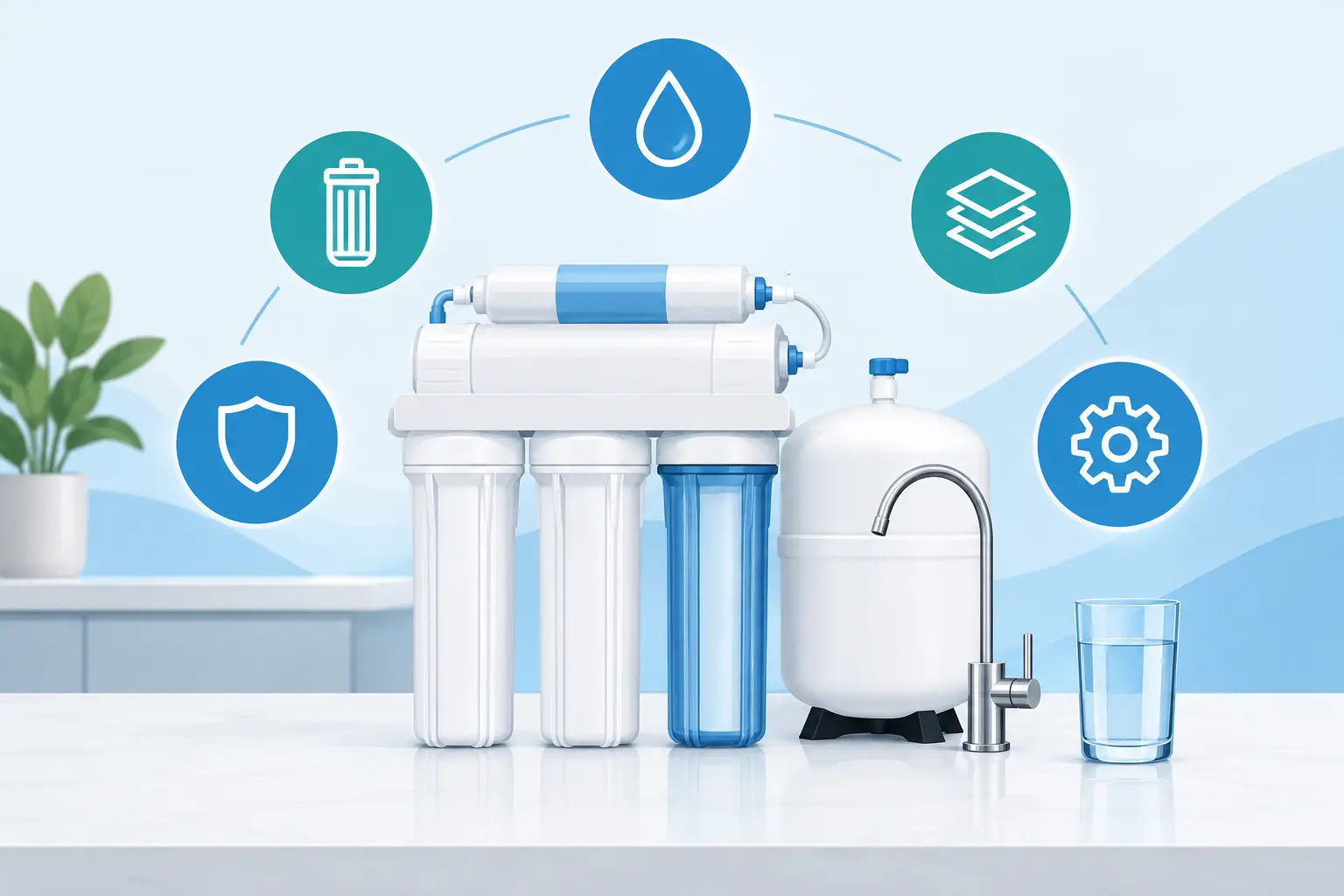
A reverse osmosis system can make a noticeable difference at the kitchen tap, but not every unit delivers the same protection, capacity, or day-to-day convenience. When comparing the top reverse osmosis features, look beyond a system’s appearance or price. The right setup should address the contaminants in your water, fit the demands of your household, and remain practical to maintain for years.
For Ontario homeowners, the decision often starts with a concern about drinking water quality: lead from older plumbing, chlorine taste, dissolved minerals, sodium, or water from a private well. Reverse osmosis is highly effective for many dissolved contaminants, but its performance depends on proper system design, filter selection, installation, and maintenance.
Top Reverse Osmosis Features That Matter Most
Contaminant reduction backed by clear performance information
The central purpose of reverse osmosis is to reduce a broad range of dissolved substances in drinking water. A quality system uses a semi-permeable membrane to separate water from many dissolved contaminants. Depending on the system and the condition of the feed water, this may include lead, arsenic, fluoride, nitrates, sodium, total dissolved solids, and other unwanted materials.
However, homeowners should not assume that every reverse osmosis unit reduces every concern to the same degree. Look for clear performance information for the contaminants that matter in your home. If lead is a concern, for example, the system should be selected specifically for lead reduction. If you rely on well water, water testing should guide the recommendation because iron, sulphur, hardness, bacteria, or sediment may need treatment before water reaches the RO unit.
A reverse osmosis system is generally a point-of-use solution, meaning it treats water at a dedicated drinking-water faucet. It does not replace a whole-home water softener, iron filter, UV sterilizer, or sediment filter when those systems are needed elsewhere in the property.
A membrane sized for household demand
Membrane production capacity is commonly expressed in gallons per day. Higher capacity can help a busy household recover more quickly after filling water bottles, cooking, making coffee, or supplying a refrigerator dispenser. A family that uses purified water throughout the day may find a low-capacity system frustrating if the storage tank takes too long to refill.
More capacity is not automatically better. Water pressure, temperature, incoming water quality, and pre-treatment all affect actual production. A properly sized system balances household use with available pressure and the space under the sink. For larger homes, offices, or facilities, a commercial reverse osmosis system may be more appropriate than trying to make a residential unit serve an unusually high demand.
Multi-stage filtration before and after the membrane
A reverse osmosis membrane needs protection. Sediment and carbon prefilters are not minor add-ons – they help prevent premature membrane fouling and improve the water entering the membrane. A sediment filter captures dirt, rust, and fine particles, while carbon filtration commonly reduces chlorine and improves taste and odour. Chlorine can damage many RO membranes, making an effective carbon stage especially important for municipally supplied water.
A post-carbon filter is also valuable. It polishes water after it leaves the storage tank, helping deliver a cleaner taste at the faucet. Some systems include additional stages for specific purposes, but more stages do not necessarily mean better treatment. Each filter should have a defined job that matches the water analysis and the household’s goals.
Efficient water use and pressure support
Reverse osmosis produces purified water and a separate concentrate stream that carries rejected contaminants away from the membrane. This is normal, but systems vary significantly in how efficiently they use water. For homeowners paying municipal water and wastewater charges, a more efficient design can reduce unnecessary waste over time.
Some systems use a permeate pump or pressure-assisted design to improve membrane performance and reduce the amount of water sent to drain. These features can be particularly helpful where incoming water pressure is lower or where the system must push water to a refrigerator or a faucet located farther away. They can add cost and complexity, so the best choice depends on your plumbing layout and expected use.
Reliable storage and delivery at the faucet
Most under-sink reverse osmosis systems store treated water in a pressurized tank. Tank capacity matters because it determines how much purified water is readily available before the system needs time to replenish it. A practical system should provide enough water for normal household routines without making the cabinet difficult to access or service.
The faucet and tubing deserve attention as well. A dedicated faucet should be durable, easy to operate, and compatible with the kitchen finish. If you want RO water connected to a refrigerator, ice maker, coffee station, or secondary faucet, confirm that the system has sufficient pressure and capacity. Long tubing runs or multiple points of use may require additional design considerations.
Leak protection and dependable installation components
Water treatment equipment should improve your home, not create a cabinet leak. Quality reverse osmosis systems use secure fittings, appropriate shut-off valves, and properly routed drain connections. Leak detection or automatic shut-off features can provide extra protection, especially in finished kitchens, condominiums, or properties where a slow leak could go unnoticed.
Professional installation is valuable because reverse osmosis units connect to the cold-water supply, drain line, storage tank, and dedicated faucet. An installer can confirm that the drain connection is appropriate, protect against cross-connections, maintain access for future service, and identify restrictions that could affect performance. This is also the time to assess whether existing water conditions could shorten filter or membrane life.
Features That Make Maintenance Easier
Every RO system requires service. Filters eventually load with sediment or exhaust their carbon capacity, and membranes have a finite lifespan. A good system makes routine maintenance straightforward rather than turning it into an under-sink plumbing project.
Look for filter housings or quick-change cartridges that can be accessed without removing half the cabinet. Clearly labelled filters, practical shut-off arrangements, and available replacement parts make a real difference over the life of the system. Indicator lights or filter-life monitors can be useful reminders, but they are not a substitute for following the recommended service schedule and responding to changes in water taste, flow, or pressure.
The best maintenance schedule depends on incoming water quality and water use. A home with heavy sediment, high chlorine, or a private well may require more frequent prefilter changes than a home with relatively clean municipal water. Delaying filter changes can reduce water quality, slow production, and place unnecessary strain on the membrane.
When Reverse Osmosis Needs Supporting Treatment
Reverse osmosis is not a cure-all for every water issue. It is designed primarily for purified drinking water, while many Ontario homes have water problems that should be treated before water reaches the kitchen tap.
Hard water can cause scale buildup on fixtures, inside water heaters, and throughout plumbing. A water softener is often the more appropriate whole-home solution for hardness. Iron and manganese can stain fixtures and foul filters, while sulphur can create a rotten-egg odour. These concerns typically call for dedicated iron, sulphur, or oxidation treatment. If microbiological contamination is possible, particularly with private wells or lake water, UV disinfection and proper pre-treatment may be required.
This is why water testing matters. It identifies what is actually present and helps avoid buying a drinking-water system that is asked to solve a whole-home problem. It can also reveal whether an RO system needs specialized pre-treatment or a specific membrane configuration.
How to Compare Systems Before You Buy
Start with your water source and your objectives. Municipal water users may prioritize reducing chlorine taste, lead, and dissolved solids. Well-water households should first understand hardness, iron, manganese, sulphur, bacteria, and nitrate levels. Families with infants, people managing sodium intake, and homeowners in older properties may have additional reasons to seek targeted treatment.
Then compare the practical details: documented contaminant reduction, membrane capacity, storage volume, water-efficiency design, service requirements, available replacement filters, and warranty coverage. Also consider who will install and support the system. A lower upfront price is less attractive if the unit is difficult to service, lacks readily available parts, or is poorly matched to the water supply.
Canadian Smart Home Solutions can help assess the water issue, recommend the appropriate treatment combination, and install equipment designed for dependable long-term use. The goal is not simply to add a filter under the sink. It is to provide drinking water treatment that works properly with the rest of your home’s water system.
A well-chosen reverse osmosis system should give your household confidence each time you fill a glass, prepare a meal, or reach for water from the refrigerator. Begin with a water test and a clear understanding of what you want the system to reduce, then choose features that support reliable performance rather than unnecessary extras.