
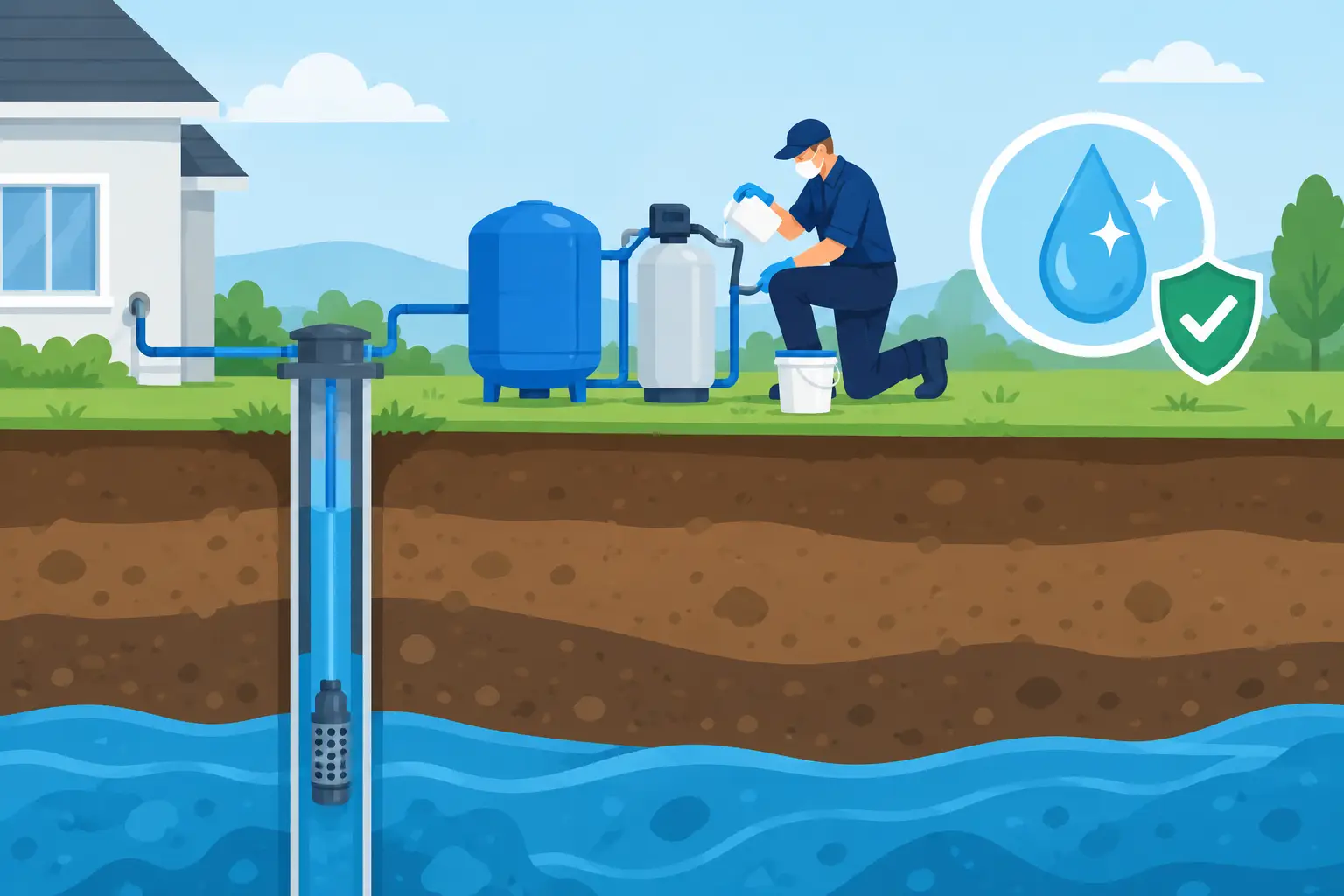
A private well can look perfectly normal while carrying bacteria that make people sick. That is why homeowners need to know when to disinfect private well systems, what the process can realistically solve, and when disinfection is only the first step toward a lasting water-quality solution.
Well disinfection, often called shock chlorination, is designed to kill bacteria in the well, pressure tank, plumbing, and fixtures. It is commonly needed after a positive bacteriological water test, flooding, well repairs, pump replacement, or any event that could introduce surface contamination. It is not a substitute for finding and correcting the source of recurring contamination.
When a Private Well Needs Disinfection
A laboratory water test is the clearest reason to disinfect. Ontario well owners should pay particular attention to total coliform and E. coli results. Total coliform bacteria indicate that the well or plumbing system may be vulnerable to contamination. E. coli is more serious because it can signal contamination from human or animal waste and requires prompt action.
Disinfection is also sensible after work that opens the well system. Replacing a pump, servicing a pressure tank, installing a new well cap, or repairing a broken water line can allow bacteria into the system if tools, equipment, or hands come into contact with water-bearing components. Heavy rain, flooding, or standing water around the well head can create the same risk.
Changes in taste, odour, or appearance deserve attention, but they do not automatically mean bacteria are present. A sulphur smell may be caused by hydrogen sulphide, sulphur bacteria, or reactions in a water heater. Orange staining can point to iron, while black staining may involve manganese. These issues often need dedicated filtration or oxidation equipment in addition to, or instead of, a one-time disinfection.
What Shock Chlorination Can and Cannot Do
Shock chlorination uses a carefully calculated chlorine dose and contact time to disinfect the complete household water system. The chlorine must reach every cold-water fixture, outside tap, and section of plumbing. After the required contact period, the system is flushed until chlorine is gone, then the water is retested.
The process can be highly effective when contamination is isolated and the well is structurally sound. For example, bacteria introduced during a pump repair may be eliminated with proper disinfection and flushing. It can also help address nuisance slime-producing bacteria in some wells.
However, recurring bacteria are a warning that chlorine alone may not resolve the problem. A damaged casing, missing or loose well cap, poor grading around the well, cracked sanitary seal, nearby surface runoff, or an improperly located septic system can continually reintroduce contamination. In that situation, repeated shock chlorination can become expensive, inconvenient, and frustrating without making the water reliably safe.
Chlorine also does not remove lead, hardness, nitrates, pesticides, dissolved iron, manganese, or other chemical contaminants. A water analysis should guide the treatment plan. The right solution may involve well repairs, sediment filtration, iron and sulphur removal, reverse osmosis for drinking water, or an ultraviolet sterilizer for ongoing disinfection.
Before You Disinfect Private Well Systems
Start by protecting the household and collecting useful information. If E. coli is detected or there is a suspected sewage or floodwater intrusion, do not use the water for drinking, preparing food, brushing teeth, making ice, or washing produce until you have followed advice from your local public health authority. Boiling may be appropriate for short-term microbial safety, but it does not correct the well itself.
Inspect the area around the well before adding chlorine. The cap should fit tightly and sit above grade. The casing should not be cracked, bent, or exposed to pooling water. Surface drainage should move away from the well, not toward it. If the well has been flooded, has visible structural damage, or contains debris, professional assessment is the safer starting point.
You should also identify water treatment equipment connected to the home. Activated-carbon filters, reverse osmosis membranes, ultraviolet units, water softeners, and certain specialty media can be affected by high chlorine concentrations. Some equipment may need to be bypassed, isolated, or serviced after the procedure. Check the manufacturer instructions or ask a treatment professional before proceeding.
A Safe Approach to Well Disinfection
The exact amount of chlorine depends on the well diameter, total water depth, static water level, plumbing volume, and treatment equipment. Guessing is not a good practice. Too little chlorine may not disinfect the system; too much can create excessive fumes, damage components, and take much longer to flush.
A proper process generally follows these stages:
- Calculate the system volume and chlorine dose. This includes the water column in the well and the household plumbing. Use an approved calculation method based on accurate well dimensions.
- Introduce the disinfectant safely. Use an appropriate unscented household bleach or a water-well disinfection product. Never mix chlorine with acids, ammonia, cleaners, or any other chemical. Wear appropriate protective equipment and keep the area ventilated.
- Circulate chlorinated water through the well and plumbing. Water is typically recirculated at the well, then each cold-water fixture is opened until a chlorine smell is present. Hot-water plumbing may need separate consideration, particularly where treatment equipment or sensitive appliances are installed.
- Allow adequate contact time. The system is left unused for the required period so chlorine can disinfect the well and pipes. Plan ahead because this can mean going without normal water use overnight or longer.
- Flush responsibly and retest. Chlorinated water should not be discharged into a septic system, fish-bearing water, or areas where it can harm vegetation. Once chlorine has been flushed from the system, submit a follow-up sample to an accredited laboratory.
Because every well is different, homeowners should treat these stages as a framework, not a substitute for site-specific instructions. Older drilled wells, dug wells, cistern-fed systems, and properties with extensive treatment equipment often need a more tailored approach.
Why Retesting Matters More Than the Chlorine Smell
A chlorine smell only proves that disinfectant moved through the plumbing. It does not prove the bacteria are gone. Follow-up sampling is the only reliable way to confirm whether disinfection worked.
For a meaningful result, take the sample after the chlorine has fully cleared and according to the laboratory’s collection instructions. Avoid sampling from a swivel faucet or a tap with an aerator if the lab advises against it. Use a clean, cold-water tap that is not connected to a point-of-use filter, and deliver the sample within the required time.
If the retest is clear, continue regular testing. Many Ontario well owners test at least several times a year and after major weather events, construction, plumbing work, or changes in water quality. If bacteria return, stop treating the symptom alone and investigate the cause.
When Ongoing Treatment Is the Better Answer
Some properties need more than periodic shock chlorination. An ultraviolet sterilizer can provide continuous protection against bacteria and other microorganisms after water has been properly prefiltered. UV is especially useful where a well has an ongoing vulnerability that cannot be immediately eliminated, but it requires clear water and routine lamp and sleeve maintenance to perform properly.
For homes with iron, sediment, sulphur odours, or hardness, pretreatment matters. Sediment can shield microorganisms from UV light. Iron can foul treatment equipment and create staining throughout the home. Hard water can shorten appliance life and create scale on fixtures, water heaters, and plumbing. A properly designed whole-home system addresses these connected issues rather than treating one problem in isolation.
Canadian Smart Home Solutions can assess well-water results, inspect the treatment needs of the home, and recommend equipment that fits the water chemistry and household demand. This is particularly valuable for larger homes, rental properties, farms, and commercial buildings where undersized or poorly matched equipment can create ongoing service issues.
A well should provide dependable water, not a recurring source of uncertainty. If bacteria keep returning, protect your household by testing promptly and having the well, plumbing, and treatment options evaluated as one complete system.