
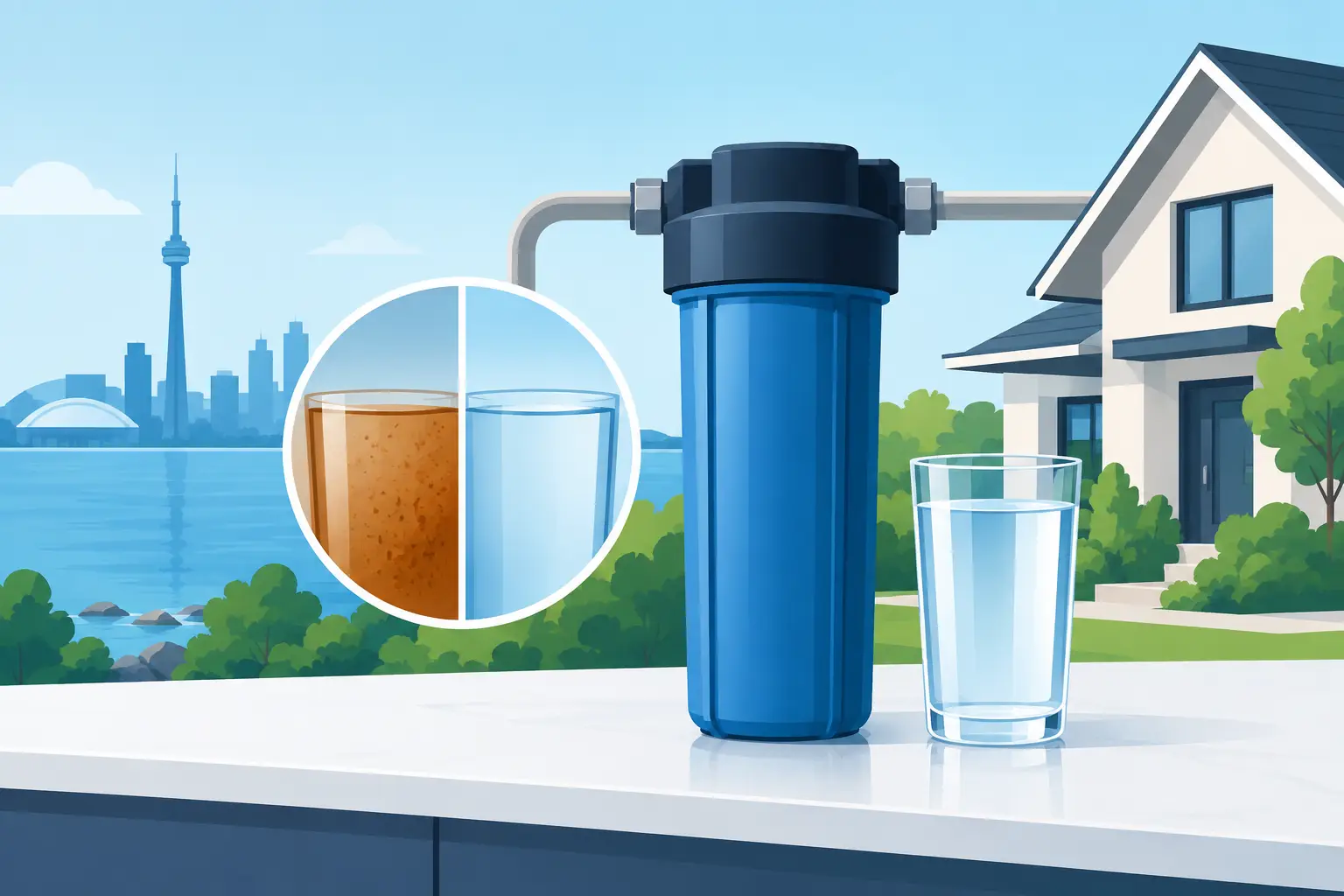
Orange streaks in toilets, reddish-brown laundry stains, metallic-tasting water, and black buildup around fixtures are rarely problems that cleaning alone can solve. This iron filter review explains what Ontario homeowners should look for before investing in treatment equipment, especially when private well water is involved. The right system can protect plumbing, appliances, fixtures, and clothing. The wrong one may reduce a visible stain for a short time while leaving the underlying water problem untreated.
Why Iron in Water Needs a Proper Solution
Iron is one of the most common concerns in Ontario well water. It is naturally present in soil and rock, and groundwater can carry it into a home at levels high enough to cause staining, odours, sediment, and equipment wear. Iron is not always a direct health concern at typical residential levels, but it can make water unpleasant to use and expensive to manage.
A small amount of clear-water iron may seem harmless at first. Over time, however, it oxidizes when exposed to air, turning water yellow, orange, or brown. That oxidation leaves deposits in toilet tanks, water heaters, dishwashers, humidifiers, washing machines, and pipework. Iron can also create the conditions that allow iron bacteria to grow, producing slime, staining, and a musty or swamp-like odour.
The practical goal is not simply to install a filter labelled for iron. It is to identify the form of iron present, its concentration, the household flow rate, and any related contaminants such as manganese, sulphur, hardness, tannins, or bacteria. Those details determine whether a basic filtration system is enough or whether the home needs a more complete well water treatment solution.
Iron Filter Review: What Makes a System Effective?
A dependable iron filter removes iron at the point where water enters the home, before it reaches fixtures and appliances. Whole-home treatment is generally the preferred approach because treating only drinking water will not stop stains in bathrooms, scale and deposits in water heaters, or damage to water-using equipment.
The strongest systems are sized to the property and designed around actual water test results. Capacity matters, but so does flow rate. A system that works well for a small household may struggle when several showers, a washing machine, and a dishwasher run at the same time. Inadequate flow can create pressure loss, incomplete treatment, or frequent regeneration cycles.
An effective system should also have a clear maintenance plan. Most iron filters need periodic backwashing to flush trapped iron and sediment out of the media bed. Depending on the technology, they may require air injection, an oxidizing agent, specialized media replacement, or cleaning to manage iron bacteria. Maintenance is not a drawback when it is understood in advance. It is part of keeping water quality stable over the long term.
Clear-Water Iron Versus Rust-Coloured Water
Clear-water iron is dissolved iron. Water may look perfectly clear from the tap, then turn yellow or orange after it sits in a glass or toilet bowl. This is a common scenario for well owners and often responds well to oxidation followed by filtration.
Rust-coloured water already contains oxidized iron particles. In these cases, sediment filtration may play a larger role, but the source still needs attention. A simple cartridge filter can catch visible particles, yet it may clog quickly if iron levels are high. It is usually a support component, not a complete answer for a significant iron problem.
Iron Bacteria Changes the Recommendation
Iron bacteria are not the same as dissolved iron. These microorganisms feed on iron and can form sticky orange, brown, or black slime inside toilet tanks, pressure tanks, plumbing, and filters. A homeowner may notice recurring odours, clogged screens, or residue that returns soon after cleaning.
Where iron bacteria are present, treatment may involve well disinfection along with appropriately designed oxidation and filtration equipment. Installing an iron filter without addressing bacterial growth can lead to fouled media and disappointing results. This is one reason water testing and an on-site assessment are more reliable than selecting equipment based on a single symptom.
The Main Types of Iron Removal Systems
There is no single best iron filter for every Ontario property. The right choice depends on water chemistry and water demand.
Air injection systems introduce air into the treatment tank to oxidize dissolved iron. Once the iron changes into particles, filtration media captures it and the unit backwashes the material away. These systems can be an excellent option for many well-water applications, particularly where iron is present with sulphur odour or manganese. Their performance depends on correct sizing and suitable pH.
Oxidizing media filters use specialized media to remove iron, and in some situations manganese or sulphur as well. Some media need periodic regeneration with an oxidizer, while others rely on backwashing and the chemistry of the incoming water. The benefit is strong treatment capability for more challenging water. The trade-off is that maintenance requirements and operating costs can be higher than for a basic filter.
Water softeners can remove limited amounts of dissolved ferrous iron while also addressing hard water. For homes with low iron and clear evidence of hardness, a softener may be part of the solution. It should not be expected to manage heavy iron loads on its own. Excess iron can foul softener resin, reduce efficiency, and increase cleaning requirements.
Chemical feed and retention systems are often used when iron, sulphur, bacteria, or staining is severe. A carefully measured oxidizing solution is introduced into the water before filtration, allowing contaminants to react and be removed. These systems can be highly effective but need professional setup, safe chemical handling, and ongoing service. They are more common in difficult residential wells and higher-demand commercial applications.
Do Not Choose by Iron Level Alone
An iron result on a lab report is useful, but it is only one part of the decision. Water pH affects how readily iron oxidizes. Manganese can require different treatment conditions and is often harder to remove. Hydrogen sulphide creates the familiar rotten-egg smell and may require a different process than iron alone. Tannins can make water look tea-coloured and interfere with conventional filtration.
Hardness also matters. A home with hard water and iron may need treatment in stages, with an iron removal system installed before a water softener to prevent resin fouling. Sediment, well pump capacity, plumbing size, and the number of bathrooms influence equipment selection as well.
For this reason, a proper water analysis should test more than iron. At minimum, it should consider hardness, pH, manganese, sulphur, total dissolved solids, alkalinity, turbidity, and bacteria where appropriate. A local water treatment professional can then recommend a system based on measured conditions instead of assumptions.
What Homeowners Should Expect After Installation
When a properly selected iron filtration system is installed, the most noticeable improvement is often visual. Toilet bowls and sinks stay cleaner, laundry is less likely to develop yellow or rust-coloured marks, and clear glassware no longer shows orange spotting after washing. Water may also smell fresher where sulphur or iron bacteria had been contributing to odours.
The less visible benefits matter just as much. Reduced deposits can help preserve water heaters, faucets, dishwasher components, washing machines, and plumbing fixtures. That can lower maintenance needs and help equipment operate more efficiently over time.
Results are not always instant in every part of the house. Existing stains may need separate cleaning, and pipes with years of accumulated deposits can take time to clear. A new system should be checked after installation to confirm that backwash cycles, pressure, and treated-water results are performing as expected.
Questions to Ask Before Buying an Iron Filter
Before approving a system, ask whether the recommendation is based on a current water test and whether it addresses manganese, sulphur, hardness, bacteria, or tannins if they are present. Confirm the system’s service flow rate, backwash requirements, drainage needs, electrical requirements, and expected maintenance.
It is also sensible to ask what happens during a power outage, how often media or components need service, and whether the installer can support the system after the sale. A lower initial price can become costly if equipment is undersized, requires frequent cartridge changes, or cannot handle the home’s peak demand.
For larger homes, farms, rental properties, restaurants, schools, and other high-use buildings, treatment should be engineered for real demand rather than adapted from a standard residential package. High flow rates and consistent water quality require properly sized tanks, valves, filtration media, and service support.
Canadian Smart Home Solutions approaches iron removal as a water-quality diagnosis, not a one-size-fits-all product sale. A tested, correctly installed system gives homeowners a practical path away from staining, odours, and premature equipment wear.
If your water is leaving orange marks or producing an unpleasant smell, keep a record of when it happens and where it is most visible. Those everyday clues, combined with professional water testing, are often the fastest route to cleaner water that stays that way.