
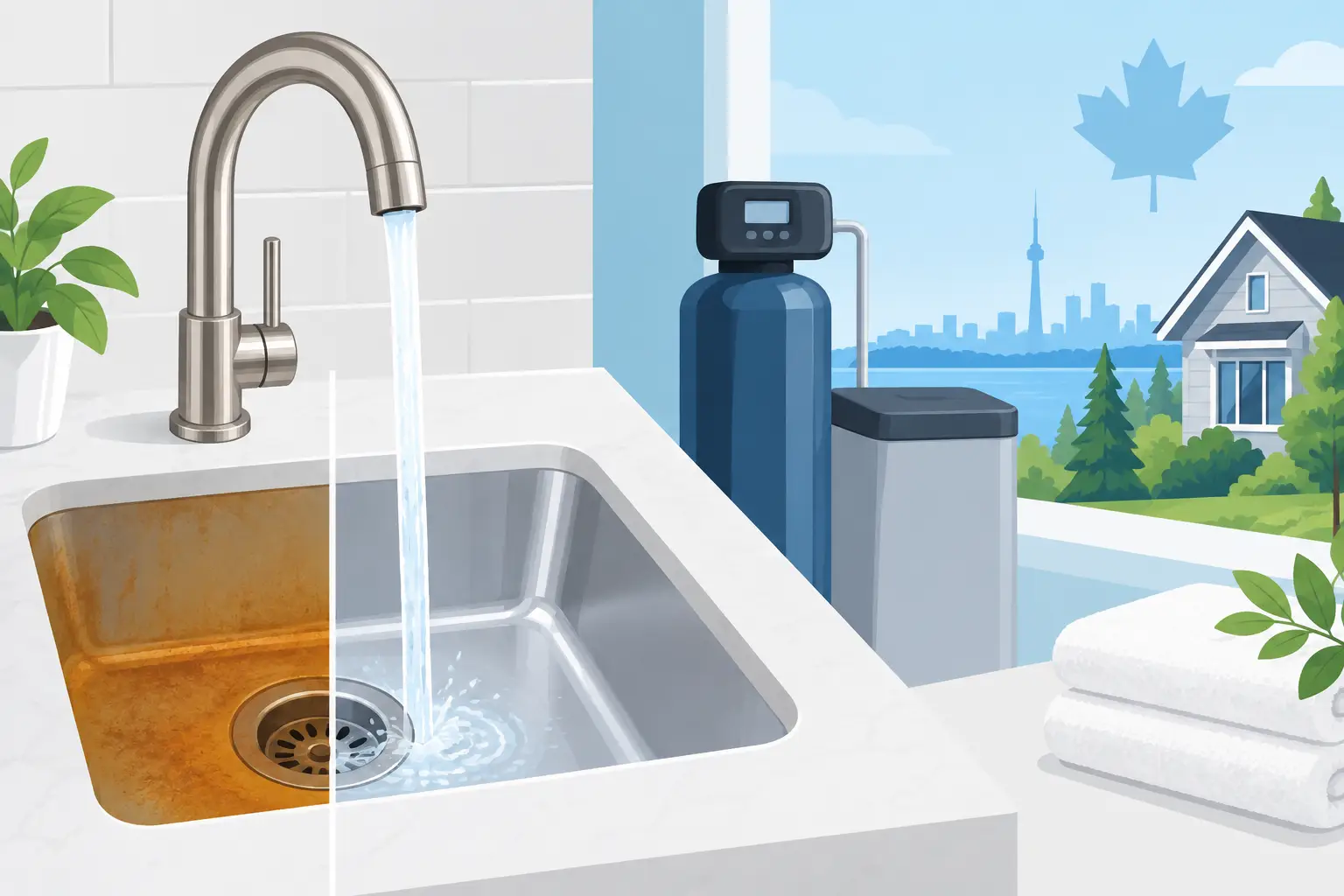
Orange-brown marks around taps, toilets, tubs, and appliances are more than a cleaning nuisance. Iron staining is a common sign that your water contains dissolved iron or iron particles, often from a private well but sometimes from plumbing or a municipal supply. The right treatment can protect fixtures, reduce cleaning time, improve water appearance, and help prevent premature wear on plumbing equipment.
A stain remover may make a sink look better for a few days. It does not remove the iron entering the home. Lasting results start by identifying the type and amount of iron in the water, then matching the treatment system to the property’s water chemistry and daily demand.
What causes iron staining?
Iron is a naturally occurring mineral found in soil and rock. As groundwater moves through iron-bearing formations, it can dissolve the mineral and carry it into a well. This is especially common in rural and suburban Ontario properties that rely on private wells.
When the water first leaves the tap, dissolved iron may be clear. Once it meets oxygen, it oxidizes and turns yellow, orange, brown, or reddish. Those particles settle on porcelain, glass, fabric, and metal surfaces. This is why a toilet bowl, shower enclosure, or white laundry can develop staining even when the water initially looks clean.
Iron can also enter water from corroding pipes, although this is less common as the primary cause in a home with a private well. A proper water analysis helps distinguish a source-water issue from a plumbing issue before any equipment is selected.
The type of iron matters
Not all iron behaves the same way, and that difference affects treatment. Clear-water iron is dissolved and may only become visible after sitting in a glass or contacting air. Red-water iron is already oxidized into visible particles. Organic iron can be associated with colour and tannins, while iron bacteria can create a slimy residue, clogged fixtures, and persistent musty or swamp-like odours.
Hydrogen sulphide is another frequent companion to iron in well water. It creates a rotten-egg smell and can make staining problems more difficult to manage. A system designed only for basic iron removal may not be the right answer when sulphur, manganese, hardness, low pH, or bacteria are also present.
Why iron staining should not be ignored
For many households, the first concern is appearance. No one wants visitors to see a stained toilet, rusty ring in the bathtub, or discoloured laundry. But the practical effects can extend beyond surface cleaning.
Iron deposits can restrict faucet aerators, showerheads, appliance valves, filters, and water-using equipment. Over time, buildup may reduce flow and add to maintenance costs. Water heaters, dishwashers, washing machines, humidifiers, and ice makers can all suffer when sediment and mineral deposits are allowed to accumulate.
Iron can also interfere with other water treatment equipment. For example, heavy iron can foul a water softener resin bed or shorten the life of certain filtration media if it is not addressed properly beforehand. In commercial settings, staining and iron buildup can create added housekeeping work and affect guest, tenant, patient, or customer experience.
Iron in household water is usually an aesthetic and operational concern rather than an immediate health emergency. That said, every water source is different. Well owners should not assume that staining is the only issue. A complete water test can identify related concerns that require separate treatment, including bacteria, nitrates, lead, pH imbalance, manganese, and sulphur.
How to identify an iron problem
The location and timing of stains offer useful clues. Orange or brown marks in multiple bathrooms, along with rusty laundry or sediment in toilet tanks, point to a water-supply issue rather than one isolated fixture. Clear water that turns orange after standing is a strong indicator of dissolved iron.
A metallic taste, yellowish water, black specks, reduced water pressure, or a rotten-egg odour are also worth noting. Black staining may indicate manganese, which often occurs alongside iron and needs to be considered during system design.
The dependable next step is a professional water analysis. Testing should measure iron concentration, manganese, hardness, pH, alkalinity, sulphur where relevant, total dissolved solids, and bacterial quality for well water. The results show whether the water needs oxidation, filtration, softening, disinfection, pH correction, or a combination of these steps.
The most effective solutions for iron staining
There is no single filter that fits every property. The right solution depends on the iron level, whether the iron is dissolved or particulate, the presence of sulphur or manganese, household water flow, and the condition of the well or plumbing.
Iron and sulphur removal systems
For many Ontario well-water homes, an automatic iron and sulphur removal system is the most effective whole-home approach. These systems oxidize iron so it can be captured by specialized filtration media. Depending on the water chemistry, the system may use air injection, an oxidizing filter media, or another engineered treatment process.
The benefit is simple: iron is removed before it reaches sinks, toilets, showers, laundry, and appliances. Automatic backwashing keeps the media cleaner and directs trapped contaminants out of the system. Proper sizing is critical. A unit that is too small for the home’s peak flow rate may allow breakthrough, leading to recurring stains during busy periods.
Water softeners for iron and hardness
A water softener can help where hardness and modest amounts of clear-water iron occur together. Softening reduces calcium and magnesium, which cause scale buildup, while also removing a limited amount of dissolved iron.
However, a softener is not always the best primary treatment for higher iron levels, iron bacteria, or severe sulphur odours. Excess iron can coat the resin, reduce efficiency, and increase maintenance. In these cases, installing iron removal ahead of the softener often provides better long-term performance.
Sediment filtration and pH correction
When water contains visible iron particles, a sediment filter may be part of the solution. It can protect downstream equipment by catching particulate matter. On its own, though, it may not remove dissolved iron that turns into stains later.
Low pH can make water more corrosive and may contribute to plumbing deterioration. Neutralizing treatment can raise pH and support more effective iron removal, particularly where corrosion and metallic taste are also concerns. Water testing determines whether this additional step is needed.
Ultraviolet disinfection and reverse osmosis
Ultraviolet systems do not remove iron, but they may be recommended when well-water testing identifies bacteria or when a property needs reliable ongoing disinfection. Iron should generally be controlled before UV treatment because staining and sediment can reduce UV effectiveness.
Reverse osmosis systems are typically installed at a kitchen sink for high-quality drinking and cooking water. They are not a replacement for whole-home iron treatment. If iron staining affects bathrooms, laundry, and appliances, the issue must be addressed where water enters the building.
Why cleaning alone does not solve the problem
Acid-based or iron-specific cleaners can remove existing stains from many surfaces when used according to product directions. They are useful for restoring a fixture after a treatment system is installed. But repeated scrubbing can damage finishes, grout, and protective coatings, especially on older fixtures.
Bleach is not an effective answer for mineral-based iron stains and should never be mixed with other cleaners. More importantly, cleaning does nothing for the iron entering the water every day. Whole-home treatment prevents new deposits instead of creating a permanent cleaning routine.
Protecting your system after installation
Water treatment equipment needs appropriate service to continue working as designed. This may include checking settings, confirming regeneration or backwash cycles, replenishing consumables where required, inspecting valves, and retesting water if conditions change. Well water can vary with seasonal groundwater levels, heavy rainfall, construction activity, or changes to the well itself.
A professionally installed system should be sized for the building, not just the test result. A family home with several bathrooms needs different flow capacity than a small cottage. Hotels, schools, healthcare facilities, and other high-use properties require engineered equipment that can handle peak demand without sacrificing treatment performance.
Canadian Smart Home Solutions can assess the source water, identify the cause of recurring staining, and recommend a treatment plan suited to the property. The objective is not simply clearer water at one tap. It is dependable whole-home protection for fixtures, plumbing, appliances, and the people who rely on them.
If orange stains keep returning after every cleaning, treat that pattern as useful information. A targeted water test and correctly designed system can replace the cycle of scrubbing with water that stays cleaner where it matters most.