
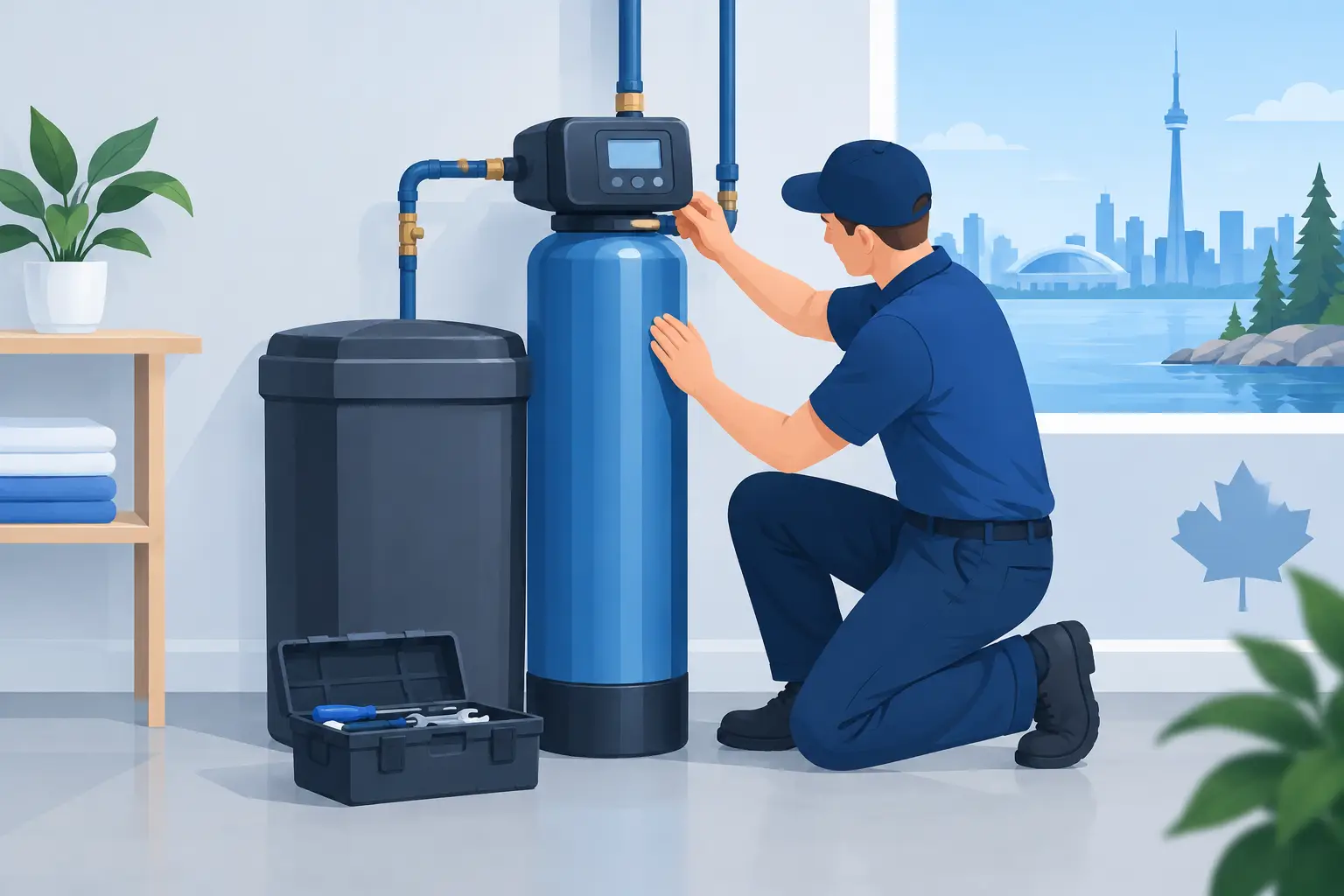
A water softener can quietly protect nearly every water-using surface in your home – until it stops doing its job. When soap no longer lathers, white scale returns to faucets, or laundry feels stiff, the system may need attention. This water softener maintenance guide explains what Ontario homeowners should check, how often to check it, and when professional service is the safer choice.
Hard water is common across Ontario, but hardness levels and water conditions vary by municipality, well, and season. A properly maintained softener reduces mineral buildup in plumbing, helps appliances operate more efficiently, and makes cleaning easier. The goal is not complicated upkeep. It is consistent, practical care that keeps the system matched to your household’s water use.
Start With the Salt Tank
The brine tank is where most homeowner maintenance happens. It holds the salt that allows the softener to regenerate and remove hardness minerals such as calcium and magnesium from the resin.
Check the tank about once a month. Salt should generally remain above the water level and should not be allowed to run completely empty. For many homes, keeping the tank about one-third to two-thirds full is a sensible range. Filling it to the top every time is not always better, particularly if your household uses water slowly. Salt stored for long periods can compact, bridge, or become damp in humid conditions.
Use high-quality water softener salt suited to your system and water source. Solar salt crystals are a common choice for many municipal-water homes, while pellet salt often leaves less insoluble residue. If your water contains iron, an iron-fighting salt or approved resin cleaner may be appropriate. The best option depends on the results of a water analysis, not simply what is available at the nearest store.
Avoid using rock salt, which can leave more sediment in the brine tank. Also avoid mixing different salt types without a clear reason. A consistent salt product makes it easier to spot changes in system performance.
Watch for Salt Bridges and Salt Mush
A salt bridge is a hard crust that forms above the water in the tank, creating an empty space below it. The tank may look full, but no salt reaches the water, so the system cannot produce brine correctly. A sudden return of scale or hard-water spotting can be an early warning.
Gently break a bridge with a broom handle or similar blunt tool, taking care not to damage the tank or internal components. Do not use sharp tools. Salt mush is different: it is a thick layer of compacted salt at the bottom of the tank. If it is severe, the tank may need to be emptied, cleaned, and refilled with fresh salt.
Confirm the Softener Is Regenerating Properly
Regeneration is the cleaning cycle that restores the resin beads inside the softener. During this process, the system uses brine to flush collected hardness minerals from the resin and sends the waste water to a drain.
Many modern systems regenerate based on actual water use, which is generally more efficient than a fixed weekly schedule. Others are timer-based. Either design must be programmed correctly for your household size, water hardness, iron level, and water usage. A family of five, for example, will have very different needs than a two-person household.
Check the display periodically for error messages, incorrect time settings, or unusually frequent regeneration. A power outage can reset the clock on some models. If the cycle runs at the wrong time or regenerates too often, it can waste water and salt. If it runs too rarely, hard water can break through before the resin is fully refreshed.
You can also inspect the drain line during a scheduled regeneration. There should be no kinks, leaks, loose connections, or signs of water backing up. Drain line issues can prevent the system from completing its cycle and may create a mess in the mechanical room.
Clean the Brine Tank When It Needs It
A brine tank does not need to be scrubbed every month. In fact, unnecessary cleaning can be inconvenient and may interrupt normal operation. For many homes, cleaning every one to two years is sufficient, although homes with iron, sediment, low-grade salt, or recurring salt mush may need more frequent service.
To clean the tank, allow the salt level to get low, place the system in bypass if recommended by the manufacturer, and remove remaining salt and water. Rinse the tank with clean water and use a mild soap solution if needed. Make sure all soap is thoroughly rinsed out before refilling. If the brine well, float assembly, or tubing appears damaged, do not force it back into place. A service technician can inspect and reassemble these parts correctly.
For households with well water, brine tank cleaning is only one part of the picture. Iron bacteria, sediment, sulphur, and manganese can affect both the softener and other treatment equipment. A system designed for municipal water may not be the right setup for a private well.
Protect the Resin Bed From Iron and Chlorine
The resin bed is the working core of the softener. It attracts hardness minerals as water flows through the tank. Over time, iron can coat the resin and reduce its ability to soften water. Municipal chlorine can also shorten resin life in some conditions.
If your water test shows iron, use a resin cleaner approved for water softeners and follow the product directions carefully. Some cleaners are added to the brine tank before regeneration; others are used during a service procedure. More cleaner is not better. The right product and dosage depend on the type and amount of iron present.
Where chlorine or chloramine levels are a concern, a properly designed whole-home filtration system can protect the softener resin while improving taste and reducing chemical odours. This is one reason a complete water assessment is more valuable than treating a single symptom.
Test Your Water When Performance Changes
Do not rely on feel alone. Soft water can feel different on skin and can make soap more effective, but a hardness test provides clearer information when you suspect a problem.
Test the water before and after the softener if you notice scale returning, spotting on glassware, dry-feeling laundry, or reduced lather. A test can help identify whether the issue is low salt, incorrect programming, exhausted resin, a regeneration problem, or a separate water-quality concern.
If you are on a private well, annual water testing is a practical minimum, with additional testing after flooding, construction near the well, changes in taste or odour, or a shift in staining. Water chemistry can change over time, and a softener only addresses hardness. It does not remove every contaminant or solve every well-water issue.
Inspect the System and Its Surroundings
A brief visual inspection can prevent small issues from becoming expensive repairs. Every few months, look around the softener for dampness, salt residue, cracked tubing, corrosion, or water on the floor. Confirm that the bypass valve is in the service position unless you intentionally placed it in bypass for maintenance.
Keep the area around the unit accessible. Storing boxes tightly against the brine tank or control valve makes leaks harder to detect and makes service more difficult. In cold areas, ensure the equipment and plumbing are protected from freezing. A frozen line or tank can cause significant damage.
If your home has a pre-filter ahead of the softener, change it on schedule. Sediment filters protect valves and resin from dirt, sand, and debris. Ignoring a clogged pre-filter can reduce water pressure and place unnecessary strain on the treatment system.
When to Call for Water Softener Service
Some issues are straightforward, but repeated hard water, constant regeneration, leaks, unusual noises, or error codes deserve professional attention. The same applies if the unit is more than 10 years old and performance has declined. Components such as seals, injectors, valves, and resin can wear over time.
Professional service is especially valuable when a home has iron staining, sulphur odours, well-water bacteria concerns, or multiple treatment systems. The solution may involve adjusting the softener, cleaning the resin, replacing worn parts, or adding filtration ahead of the unit. Guessing can lead to unnecessary salt use, poor water quality, and avoidable wear on appliances.
Canadian Smart Home Solutions can assess the water, inspect the equipment, and recommend service based on the conditions in your home rather than a one-size-fits-all schedule.
A well-maintained softener should not demand constant attention. Check the salt, keep an eye on regeneration and leaks, test water when results change, and arrange service before a minor performance issue becomes scale throughout the home.