
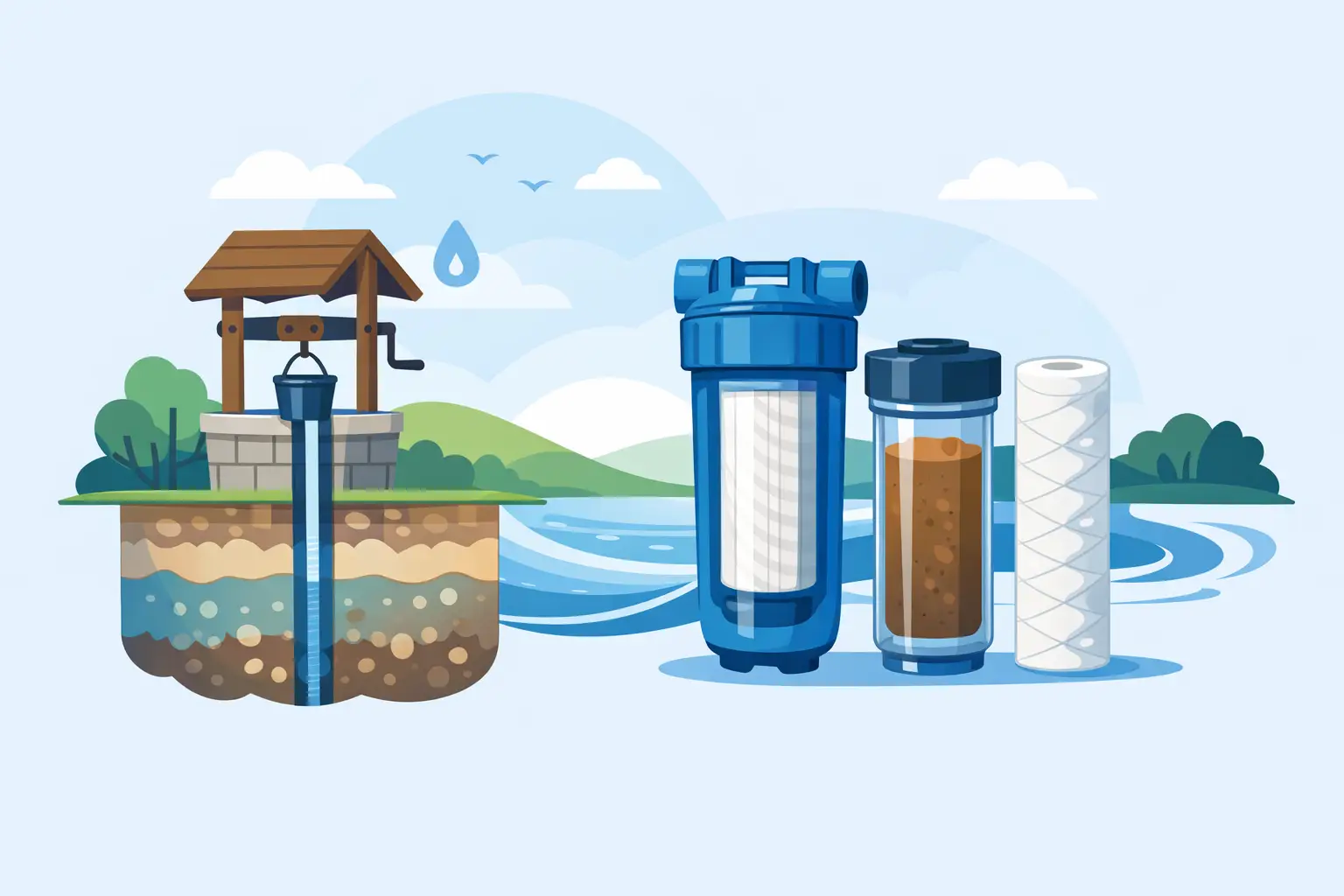
Sand in a toilet tank, grit in faucet aerators, and cloudy water after heavy rain are more than minor annoyances. They are signs that a sediment filter for well water may be needed to protect your plumbing and the treatment equipment that follows it. The right system can reduce maintenance, prevent premature appliance wear, and provide a cleaner starting point for water treatment throughout the home.
A sediment filter is not a one-size-fits-all purchase. Well water conditions vary widely across Ontario, and the best solution depends on what is in the water, how much water the property uses, and whether the sediment is occasional or constant. A proper water assessment helps ensure the filter solves the actual problem without causing frustrating pressure loss or frequent service calls.
What a Sediment Filter Removes
Sediment is the visible or suspended material carried in water. It can include sand, silt, clay, soil particles, rust flakes from plumbing, and organic debris. Some wells produce a small amount of fine sediment only after a storm or seasonal groundwater change. Others continuously draw sand or grit from the well.
A sediment filter captures these particles before they travel through the home. This protects fixtures, water heaters, washing machines, dishwashers, pressure tanks, water softeners, ultraviolet systems, and reverse osmosis equipment. It can also improve the appearance of water when turbidity, or cloudiness, is caused by suspended particles.
Sediment filtration does have limits. It does not remove dissolved iron, hardness minerals, sulphur odour, bacteria, lead, or chemical contaminants. For example, clear water may still contain iron that stains fixtures or bacteria that requires disinfection. Many well-water properties need a complete treatment system, with sediment reduction as the first stage rather than the only stage.
Why Well Water Needs Pre-Filtration
Municipal water is normally treated before it reaches the property. Private well water is different. Its quality can shift with groundwater levels, nearby construction, heavy rainfall, changes to the well, or aging plumbing. Even a well that has performed reliably for years can begin producing sediment after a pump replacement or a change in water demand.
Sediment is especially hard on equipment with narrow internal passages. A water softener control valve, for instance, can become blocked or worn when abrasive sand reaches it. An ultraviolet sterilizer works best when the water is clear, because suspended particles can shield microorganisms from UV light. Reverse osmosis membranes can foul quickly if sediment reaches them without suitable pre-filtration.
Installing the correct filter ahead of these systems is a practical investment in their performance and service life. It also makes routine maintenance more predictable. Instead of cleaning grit from multiple fixtures or repairing a sticking valve, the homeowner services one filter designed to capture the material.
Choosing a Sediment Filter for Well Water
The key decision is not simply whether to use a filter. It is selecting the right filtration method, micron rating, capacity, and flow rate for the property. A filter that is too fine may reduce water pressure. A filter that is too coarse may allow particles through and leave downstream equipment unprotected.
Start With Water Testing and Observation
A laboratory water test identifies concerns such as iron, manganese, hardness, bacteria, nitrates, and sulphur compounds. It may not always show the full sediment load, particularly when sediment occurs intermittently, so a site assessment also matters. Looking at pressure-tank debris, faucet aerators, toilet tanks, and existing filter cartridges can reveal what the system is handling.
Consider when the issue appears. Is the water gritty all the time, only after rain, or mainly when the pump starts? Does the material settle quickly in a glass, or does it remain cloudy for hours? Those details help determine whether the property needs a simple cartridge filter, a reusable spin-down screen, or a higher-capacity automatic backwashing system.
Understand Micron Ratings
A micron rating describes the approximate size of particles a filter is designed to capture. One micron is very small, and smaller micron ratings generally provide finer filtration. That does not automatically make them better.
A 50-micron screen may be appropriate as an initial defence against larger sand and grit. A 20- or 5-micron cartridge can capture much finer material and is often used to protect sensitive equipment. When water contains a mix of large and fine particles, staged filtration can work better than forcing all sediment through one fine cartridge.
The trade-off is pressure drop and maintenance. Fine filters collect more material and can restrict flow as they load up. For a busy household with several bathrooms, or a commercial property with high peak demand, the system must be sized to maintain adequate flow while filtering effectively.
Match the Filter to the Sediment Load
Light, occasional sediment may be managed with a standard replaceable cartridge filter. These systems are straightforward and cost-effective, but cartridges must be checked and changed before pressure falls noticeably.
For larger grit and heavier sediment, a reusable spin-down filter can be a useful first stage. It uses a screen that captures larger debris and can be flushed or cleaned. This reduces the burden on finer downstream cartridges, although it may not remove very fine silt on its own.
Properties with persistent turbidity, heavy sand, or significant water use may need an automatic backwashing sediment filter. These systems use a larger media tank and clean themselves on a programmed cycle. They require suitable drainage and proper installation, but they can provide greater capacity and less hands-on maintenance than small cartridges.
Size for Flow Rate, Not Just the Filter Housing
A sediment filter must support the property’s peak water demand. A small housing may work for a cottage with one bathroom but become restrictive in a family home where showers, laundry, and kitchen fixtures run at the same time. The same principle applies to hotels, schools, farms, and other facilities where water demand can be concentrated during certain hours.
Filter size, pipe size, pressure-tank performance, pump output, and the number of treatment stages all affect available flow. Adding several filters without reviewing the overall system can create a pressure problem that looks like a pump issue. An experienced installer considers the entire water path, from the well and pressure tank through every treatment component.
For many whole-home applications, larger-capacity filter housings or tank-based systems provide better performance and longer service intervals. The right choice depends on the actual flow requirement, sediment load, and available installation space.
Where the Filter Belongs in a Well-Water System
Sediment removal is usually installed near the start of the treatment train, after the pressure tank. This protects everything downstream. If the water contains large grit, a coarse reusable filter may come first, followed by a finer cartridge or backwashing filter.
The remaining equipment should be selected based on test results. Iron and manganese treatment may follow sediment filtration. A softener may be installed to address hardness and scale. An ultraviolet system can provide disinfection when water quality and testing indicate it is appropriate. Drinking-water reverse osmosis is often installed separately at a kitchen sink for additional reduction of selected dissolved contaminants.
The sequence matters. Installing equipment in the wrong order can reduce performance, increase maintenance, and shorten the life of expensive components. A complete design is especially valuable when the water has several concerns at once, such as sediment, iron staining, hardness, and odour.
Maintenance Is Part of Reliable Water Treatment
Every sediment filter needs attention, whether that means changing a cartridge, flushing a screen, or confirming an automatic backwashing valve is operating correctly. The service schedule depends on water conditions rather than a fixed calendar date. A cartridge that lasts six months in one home may need replacement every few weeks in another.
Watch for reduced water pressure, visible discolouration, a loaded cartridge, or sediment returning to fixtures. These are practical signs that service is due. Keep spare cartridges on hand if the system uses them, and make sure filter housings are installed with enough clearance for safe replacement.
For automatic equipment, routine inspection helps catch drainage, valve, and programming issues before they interrupt water service. Well water should also be tested periodically and whenever there is a change in taste, odour, colour, well repairs, flooding, or a shift in household health concerns.
When Professional Sizing Makes Sense
A sediment filter can appear simple, but well-water treatment is often connected to larger questions about water safety, pressure, appliance protection, and long-term operating costs. If sediment is heavy, water pressure is inconsistent, or multiple treatment issues are present, professional testing and system sizing can prevent expensive trial and error.
Canadian Smart Home Solutions can assess Ontario well-water conditions and recommend filtration that fits the property, not a generic shelf specification. Proper installation also helps ensure bypass valves, drainage, shutoffs, and service access are in place for dependable operation.
Cleaner water begins with identifying what is actually moving through the well system. Once sediment is controlled at the source, every fixture and treatment component downstream has a better chance to perform as intended.