
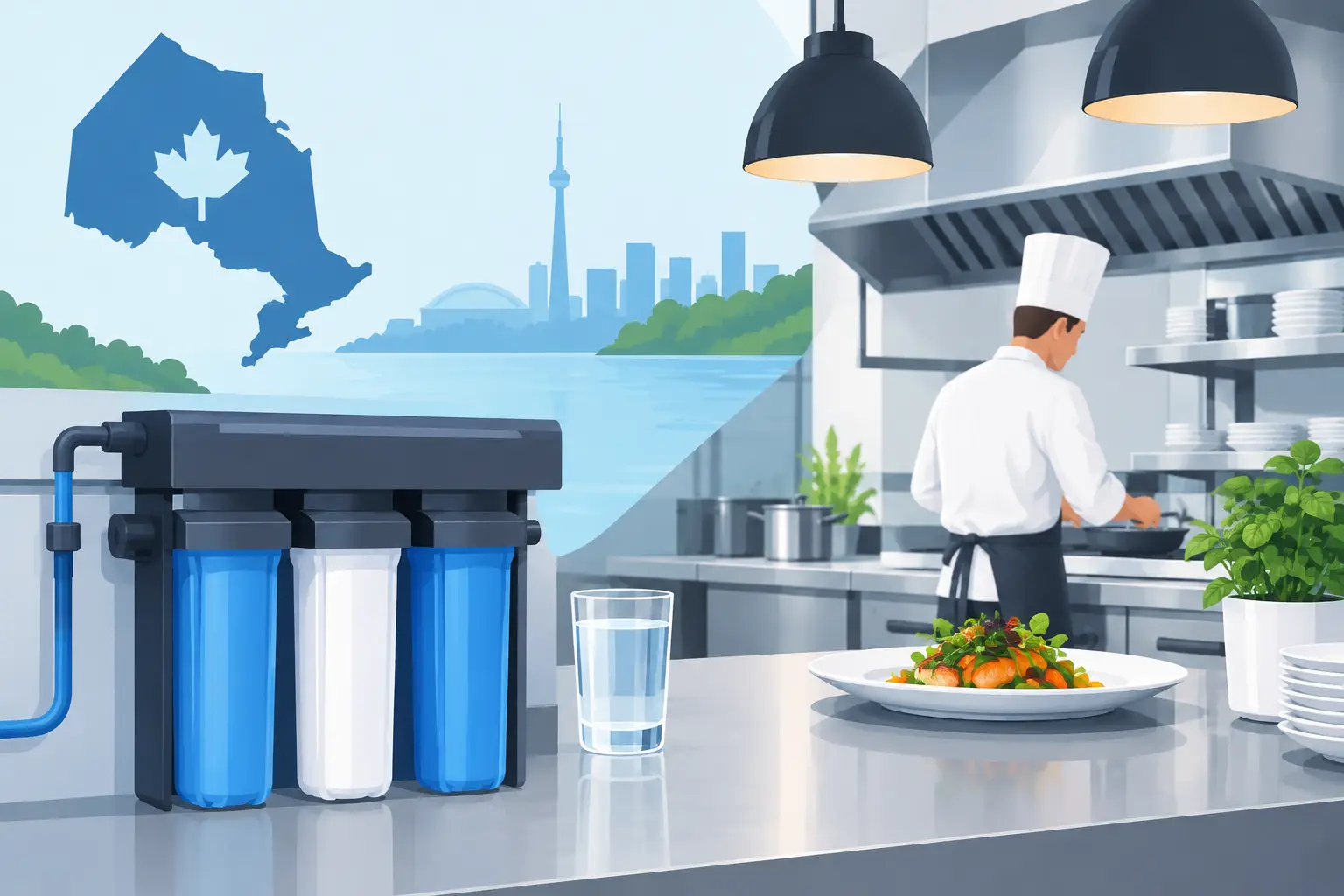
A glass of water, a cup of coffee, a clear ice cube and a spotless combi oven all start with the same utility line. This restaurant water filtration guide helps Ontario restaurant owners and operators turn that water into a business advantage: better flavour, fewer equipment failures and a more dependable guest experience.
Water treatment is not one-size-fits-all. A downtown restaurant on municipal water may be focused on chlorine taste and scale, while a rural banquet facility may need to manage iron, hardness, bacteria or sulphur odours from a well. The right system begins with the actual water conditions and the equipment that depends on them.
Why restaurant water quality affects the whole operation
Water appears everywhere in food service. It becomes coffee, tea, soup, sauces, fountain beverages and ice. It also feeds dishwashers, steamers, combi ovens, glass washers and ice machines. If it carries excessive hardness minerals, sediment, chlorine, iron or other contaminants, the effects can show up in both the dining room and the back of house.
Hard water is a common concern in many Ontario communities. Calcium and magnesium can form scale inside heating elements, boiler chambers, spray arms and water lines. That buildup reduces heat transfer, increases energy use and can shorten the life of costly equipment. It may also leave spotting on glassware and dull residue on dishes, creating extra work for staff before service.
Chlorine and chloramine are used to disinfect many municipal supplies, but they can affect the taste and aroma of drinking water, coffee and ice. Sediment can clog valves and cartridges. On private water supplies, iron can stain fixtures and equipment, while sulphur can create an unpleasant odour. Each issue calls for a specific treatment approach rather than a generic filter installed under a sink.
Start a restaurant water filtration guide with water testing
The most expensive mistake is selecting equipment before identifying the problem. A professional water analysis establishes what is in the water, how much is present and which treatment stages are required. For a restaurant, testing should be tied to the source water and the intended use of the treated water.
Municipal water customers may need to review hardness, chlorine or chloramine, sediment, total dissolved solids and lead risk from older plumbing. A restaurant supplied by a well should also consider iron, manganese, sulphur, pH, tannins, bacteria and other conditions relevant to its local source. Water quality can change seasonally, especially on private supplies, so a one-time test may not be enough for every location.
Flow rate matters as much as the lab results. A small café and a 200-seat restaurant do not place the same demand on a filtration system. Peak service periods can involve dishwashing, ice production, handwashing and beverage preparation at once. A system must deliver sufficient flow and pressure without starving critical equipment or allowing untreated water to bypass the intended treatment.
Match the treatment system to the restaurant problem
Most commercial installations use several stages because each stage has a distinct purpose. The final design should reflect the kitchen layout, equipment manufacturer requirements, available space, drainage and expected water demand.
Sediment filtration for particles and equipment protection
Sediment filters capture sand, rust, silt and other suspended material before it reaches downstream equipment. They are particularly useful where older pipes release debris or where a private water source carries visible particles. By protecting valves, carbon media and membranes, sediment filtration can reduce service interruptions and extend the life of later treatment stages.
The cartridge rating should suit the water conditions. A very fine filter can improve clarity but may restrict flow or require frequent replacement if the incoming water is heavily loaded with sediment. A properly sized prefilter protects performance without becoming a bottleneck during a busy shift.
Carbon filtration for taste, odour and chlorine
Activated carbon is a practical choice for improving the taste and smell of municipal water. It is commonly used for drinking water, beverage stations, ice machines and coffee equipment because it reduces chlorine and many taste-and-odour concerns. The result is often more consistent coffee, tea and fountain beverages, especially where the local water has a noticeable disinfectant taste.
Carbon is not a cure for every water issue. It does not soften hard water, and it should not be treated as a substitute for properly designed treatment where bacteria or well-water contaminants are present. Media capacity, contact time and replacement intervals must match actual usage.
Water softeners for scale control
A commercial water softener removes hardness minerals that cause scale. It is often one of the most valuable investments for restaurants using hot-water equipment, warewashing machines, steamers and combi ovens. Softer water helps reduce mineral buildup, supports efficient heating and can lower the frequency of deliming and equipment repairs.
Softening may be applied to the entire building or only to equipment that benefits most. Whole-building treatment can protect plumbing and hot-water systems, while point-of-use softening may suit a smaller operation with a clear equipment concern. The right choice depends on water hardness, service demand, floor space and operational priorities.
Reverse osmosis for high-purity water
Reverse osmosis, often called RO, removes a broad range of dissolved materials. It is a strong option where a restaurant needs lower-mineral water for specialty coffee, tea, steam equipment, spot-free glassware or ingredient preparation. In some applications, RO water can improve consistency by reducing the dissolved solids that influence flavour and leave mineral residue.
RO requires careful planning. It produces treated water at a controlled rate, so storage capacity and peak demand need to be considered. It also creates a reject-water stream and needs regular membrane and prefilter maintenance. For many restaurants, it makes sense at dedicated points of use rather than as the only treatment system for every tap in the building.
UV and specialized treatment for private supplies
Ultraviolet sterilization is often considered for well or lake water where bacterial control is a concern. UV uses light to disinfect water without adding chemicals, but the water must be clear enough for the system to work effectively. Sediment removal and, in some cases, iron reduction may be necessary before the UV chamber.
Iron, manganese, sulphur and low pH need their own treatment strategies. Iron and sulphur systems can address staining, metallic taste and odour, while neutralizing equipment may help correct acidic water that can be hard on plumbing. These applications require site-specific design, particularly for restaurants where uninterrupted service is essential.
Plan around equipment warranties and local installation needs
Many food-service equipment manufacturers specify water conditions for their products. An ice machine, combi oven or commercial dishwasher may require filtration, hardness limits or pressure regulation to maintain warranty coverage. Review those requirements before installation, not after scale or corrosion has already caused damage.
Commercial water treatment also needs to fit the building. A system may require floor space, electrical power, drain access, bypass plumbing and room for service. In leased premises, operators should confirm landlord requirements and available utility capacity early in the planning process. Installation should follow applicable Ontario plumbing and building requirements, with accessible isolation valves and service connections that make maintenance practical.
For high-volume restaurants, hotels, schools, healthcare facilities and banquet operations, engineered commercial systems may be required to maintain reliable pressure through peak demand. Canadian Smart Home Solutions can assess water conditions and design treatment around the actual flow rate, equipment load and operational needs of the site.
Maintenance is part of the system, not an afterthought
A filter only performs as intended when it is maintained. Restaurant managers should know who is responsible for cartridge replacement, softener salt replenishment, sanitizer checks, UV lamp changes and periodic water testing. Waiting until the ice tastes different or the dishwasher starts spotting glasses usually means the system has been operating below its intended performance for some time.
A simple service record is valuable. Record installation dates, filter changes, water test results, salt use, equipment cleaning and any changes in taste, odour or pressure. This helps identify recurring issues and supports more informed decisions when equipment is expanded or replaced.
Do not select filters on price alone. A low-cost cartridge that must be changed too frequently, restricts flow or fails to protect expensive equipment can cost more over a year than a properly sized commercial solution. The best value is dependable treated water, predictable maintenance and fewer disruptions during service.
Choose a solution that protects the guest experience
Restaurant water treatment should improve more than what customers see in a water glass. It should help the kitchen run with less scale, fewer stains, cleaner ice and more consistent beverages. It should also give owners confidence that their equipment is being protected by a system designed for their actual water supply.
The practical next step is to test the water, review the demands of the kitchen and build treatment around the results. When water quality is managed before it reaches the equipment, staff can focus on service and guests can taste the difference.