
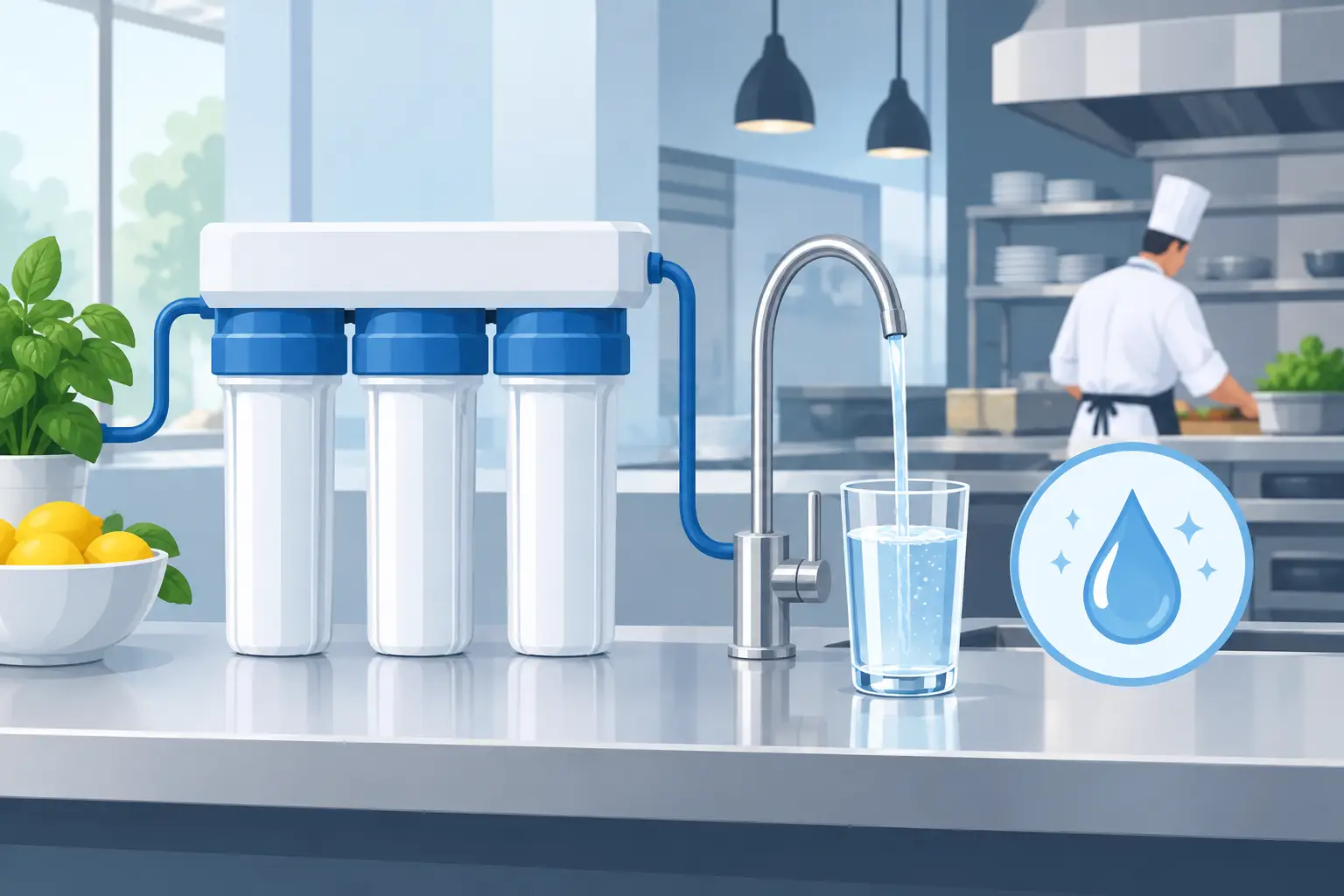
A busy restaurant can lose service time over something as ordinary as water. A combi oven scales up, glassware comes out spotted, ice tastes off, or a coffee machine fails before its expected lifespan. This restaurant filtration guide explains how Ontario food-service operators can identify the source of those problems and select water treatment that protects equipment, supports food and beverage quality, and gives staff dependable water at every tap.
Water treatment is not one product for every kitchen. The right system depends on the incoming water, the equipment being protected, peak flow demand, and whether the building uses municipal water, a private well, or another source. A water test and a practical site review should come before a recommendation.
Start With the Water Problems You Can See
Restaurant water issues usually show up in operations before anyone sees a lab report. White mineral deposits inside dishwashers and steam equipment point to hardness. Orange staining may indicate iron. A rotten-egg smell can be associated with sulphur or bacteria in a well-water supply. Chlorine taste and odour can affect drinking water, fountain beverages, soups, sauces, coffee, and ice.
Sediment is another common concern, particularly in older buildings, rural properties, or facilities supplied by wells. Fine sand, rust particles, and other debris can clog valves, reduce water pressure, and shorten the life of cartridges, ice makers, pumps, and kitchen appliances.
The same symptom can have more than one cause. For example, cloudy ice may result from mineral content, sediment, poor ice-machine maintenance, or a filter that is overdue for replacement. That is why guessing based on one problem often leads to an incomplete solution.
Municipal Water and Well Water Need Different Approaches
Municipal water is generally treated before it reaches the property, but it can still contain chlorine or chloramine, hardness minerals, sediment from aging infrastructure, and trace contaminants that matter for specific applications. A restaurant may need to improve taste and reduce scale even when the incoming water meets municipal standards.
Well water requires more detailed assessment. Its quality can change with seasons, groundwater conditions, and nearby activity. Iron, manganese, hardness, sulphur, tannins, bacteria, and sediment may all require treatment. For a commercial kitchen, treating well water properly is essential not only for equipment protection but also for operational consistency.
Restaurant Filtration Guide: Match Treatment to the Job
A commercial system should be designed around what the water must do. Water used for handwashing does not always need the same treatment as water feeding a high-temperature dishwasher or espresso machine. Treating every gallon to the highest standard can add unnecessary cost, while treating too little can leave expensive equipment exposed.
Sediment Filtration
Sediment filters capture particles such as sand, silt, rust, and pipe scale. They are often the first stage of a larger treatment system because they protect downstream equipment from fouling. In a restaurant, sediment filtration can be valuable for the main incoming supply, ice machines, dishwashers, and any equipment with narrow internal passages.
Filter sizing matters. A small cartridge may work for a low-volume point of use, but it can create pressure loss in a high-demand kitchen. Commercial systems need sufficient flow capacity for peak periods, such as lunch service, dishwashing cycles, and ice production.
Carbon Filtration for Taste and Odour
Activated carbon filtration is commonly used to reduce chlorine taste, odours, and certain organic compounds. It can make drinking water, brewed beverages, soups, and fountain drinks taste cleaner and more consistent. Carbon filtration also protects equipment components that can be affected by chlorine.
However, carbon is not a universal contaminant solution. It does not soften hard water or reliably address all dissolved minerals. It also needs timely replacement. Once a carbon filter reaches capacity, performance declines and the media can become a maintenance concern rather than a benefit.
Water Softeners for Scale Control
Hard water is one of the most expensive hidden problems in food service. Calcium and magnesium minerals form scale inside steamers, boilers, coffee equipment, dishwashers, glass washers, and hot-water components. Scale reduces heat transfer, increases energy use, affects wash results, and can contribute to early equipment failure.
A commercial water softener removes hardness minerals before they enter the equipment. For many Ontario restaurants, it is a core part of protecting plumbing and high-value kitchen assets. Proper sizing is critical because a system that cannot keep up with daily volume or peak flow will allow hard water through during busy periods.
Softened water is not automatically the best choice for every connection. Some applications may require additional polishing filtration, while others may be better served by a blended water supply. The goal is to meet equipment manufacturer requirements and achieve reliable results without over-treating water where it is not needed.
Reverse Osmosis for High-Quality Beverage and Ice Water
Reverse osmosis, often called RO, reduces a wide range of dissolved solids. It is a strong option for drinking-water stations, coffee and espresso systems, specialty beverage preparation, and ice machines where clarity and taste are especially important.
RO water can improve consistency, but it must be engineered for demand. A small under-counter unit may not support a high-volume beverage program or a large ice machine. Storage capacity, recovery rate, water pressure, pre-filtration, drainage, and sanitation all affect whether an RO system will perform well in a commercial setting.
Some coffee equipment manufacturers recommend water with a specific mineral range rather than extremely low mineral content. In those cases, a tailored filtration or blending approach may be preferable to standard RO alone.
UV and Specialized Treatment
Ultraviolet treatment disinfects water by inactivating microorganisms as water passes through a UV chamber. It is often used for well water, lake water, or facilities where microbiological protection is part of the treatment plan. UV systems require clear water to work effectively, so sediment and iron removal may be necessary ahead of the unit.
Iron, manganese, sulphur, lead, and other concerns need specialized treatment selected from test results. Lead reduction, for example, may be important in older properties with aging plumbing, but the system must be certified and installed for the intended use. A kitchen cannot rely on a general-purpose filter when the water issue requires targeted removal.
Design for Equipment, Volume, and Maintenance
The best commercial filtration system is not simply the one with the most stages. It is the system that delivers the required water quality at the required flow rate, every day. Start by listing all water-using equipment, including dishwashers, glass washers, combi ovens, steamers, coffee machines, ice makers, beverage dispensers, water heaters, and hand sinks.
Then consider the building’s peak demand. A hotel breakfast kitchen, a high-volume quick-service restaurant, and a small independent café may all use different total volumes, even if they have similar equipment. If a system is undersized, pressure drops and untreated bypass can become recurring problems.
Maintenance should be planned before installation. Filters need scheduled changes, softeners need salt and periodic servicing, UV lamps need replacement, and RO systems need membrane monitoring and sanitization. Restaurants should keep service records and assign responsibility for visual checks, salt levels, and alerts. Waiting until water quality changes or equipment fails usually costs more than routine maintenance.
Installation Details That Protect the Investment
Commercial water treatment should be installed where technicians can safely access filters, valves, drains, and control heads. Systems need appropriate shutoff valves, bypass arrangements, drainage, and electrical connections where required. For food-service properties, installation also has to work with local plumbing requirements and the facility’s sanitation practices.
It is wise to protect the incoming main supply where hardness, sediment, or iron affects the entire building, then add point-of-use treatment where beverage or ice quality needs additional control. This layered approach can reduce scale throughout the property without paying to produce RO-quality water for every faucet.
Canadian Smart Home Solutions designs and installs commercial water treatment systems for Ontario facilities that need dependable flow, practical maintenance, and treatment matched to real water conditions. The right recommendation begins with the water source and the kitchen’s operating demands, not a one-size-fits-all package.
A restaurant’s water should support service quietly: clear ice, consistent coffee, cleaner glassware, protected equipment, and fewer interruptions during the hours that matter most. Testing the water and designing the treatment around the operation gives owners and managers a clear path to that result.