
A water heater that starts rumbling, white crust around faucets, and shower doors that never look clean are not separate housekeeping problems. They are common signs of hard water at work. The most reliable way to prevent scale in plumbing is to identify what is in the water first, then treat the water before minerals can settle inside pipes, fixtures, appliances, and heating equipment.
For Ontario homes, cottages, multi-unit properties, and commercial facilities, scale control is often less about a single cleaning product and more about selecting the right whole-property water treatment solution. The right approach protects equipment, reduces maintenance, and helps water-using appliances operate as intended.
Why Scale Builds Up in Pipes and Equipment
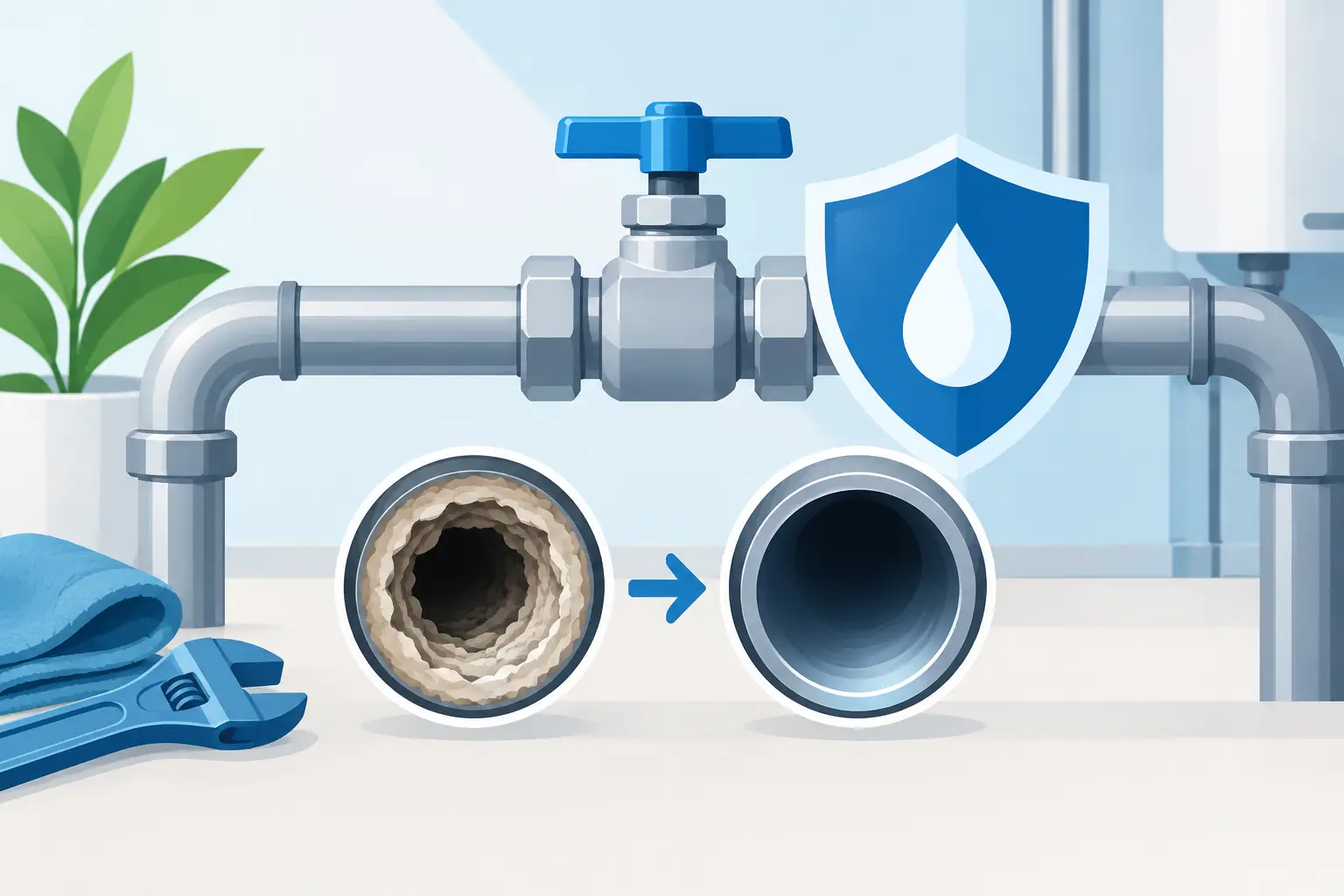
Scale is a hard mineral deposit, most commonly calcium and magnesium, left behind when hard water is heated or evaporates. It can appear as white, grey, or chalky residue on taps and showerheads, but the more costly buildup is often hidden inside hot-water plumbing, tankless water heaters, boilers, dishwashers, humidifiers, and commercial equipment.
Heat accelerates the problem. When hard water passes through a water heater or boiler, dissolved minerals can come out of solution and attach to hot surfaces. Over time, that layer reduces heat transfer. The equipment has to work harder to heat the same amount of water, which can increase energy use and shorten its service life.
Not every mineral deposit is the same. Iron, manganese, silica, and corrosion products can also create deposits or contribute to staining. That is why a system chosen only by looking at a white faucet ring may miss the real issue.
Start With a Proper Water Test
Water hardness is typically measured in grains per gallon or milligrams per litre. A water test can show the level of hardness and identify other conditions that affect treatment, including iron, sulphur, pH, total dissolved solids, and bacteria concerns for private wells.
Municipal water and well water require different considerations. A municipal supply may have stable hardness but still create persistent scale, especially where water is heavily used for showers and hot-water appliances. Well water can change seasonally and may contain iron or sulphur that interferes with a standard softener if it is not addressed first.
For a homeowner, testing removes guesswork. For a hotel, school, healthcare facility, or other high-use building, a water analysis is also necessary for sizing equipment correctly. An undersized system may regenerate too often, fail to keep up with peak demand, or allow untreated hard water to bypass the treatment process.
The Best Way to Prevent Scale in Plumbing
For most properties with moderate to high hardness, an ion-exchange water softener is the most dependable solution. It replaces hardness minerals such as calcium and magnesium with sodium or potassium ions before the water enters the home’s plumbing system. By removing the minerals that form scale, it protects both cold-water and hot-water lines throughout the building.
A properly sized whole-home softener can reduce scale on fixtures, help soap rinse more effectively, and protect costly equipment. The benefit is especially noticeable in tankless water heaters, where narrow internal passages can lose efficiency quickly when scale accumulates.
Softener sizing should be based on more than the hardness number. Daily water consumption, the number of occupants or users, peak flow rate, plumbing size, and iron content all matter. A family home may need a very different system than a restaurant, apartment building, or nursing home with continuous hot-water demand.
Salt-based softening is not the only option, but it is the strongest choice when the goal is to remove hardness minerals. Salt-free scale conditioners can alter how minerals behave in water, helping reduce their ability to adhere to surfaces under suitable conditions. They may be appropriate where sodium discharge or maintenance requirements are a concern, but they do not remove hardness in the same way a water softener does. Results depend on the water chemistry and the equipment being protected.
Match Treatment to the Actual Water Problem
A sediment filter can protect valves and treatment equipment from grit, sand, and suspended particles, but it does not soften hard water. Carbon filtration can improve chlorine taste and odour on municipal water, but it also does not remove the minerals responsible for scale. Reverse osmosis produces highly treated drinking water at a dedicated tap, yet it is not designed to protect the entire plumbing system from hardness.
These systems can work very well together when they are installed for the right purpose. For example, a whole-home softener can address scale, while carbon filtration improves taste and odour, and reverse osmosis provides refined drinking water for cooking and drinking. Well-water properties may need iron or sulphur removal before softening to prevent fouling and maintain consistent performance.
This distinction matters because treating only drinking water will not protect the dishwasher, laundry equipment, water heater, shower valves, or boiler. Scale prevention is generally a point-of-entry issue: treatment needs to happen where water enters the property.
Protect Hot-Water Equipment Before It Becomes Expensive
Water heaters and tankless units deserve special attention because heat speeds up mineral deposition. If scale is already present, treatment will stop or greatly reduce new buildup, but it will not instantly remove thick deposits that have been accumulating for years. Existing equipment may require professional flushing or descaling according to the manufacturer’s instructions.
Once the incoming water is treated, regular maintenance becomes more effective. Tank-style heaters should be inspected and flushed on an appropriate schedule. Tankless units should be serviced at intervals based on the hardness level, water use, and manufacturer requirements. In commercial settings, planned maintenance is far less disruptive than an emergency shutdown caused by restricted flow or poor heating performance.
Do not rely on acidic cleaners as a whole-plumbing solution. They can be useful for cleaning a removable showerhead or faucet aerator, but they cannot correct the mineral content of the water entering the building. Frequent cleaning is a symptom-management strategy, not scale prevention.
Watch for These Early Signs of Hard Water
Scale tends to develop gradually, so early warning signs are useful. You may need hardness treatment if you notice several of the following conditions:
- White or chalky residue on faucets, glass, sinks, and coffee makers
- Reduced water flow from showerheads or fixture aerators
- Spots on dishes and glassware after washing
- Soap that is difficult to rinse away or laundry that feels stiff
- A water heater that is noisy, less efficient, or needing frequent service
These signs are helpful indicators, but they are not a substitute for testing. A property can have significant hardness even when the visible residue seems minor, particularly when much of the water use occurs inside appliances or mechanical rooms.
Maintain the System That Protects Your Plumbing
A water treatment system needs basic ongoing care to keep preventing scale. With conventional water softeners, this usually means keeping the brine tank supplied with the appropriate salt, checking for salt bridging, and scheduling periodic service. Demand-initiated systems can regenerate based on actual water use, helping avoid unnecessary salt and water consumption when correctly programmed.
Commercial systems require a more structured plan. High flow rates, multiple treatment tanks, storage requirements, bypass arrangements, and service continuity all need to be considered during design and installation. The objective is not simply to install a large softener. It is to deliver treated water consistently at the flow and volume the facility requires.
Canadian Smart Home Solutions helps Ontario property owners assess water quality and select treatment systems that fit the source water, building demand, and equipment being protected. Expert installation also matters: treatment equipment must be connected correctly, include the proper bypass and drainage arrangements, and meet applicable plumbing requirements.
If you are seeing scale on fixtures or suspect it is affecting your hot-water equipment, arrange a water assessment before replacing another appliance. Treating the source of the problem gives your plumbing, fixtures, and mechanical equipment a much better chance of performing well for years to come.