
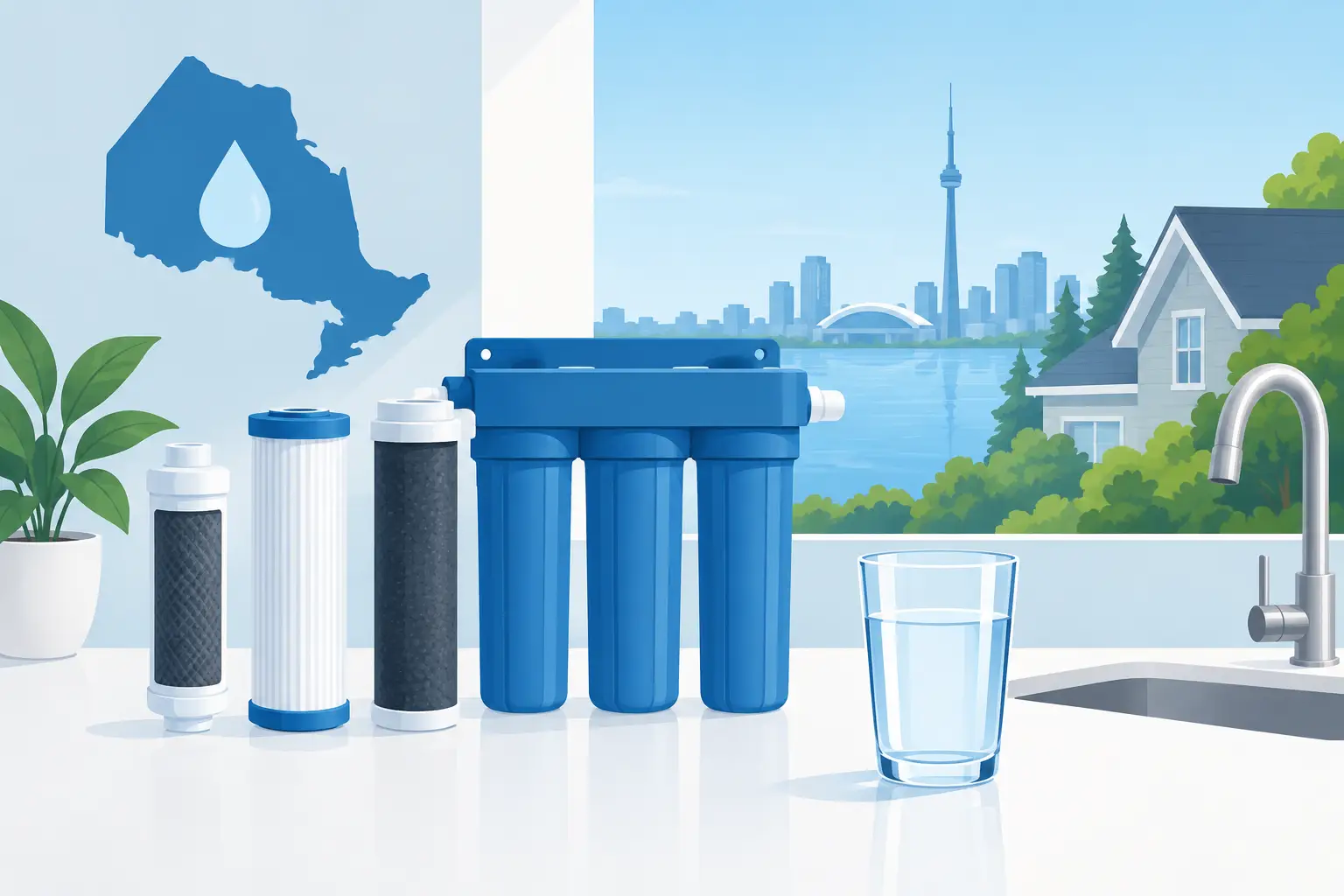
Lead filters are not a cosmetic upgrade when a home has a potential lead concern. They are a practical barrier between plumbing-related contamination and the water your family drinks, cooks with, and uses to prepare infant formula. The right system can substantially reduce lead at the tap, but only when it is matched to the source of the problem, certified for the job, and maintained on schedule.
In Ontario, lead can be an issue in older homes with lead service lines, older interior plumbing, lead-based solder, or certain brass fixtures. Municipal water may leave the treatment plant meeting required standards, yet water can pick up lead while travelling through the service line or household plumbing. That distinction matters because a general sediment filter or water softener is not automatically a lead removal solution.
Where lead enters household water
A lead service line is the pipe that connects a municipal water main to a building. Many Ontario municipalities have programs to identify and replace these older lines, but replacement can take time and private-side piping may remain the property owner’s responsibility. Homes built or renovated decades ago may also have older soldered copper pipes or fixtures that contribute small amounts of lead.
Lead levels can change from one day to the next. Water that has been sitting in pipes for several hours often has a greater chance of collecting lead than water that has been running. Water chemistry, pipe condition, temperature, and recent plumbing work can all affect results.
That is why taste and appearance are not reliable indicators. Lead has no dependable taste, smell, or colour at levels that may be a health concern. Clear, good-tasting water can still require treatment.
Start with testing, not assumptions
Before selecting a filter, arrange appropriate water testing. A test helps confirm whether lead is present and provides a clearer picture of water conditions that can affect treatment, including pH, hardness, iron, turbidity, and other contaminants.
For municipally supplied homes, the local municipality may provide guidance on lead sampling or identify neighbourhoods with known lead service lines. An accredited laboratory can also provide detailed results. Sampling instructions matter. A first-draw sample, taken after water has remained unused for a specified period, may be used to assess plumbing-related lead exposure. Follow the laboratory or municipal instructions carefully so the result is meaningful.
Well-water properties need a different approach. Lead can still come from household plumbing, pumps, fittings, or components, but well water may also contain iron, manganese, bacteria, or sediment that affects how a lead treatment system performs. A complete analysis is especially valuable before installing equipment on a private well.
Choosing lead filters that actually address the problem
The most dependable residential option is often a point-of-use system installed at the kitchen sink. This treats water where it is used for drinking and food preparation, rather than requiring every litre used for showers, laundry, and toilets to pass through specialized media.
Look for products certified to reduce lead under a recognized performance standard. NSF/ANSI 53 certification is commonly associated with lead reduction in carbon block filters, while NSF/ANSI 58 applies to reverse osmosis systems. Certification should apply to the actual filter model and its lead-reduction claim, not simply to one component or to the brand in general.
Carbon block filters
A high-quality carbon block filter can reduce lead while also improving chlorine taste and odour. It is a practical choice where municipal water is otherwise in good condition and a homeowner wants filtered drinking water from a dedicated faucet or compatible kitchen tap.
Its limitation is capacity. Every cartridge has a rated service life, and that life may be shorter when water contains high sediment levels or when household consumption is greater than expected. A filter that is overdue for replacement should not be treated as continued lead protection.
Reverse osmosis systems
Reverse osmosis, often called RO, is a point-of-use system that uses a membrane to reduce a broad range of dissolved contaminants, including lead. It can be an excellent choice for homeowners who want very high-quality drinking and cooking water, particularly when testing identifies more than one concern.
RO systems require professional consideration of water pressure, pretreatment, drain connections, and maintenance. Hard water can shorten membrane life if it is not addressed properly. For many homes, an RO system paired with suitable prefiltration provides a reliable, convenient drinking-water solution.
Whole-home lead treatment
A whole-home system may make sense when lead needs to be managed at multiple drinking-water locations, in a large residence, or in a commercial or institutional setting. However, whole-home lead treatment must be engineered for the property’s flow rate, water chemistry, and peak demand.
Not every whole-home filter removes dissolved lead. Standard sediment cartridges catch particles, but dissolved lead requires the right treatment media and validated performance. A system also needs enough contact time to work at realistic flow rates. Installing an undersized filter at the main water line can reduce pressure without delivering the intended protection.
For schools, care facilities, hotels, and other high-use buildings, point-of-use filtration at drinking fountains, kitchen stations, and bottle-filling areas may be combined with central treatment. The best design depends on building plumbing, occupancy, testing results, and maintenance capacity.
Installation details that protect performance
A filter is only as dependable as its installation. Point-of-use filters should be installed on the cold-water line used for drinking and cooking, unless the manufacturer specifically approves another application. Hot water can affect filter materials and may contain higher levels of metals released from plumbing.
The system should also be accessible. If changing a cartridge requires moving appliances, shutting off multiple valves, or reaching an awkward location, maintenance is more likely to be delayed. A professional installation can include shut-off valves, pressure checks, correct tubing connections, and a clear service schedule.
In homes with visibly cloudy water, sediment, iron, or severe hardness, pretreatment may be necessary. Sediment can block cartridges prematurely, while hardness can interfere with some treatment equipment. Solving the full water-quality picture usually produces better results than adding a single filter to a complicated water problem.
Maintenance is part of lead reduction
Lead filters need scheduled service. Replace cartridges and membranes according to the manufacturer’s rated capacity, time limit, or whichever comes first. Do not wait for a change in taste or water flow. Those signs may occur too late, and lead itself is not something you can taste.
Keep a simple record of installation dates, replacement dates, filter model numbers, and any water test results. This is particularly useful for rental properties, businesses, and facilities where several people may be responsible for maintenance.
After extended periods away from home, run cold water before drinking or cooking, especially if the home has older plumbing. Use cold water for consumption and heat it separately when needed. Boiling water does not remove lead and can increase its concentration as water evaporates.
A filter helps, but pipe replacement remains the permanent fix
Certified lead filtration is an effective immediate safeguard, but it does not remove lead from a service line or eliminate old plumbing materials. Where a lead service line is confirmed, replacement is the long-term solution. Until that work is complete, properly maintained filtration and good flushing habits can reduce exposure at the tap.
Canadian Smart Home Solutions can assess test results, household water use, and existing equipment to recommend a lead reduction approach that fits the property. The goal is not to sell a one-size-fits-all cartridge. It is to provide dependable drinking water protection without creating pressure, maintenance, or compatibility problems elsewhere in the home.
If you are concerned about lead, begin with a water test and a close look at the age of your plumbing. A clear result and a correctly selected filter can turn an uncertain water concern into a practical plan your household can maintain with confidence.