
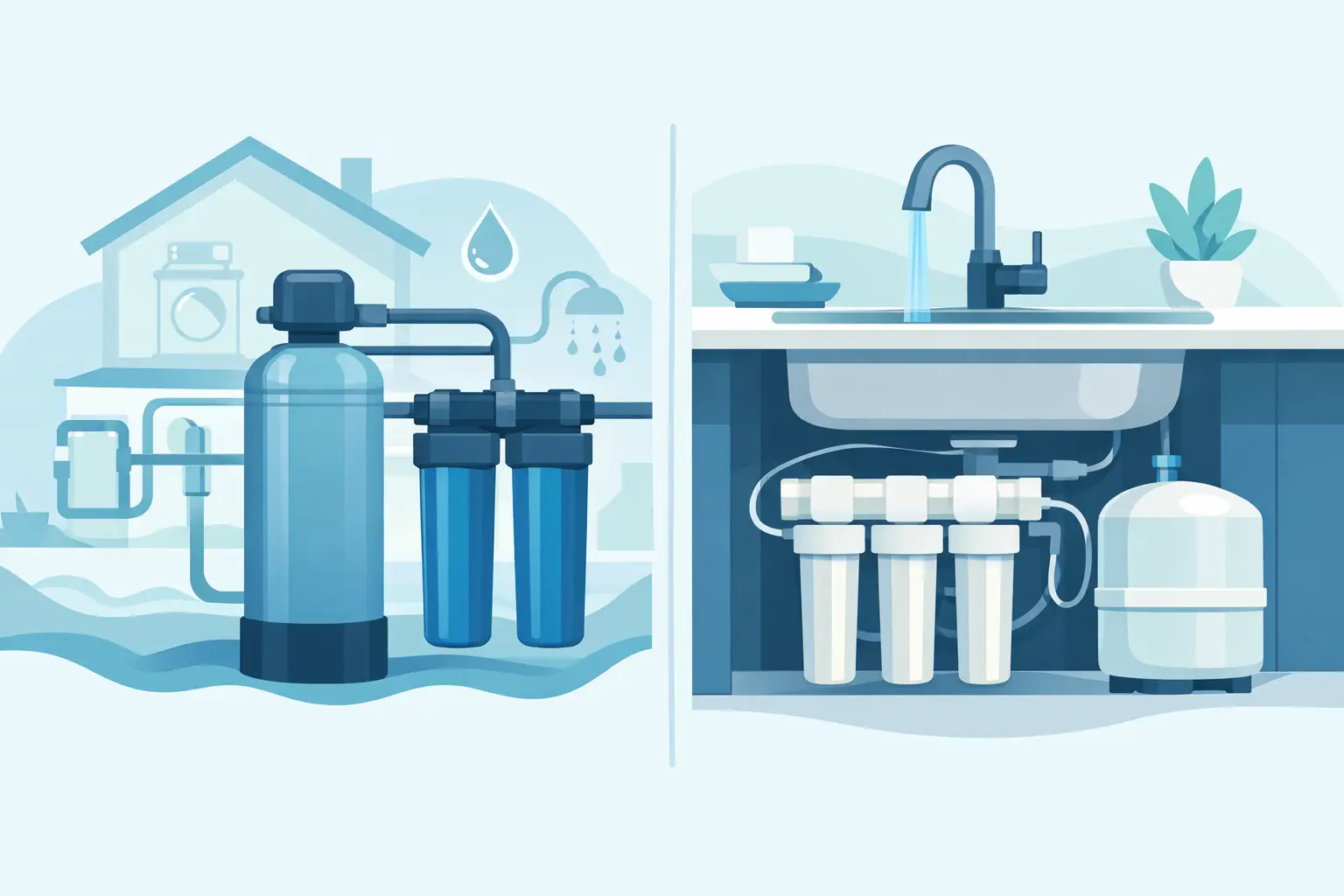
A whole home filter vs under sink decision comes down to one practical question: are you trying to improve the water throughout your property, or are you focused on the water your family drinks and cooks with? The right answer is rarely about choosing the smallest or least expensive unit. It depends on the contaminants present, your water source, your plumbing, and the problems you want to solve.
For many Ontario homeowners, water treatment starts with a visible issue: white scale on fixtures, orange staining, a sulphur odour, cloudy water, or drinking water that does not taste right. Each issue points to a different treatment need. A properly selected system should address the cause, not simply mask the symptom.
Whole Home Filter vs Under Sink: The Main Difference
A whole-home filter is installed at the main water line, usually where water enters the house. It treats water before it reaches showers, faucets, toilets, laundry equipment, dishwashers, and water-using appliances. Depending on the media and system design, it can reduce sediment, chlorine, iron, sulphur, certain odours, and other contaminants.
An under-sink system is installed at one point of use, typically beneath the kitchen sink. It treats the water supplied to a dedicated drinking water faucet or, in some installations, the main kitchen faucet. Under-sink systems are often used for carbon filtration, lead reduction, or reverse osmosis drinking water purification.
Neither option is automatically better. They solve different problems. Whole-home equipment protects the property and improves water across daily uses. Under-sink treatment concentrates on high-quality water for drinking, cooking, making coffee, preparing infant formula, and filling pet bowls.
When a Whole-Home System Is the Better Investment
A whole-home filter is the more appropriate choice when the water issue affects more than the kitchen. If showers have a chlorine smell, fixtures develop scale, laundry looks dull, or sediment clogs aerators and appliances, a point-of-use filter will not solve the larger problem.
Municipal water customers may choose whole-home carbon filtration to reduce chlorine taste and odour throughout the house. The benefit is noticeable at every tap, including in the shower, where chlorine odour can be especially apparent. A sediment pre-filter may also be useful where fine particles are present or where older plumbing introduces debris into the water supply.
For private wells, whole-home treatment is often essential. Well water can contain iron, manganese, hardness minerals, hydrogen sulphide, bacteria, or sediment. These conditions can stain sinks and toilets, create unpleasant odours, damage plumbing components, and shorten the service life of water heaters, dishwashers, and washing machines. Treatment may involve a combination of filtration, oxidation, softening, ultraviolet disinfection, or specialized media selected through water analysis.
Hard water deserves special attention. A standard whole-home filter does not necessarily soften water. If calcium and magnesium are causing scale buildup, a water softener is generally the correct solution. Filtration and softening can work together, but they perform different jobs. Installing a filter when the real issue is hardness may improve some aspects of water quality while leaving scale and appliance wear largely unchanged.
Whole-home systems also need to be sized correctly. A small cartridge filter may be adequate for sediment control in a modest household, while a larger media tank system may be required for chlorine reduction or high-flow applications. Undersized equipment can restrict flow, reduce treatment performance, and create unnecessary maintenance. Professional installation helps ensure the system matches household demand and local plumbing requirements.
When an Under-Sink System Makes More Sense
An under-sink system is a focused solution for homeowners who are primarily concerned about drinking water quality. It is often the right fit when the rest of the home water supply is acceptable, but you want better taste, reduced lead exposure, or an additional level of purification at the kitchen tap.
Carbon under-sink filters can improve taste and reduce chlorine, odours, and selected contaminants, depending on the certified filter media. They are a practical choice for municipal water users who want fresher-tasting drinking water without installing equipment on the main water line.
Reverse osmosis systems provide a more intensive level of point-of-use treatment. They typically use several filtration stages and a membrane to reduce a broad range of dissolved substances. Reverse osmosis is commonly considered where customers are concerned about lead, total dissolved solids, certain metals, or specific water quality concerns identified through testing. It produces purified water at a dedicated faucet and is particularly useful for drinking and cooking.
The limitation is coverage. An under-sink reverse osmosis system will not stop scale in the shower, remove iron staining from toilets, or protect a water heater from hard-water deposits. It treats a small volume of water at one location. That is exactly what makes it efficient for drinking water, but it is not a whole-property treatment strategy.
Comparing Cost, Maintenance, and Performance
The initial cost of a whole-home system is generally higher because it requires larger equipment, main-line installation, and system sizing based on household flow rate and water conditions. Some systems also require drain connections, electrical service, backwashing capability, or periodic media replacement. In return, they can protect plumbing fixtures and appliances throughout the home.
Under-sink filters usually cost less to install and are simpler to maintain. Most require replacement cartridges on a schedule based on water usage and filter capacity. Reverse osmosis systems also require periodic filter changes and eventual membrane replacement. Their production rate is lower than a whole-home system because they are designed for drinking water, not for filling a bathtub or running multiple showers.
Maintenance should never be treated as an afterthought. A neglected cartridge can reduce flow and performance. A poorly maintained whole-home system may fail to address the original issue. The best system is one that is correctly installed, easy for the household to service, and supported with clear maintenance guidance.
Many Homes Benefit From Both Systems
For households with several water concerns, the strongest solution is often a whole-home system paired with under-sink reverse osmosis. The whole-home equipment handles broad issues such as sediment, chlorine, hardness, iron, sulphur, or odours. The under-sink system then provides an added level of purified water where it matters most for consumption.
This combination is especially useful for well-water homes. For example, a property with iron, hardness, and bacterial risk may require iron removal, a softener, and ultraviolet disinfection at the main line. An under-sink reverse osmosis system can then improve the final drinking water quality at the kitchen sink. Each component has a clear role, rather than asking one small filter to do everything.
The same approach can suit municipal water customers. A whole-home carbon filter can improve water throughout the house, while reverse osmosis provides highly treated water for drinking. Whether that additional drinking-water stage is necessary depends on the water report, the condition of the home’s plumbing, and the household’s preferences.
Start With the Water, Not the Equipment
Choosing between systems without understanding the water quality can lead to wasted money and disappointing results. Municipal water quality reports provide useful background, but they do not always reflect the water after it travels through neighbourhood infrastructure and a home’s own plumbing. Older pipes, lead service lines, well conditions, and seasonal changes can all affect what comes from the tap.
A water test and a review of the property’s symptoms provide a more dependable starting point. Discoloured water, black staining, rotten-egg odour, low pressure, scale, and metallic taste should all be assessed individually. For homes on well or lake water, testing is particularly important because water conditions can change over time.
Canadian Smart Home Solutions helps homeowners identify whether they need point-of-use drinking water treatment, full-property filtration, softening, disinfection, or a combination designed around their actual water conditions. The goal is not to add unnecessary equipment. It is to deliver cleaner, safer water while protecting the systems that make a home run.
Before choosing a filter, consider where the problem shows up and what you want the water to do better. A well-matched treatment plan gives you more than better-tasting water at one faucet – it gives you confidence every time you turn on the tap.