
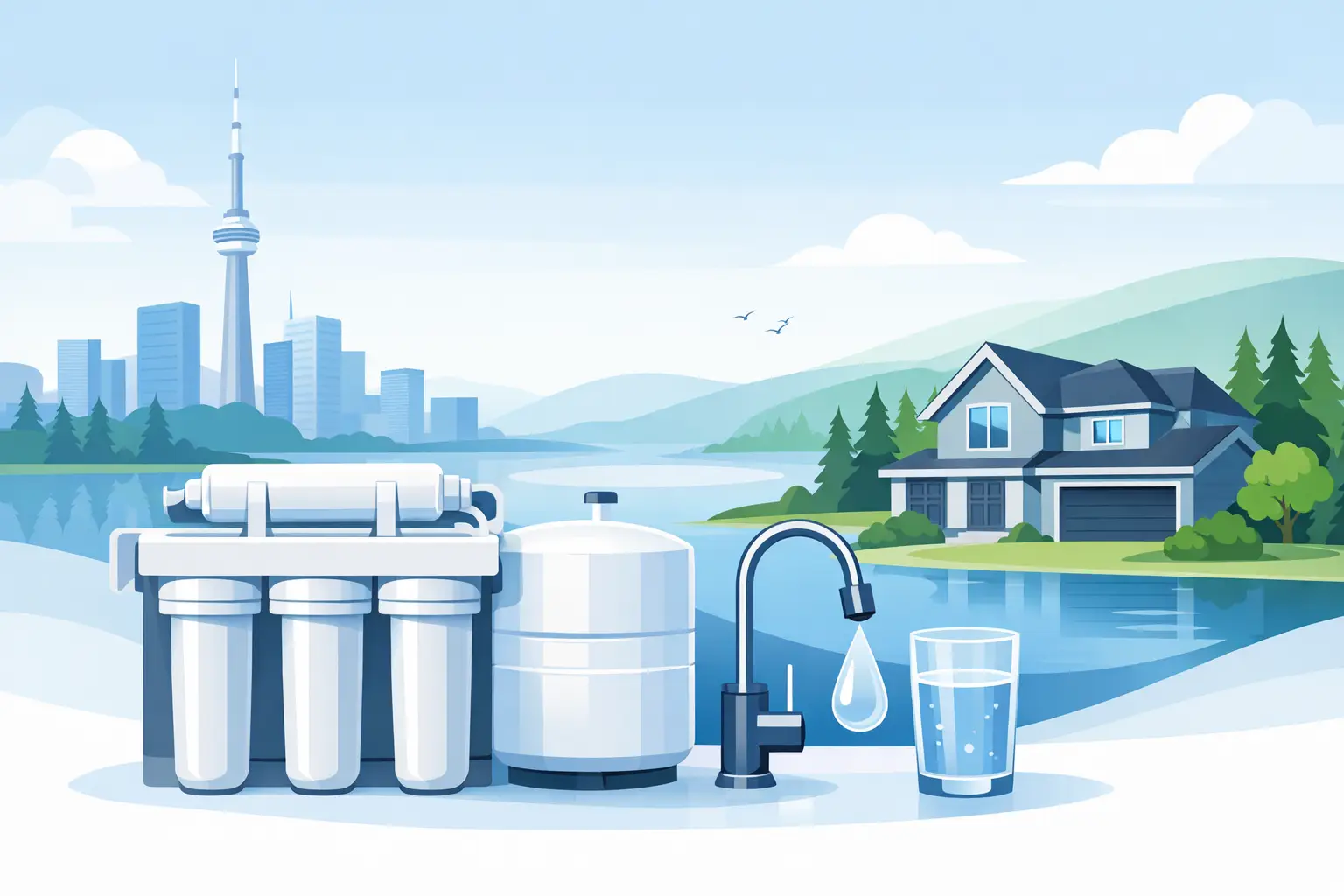
A reverse osmosis system review should start with your water, not a box on a shelf. A family on chlorinated municipal water in Mississauga may want cleaner-tasting drinking water and added protection from lead. A rural homeowner with well water may first need to address iron, sulphur odours, hardness, or bacteria before an under-sink reverse osmosis unit can perform as intended.
Reverse osmosis, often called RO, is one of the most effective point-of-use treatments for improving drinking water quality. It can reduce many dissolved contaminants that ordinary carbon filters do not fully address. But performance depends on the system design, the incoming water conditions, proper installation, and consistent maintenance. The best system is not necessarily the one with the most filter stages. It is the one that solves a verified water problem reliably.
What a Reverse Osmosis System Should Do
An RO system pushes water through a semipermeable membrane that separates many dissolved solids from the drinking water supply. Most residential systems also include sediment and carbon prefilters, plus a final carbon filter to improve taste before water reaches the dedicated faucet.
When properly specified, reverse osmosis can help reduce total dissolved solids, sodium, lead, fluoride, certain heavy metals, and many other dissolved substances. Carbon stages also help reduce chlorine, chloramine in appropriately designed systems, and unpleasant tastes or odours. The exact reduction depends on the contaminant, membrane quality, water pressure, filter condition, and the system’s certification or tested performance data.
That distinction matters. No responsible review should suggest that every RO unit removes every possible contaminant. If bacteria are a concern, particularly with private wells, ultraviolet disinfection or another verified microbial treatment step may be required. If water contains heavy iron or sediment, pretreatment is usually necessary to prevent rapid membrane fouling.
Reverse Osmosis System Review: The Factors That Matter
Start with a water test
The first question is simple: what is actually in the water? Municipal water reports offer useful background, but they do not replace testing at your tap when you are concerned about lead, taste, hardness, or plumbing-related issues. Well water should be tested regularly because quality can change with seasons, groundwater conditions, and nearby land use.
A useful review considers hardness, iron, manganese, pH, total dissolved solids, chlorine or chloramine, and any specific concern such as lead, nitrate, or sulphur. This prevents an expensive mistake: installing an RO system to solve a whole-home problem it was never designed to address. An under-sink unit treats drinking and cooking water, not the water feeding showers, laundry, dishwashers, or water heaters.
Look beyond the number of stages
Five-stage, six-stage, and seven-stage labels can be helpful, but stage count alone is not a measure of quality. One system may add a remineralization cartridge, while another may count a basic inline polishing filter as an additional stage. What matters is the function of each component and whether it serves your water conditions.
A strong residential system generally includes sediment protection, carbon prefiltration, a quality RO membrane, post-filtration for taste, and a properly sized storage tank or tankless delivery design. If your water is hard, a water softener ahead of the RO system can protect the membrane and extend its service life. For homes with chlorine or chloramine, the carbon media and contact time should be appropriate for the disinfectant used by the local utility.
Check recovery rate and wastewater expectations
Reverse osmosis creates purified water and a separate stream that carries concentrated dissolved material away from the membrane. This is normal. A system that claims zero wastewater should be examined carefully, because membrane separation requires a way to flush rejected contaminants.
Modern systems can be significantly more efficient than older designs, especially when they use permeate pumps, recirculation, or efficient tankless technology. Still, recovery rates vary with incoming pressure, water temperature, membrane condition, and system design. A review should give clear expectations about water use rather than treating wastewater as a hidden detail.
For many Ontario households, the trade-off is reasonable when the system is used for drinking, cooking, coffee, tea, infant formula preparation, and pet water. It may be less suitable if the goal is to supply large volumes of purified water continuously without considering a higher-capacity design.
Consider flow rate, storage, and household habits
A conventional RO system stores treated water in a pressure tank. It is a proven design that provides a reserve for normal household use, but it needs space below the sink and delivers water at a slower rate as the tank empties. Tankless systems save cabinet space and can provide higher production rates, although they require electricity and may cost more upfront.
The right option depends on your household. A couple using purified water mainly for drinking has different needs than a busy family filling water bottles, preparing meals, and using a refrigerator water line. Ask how much water the system can produce daily, how quickly it refills, and whether it can support the fixtures you intend to connect.
Installation Is Part of System Performance
An RO system can be well built and still perform poorly when installed incorrectly. The installation should account for available sink space, drain connection, feed-water valve, water pressure, faucet placement, and access for future filter changes. Refrigerator connections need proper tubing, shutoff provisions, and sufficient pressure for dependable ice and water dispensing.
Ontario homes also vary widely in plumbing age and layout. In older properties, lead service lines or legacy plumbing may create concerns that need a broader assessment. In homes with low pressure, a booster pump may be needed for the membrane to work effectively. In condominium units, access restrictions and building rules can affect drain connections and installation options.
Professional installation also helps prevent small issues that create major frustration later, such as slow flow, leaks, noisy drain lines, inaccessible filters, or improperly secured fittings. Canadian Smart Home Solutions approaches RO installation as part of a complete water treatment plan, particularly where softening, iron removal, UV treatment, or whole-home filtration must work together.
Maintenance Costs Should Be Clear Up Front
Every RO system has ongoing costs. Sediment and carbon filters commonly need replacement every six to 12 months, depending on water quality and consumption. RO membranes often last longer, commonly two to five years, but hard water, sediment, chlorine breakthrough, or neglected prefilters can shorten that lifespan.
A worthwhile review looks at annual ownership cost, not only purchase price. Ask whether replacement filters are readily available, whether they are proprietary, how difficult service access will be, and what warranty applies to the system and its components. Low-priced units can become costly if replacement cartridges are difficult to source or if the membrane fails prematurely due to inadequate pretreatment.
Regular service also gives an opportunity to inspect fittings, sanitize the system when appropriate, verify pressure, and check whether taste or flow has changed. A sudden drop in flow, unusual taste, or leaking connection should be addressed promptly rather than ignored until the system stops producing water.
When Reverse Osmosis Is Not the First Step
RO is excellent for drinking water treatment, but it is not a substitute for treating severe water problems at their source. If you see orange staining, black deposits, rotten-egg odours, scale buildup, or cloudy water throughout the house, start with a proper water analysis and a whole-home solution.
Hardness can damage appliances and leave scale on fixtures. Iron and manganese can stain laundry and foul filters. Sulphur can create odours that an under-sink system will not eliminate from showers. Bacteria require disinfection strategies appropriate to the water source. Addressing these concerns before or alongside RO protects equipment and provides better water at every tap.
For commercial kitchens, schools, healthcare facilities, and other high-use properties, a residential under-sink unit is rarely enough. These applications may need engineered systems with higher flow rates, storage, pretreatment, monitoring, and scheduled service support.
A dependable RO system should leave you with water you are comfortable serving, cooking with, and giving to your family – without turning filter changes or plumbing worries into another household task. Test first, match the equipment to the problem, and choose installation and service support that will still be there when your water needs change.