
A glass of water can look perfectly clear while carrying issues that affect its taste, your plumbing, and the equipment that serves your home. When comparing municipal water vs well water, the real question is not which source is automatically better. It is what is in your water, how it reaches your taps, and which treatment solution will protect your family and property.
For Ontario homeowners, both sources can create familiar concerns: hard water scale, chlorine taste, iron staining, sulphur odours, lead risks from older plumbing, bacteria, or sediment. The difference is where responsibility begins and what type of treatment is most likely to deliver reliable results.
Municipal Water vs Well Water: The Main Difference
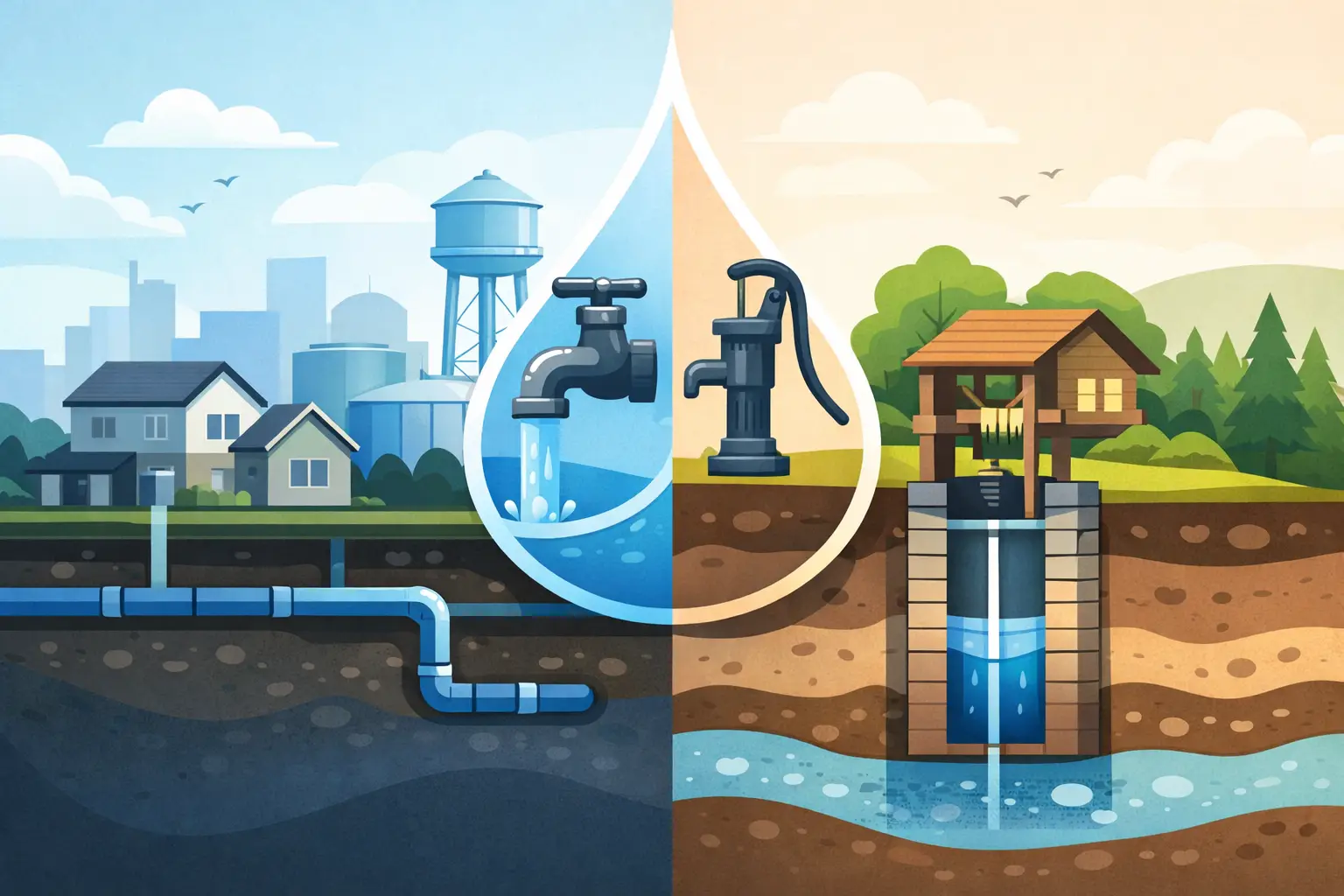
Municipal water comes from a public water system. It is treated before distribution and monitored by the utility to meet applicable drinking water requirements. Disinfection is commonly used to control microorganisms, which is why some homes notice a chlorine taste or odour. Municipal treatment provides an essential level of protection, but it does not guarantee that water will arrive at every fixture with the taste, softness, or contaminant profile a household wants.
Water can pick up changes as it travels through distribution lines and a building’s own plumbing. Older service lines, fixtures, and pipes may contribute metals such as lead. Naturally occurring minerals can still cause hardness, scale, dry skin, spotty dishes, and shortened appliance life. Chlorine may be safe at managed levels, yet many families prefer to remove its taste and smell from drinking and bathing water.
Well water comes from a private groundwater source on or near the property. The homeowner is responsible for testing, treatment, equipment maintenance, and protecting the well from contamination. Groundwater can be excellent, but its quality varies substantially by location, season, well depth, nearby land use, and the condition of the well itself.
A well that tested well several years ago should not be assumed to have the same water quality today. Heavy rain, spring runoff, construction, flooding, or a change in groundwater conditions can alter results. That is why regular testing is a practical part of owning a private well.
What Problems Are Most Common?
Municipal and well water can share some problems, especially hardness and sediment, but the treatment priorities are often different.
With municipal water, homeowners commonly call about chlorine odour, poor taste, hard water, limescale, dry-feeling skin, and concerns about lead in older homes. A whole-home carbon filtration system can reduce chlorine and improve water quality at every tap. Where hardness is present, a properly sized water softener helps control scale in water heaters, dishwashers, washing machines, faucets, and shower doors. A reverse osmosis drinking water system can provide an added level of filtration at the kitchen tap for families seeking cleaner-tasting drinking water.
With well water, iron, manganese, sulphur, hardness, bacteria, turbidity, and sediment are frequent concerns. Iron can leave orange or brown marks in toilets, tubs, laundry, and on fixtures. Manganese may produce black staining. Sulphur can create a noticeable rotten-egg odour, while sediment can clog cartridges, fixtures, and valves. Bacteria cannot be identified by sight, smell, or taste, which is one reason testing matters.
The right system depends on the test results. For example, an iron and sulphur removal system may address staining and odours, while ultraviolet sterilization may be recommended for microbial protection after proper prefiltration. A softener alone is not a complete well water solution if iron, bacteria, or sulphur is also present.
A Practical Comparison for Homeowners
| Consideration | Municipal Water | Well Water | |—|—|—| | Primary responsibility | Utility treats the source; homeowner manages in-home quality | Homeowner manages testing, treatment, and well condition | | Common concerns | Chlorine, hardness, scale, lead from plumbing, taste | Iron, sulphur, hardness, bacteria, manganese, sediment | | Testing needs | Useful when taste, hardness, lead, or plumbing concerns arise | Essential on a regular schedule and after changes or flooding | | Typical treatment | Carbon filtration, softening, reverse osmosis, lead reduction | Sediment filtration, iron and sulphur removal, softening, UV, custom treatment | | Maintenance focus | Filter changes, softener salt, system servicing | The same system servicing plus well protection and ongoing water testing |
This comparison is a starting point, not a system design. Two homes on the same street can need different treatment, especially where one is connected to municipal water and another uses a private well.
Why Water Testing Should Come Before Equipment
Selecting equipment based only on a stain, odour, or a neighbour’s recommendation can lead to disappointing results. A rotten-egg smell may be related to sulphur bacteria, hydrogen sulphide, plumbing conditions, or a water heater. Orange staining can point to iron, but the amount and form of iron determine which treatment approach is appropriate. Hardness levels also affect the sizing and configuration of a softener.
A proper water analysis identifies the conditions that matter for system selection. For well water, testing should consider microbiological safety as well as minerals and aesthetic issues. For municipal water, testing may focus on hardness, chlorine, lead concerns, pH, total dissolved solids, and other site-specific questions.
Testing also helps avoid over-treatment. Not every home needs every technology. The goal is a dependable system that addresses the actual issue, provides the required flow rate, and is practical to maintain.
Treatment Options That Match the Source
For municipal homes, whole-home filtration is often the foundation. A carbon-based system can improve chlorine taste and odour throughout the house, making showers, laundry, and drinking water more pleasant. Pairing it with a water softener can reduce mineral scale and help protect water-using appliances. In homes with lead concerns, a dedicated lead reduction solution or point-of-use reverse osmosis system may be appropriate, depending on the plumbing and test results.
For well water, treatment is commonly built in stages. Sediment filtration protects downstream equipment from sand, silt, and turbidity. Iron and sulphur treatment addresses staining and odours. A water softener manages hardness, and an ultraviolet system provides a chemical-free disinfection barrier when the water is clear enough for UV to work effectively. Reverse osmosis can then be added at a drinking water tap when homeowners want additional filtration for cooking and drinking.
Commercial and institutional properties require the same disciplined approach, with greater attention to peak flow, water demand, service requirements, and code compliance. A small undersized filter can become a costly bottleneck in a hotel, school, healthcare setting, or multi-unit building. Engineered systems should be selected for the actual water conditions and volume required, not simply for the lowest initial price.
Cost, Maintenance, and Long-Term Value
Municipal water usually has predictable monthly utility costs, while a private well avoids a municipal water bill but places equipment and maintenance responsibility on the owner. Neither source is maintenance-free.
Treatment systems also require care. Filters need replacement, softeners need salt and periodic service, UV lamps need scheduled replacement, and well systems need continued monitoring. These costs are easier to manage when the system is properly matched to the water and installed where service access is straightforward.
The return is more than better-tasting water. Managing hardness can reduce scale buildup in hot water equipment and fixtures. Removing iron and sulphur can protect finishes, reduce cleaning time, and prevent recurring odours. Addressing water quality early can help avoid appliance damage and expensive plumbing repairs.
When to Call a Water Treatment Professional
A professional assessment is worthwhile when you see persistent staining, scale, cloudy water, unusual odours, changing taste, low flow caused by clogged fixtures, or concerns about lead or bacteria. It is especially valuable after buying a rural property, after a flood, when a well has been unused, or before investing in a major appliance such as a tankless water heater.
Canadian Smart Home Solutions helps Ontario homeowners and property managers move from a water complaint to a clear treatment plan through water analysis, system selection, and professional installation. The right recommendation should explain what the system treats, what maintenance it requires, and what result you can reasonably expect.
Your water source does not have to dictate the quality of water your family uses every day. Start with an accurate test, address the conditions that are actually present, and choose equipment designed to keep working long after the first glass tastes better.