
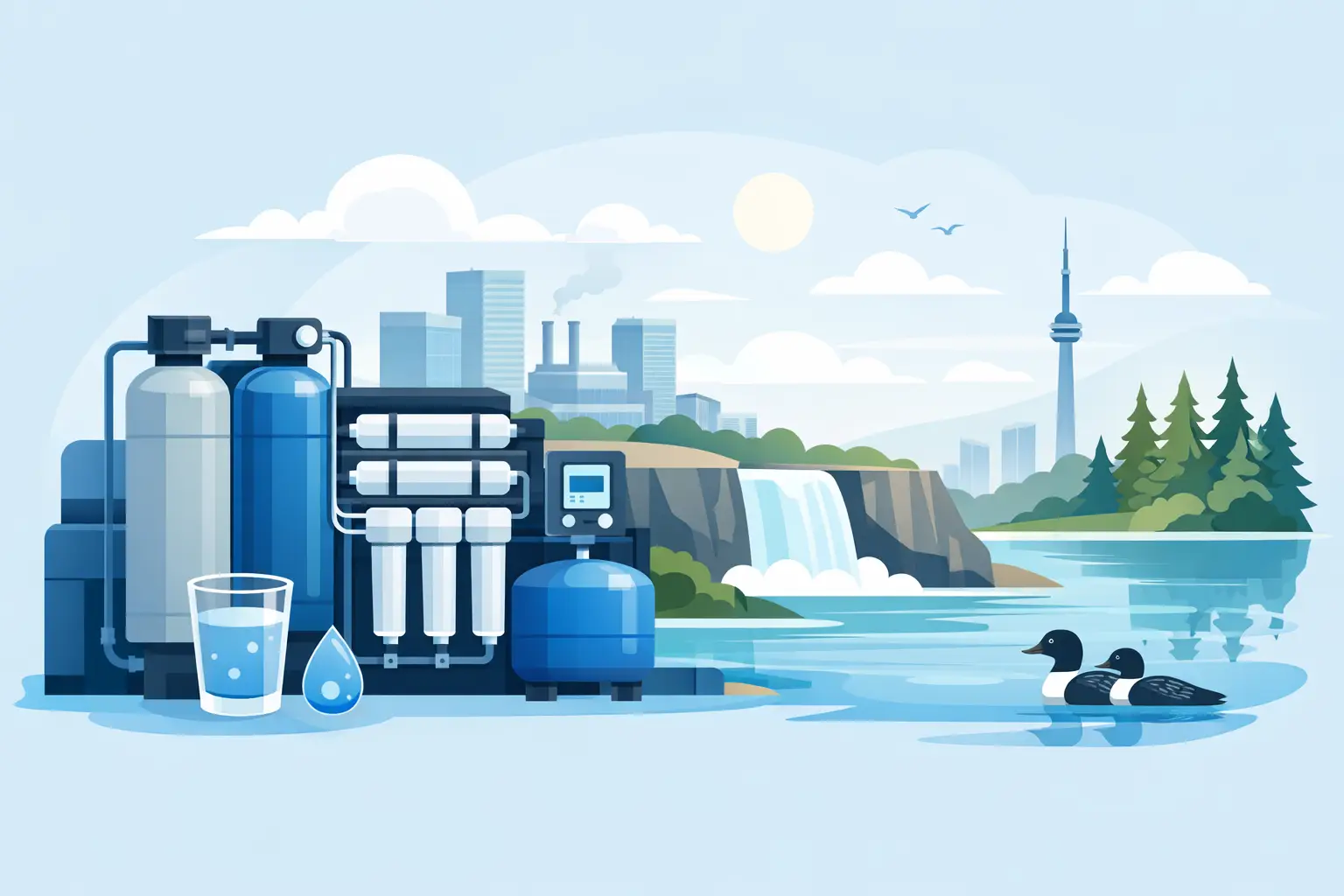
A hotel that runs out of hot water because scale has coated the heat exchanger has a water problem, not simply a plumbing problem. A school with metallic-tasting fountains, a care home managing bacteria risks, or a restaurant replacing clogged equipment faces the same decision: treatment must match the water, the building, and the demand. This commercial water purification guide explains how Ontario facilities can make that decision with confidence.
Commercial systems are not oversized residential filters. They are engineered around flow rate, peak demand, source water conditions, building use, service access, and the level of water quality required at each point of use. The right design can protect equipment, improve drinking water, reduce cleaning time, and support a safer, more reliable operation.
Start a Commercial Water Purification Guide With Testing
Water treatment should begin with analysis, not a product catalogue. Municipal water may be safe for its intended use yet still contain hardness minerals, chlorine, chloramines, iron, sediment, or other characteristics that affect taste, fixtures, appliances, and specialized equipment. Private well and lake water can introduce additional concerns, including bacteria, manganese, sulphur odours, tannins, and changing seasonal conditions.
A proper assessment reviews the water source and tests for the issues that matter to the facility. It also considers pH, hardness, iron, manganese, total dissolved solids, turbidity, chlorine or chloramine levels, and microbiological quality where applicable. If lead is a concern, testing should account for the building plumbing as well as the incoming supply. Older buildings can have acceptable source water but elevated lead at taps after water has travelled through internal piping.
The building’s water use is just as important. A small office and a 120-room hotel may have similar hardness levels, but their treatment systems will look very different. Peak flow, daily consumption, simultaneous demand, incoming pressure, drain availability, electrical requirements, and available mechanical-room space all affect system selection.
Testing also avoids expensive mismatches. Reverse osmosis is highly effective for reducing many dissolved contaminants, but it is not usually the first solution for a facility struggling with high hardness throughout the building. An appropriately sized water softener may be the better first step, with reverse osmosis reserved for drinking water, food preparation, laboratory, or equipment applications.
Match the Treatment to the Problem
Commercial purification is often a treatment train rather than one piece of equipment. Each stage addresses a specific issue, and the sequence matters. Pretreatment can protect downstream equipment, while point-of-use systems can provide higher-quality water where it is needed most.
Hardness and Scale Buildup
Hard water is one of the most common commercial concerns in Ontario. Calcium and magnesium form scale inside boilers, water heaters, dishwashers, steam equipment, coffee machines, humidifiers, and plumbing fixtures. Over time, scale reduces heat transfer, increases energy use, shortens equipment life, and creates more maintenance calls.
A commercial water softener removes hardness minerals through ion exchange. Proper sizing is essential. A system that is too small may regenerate too often, waste salt and water, or allow hard water through during high-demand periods. High-use sites may benefit from duplex or alternating systems that maintain treated water while one tank regenerates.
Sediment, Iron, Manganese, and Sulphur
Sediment can block valves, foul filters, reduce UV performance, and wear down equipment. Iron and manganese can stain sinks, laundry, and fixtures, while sulphur commonly produces a rotten-egg odour. These concerns are particularly common with private wells, but water conditions vary widely by location and season.
The treatment approach depends on the test results and the chemical form of the contaminant. Sediment filtration may be sufficient for suspended particles. Iron, manganese, and sulphur often require oxidation, specialized media, air injection, or filtration designed for the measured levels. Treating only the visible stain without addressing the source can leave odours, fouling, and equipment damage unresolved.
Chlorine, Taste, and Drinking Water Quality
Activated carbon filtration is widely used to reduce chlorine taste and odour in municipal water. It can improve the water served in restaurants, staff kitchens, hospitality settings, and common areas. However, carbon is not a universal solution. Its performance depends on contact time, flow rate, media condition, and the contaminants being targeted.
For premium drinking water or specific applications, reverse osmosis can reduce many dissolved solids and improve taste. Commercial reverse osmosis systems are commonly used for drinking water stations, food service, coffee and beverage equipment, laboratories, and certain process applications. They require pretreatment, regular monitoring, and a plan for concentrate water, so they should be designed around actual demand rather than installed as a catch-all fix.
Microbiological Protection
Where bacteria or other microorganisms are a concern, ultraviolet sterilization can provide an effective barrier when the water is properly pretreated. UV light does not remove sediment, hardness, chemicals, or dissolved minerals. Cloudy water, iron, and scale can interfere with performance, which is why filtration and maintenance are critical.
Private water sources should be monitored over time. A single acceptable test does not guarantee that a well or lake supply will remain unchanged after heavy rain, construction, flooding, or seasonal shifts. Facilities serving vulnerable populations should establish a clear testing and maintenance schedule with their water treatment provider.
Size the System for Real Building Demand
The most capable treatment media will underperform if water bypasses it at peak demand. Commercial sizing is based on more than the building’s total number of occupants. A restaurant has intense short periods of water use. A hotel may have morning and evening peaks. A long-term care facility requires dependable supply around the clock. Schools can experience concentrated demand during breaks and meal periods.
A system design should identify the required service flow and peak flow, then confirm that it can maintain adequate pressure through filters, softeners, UV chambers, and storage tanks. Pressure loss is a frequent oversight, especially when multiple treatment stages are added to an existing plumbing system.
Redundancy should be considered where downtime is unacceptable. Duplex softeners, parallel filtration, duty-standby pumps, bypass plumbing, alarms, and remote monitoring can help maintain service while equipment is regenerating or being serviced. The right level of redundancy depends on the building’s risk, budget, and ability to tolerate an interruption.
Plan Installation Around Safety and Service
Commercial water treatment equipment needs more than a place to sit. Installation should provide safe access for filter changes, salt delivery, media service, UV lamp replacement, and system inspection. It also requires correctly sized drains, suitable electrical supply, backflow protection where required, and plumbing that complies with applicable local codes.
A well-designed bypass is particularly valuable. It allows service work without shutting down the entire facility, though bypassed water may not receive treatment. For critical applications, temporary service plans and redundant equipment are often preferable to relying on a bypass alone.
Controls and monitoring should be practical for the staff responsible for the building. Flow meters, water meters, pressure gauges, alarm conditions, and regeneration settings need to be understandable and documented. A sophisticated system that no one monitors is not a reliable system.
Protect Performance With Ongoing Maintenance
Commercial treatment is an operating system, not a one-time purchase. Filters load with sediment, carbon media becomes exhausted, softeners require salt and periodic inspection, reverse osmosis membranes need monitoring, and UV lamps have a defined service life. Ignoring maintenance can gradually reduce water quality or create a sudden equipment failure at the worst possible time.
A maintenance plan should specify who checks the system, what is recorded, and when consumables are replaced. Useful records include incoming and treated water readings, pressure changes across filters, regeneration activity, salt use, UV lamp replacement dates, and laboratory results where relevant. These details make it easier to spot a developing issue before it affects tenants, guests, patients, students, or equipment.
Canadian Smart Home Solutions designs and installs commercial water treatment systems based on source-water analysis, facility demand, and the practical service needs of Ontario properties. The goal is not to add unnecessary equipment. It is to deliver dependable water treatment that protects the people and systems that rely on it.
When water affects your equipment, your operating costs, or the confidence people have in your facility, start with a professional assessment. Clear test results and a properly engineered treatment plan turn a recurring water problem into a manageable part of building operations.