
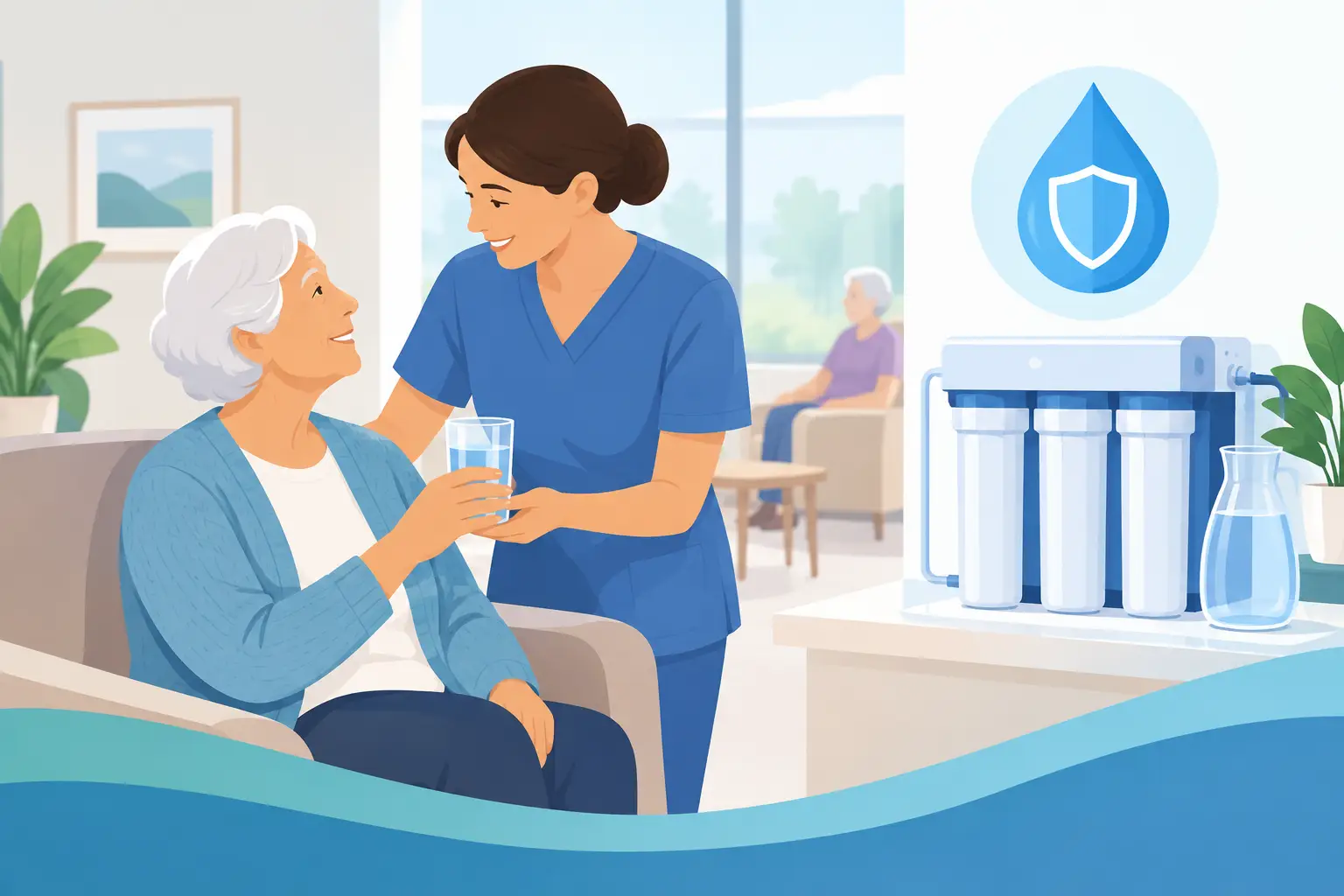
A nursing home can use thousands of litres of water every day. Residents depend on it for drinking, bathing, handwashing, meal preparation, laundry, cleaning and clinical care. When that water causes scale, smells unpleasant, stains fixtures or carries contaminants, the impact reaches far beyond one tap.
Water treatment for nursing homes must support resident safety while keeping a demanding building operating reliably. The right solution is not a single off-the-shelf filter. It begins with water testing, a clear understanding of the facility’s plumbing and flow requirements, and equipment designed to treat the specific issues found at the property.
Why water quality needs closer attention in nursing homes
Older adults may be more vulnerable to the effects of poor water quality, particularly where drinking water contains lead, bacteria or other contaminants at concerning levels. At the same time, nursing homes place heavy demands on their plumbing systems. High laundry loads, commercial kitchens, multiple bathing areas and continuous hot-water use can expose water problems quickly.
Hard water is one of the most common examples. Calcium and magnesium deposits build up inside water heaters, boilers, dishwashers, laundry equipment, shower valves and pipework. That scale reduces heating efficiency, shortens equipment life and creates more maintenance calls. In a facility where hot water availability is essential, a scale problem is an operating-cost problem.
Water can also contain iron, manganese, sulphur compounds or sediment. These issues may cause orange or black staining, unpleasant odours, cloudy water and clogged fixtures. Municipal water supplies can still require treatment for hardness, chlorine taste, lead concerns within building plumbing or localized sediment. Private wells and lake-fed systems require even closer assessment because water conditions can change with weather, groundwater levels and seasonal activity.
Start with a facility-specific water analysis
No responsible treatment recommendation should be based on assumptions. A water analysis identifies what is in the incoming water and helps determine whether the concern comes from the source water, the building’s plumbing or both.
Testing should assess the issues most relevant to the property. Depending on the water source and facility history, this may include hardness, iron, manganese, pH, turbidity, total dissolved solids, sulphur, chlorine or chloramine, lead and microbiological indicators. Well and surface-water systems may need more frequent monitoring than municipal supplies.
Testing should also consider where samples are collected. A sample taken at the point where water enters the building tells a different story from one taken at a kitchen tap, resident bathing area or a seldom-used fixture. If lead is a concern, testing within the building is particularly important because lead can originate in service lines, solder, fittings or older plumbing components.
Water quality is only half of the assessment. A treatment professional should review peak flow demand, daily consumption, pipe size, water pressure, available installation space, drainage, electrical requirements and maintenance access. A system that treats water effectively but cannot supply enough flow during bathing, laundry or meal service is not a practical solution.
Water treatment for nursing homes is usually a treatment train
Many facilities need more than one technology. A properly engineered treatment train places each component in the right order so it protects the next stage and delivers dependable water throughout the building.
Sediment filtration for cleaner, protected plumbing
Sediment filters remove suspended particles such as sand, silt, rust and debris. They are especially useful for older buildings, well-water systems and properties with intermittent turbidity. Removing sediment can protect control valves, ultraviolet equipment, softeners and other downstream components from plugging or premature wear.
The filter type and size should match the water condition and expected flow rate. A small cartridge filter may be appropriate at a point of use, but a high-demand facility often needs commercial-grade filtration with sufficient capacity and a practical service schedule.
Water softeners to reduce scale and operating costs
Commercial water softeners address hardness minerals before they can form scale. This protects water heaters, boilers, dishwashers, laundry machines, shower fixtures and plumbing. Softened water can also improve detergent performance, which may reduce the amount of soap and cleaning product required.
For nursing homes, sizing matters. A system needs adequate resin capacity, regeneration capability and flow rate to serve the building during busy periods. Duplex or alternating softeners are often worth considering where uninterrupted soft water is necessary. They allow one tank to regenerate while the other remains in service.
Softening is not the answer to every water problem. It does not remove all contaminants, and it should be selected as part of a broader plan when water testing confirms hardness is a concern.
Carbon filtration for chlorine, taste and odour
Activated carbon filtration can reduce chlorine, chloramine, unpleasant taste and certain odours in municipal water. This can make drinking water more appealing to residents and improve water used in food service.
Carbon systems need correct design and regular service. If media is neglected, performance declines. In facilities that require disinfection control, carbon filtration must also be positioned carefully because removing chlorine from all incoming water may not be appropriate. The right approach depends on the building’s water-management plan and the water’s intended use.
Iron, sulphur and manganese removal for private water supplies
Well water may require specialized treatment for iron, manganese and hydrogen sulphide. Iron causes reddish-brown stains, manganese can create dark staining, and sulphur may produce a rotten-egg odour. These issues affect resident confidence, housekeeping workload and the appearance of fixtures and linens.
Treatment may involve oxidation, specialized media filtration, aeration or chemical feed, depending on the test results and water chemistry. There is no universal iron filter that performs equally well in every condition. Proper testing is what separates a lasting solution from a system that needs constant attention.
UV disinfection for microbiological protection
Ultraviolet systems use UV light to inactivate microorganisms as water passes through the treatment chamber. They are commonly used for well water, lake water and other non-municipal sources where microbiological control is required.
UV is effective only when it is correctly sized, maintained and supplied with clear water. Sediment, staining minerals and cloudy water can reduce UV performance, which is why pretreatment is often essential. Lamps, sleeves and monitoring components also require scheduled service. A UV unit should support, not replace, a documented water safety and maintenance program.
Reverse osmosis for targeted drinking-water needs
Reverse osmosis systems provide high-quality drinking water at selected locations by reducing many dissolved substances. In a nursing home, this may be a practical option for kitchen drinking-water stations, staff areas or other designated points of use.
Point-of-use reverse osmosis is not always the best choice for every fixture in a large facility. It produces water more slowly than a whole-building treatment system and requires storage capacity, maintenance and water-quality monitoring. Its strongest role is usually targeted drinking-water treatment rather than serving every shower, laundry connection and utility sink.
Design around hot water and infection-control practices
Water treatment and water management are related, but they are not the same. Treatment equipment improves source-water quality and protects infrastructure. A broader water-management plan addresses how water is stored, heated, circulated and used throughout the building.
Stagnant sections of plumbing, low-use rooms, improperly maintained hot-water systems and poorly controlled temperatures can create risks that a basic filter cannot solve. Nursing homes should coordinate treatment decisions with their facility maintenance team, plumbing contractor and infection-control procedures. Water heaters, recirculation loops, mixing valves and seldom-used outlets need routine attention.
This is also why installation quality matters. Commercial treatment equipment must be installed with appropriate bypasses, isolation valves, drainage, backflow protection and service access. Staff should know what normal operation looks like, what alarms or pressure changes mean and who to call when service is needed.
Maintenance protects the investment
A treatment system is not a set-and-forget appliance. Filters need changing, softeners need salt and periodic inspection, UV lamps need replacement, and media systems may need testing or service over time. The maintenance schedule should be written around the actual equipment and water conditions, not guessed.
A practical service plan should include regular water testing, filter and media checks, inspection of valves and drains, verification of flow and pressure, and clear records of service work. Facilities should also keep spare consumables where appropriate so routine maintenance does not become an urgent problem.
For Ontario properties, Canadian Smart Home Solutions can assess water conditions, building demand and treatment goals to specify commercial equipment that fits the facility rather than forcing the facility to fit a standard package.
The best time to address water quality is before scale damages a water heater, staining creates resident complaints or an unreliable system disrupts daily care. With testing, professional design and consistent maintenance, a nursing home can provide cleaner water while protecting the equipment and people that depend on it.