
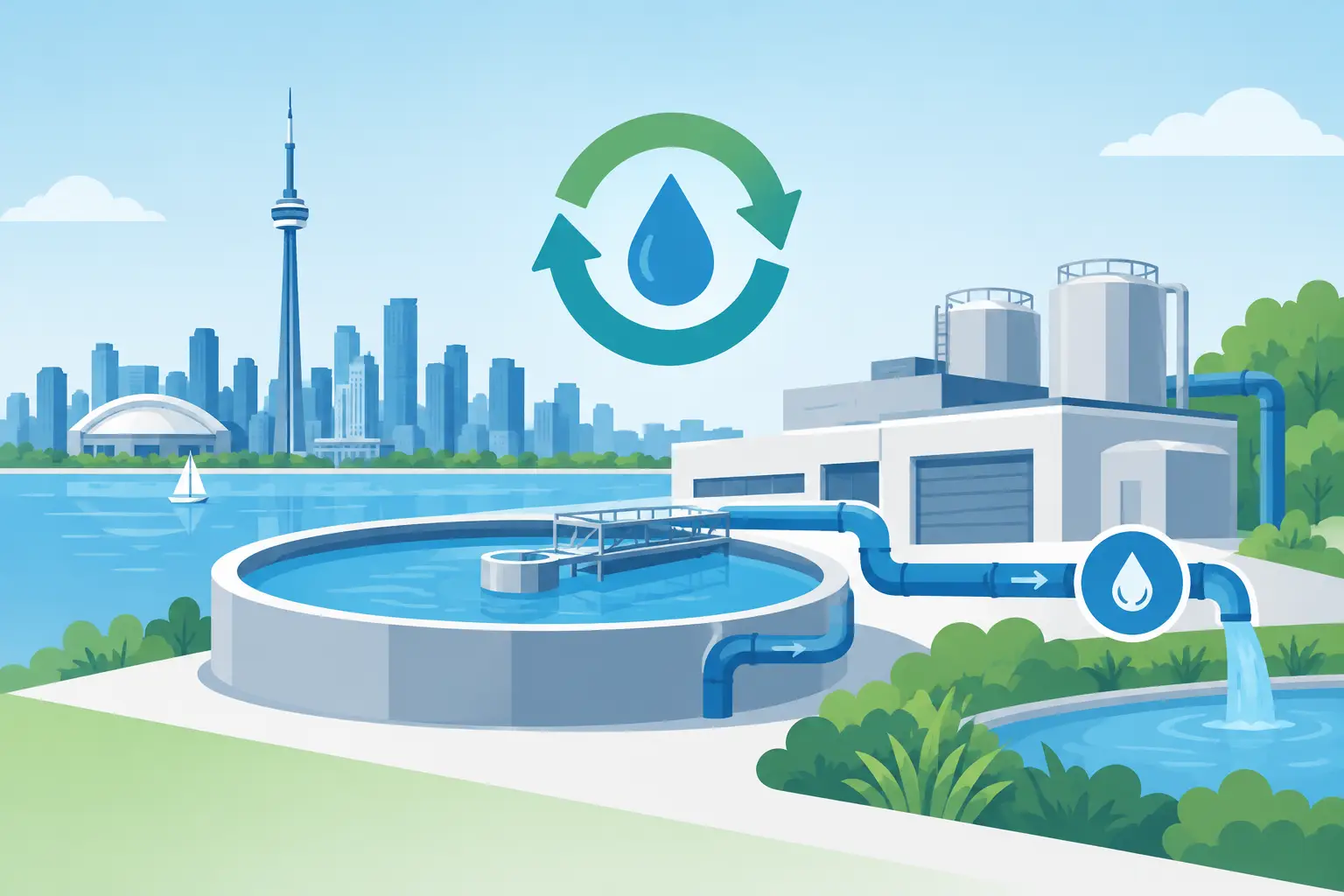
A hotel laundry room, a school washroom block, and a manufacturing plant may have very different water demands, but they share one expensive reality: high-quality potable water is often used for jobs that do not require drinking-water quality. Commercial water reuse trends are changing that calculation. Ontario facilities are looking more closely at capturing, treating, and reusing water for toilets, irrigation, cooling systems, cleaning, and process applications.
Reuse is not a replacement for safe drinking water. It is a way to reserve treated municipal or well water for the uses where it matters most. When designed correctly, a reuse system can reduce water consumption, ease pressure on drainage infrastructure, and give high-use properties greater control over operating costs. The right approach depends on the building, the incoming water source, local approvals, and the quality required at each point of use.
Why commercial water reuse trends matter now
Water use has become a more visible operating issue for facility managers. Utility costs, sewer charges, seasonal water restrictions, aging infrastructure, and corporate sustainability targets are all pushing commercial property owners to measure where water goes. The largest opportunities are usually not at a drinking fountain. They are in toilets and urinals, cooling towers, laundry operations, irrigation, washdown areas, and certain industrial processes.
For a facility with high occupancy or long operating hours, these uses add up quickly. Hotels, multi-unit buildings, schools, healthcare settings, food-service operations, warehouses, and manufacturing sites can all have meaningful reuse opportunities. A system must be sized for actual demand, however. A building that produces ample greywater but has little non-potable demand may not justify the capital cost. Conversely, a property with substantial cooling or flushing demand may see a much stronger case for reuse.
The most practical projects begin with a water balance. This tracks where water enters the property, where it is consumed, what can be collected, and which applications can safely use treated non-potable water. It also reveals losses caused by leaks, inefficient fixtures, scale buildup, or poorly controlled equipment. Often, conservation and treatment work together. Reducing unnecessary water use can make a reuse system smaller, more affordable, and easier to maintain.
The main sources commercial facilities are using
Not all recovered water is equal. Its source determines the treatment level, storage requirements, permitted uses, and operating risk.
Greywater from sinks, showers, and laundry
Greywater typically comes from showers, bathroom sinks, and some laundry sources. It can be a strong candidate for toilet flushing and irrigation after appropriate treatment and disinfection. It is not the same as sewage. Water from toilets and kitchen areas generally carries higher contamination and organic loading, which requires a different level of treatment.
Greywater quality can also vary more than owners expect. Laundry water may contain detergents, lint, and fluctuating chemical concentrations. Hotel guest use changes by season. A system must handle these variations rather than perform well only under ideal conditions.
Rainwater harvesting
Rainwater can be collected from roof surfaces and stored for irrigation, toilet flushing, washdown, or other approved non-potable uses. It is often attractive for facilities with large roof areas, including schools, warehouses, retail buildings, and institutional properties.
The trade-off is reliability. Rainfall is seasonal, storage capacity is limited by available space, and roof runoff can carry sediment, bird droppings, organic debris, and contaminants from roofing materials. Pre-filtration, first-flush diversion, protected storage, and disinfection are central to a dependable design. A municipal makeup-water connection may still be required during dry periods.
Process water and cooling system recovery
Industrial and commercial operations may recover water from rinsing, equipment cleaning, condensate, or cooling processes. Air-conditioning condensate, for example, can be a relatively consistent source in some larger buildings during cooling season. Cooling tower blowdown may also offer recovery potential, but dissolved minerals and treatment chemicals can limit where it can be reused.
This is where detailed water analysis matters. Water that looks clear may still contain hardness minerals, iron, chlorides, cleaning chemicals, or microorganisms that can damage equipment or create a health concern. The intended reuse application should determine the treatment target.
Treatment must match the end use
A common mistake is treating every reuse stream as though it needs drinking-water quality. That can add unnecessary cost and complexity. The opposite mistake is more serious: using inadequate treatment for the application. The goal is fit-for-purpose water that performs safely and consistently.
A toilet-flushing system may require screening, sediment filtration, biological treatment where needed, disinfection, protected storage, and controls that prevent untreated water from entering the supply line. Irrigation water may have different requirements, especially if it can contact the public, food crops, or sensitive landscaped areas. Water reused in a boiler, cooling tower, or industrial process may need hardness reduction, iron removal, membrane filtration, reverse osmosis, or chemical control to prevent scale and corrosion.
Typical commercial treatment trains may include:
- Screening or settling to remove debris, lint, and larger solids
- Media or cartridge filtration to reduce suspended particles
- Activated carbon where odours or certain organic compounds are a concern
- Water softening or specialty media for hardness, iron, sulphur, or manganese
- Ultrafiltration or reverse osmosis for higher-purity process requirements
- UV disinfection, chlorination, or another validated disinfection method
The equipment list alone does not make a system safe. Tanks, pumps, pipe materials, flow rates, automation, alarms, and maintenance access all affect performance. A UV system, for example, works best when water is already clear enough for ultraviolet light to penetrate. A softener can protect downstream equipment from scale, but it does not disinfect water. Each component has a specific job.
Safety, code compliance, and cross-connection control
Commercial reuse projects must be designed around public health and plumbing safety. Ontario requirements can vary based on the municipality, building type, source water, and proposed application. Owners should confirm requirements with the local authority having jurisdiction before equipment is selected or construction begins.
The separation between potable and non-potable plumbing is especially critical. Reuse piping should be clearly identified, and proper backflow prevention must protect the potable water supply. There should be no possibility of reclaimed water entering drinking fountains, kitchen fixtures, handwashing sinks, or other potable outlets.
System controls also matter. Level sensors, automatic municipal-water makeup, pressure monitoring, leak detection, and high-level alarms help prevent service interruptions and overflow events. For facilities with vulnerable occupants, such as hospitals, long-term care homes, and schools, conservative design and documented operating procedures are particularly important.
What separates a useful system from an expensive experiment
The strongest reuse projects are built around measurable demand, not a general desire to be greener. Start by reviewing at least 12 months of water and sewer bills, occupancy patterns, seasonal use, fixture counts, irrigation needs, and process requirements. Water testing should follow for both the incoming water and the proposed reuse source.
A property may discover that a softener, iron removal system, high-efficiency fixtures, or cooling-tower water management program delivers a faster return than a large reuse installation. That does not mean reuse is the wrong idea. It may mean the project should be phased. Improving feed-water quality first can protect the equipment that a future reuse system will rely on.
Maintenance should be planned before installation, not after. Filters need replacement, tanks need inspection, pumps need service, and disinfection systems need verification. Operators need clear instructions for alarms and shutdowns. Remote monitoring can be valuable for larger or multi-site properties, but it does not eliminate the need for qualified on-site checks.
Canadian Smart Home Solutions helps Ontario property owners evaluate water quality, high-flow demand, equipment protection, and practical treatment options before recommending a commercial system. That engineering-first approach is particularly valuable when reuse is being considered alongside filtration, softening, UV treatment, reverse osmosis, or specialized iron and sulphur removal.
A practical path forward for Ontario facilities
Commercial water reuse is most effective when it is treated as part of the whole water system. Begin with a site assessment, water analysis, and a clear definition of which uses require potable water and which do not. Then compare the projected water savings against installation costs, maintenance requirements, available space, approvals, and the consequences of downtime.
For some facilities, the answer will be a rainwater system for irrigation and flushing. For others, it will be condensate recovery, greywater treatment, or better conditioning of the existing water supply. The useful next step is not choosing a technology from a catalogue. It is identifying the water problem, the required water quality, and the system that will keep performing long after installation.