
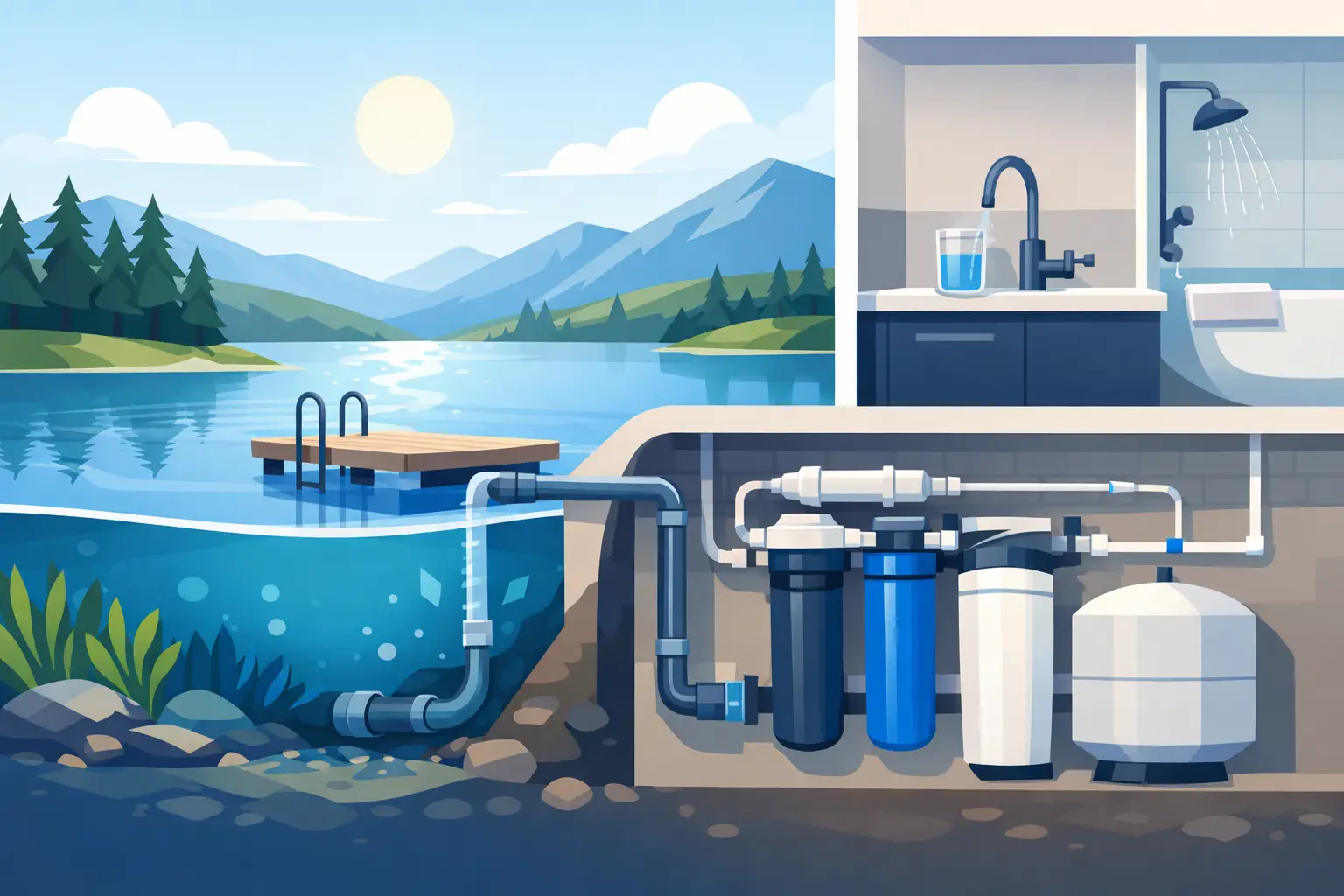
A lake can provide a practical, abundant water source for a cottage, seasonal property, or year-round home. It can also change quickly after rain, wind, algae growth, or heavy seasonal use. Effective lake filtration is not one filter attached to a pump. It is a properly planned treatment system that addresses the water entering the property, protects the plumbing, and produces water suitable for its intended use.
For Ontario property owners, the goal is straightforward: reduce sediment, control microbiological risk, improve taste and odour, and keep treatment equipment working reliably when lake conditions shift. The right system starts with understanding what is actually in the water.
Why Lake Water Needs More Than a Basic Filter
Lake water is surface water. Unlike a municipal supply, it is exposed to runoff, wildlife, decaying vegetation, shoreline activity, and changing weather. Water that looks clear at the tap may still contain fine particles, bacteria, parasites, organic material, or tannins that affect safety, appearance, and taste.
Sediment is often the first issue homeowners notice. Sand, silt, algae, and organic debris can block faucet aerators, reduce water pressure, damage pumps, and shorten the life of cartridge filters. After a storm or a busy weekend on the lake, sediment levels can rise enough to overwhelm an undersized system.
Microbiological contamination is the more serious concern. Surface water can contain bacteria and other organisms that should not be assumed safe for drinking, cooking, brushing teeth, or washing food. A quality lake water treatment design therefore needs both physical filtration and a dependable disinfection step.
Odours and colour may also be a problem, particularly when the lake contains algae, decaying leaves, or dissolved organic matter. Water may smell earthy, musty, or swamp-like even when it is not visibly dirty. These concerns can often be treated effectively, but the equipment must be selected for the source water rather than guessed at from appearance alone.
How a Lake Filtration System Should Be Built
A complete lake filtration system uses stages. Each stage has a specific job, and placing them in the right order matters. Trying to make one cartridge or one ultraviolet unit solve every problem usually leads to poor flow, frequent maintenance, or inadequate protection.
Start With Proper Water Intake and Pump Protection
Treatment begins at the lake intake. The intake should be positioned and screened to limit large debris, weeds, and bottom sediment from entering the line. It should also be installed in a location that maintains adequate water depth through changing seasonal levels.
A coarse intake screen is not drinking-water filtration, but it is essential equipment protection. It reduces the load on the pump and the treatment system inside the property. Where water levels, shoreline conditions, or winter use are challenging, the intake and pump arrangement require careful planning before filters are selected.
Remove Sediment Before Fine Treatment
The first indoor treatment stage generally targets suspended material. Depending on water quality, this may include a washable spin-down filter, a backwashing sediment filter, or replaceable cartridge filtration. A larger, backwashing filter is often the better choice for properties with consistently high sediment because it avoids the inconvenience and expense of replacing clogged cartridges every few weeks.
Fine sediment filtration follows when needed. This step improves water clarity and protects downstream equipment, especially ultraviolet sterilizers. UV systems work best when the water is clear because particles can shield microorganisms from the UV light.
The correct micron rating depends on the quality of the source water and the flow rate required. A filter that is too coarse may leave excessive particles behind. One that is too fine can cause pressure loss and require frequent service. This is why water testing and a review of peak water demand are as important as the filter itself.
Treat Taste, Odour, and Organic Material When Needed
Activated carbon is commonly used where lake water has unpleasant taste or odour. It can reduce earthy, musty, chlorine-like, or organic smells and improve the overall drinking experience. Carbon treatment may also help with some dissolved contaminants, but it is not a substitute for disinfection.
Carbon needs regular maintenance. When organic material builds up in neglected media or cartridges, it can become a source of bacterial growth. For that reason, system design should account for service access, replacement schedules, and seasonal shutdown procedures at cottages.
In some cases, tannins or heavy organic loading require more specialized equipment. Yellow or tea-coloured water does not always respond to standard carbon filtration. A water analysis helps identify whether the issue is sediment, tannins, algae-related organics, iron, or another source altogether.
Use UV Disinfection for Microbiological Protection
Ultraviolet disinfection is a core component of many lake water systems. UV light treats water as it passes through the chamber, deactivating bacteria and other microorganisms without adding chemicals to the water. For homes and cottages drawing from a lake, it is often the final safeguard before water reaches the taps.
However, a UV unit is only dependable when it is correctly sized, installed after adequate pre-filtration, and maintained on schedule. The lamp has a service life even if it still appears to be lit. The quartz sleeve also needs cleaning because mineral scale or organic film can reduce UV transmission.
A UV system should be sized for the property’s actual flow demand, not simply the number of people staying there on an average weekend. A home with several bathrooms, a dishwasher, laundry, and outdoor use may need greater capacity than a small seasonal cabin. Commercial and institutional properties require engineered equipment designed for higher and more consistent flow rates.
Testing Guides the Right Lake Water Treatment Plan
Lake water should be tested before a treatment system is specified and re-evaluated when conditions change. At minimum, testing can identify microbiological concerns, turbidity, pH, hardness, iron, manganese, tannins, and other factors that affect treatment performance.
Testing is particularly valuable when a property has a new intake, a changed shoreline, recurring odours, staining, pressure loss, or a history of failed filters. It prevents the common mistake of buying equipment based on a neighbour’s setup. Two cottages on the same lake can have very different water because their intakes, depths, shoreline runoff, and plumbing systems are different.
Seasonal testing also makes sense for properties that see significant variation between spring runoff and late summer. If water becomes cloudier after rain or develops a stronger odour during warm weather, the treatment system may need more sediment capacity, carbon treatment, or adjustments to maintenance frequency.
Lake Filtration for Seasonal and Year-Round Properties
A cottage used only in summer has different operational needs from a permanent lakeside home. Seasonal systems must be easy to shut down, drain, and protect from freezing. Filters and UV equipment should be serviced before opening and closing the property so the system starts each season in good condition.
Year-round homes need greater attention to freeze protection, reliable pressure, and continuous disinfection. If the property is left unattended for periods of time, the system should be designed to minimize avoidable service issues and provide clear maintenance requirements. Equipment that is difficult to access or poorly matched to the home’s water use tends to be neglected.
For larger buildings, rental properties, resorts, and camps, the stakes are higher. High flow rates and varying occupancy can place major demands on filtration and disinfection equipment. These applications benefit from a custom approach that considers peak demand, storage, redundancy, monitoring, and local installation requirements.
Maintenance Protects Water Quality and Equipment
Even the best system needs routine service. Sediment filters must be cleaned, backwashed, or replaced as required. Carbon media and cartridges need scheduled replacement. UV lamps and sleeves need annual attention, and the intake should be inspected for debris or damage.
Ignoring maintenance can lead to reduced pressure, poor taste, shortened equipment life, and lower disinfection performance. It can also make a small, manageable water issue look like a major system failure. A clear service schedule helps property owners plan ahead, especially before cottage season begins.
Canadian Smart Home Solutions can assess lake water conditions, recommend the right treatment stages, and install a system built around the property’s actual water demand. The objective is not to add unnecessary equipment. It is to provide reliable water treatment that protects the people using the water and the plumbing that carries it.
A lake should be one of the best parts of owning a property, not a source of uncertainty at every tap. With proper testing, correctly sized filtration, dependable UV disinfection, and regular maintenance, lake water can be treated with confidence throughout the season and beyond.