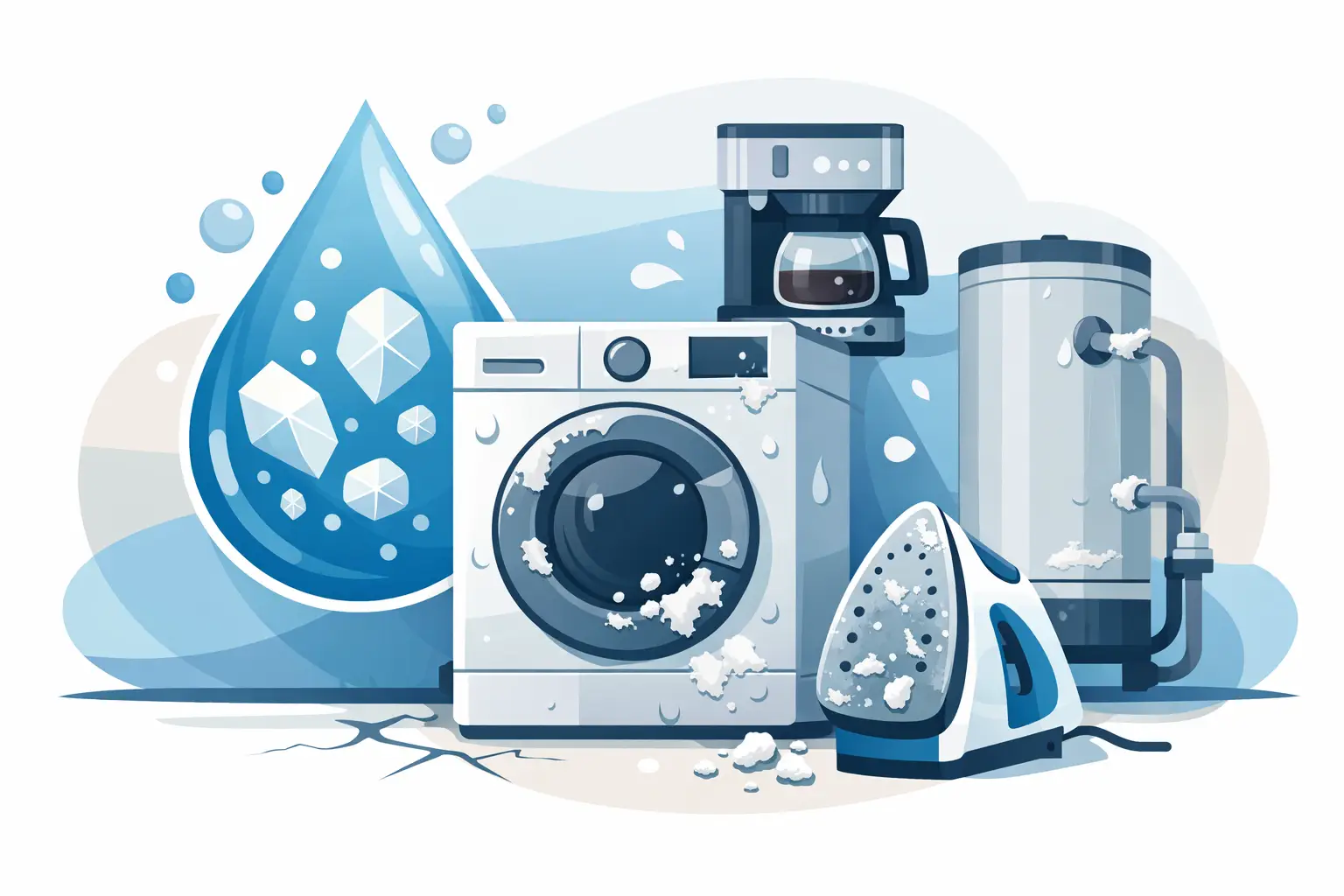
A dishwasher that leaves cloudy glasses, a kettle coated in white residue, and a water heater that seems to run longer than it used to are often connected by the same issue. Can hard water damage appliances? Yes. The minerals in hard water can build up inside water-using equipment, reducing efficiency, increasing maintenance needs, and in some cases shortening the appliance’s service life.
For Ontario homeowners, this is more than a cosmetic concern. Hardness levels can vary significantly from one municipal supply or private well to another. Without the right treatment, calcium and magnesium deposits can accumulate where you cannot see them: inside heating elements, supply lines, valves, pumps, and internal appliance components.
How hard water damages appliances
Hard water contains dissolved minerals, primarily calcium and magnesium. The water itself is not harmful to drink, but those minerals become a problem when water is heated, evaporates, or repeatedly flows through equipment. They separate from the water and form a hard, chalky deposit called scale.
Scale does not usually cause an appliance to fail overnight. Instead, it creates gradual wear. A thin layer on a heating element makes it harder for heat to transfer into the water. Deposits can restrict water flow through small passages and interfere with sensors, spray arms, valves, and seals. Over months or years, the appliance has to work harder to deliver the same result.
The financial impact can add up through higher energy use, more frequent servicing, reduced cleaning performance, and premature replacement of expensive equipment.
Water heaters are especially vulnerable
Water heaters are among the household systems most affected by hard water because they constantly heat large volumes of water. As minerals settle and harden, sediment and scale can collect at the bottom of a tank or coat heating elements in tankless and electric models.
That buildup acts like insulation. The system needs more energy and more time to heat the water, which can raise utility costs. In severe cases, a tank water heater may make popping or rumbling sounds as water becomes trapped beneath sediment. Tankless water heaters can experience restricted flow, error messages, and reduced heating performance when internal passages are not properly maintained.
Regular flushing may help manage sediment, but flushing alone does not stop new minerals from entering the system. For homes with consistently hard water, treating the water before it reaches the heater is a more dependable long-term approach.
Dishwashers and washing machines lose performance
Hard water can leave dishes with spots, haze, or a film even when the dishwasher is working mechanically as intended. Scale can also build inside the dishwasher’s heating system, spray arms, and water lines. This reduces cleaning efficiency and may increase the amount of detergent or rinse aid required to get acceptable results.
Washing machines face similar problems. Mineral deposits can affect inlet screens, hoses, internal components, and the machine’s ability to rinse clothing effectively. Laundry may feel stiff, look dull, or develop detergent residue because soap does not perform as well in hard water.
A water softener changes this equation by reducing the hardness minerals before they reach the appliance. Many homeowners notice that laundry feels softer and dishware comes out clearer, but the equipment protection is just as valuable.
Small appliances can show the first warning signs
Coffee makers, kettles, humidifiers, steam irons, espresso machines, and ice makers often reveal hard water problems quickly. White crust inside a kettle or coffee maker is visible scale. While regular descaling can restore performance, frequent buildup means the appliance is continually being exposed to mineral-heavy water.
Small appliances may be less costly to replace than a water heater, but they are useful indicators of what may be occurring inside larger equipment. If a kettle needs descaling every few weeks, the home’s plumbing and major appliances may also be dealing with significant mineral buildup.
Signs that hard water is affecting your home
Not every appliance issue is caused by water hardness. Age, installation quality, water pressure, and normal mechanical wear all matter. Still, several signs point to hard water as a likely contributor:
- White or grey scale on faucets, showerheads, kettles, or coffee makers
- Cloudy glasses and spots on dishes after washing
- Reduced water flow from showerheads or fixtures
- Dry skin, dull hair, stiff laundry, or soap that does not rinse easily
- A water heater that is noisy, slow to recover, or increasingly expensive to operate
Brown, orange, or black staining may indicate iron, manganese, or other water quality concerns rather than hardness alone. Sulphur odours, sediment, bacteria risks, and lead also require different treatment methods. A professional water analysis is the best way to identify what is actually in the water and avoid choosing a system based on guesswork.
Can hard water damage appliances beyond repair?
It depends on the level of hardness, the age of the equipment, and how long the scale buildup has been present. Some appliances can be restored with professional descaling, cleaning, flushing, or replacement of a clogged component. Others may have permanent efficiency loss or damage to heating elements, valves, and internal water pathways.
A softener will not reverse existing mechanical damage, but it can prevent additional scale from forming. That matters when protecting newer appliances or extending the useful life of a water heater, dishwasher, washing machine, and plumbing fixtures.
For commercial properties, the stakes are often higher. Hotels, restaurants, schools, healthcare facilities, and multi-unit buildings use large volumes of hot water. Scale in boilers, commercial dishwashers, laundries, and water heating equipment can create costly downtime and service disruptions. Commercial water treatment should be designed around actual flow rates, hardness levels, usage patterns, and equipment requirements.
The right solution depends on your water source
For most homes with hard municipal water or well water, a properly sized water softener is the primary solution. It uses an ion-exchange process to reduce calcium and magnesium before water travels through the home’s plumbing and appliances.
A whole-home filtration system may also be appropriate if chlorine, sediment, odours, iron, or other contaminants are present. If drinking water quality is a concern, reverse osmosis can provide an additional level of treatment at a dedicated drinking-water tap. These systems solve different problems, which is why one-size-fits-all recommendations can miss the mark.
The sizing and installation matter as much as the equipment itself. A system that is too small may regenerate too frequently or fail to keep up with peak household demand. A system that is too large may be unnecessarily expensive. Water hardness, household size, plumbing configuration, well water conditions, and daily usage all need to be considered.
Canadian Smart Home Solutions helps Ontario homeowners identify hardness and related water concerns, then recommends practical treatment systems designed for reliable whole-home protection. Professional installation also helps ensure the equipment is properly connected, programmed, and supported over time.
Protect appliances before scale becomes a repair bill
Descaling a coffee maker and cleaning a showerhead are useful maintenance steps, but they treat the symptom at the end of the line. When hard water is entering every fixture and appliance, the more effective solution is to address it at the point where water enters the home.
If you are seeing scale, cloudy dishes, reduced appliance performance, or repeated water-heater maintenance, start with a water test. Knowing your hardness level gives you a clear basis for protecting the equipment your household relies on every day.