
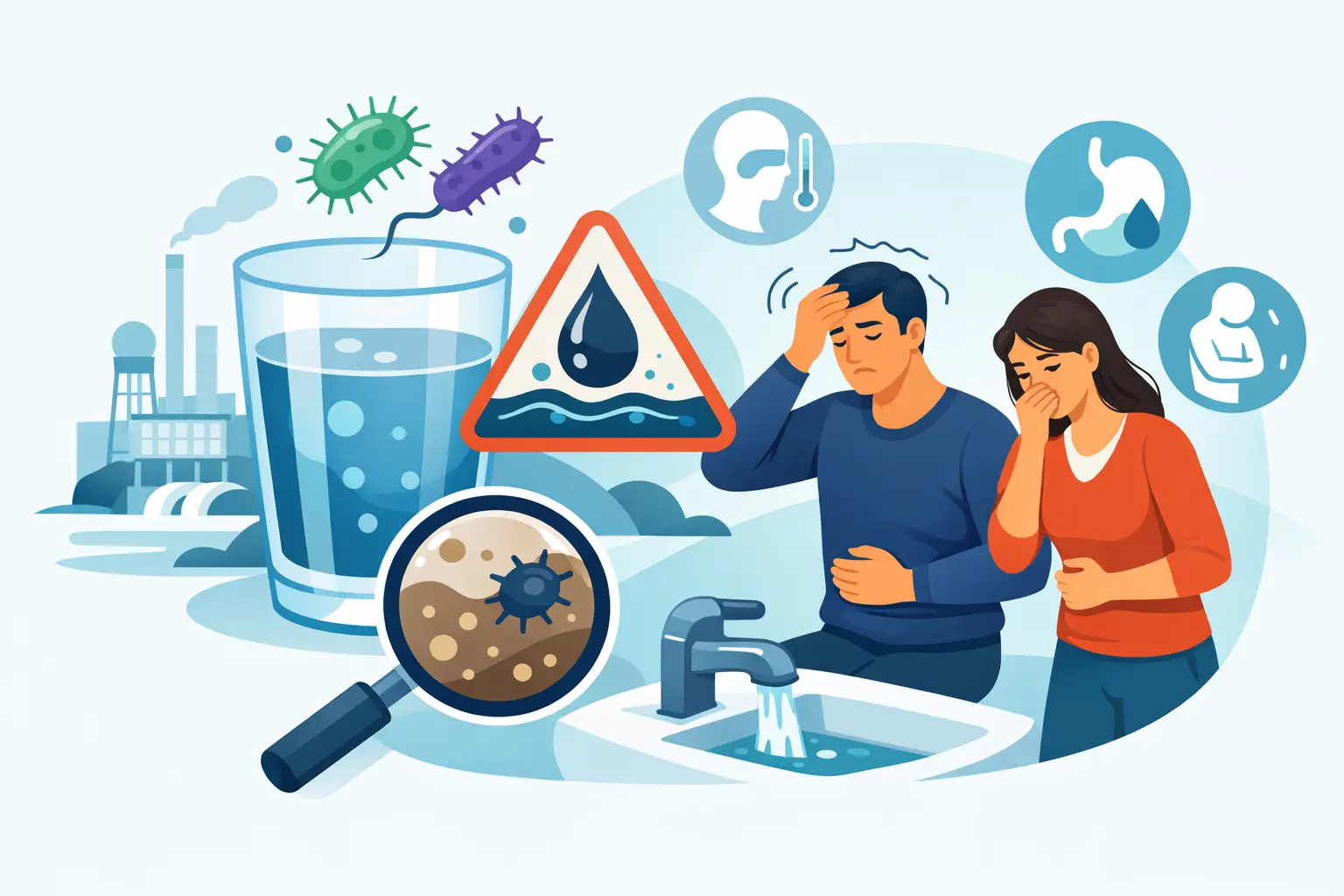
A glass of water can look clear and still contain something you do not want to drink. That is what makes drinking water contamination symptoms difficult for Ontario homeowners to judge by sight alone. A metallic taste, sulphur odour, recurring stomach upset, orange staining, or unexplained scale may point to a water-quality concern, but none of these signs can identify a contaminant with certainty. Proper water testing is the step that turns a concern into a practical treatment plan.
For families using private wells, lake water, or older plumbing, regular testing is especially valuable. Municipal water is monitored, but water quality can still change within a building because of aging service lines, plumbing materials, fixtures, or a specific issue such as lead.
Symptoms Can Affect Water, Your Home, or Your Health
Contamination does not always cause an immediate illness. Some contaminants change water’s appearance or odour without creating an urgent health risk. Others, including bacteria and lead, may have no obvious taste, smell, or colour at all.
That is why it helps to look at the full picture: what comes from the tap, what is happening in your plumbing and appliances, and whether people using the water are experiencing symptoms. These clues are useful starting points, not a replacement for laboratory analysis or medical advice.
Changes in taste, smell, or appearance
Water that suddenly tastes metallic, bitter, salty, chemical-like, or earthy deserves attention, particularly if the change is new or affects only one tap. A chlorine smell can occur in municipally supplied water and does not automatically mean the water is unsafe. However, a strong or unusual chemical odour should be investigated.
A rotten-egg smell often points to hydrogen sulphide or sulphur bacteria. While it is commonly more of a nuisance than a direct health emergency, it can make water unpleasant to drink, corrode plumbing over time, and signal that a proper water assessment is needed. Iron and manganese can leave water yellow, brown, black, or cloudy and create stains in sinks, toilets, laundry, and dishwashers.
Cloudiness can come from harmless air bubbles, sediment, mineral content, or more serious causes. If it does not clear quickly in a glass, appears after heavy rainfall, or occurs with an unusual taste or odour, arrange testing before relying on the water for drinking.
Health Symptoms That May Be Related to Water
Gastrointestinal symptoms are among the most recognized possible drinking water contamination symptoms. Diarrhea, nausea, vomiting, stomach cramps, or fever can occur after exposure to bacteria, parasites, or viruses in untreated or compromised water. These symptoms can also come from food, seasonal illness, medication, or many other sources, so water should not be assumed to be the cause without evidence.
If several people in the same household develop similar symptoms, particularly after a well floods, a water main breaks, plumbing work is completed, or water changes in taste or smell, stop using the water for drinking and food preparation until you have received appropriate advice. Infants, older adults, pregnant people, and anyone with a weakened immune system may be more vulnerable to waterborne illness.
Some contaminants are more concerning because effects may develop gradually or without clear symptoms. Lead exposure is a key example. Children are particularly sensitive to lead, which can affect development even at low levels of exposure. You cannot rely on taste, colour, or smell to detect it. Homes with older plumbing, lead service lines, or brass fixtures should consider targeted lead testing.
Nitrates are another concern for private wells, especially in rural areas near agricultural activity or septic systems. Nitrate-contaminated water may look and taste normal. It can pose a serious risk to infants, so households preparing infant formula should be especially cautious about well-water quality.
If someone has severe symptoms, signs of dehydration, difficulty breathing, confusion, or a serious allergic reaction, seek medical care promptly. For ongoing health concerns, speak with a healthcare professional and test the water rather than attempting to diagnose the cause from symptoms alone.
Household Clues That Should Not Be Ignored
Your water may be giving you useful evidence long before anyone feels unwell. Repeated scale on faucets, shower glass, kettles, and heating elements usually indicates hard water rather than contamination. Still, hard water can reduce appliance efficiency, shorten the life of water heaters, and make cleaning more difficult. A water softener is often the appropriate solution when hardness is confirmed.
Other signs can point to a different treatment need. Consider testing if you notice:
- Orange, red, brown, or black stains on fixtures, clothing, or appliances
- A rotten-egg, musty, chemical, or fuel-like odour from water
- Sediment collecting in toilet tanks, filters, or appliance screens
- Blue-green staining that may suggest copper pipe corrosion
- Sudden changes after flooding, construction, drought, or a plumbing repair
One symptom does not always mean one contaminant. For example, staining may result from iron, manganese, corrosion, or sediment. The right system depends on what the test shows, how much water the property uses, and whether the issue affects all water or only drinking water.
Municipal Water, Well Water, and Lake Water Have Different Risks
Ontario municipal water systems are treated and regularly monitored, but water can pick up metals or other concerns as it travels through older infrastructure and building plumbing. A point-of-use reverse osmosis system can be a strong option for improving drinking water at a kitchen tap, particularly where lead reduction, dissolved solids, taste, or odour are concerns.
Private wells need more active oversight because the property owner is responsible for water quality. Heavy rain, flooding, nearby septic systems, agricultural runoff, a damaged well cap, and changes to groundwater conditions can introduce bacteria, nitrates, sediment, iron, sulphur, or other contaminants. Well water should be tested routinely and whenever there is a noticeable change in water quality.
Lake water systems need an engineered approach. Surface water can carry sediment, organic material, bacteria, and seasonal changes that a basic cartridge filter cannot reliably solve on its own. Depending on the test results and flow requirements, treatment may include sediment filtration, specialized media, reverse osmosis for drinking water, and ultraviolet sterilization for microbial control.
What to Do When You Suspect a Water Problem
Start by documenting what has changed. Note which taps are affected, when the issue began, whether it follows rainfall or plumbing work, and whether hot water, cold water, or both are involved. A problem only at the hot-water tap may relate to the water heater, while an issue throughout the home may indicate a source-water or whole-home plumbing concern.
Do not depend on a home strip test for major decisions. It can be useful for a quick screening of basic conditions, but laboratory testing provides the information needed to select equipment correctly. Testing should be matched to the situation. A well-water panel may assess bacteria, nitrates, hardness, iron, manganese, sulphur, pH, and other relevant parameters. A targeted sample may be needed for lead or another specific concern.
Until results are available, use caution if bacterial contamination is suspected or if public health authorities issue a boil-water advisory. Boiling is not a universal solution: it can kill many microorganisms, but it does not remove lead, nitrates, chemicals, or dissolved minerals. In some cases, boiling can concentrate contaminants that remain in the water.
Treatment Should Match the Test Results
A good water treatment system solves the actual problem without adding unnecessary equipment. Sediment filtration protects plumbing and downstream treatment from grit and debris. Water softeners address calcium and magnesium hardness. Iron and sulphur removal systems reduce staining and odours. Reverse osmosis systems provide highly filtered drinking water at a dedicated tap, while ultraviolet systems disinfect properly pre-filtered water to help control microorganisms.
For lead concerns, certified lead-reduction treatment at the drinking-water point may be appropriate, although whole-home solutions can make sense in properties with broader plumbing issues. Commercial buildings, schools, healthcare facilities, and high-use properties often require custom treatment designed around peak flow rates, water demand, code requirements, and ongoing maintenance.
Canadian Smart Home Solutions begins with the conditions at your property, then recommends treatment that fits the water source and the way you use water. Correct sizing, professional installation, and ongoing service matter just as much as the equipment itself.
Water problems are easier to solve when they are identified early. If your water has changed, your fixtures are showing stains or scale, or you simply want confidence in what your family is drinking, arrange a proper water analysis and make decisions based on results rather than guesswork.