
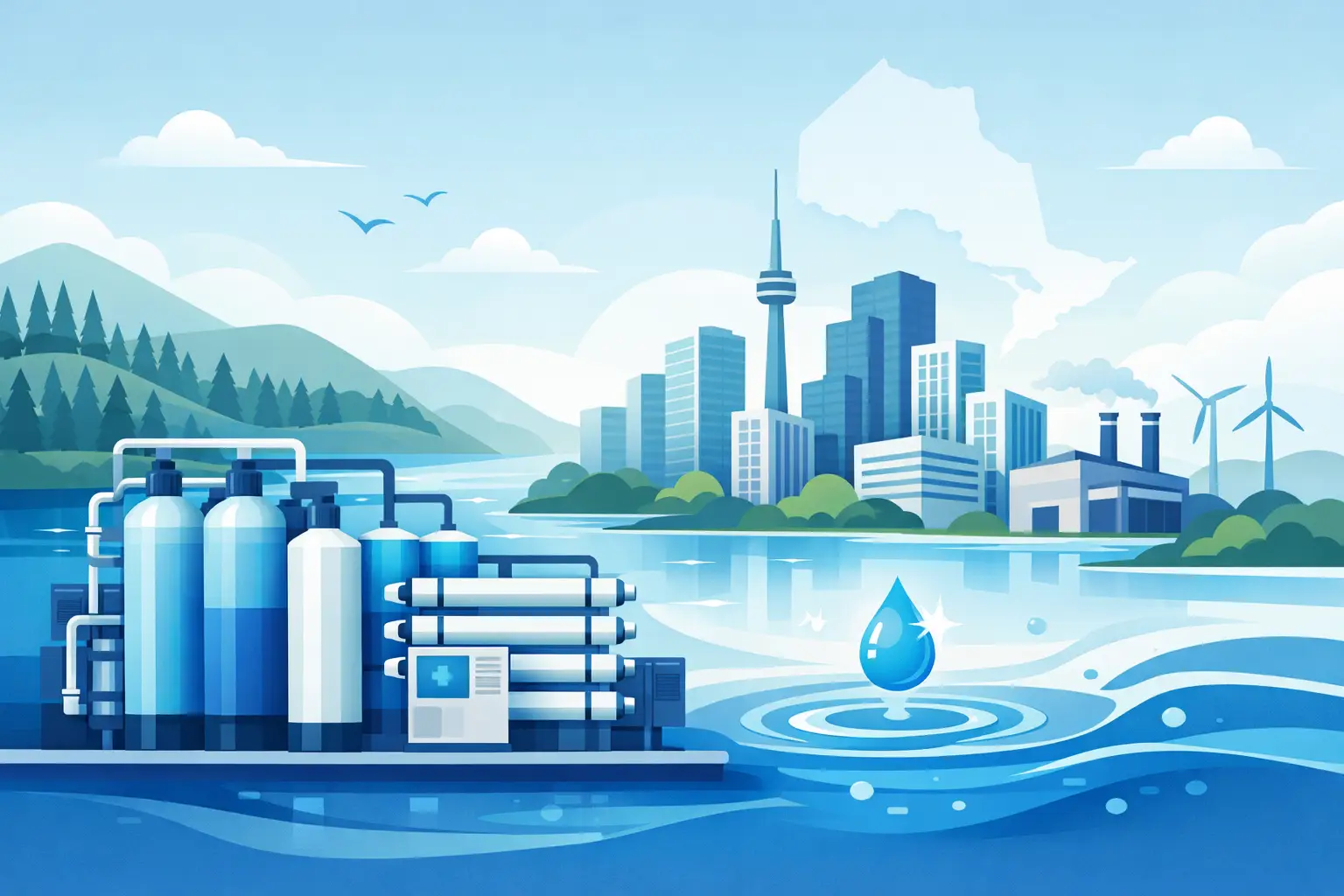
A scale-covered boiler tube, recurring sulphur odour in guest rooms, or inconsistent water pressure during peak demand can become far more than a maintenance issue. It can disrupt operations, affect visitor confidence, damage equipment, and raise operating costs. The future of commercial water treatment is moving toward systems that identify these risks earlier, treat water more precisely, and give Ontario facilities better control over the water they depend on every day.
For hotels, schools, healthcare facilities, multi-unit buildings, food service operations, and industrial sites, water treatment is no longer a single piece of equipment installed and forgotten. The most effective approach combines water analysis, properly engineered treatment equipment, professional installation, and ongoing service. The goal remains practical: safer water, less scale and staining, fewer odours, and longer-lasting plumbing and equipment.
The Future of Commercial Water Treatment Is More Responsive
Commercial water quality can change with the source water, municipal treatment adjustments, seasonal conditions, facility occupancy, or the condition of on-site plumbing. A system selected only for a past water test may not perform as expected several years later. That is why future-focused treatment plans place more emphasis on monitoring actual performance, not simply installing a standard unit.
Smart controls and connected monitoring are becoming more common in commercial treatment systems. These tools can track flow, pressure, regeneration cycles, filter life, water usage, and certain water quality indicators. When readings move outside an expected range, facility teams can investigate before the issue becomes an emergency.
This does not mean every facility needs a complex, fully automated control system. A small restaurant and a hospital have very different needs. However, any building with high water use or critical equipment benefits from clear visibility into treatment performance. A timely warning about pressure loss across a filter, for example, can help prevent poor flow at fixtures or an unexpected service interruption.
Data Supports Better Service Decisions
The real value of monitoring is not technology for its own sake. It helps owners and managers make better decisions about maintenance, media replacement, salt use, membrane performance, and service timing. Instead of waiting for scale to appear on heating equipment or for staff to report a taste concern, the facility can act on measurable changes.
This approach can also make operating budgets more predictable. Scheduled maintenance based on equipment condition is often more efficient than responding to failures, especially where downtime affects residents, patients, students, or paying guests.
Treatment Systems Will Be Designed Around the Whole Water Problem
Commercial facilities often have more than one water issue. Hard water may be causing scale in water heaters and dishwashing equipment, while iron creates staining and a separate odour issue affects certain areas of the building. A point-of-use filter alone cannot protect the full plumbing system, and a water softener alone is not designed to address every contaminant.
The future of commercial water treatment is built around treatment trains: a sequence of equipment selected to address the actual source-water conditions and the facility’s water demand. Depending on the application, that may include sediment filtration, iron and sulphur removal, water softening, activated carbon filtration, ultraviolet sterilization, reverse osmosis, or specialized lead reduction.
For a well-water property, pre-treatment may be essential before ultraviolet disinfection can perform reliably. For a commercial kitchen, softened water may protect steam equipment and improve detergent performance, while reverse osmosis can provide high-quality drinking and food-preparation water. For an older building, lead reduction may require attention to both the water treatment system and the plumbing materials already in place.
There is no universal commercial system because the right design depends on water chemistry, flow rate, peak demand, space available, drainage, electrical requirements, and the consequences of interruption. Proper water testing and site assessment remain the foundation of a dependable solution.
Water Efficiency Will Matter More, but Not at the Expense of Performance
Commercial water treatment equipment uses water and, in some cases, salt or electricity to deliver its results. As operating costs rise, facilities are looking for systems that reduce waste without compromising water quality or flow.
Modern softeners can regenerate based on actual water use rather than a fixed calendar schedule. Efficient control valves can help prevent unnecessary regeneration. High-capacity media and properly sized tanks can reduce pressure drop while supporting the demands of busy buildings. In reverse osmosis applications, recovery rates and pre-treatment design can have a meaningful effect on water consumption and membrane life.
The trade-off is important. Choosing the smallest system or the lowest initial purchase price can create higher costs later through excessive regeneration, poor flow, frequent service calls, or early equipment wear. Oversizing equipment without understanding demand can also waste space and capital. The best result comes from sizing a system for real peak flow, expected occupancy, and the water conditions it must handle.
Health Protection Will Continue to Drive Commercial Treatment Choices
Water quality decisions are increasingly connected to health protection, risk management, and customer trust. Schools, healthcare environments, nursing homes, and hospitality properties have particular reasons to take drinking water quality seriously. Concerns may include lead, bacteria, turbidity, chlorine taste, or water quality changes in low-use sections of a building.
Ultraviolet systems, properly matched pre-filtration, and point-of-use or point-of-entry treatment can each play a role. Yet technology alone is not a safety plan. A UV unit needs correct flow control, clean sleeves, functioning lamps, and water clear enough for the ultraviolet light to work effectively. A lead reduction system needs scheduled filter replacement. A reverse osmosis system needs appropriate pre-treatment and sanitation.
Future-ready facilities will treat maintenance records, service schedules, and performance checks as part of water quality protection. This is especially valuable where multiple staff members manage a property or where an organization needs documented evidence of its maintenance practices.
Resilience Will Be Part of Every Serious System Design
Ontario properties face a range of operating conditions, from municipal water variations to private wells, seasonal properties, lake-water applications, and aging building infrastructure. Resilience means planning for those realities before they cause a service issue.
For some facilities, resilience may mean duplex softeners that maintain treated-water supply while one tank regenerates. For others, it may mean parallel filtration, bypass plumbing, storage capacity, alarm notifications, or equipment selected for high flow rates. A healthcare facility or large hotel may need a different level of redundancy than a small office building, but both need a clear plan for service access and maintenance.
Installation quality matters just as much as equipment selection. Proper drain connections, backflow protection, bypasses, electrical supply, floor drainage, and access for future service all affect long-term reliability. Canadian Smart Home Solutions designs and installs commercial systems with these practical site requirements in mind, rather than treating commercial water treatment as a one-size-fits-all purchase.
How Facility Managers Can Prepare Now
The best time to assess a commercial water treatment system is before equipment fails or water complaints become routine. Start with an up-to-date water analysis and review the symptoms already affecting the facility. Look for scale on heating equipment, staining at fixtures, odours, inconsistent water quality, frequent filter changes, pressure loss, rising energy use, or appliance repairs linked to hard water.
Next, review how water is used across the property. Peak demand is often more relevant than average daily use. A hotel may see its highest demand in the morning, while a school, care facility, or food operation may have different patterns. Treatment equipment must be able to maintain performance when the building needs water most.
Finally, ask whether the current system can be serviced without disrupting operations. A good commercial design should account for maintenance access, replacement parts, operating costs, and the facility’s need for continuity. The right treatment system should make water management easier for staff, not create another complicated responsibility.
Cleaner water protects more than plumbing. It supports the people using the building, the equipment that keeps it operating, and the confidence that comes from knowing water quality has been addressed with a practical, professionally engineered plan.