
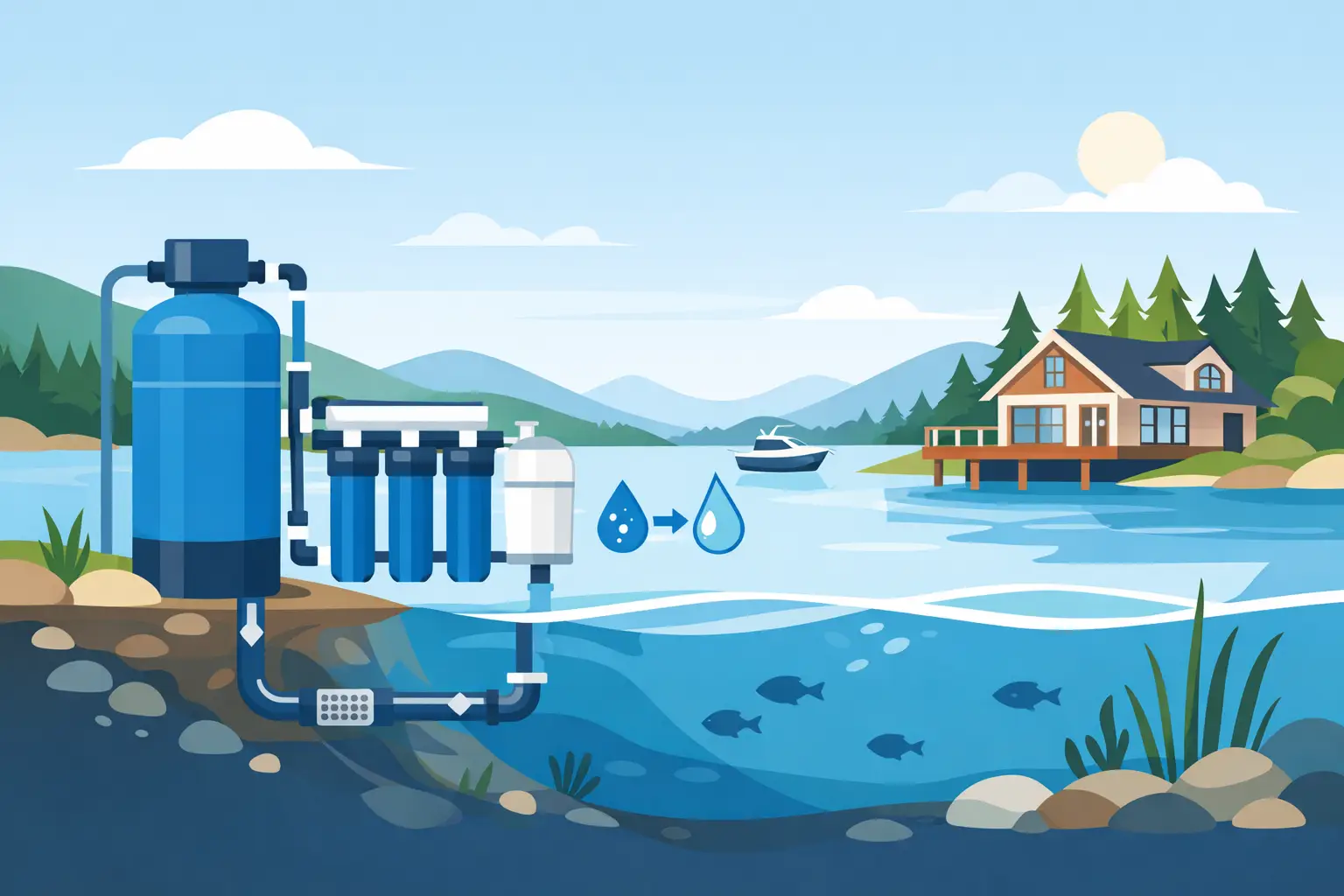
A clear-looking lake can still carry bacteria, sediment, organic matter, and seasonal contaminants that affect your family’s water supply. This lake water filtration guide explains how Ontario homeowners and cottage owners can turn variable surface water into dependable water for bathing, cleaning, and drinking – with treatment designed around the actual conditions at the property.
Lake water is not treated like municipal water, and it is not treated exactly like well water either. Its quality can change quickly after heavy rain, spring runoff, warm weather, boat traffic, or shoreline disturbance. A system that works well in July may need a different maintenance schedule in October. The right solution begins with testing, then combines the proper filtration stages in the correct order.
Start With a Lake Water Test
The appearance and smell of water are useful clues, but they cannot confirm that water is safe. Lake water testing should assess microbiological risks as well as the physical and chemical conditions that determine which equipment will perform properly.
For a home or cottage drawing from a lake, testing commonly includes total coliform bacteria and E. coli, turbidity, pH, hardness, iron, manganese, tannins, and total dissolved solids. Depending on the property and nearby land use, nitrate, lead, sulphur, or other specific contaminants may also need attention. A water treatment professional can help interpret the results rather than treating every result as a separate equipment purchase.
Testing should not be a one-time step. Surface water quality changes more than groundwater quality. Retest at least seasonally, and arrange additional testing after flooding, a major storm, an extended period of disuse, changes in odour or colour, or work on the intake line.
Why One Filter Is Rarely Enough
Many cottage owners start with a basic cartridge filter because it is visible, affordable, and easy to replace. It may capture sand and larger particles, but it does not reliably make lake water safe to drink. In fact, a single filter can create a false sense of security when bacteria and fine organic material remain in the water.
Effective lake water treatment is usually a treatment train. Each stage prepares the water for the next one. Sediment must be reduced before ultraviolet disinfection, for example, because particles can shield microorganisms from UV light. Carbon may improve taste and reduce organic odours, but it is not a substitute for disinfection. Reverse osmosis can improve drinking water quality at one tap, but it is not designed to supply every shower, toilet, or appliance in the building.
The best configuration depends on water test results, the number of occupants, seasonal or year-round use, plumbing layout, and required flow rate. A small three-season cottage and a large lakefront home with multiple bathrooms should not be designed the same way.
A Typical Lake Water Filtration System
A professionally designed system often starts at the lake intake. The intake should be located and screened to reduce leaves, weeds, fish debris, and bottom sediment. Drawing water too close to shore or too close to the lakebed can increase sediment loading and shorten filter life. The pump, pressure tank, and intake line must also be sized to deliver stable flow to the treatment equipment.
Sediment filtration
Sediment filtration removes suspended particles such as sand, silt, algae fragments, and organic debris. For water with frequent visible cloudiness, a larger backwashing sediment filter or staged filtration may be more practical than relying on small cartridges alone. Cartridge filters are useful as final polishing filters, but high sediment levels can make replacements frequent and expensive.
Turbidity is more than a cosmetic concern. It can clog plumbing fixtures, reduce the performance of other treatment equipment, and interfere with UV disinfection. Reducing sediment early protects the full system.
Carbon and specialty media
Activated carbon is often used where lake water has earthy, musty, or chlorine-like tastes and odours. It can also help improve the overall taste of water used throughout the home. Where testing shows tannins, iron, manganese, or sulphur-related odours, specialty treatment media may be required instead of, or in addition to, carbon.
This is where a test-based recommendation matters. Installing carbon for a staining problem caused by iron, for example, may improve odour without solving orange fixtures, laundry stains, or sediment buildup in appliances.
Ultraviolet disinfection
For untreated lake water intended for household use, ultraviolet sterilization is a critical final barrier against bacteria and other microorganisms. UV systems disinfect water as it passes through the chamber without adding chemicals to the supply. They are widely used for homes, cottages, and commercial properties that rely on private water sources.
However, UV only works well when the water is clear enough for light to pass through. The quartz sleeve and lamp also need scheduled service. A UV unit with an expired lamp, a dirty sleeve, or poor pre-filtration cannot provide the protection the system was designed to deliver.
Reverse osmosis for drinking water
A reverse osmosis system is often added at the kitchen sink for families who want an additional level of drinking-water treatment. It reduces a broad range of dissolved contaminants and can improve taste for drinking, cooking, coffee, and ice. It is particularly useful when testing identifies dissolved minerals or specific concerns that are best addressed at the point of use.
Reverse osmosis is not always necessary for every lake-water property. When it is installed, it should complement whole-home filtration and UV disinfection, not replace them. The rest of the home still needs water that is properly filtered and disinfected for showers, laundry, dishwashing, and everyday use.
Choosing Capacity for Your Property
A common mistake is selecting equipment based only on the price of the unit. Water treatment systems must be matched to peak demand. If a filter is undersized, water pressure can drop when more than one fixture is running. If a UV system is undersized, water may pass through too quickly for effective disinfection.
For a seasonal cottage, equipment must also suit the opening and closing routine. Some systems need to be drained or protected from freezing before winter. A year-round residence needs components that can operate reliably through Ontario winters, including properly protected plumbing and a dependable power supply for the pump and UV system.
Commercial and institutional properties need an even more careful approach. A lodge, rental property, camp, school, or healthcare facility may require higher flow rates, redundant treatment capacity, monitoring, and a documented service plan. The consequences of system downtime are greater when many people depend on the water supply.
Maintenance Is Part of Safe Water
Lake water systems are not install-and-forget equipment. Regular service keeps treatment performance consistent and prevents a minor issue from becoming a no-water or unsafe-water situation. Homeowners should monitor pressure changes, cartridge condition, unusual tastes or odours, and UV alarms. A sudden pressure drop often signals a blocked filter or intake issue.
A practical maintenance plan may include sediment filter changes, backwashing where applicable, UV lamp replacement, quartz sleeve cleaning, intake inspection, and periodic water testing. The exact interval depends on the lake, household demand, and system design. During periods of heavy algae, runoff, or high turbidity, filters may need attention more often than expected.
It is also wise to keep essential replacement filters and a UV lamp on hand at remote cottages. Waiting for a part during a busy summer weekend can leave a property without properly treated water.
When to Upgrade an Existing Cottage System
If your current setup includes only a pump and one small filter, an upgrade is worth considering when water becomes cloudy after rain, filters plug quickly, the water has an odour, family members are concerned about drinking water, or the cottage is being converted for year-round use. Staining, appliance scale, and recurring plumbing repairs can also point to untreated water quality issues.
Canadian Smart Home Solutions designs and installs treatment systems around the water source, property demand, and test results. That approach avoids both under-treating a potentially unsafe supply and overbuilding a system that does not fit the property’s needs.
Safe lake water is not achieved by choosing the most complicated equipment. It comes from understanding the source, using the right filtration and disinfection stages, and keeping the system maintained so it performs when your family needs it.